Food & Culture
Matcha in Japan: From Green Powder to a Bowl of Tea
What makes matcha different, why it comes with a sweet, and how a bowl, a bamboo whisk and a little attention can change the experience.
6 MIN READ
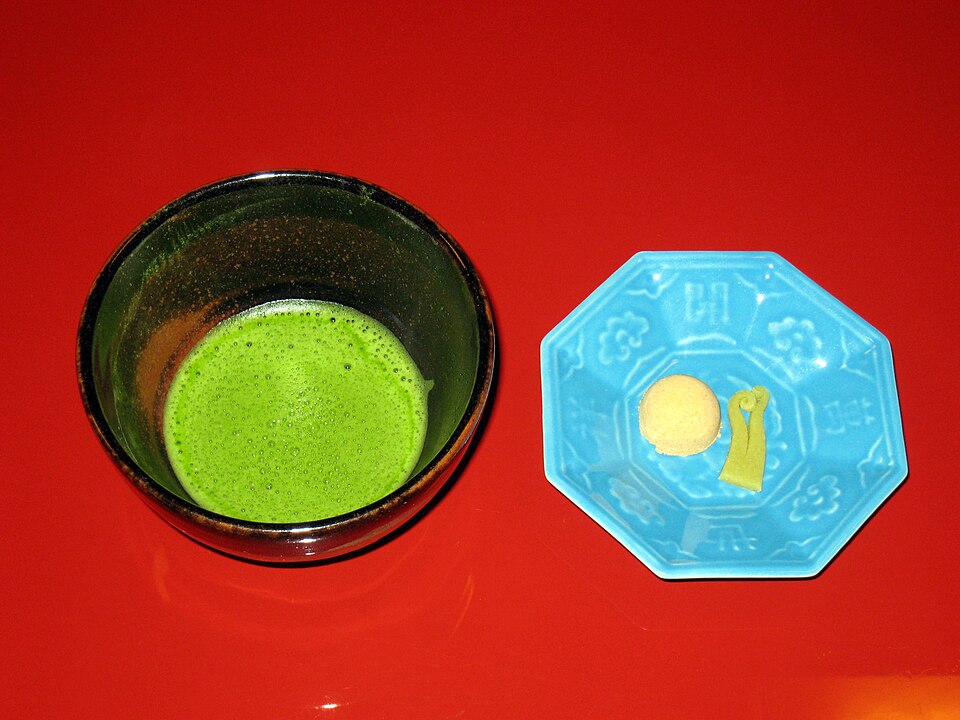
Photo: Ryosuke Hosoi (rhosoi) / Wikimedia Commons · CC BY 2.0. Resized; original composition retained.
Perhaps your first taste of matcha came in an iced latte, a scoop of ice cream or a piece of cake. Sitting down with a bowl of the tea gives that familiar green flavour a different setting.
There is the curve of the bowl against your hands, the surface of the tea and, perhaps, a small sweet waiting beside it. Without a lid or a straw, you have a moment to look at what you are about to drink.
You do not need to know the rules of a tea ceremony to be curious. Start with a few useful distinctions: how matcha is made, how it is prepared and what kind of tea experience you would like to try.
What makes matcha different?
Matcha begins as tencha. The leaves grow under shade, then are picked, steamed and dried without rolling. After stems and veins are removed, the prepared leaves are milled into a fine powder. Japan’s Ministry of Agriculture, Forestry and Fisheries explains that shading helps preserve the savoury character known as umami while limiting bitterness.1
That production method helps distinguish matcha from other Japanese teas. Sencha, for example, is rolled during processing. Matcha has its own route from leaf to cup, rather than being a general name for every green tea sold as a powder.
Uji in Kyoto is closely associated with this tradition. The ministry’s account describes how matcha developed alongside tea-ceremony culture and how longstanding tea gardens and shops continue to work in the region.1 It is a useful connection to remember if a green drink first brings you to the subject: behind the powder are growers, processing skills and generations of tea makers.
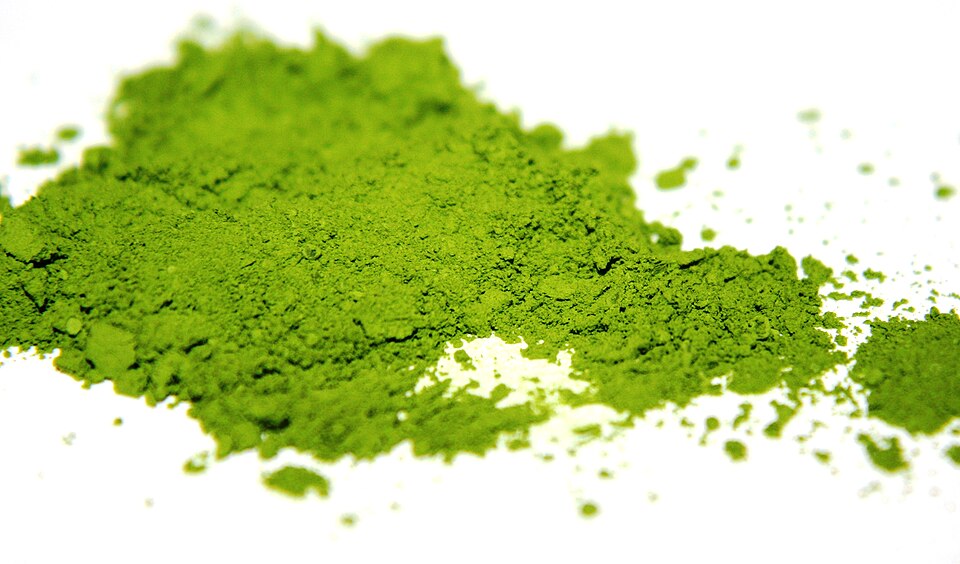
Photo: 121stephen / Wikimedia Commons · CC BY-SA 3.0. Resized; original composition retained.
Begin by noticing the taste
Tea merchant Ippodo describes matcha through its fragrance, richness and umami, and presents several ways of enjoying it, including plain tea and lattes.2 A plain bowl lets you explore those qualities without milk or added sugar.
Take a small sip and see what you notice first. Does the flavour feel rounded or sharp? Does it linger after you swallow? You do not need a tasting vocabulary to answer those questions for yourself.
If you usually drink a sweetened latte, allow the first sip to be unfamiliar. You may enjoy the tea differently, or decide that you still prefer it with milk. Either response gives you something useful to bring to your next order.
Usucha and koicha: two ways to prepare matcha
Two words may appear on a tea menu. Usucha means “thin tea,” while koicha means “thick tea.” They describe preparations: koicha uses a more concentrated proportion of powder to water and has a much denser texture. Ippodo’s explanation distinguishes the lighter usucha style from the concentrated koicha experience.3
| Preparation | What to expect |
|---|---|
| Usucha | A thinner preparation, whisked briskly; a straightforward starting point for a first plain bowl. |
| Koicha | A dense, concentrated preparation, mixed more slowly; a small serving can have a pronounced flavour. |
Ask the host or shop which preparation they suggest for a first visit. Understanding the difference is more useful than choosing the unfamiliar word because it sounds more special.
Why is there a sweet beside the tea?
At a tea gathering, the sweet is part of the experience. The Japan Tourism Agency describes the careful selection of tea, sweets, utensils and decorations to suit the season and the guests.4 What looks like a small accompaniment may be one of several choices made for that particular meeting.
In its account of a tea experience at the Tea Museum, Shizuoka, JNTO explains that the wagashi, or Japanese sweet, is eaten before the tea. Its sweetness sets up a contrast with the flavour that follows.5 Follow your host’s guidance about when to eat it; a café serving and a hosted tea gathering may proceed differently.
Before taking a bite, notice its colour and shape. You might ask what it represents. A brief explanation can make a small sweet one of the details you remember most clearly.
A bowl, a scoop and a bamboo whisk
The basic vocabulary is simple. A chawan is the tea bowl; a chasen is the bamboo whisk; and a chashaku is the scoop used to transfer the powder. These utensils are part of the preparation described in JNTO’s introduction to Japanese tea ceremony.6
Watch how the tools are used if you have the opportunity. The whisk makes quick movements possible within the bowl, while the scoop handles a small amount of powder. Seeing their purpose makes the names easier to remember.
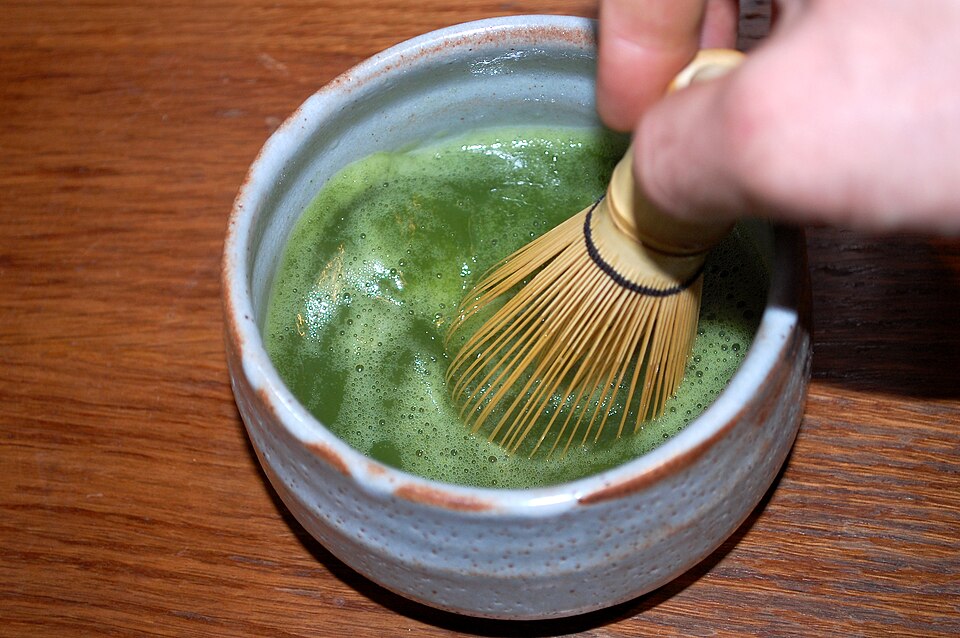
Photo: Steenbergs / Wikimedia Commons · CC BY 2.0. Resized; original composition retained.
Try making a simple bowl at home
For a concrete starting point, Ippodo’s basic usucha method uses 2 grams of matcha and 60 millilitres of water at 80°C.7 This is one tea maker’s suggested preparation, so follow the guidance supplied with your own tea if it differs.
- Sift the measured powder into your bowl.
- Pour in the measured hot water.
- Use a bamboo whisk to mix briskly for about 15 seconds.
- Sit down and taste the tea while it is freshly prepared.
Keep the first attempt simple. Set out your bowl, whisk and measured ingredients before you start, so you can give the preparation your attention. For the next bowl, think about what you liked and what you would ask a tea seller about.
Choose the experience you want in Japan
If you mainly want to taste matcha, look for a tea-and-sweet set. If you want to watch the preparation or try whisking, choose an introductory experience that explicitly includes those activities. Check the language offered, seating arrangements and reservation requirements before booking.
Tea ceremony has several schools, with differences in procedure.6 Follow the person guiding your visit rather than trying to reproduce every gesture you have seen online. Saying that it is your first time gives the host a chance to explain what comes next.
You can also bring a little of the experience home. Choose a manageable amount of tea and ask how to prepare and store it. Ippodo advises protecting tea from sunlight, heat, humidity and strong smells, and closing the bag between uses.8
Then choose an ordinary moment to make it: after a walk, while a friend is visiting, or when you have time to sit by the window. The bowl you remember from Japan can become the beginning of your own tea habit.
Sources & further reading
- Ministry of Agriculture, Forestry and Fisheries: Uji Tea — cultivation, processing and Uji’s tea traditions.
- Ippodo Tea: Types of Tea — matcha’s flavour and preparations.
- Ippodo Tea: Koicha — thin and thick preparations.
- Japan Tourism Agency: Chanoyu — hosting, seasonality and tea utensils.
- Japan National Tourism Organization: The Definitive Japanese Tea Experience — sweets and tea at the Tea Museum, Shizuoka.
- Japan National Tourism Organization: Japanese Tea Ceremony — tools and differences between schools.
- Ippodo Tea: Basic Usucha — an example home preparation.
- Ippodo Tea: How should I store my tea? — storage guidance.
Tea preparations and the procedures of hosted gatherings vary; follow your tea maker’s instructions and your host’s guidance. Photographs illustrate the dated examples named in their captions and do not indicate current menus or availability. Images have been resized to 960 pixels wide without cropping and retain their individual Creative Commons licences.





Comments