Real Life in Japan
Shibuya Crossing: Finding Your Way Through Tokyo’s Famous Scramble
Cross at street level, look down from above, then follow the streets beyond the screens. A first visit to one of Tokyo’s most recognisable places.
6 MIN READ
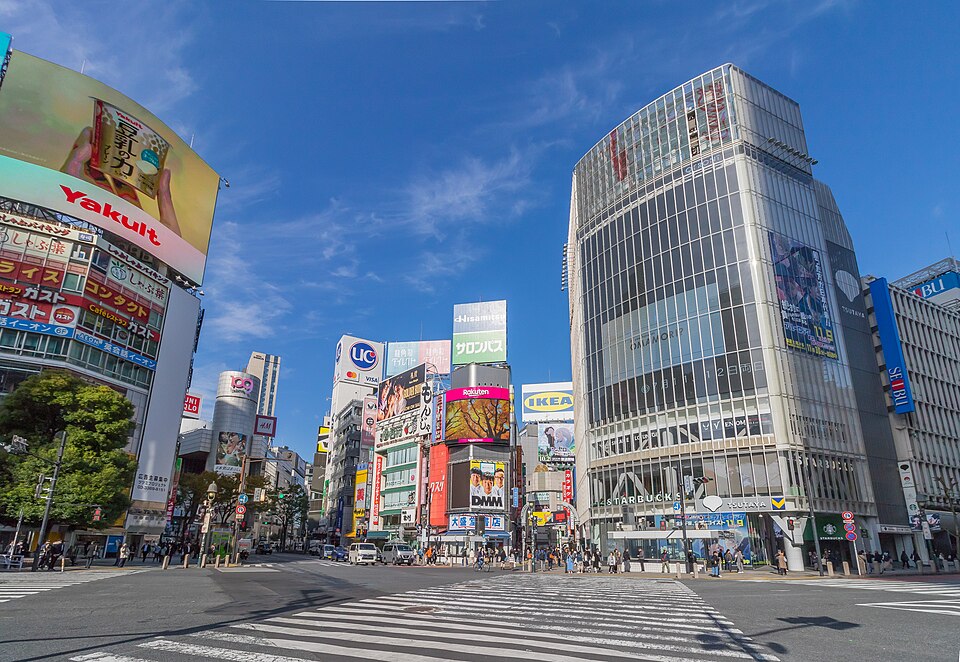
Photo: Kakidai / Wikimedia Commons · CC BY-SA 4.0. Resized; original composition retained.
The people waiting across the road start moving towards you. Others approach from the side, and for a few moments the white stripes fill with intersecting journeys. Then you reach the opposite pavement, and the crowd carries on into the surrounding streets.
Shibuya Scramble Crossing is famous enough to feel familiar before you arrive. Films, photographs and travel videos have made its screens and crowds part of Tokyo’s image.1 Walking through it adds something the pictures cannot quite supply: a sense of how quickly you become one person among many.
Give yourself time to see it from more than one position. A crossing, a view from above and a short walk into the neighbourhood make a satisfying first visit.
What does “scramble crossing” mean?
The name describes pedestrians crossing from several directions during the same phase of the traffic signals. Shibuya’s diagonal paths are part of that arrangement, allowing people to move across the junction rather than working around its edges.1
Look at the markings before setting off. Pick the side you want to reach, wait for the pedestrian signal and keep moving towards it. The experience is easiest to enjoy when you have a destination on the opposite pavement.
After crossing, find somewhere out of the pedestrian flow to pause. From there, watch the scene reset: people gather, the signal changes and a new set of journeys passes through. That repetition is part of the attraction.
Start with the station signs
The crossing is immediately outside the Hachiko side of Shibuya Station. JR’s Yamanote Line is one way to get there; Tokyo Metro, Tokyu and Keio services also connect with the station.1
Shibuya can be confusing when you arrive on a different line from the person whose directions you followed. GO TOKYO recommends allowing extra time and following the station’s signs towards Hachiko.2 Look for that name before committing to an exit.
If you are meeting someone, agree on a precise place and send a map pin. “Outside Shibuya Station” leaves a lot of room for misunderstanding. It is easier to check your location from a clear space than while standing directly in front of an exit.
Make time for Hachiko
Near the crossing stands the bronze statue of Hachiko, the Akita dog remembered for returning to the station after his owner’s death. GO TOKYO describes both the story of his long wait and the statue’s continuing role as a meeting place.3
The scale is a surprise if you have mainly seen close-up photographs. A small statue holds its place beside a very large flow of people. Reading a little about the dog before you arrive makes the stop more meaningful.
Leave room for people waiting or taking their turn to look. You can explore the wider story in our article about the real Hachiko.

Photo: Kakidai / Wikimedia Commons · CC BY-SA 4.0. Resized; original composition retained.
Choose daylight, evening—or a little of both
The photographs here show two different impressions of the crossing. In daylight, the stripes and the spaces between buildings are easy to follow. After dark, illuminated screens and windows become stronger parts of the view.
Choose the version that appeals to you rather than building the visit around an exact crowd count. The number of people you encounter will vary, and a busy scene in a photograph is not a promise about a particular hour.
If you are already spending the afternoon nearby, consider returning after an early dinner. You can compare the two impressions without standing at the same corner waiting for the light to change. A single visit is enough, too; there is no required version of the experience.
Look down on the pattern
An elevated view makes the crossing’s shape easier to understand. GO TOKYO identifies the passage between Shibuya Station and Shibuya Mark City as a place to look towards the junction.2 It is also a working passage, so take a brief look where permitted and keep access clear.
For a wider city panorama, SHIBUYA SKY is a separate, ticketed observation attraction at Shibuya Scramble Square. Its rooftop is 229 metres above ground, with views over the crossing and across Tokyo.4 Choose it if the skyline is part of what you want to see, and check the official booking information before planning around a particular time.
The operator restricts rooftop items, including bags, tripods and selfie sticks, and may close the outdoor area because of weather conditions.5 Read the current instructions before going up, especially if you are carrying luggage or camera equipment.
Let the crossing lead you into Center-Gai
Across from the station, Center-Gai continues the visit at street level. GO TOKYO describes a lively shopping and dining area with fashion shops, restaurants and karaoke venues; after dark, the signs add another layer of colour.2

Photo: Christophe95 / Wikimedia Commons · CC BY-SA 4.0. Resized; original composition retained.
Choose one modest aim for the next part of the walk: find a place for dinner, browse a shop that catches your eye, or sit down with a drink. You do not have to cover every nearby landmark to get a feel for the area.
Look at the upper floors as well as the ground-level windows. Pause somewhere clear before checking a menu or searching for an entrance. Those small decisions turn a crowded street into a series of manageable stops.
A simple first-visit plan
- Find the Hachiko side of the station. Check your position and arrange a clear meeting point if you are with others.
- Visit the statue, then cross. Follow the pedestrian signal and continue all the way to the pavement.
- Choose a second perspective. Take a permitted elevated view, or compare the scene from another corner without blocking the flow.
- Continue into Center-Gai. Make time for something you actually enjoy: a meal, a shop or a place to sit.
The street crossing itself does not require an admission ticket.6 Paid viewpoints and anything you buy along the way are separate choices. You can keep the visit short or let it become part of an afternoon.
While photographing, keep looking at the people around you. Avoid stopping in the roadway, keep station entrances clear and follow staff directions at indoor viewing spots. A short, well-chosen pause usually gives you more time to notice the scene than repeatedly walking with your eyes on a screen.
Before leaving, take one last look at where everyone is going. The crossing brings different routes together for a moment, then releases them into the city. Yours can continue towards dinner, a train or a street you have yet to explore.
Sources & further reading
- Japan National Tourism Organization: Shibuya Crossing — the crossing and railway access.
- GO TOKYO: Explore Shibuya — station signs, an elevated view and Center-Gai.
- GO TOKYO: Hachiko Statue — the dog’s story and the meeting place.
- GO TOKYO: SHIBUYA SKY — the observation attraction and its setting.
- SHIBUYA SKY: tickets and visitor information — current booking and rooftop restrictions. Official website.
- GO TOKYO: Shibuya Scramble Crossing — location and free street-level access.
Follow current station signs, traffic signals and venue instructions. Viewpoint access, ticket availability and rooftop opening depend on current conditions. The photographs are dated views; signs, shops and buildings may have changed. Images have been resized to 960 pixels wide without cropping and retain the licences linked below them.



Comments