Culture & Traditions · Real Life in Japan
Tatami: The Floor That Shapes a Japanese Room
From woven rushes to a futon at night, discover how tatami connects the room under your feet with farms, craft and a changing way of living.
By Maki Kakudate · 6 minute read
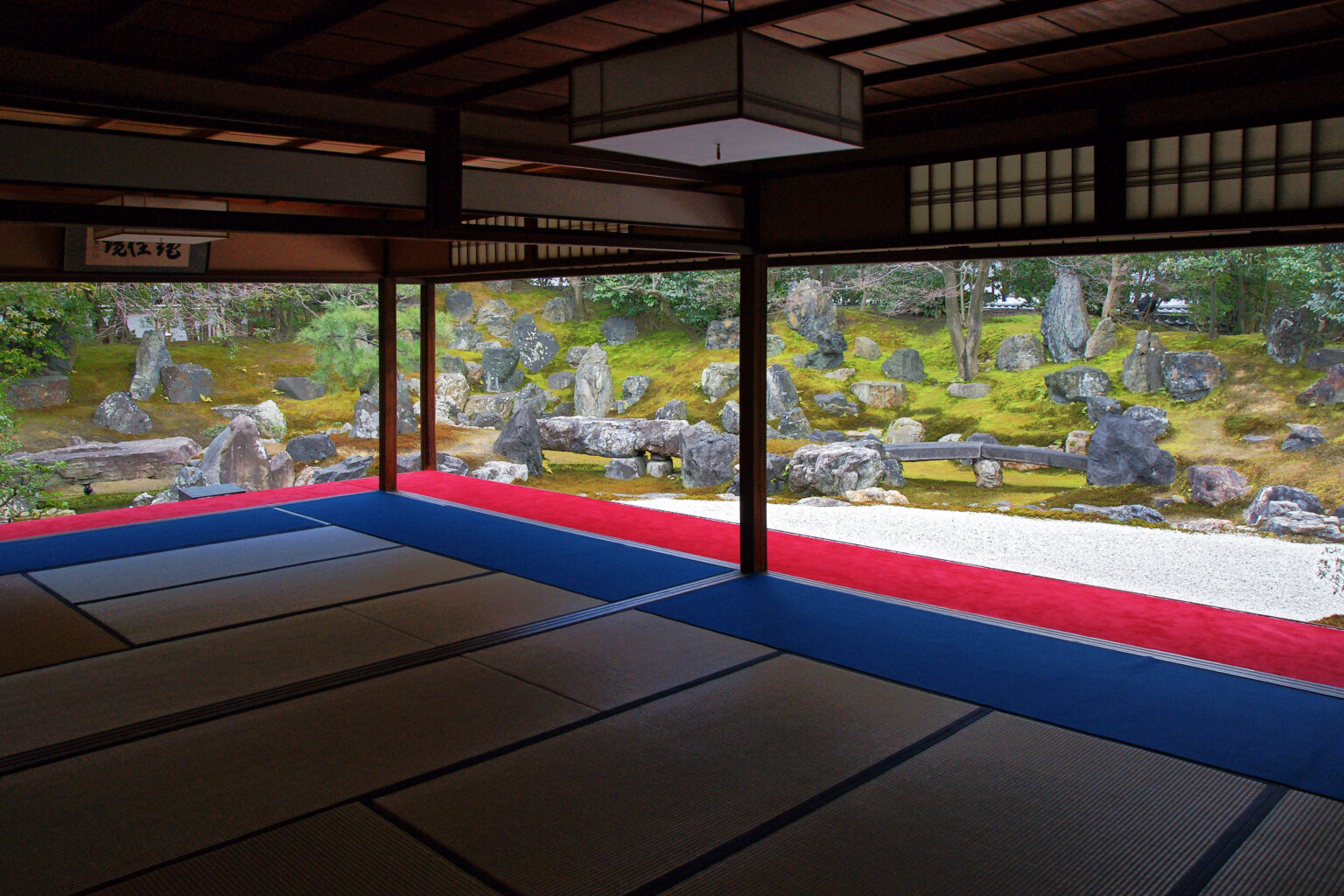
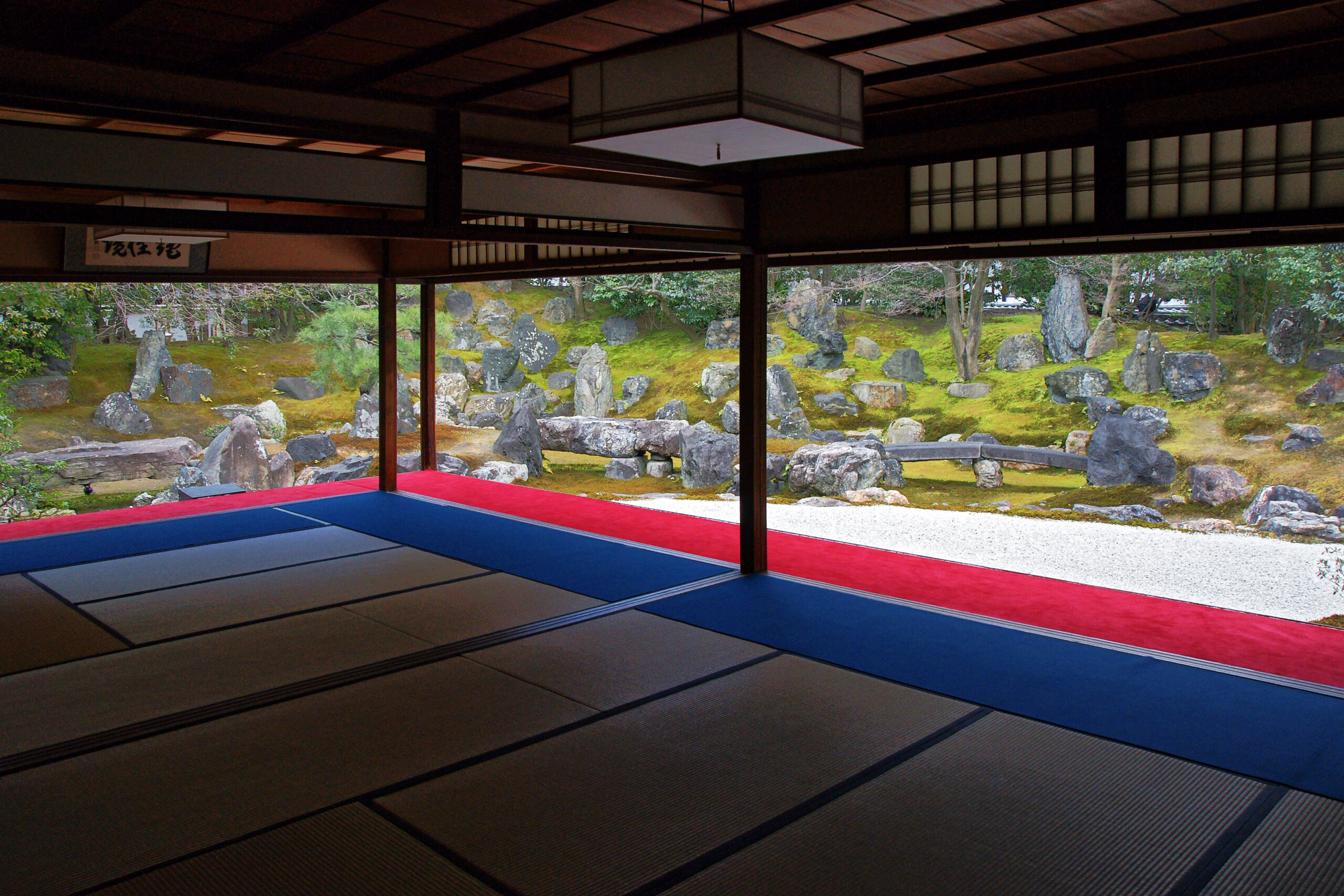
Look down in a Japanese-style room and the floor starts to explain the space. A low table can be moved, cushions gathered up, bedding spread out. The same room can hold a meal, a conversation or a night’s sleep, depending on what is brought into it.1
Tatami (畳), the mats fitted across the floor, help make that flexibility possible. Their woven surface gives the room its texture; their outlines give it a visible rhythm. Looking closely also reveals a connection between the home, the farmer who grows the covering material and the craftsperson who makes each mat fit.
Three parts beneath your feet
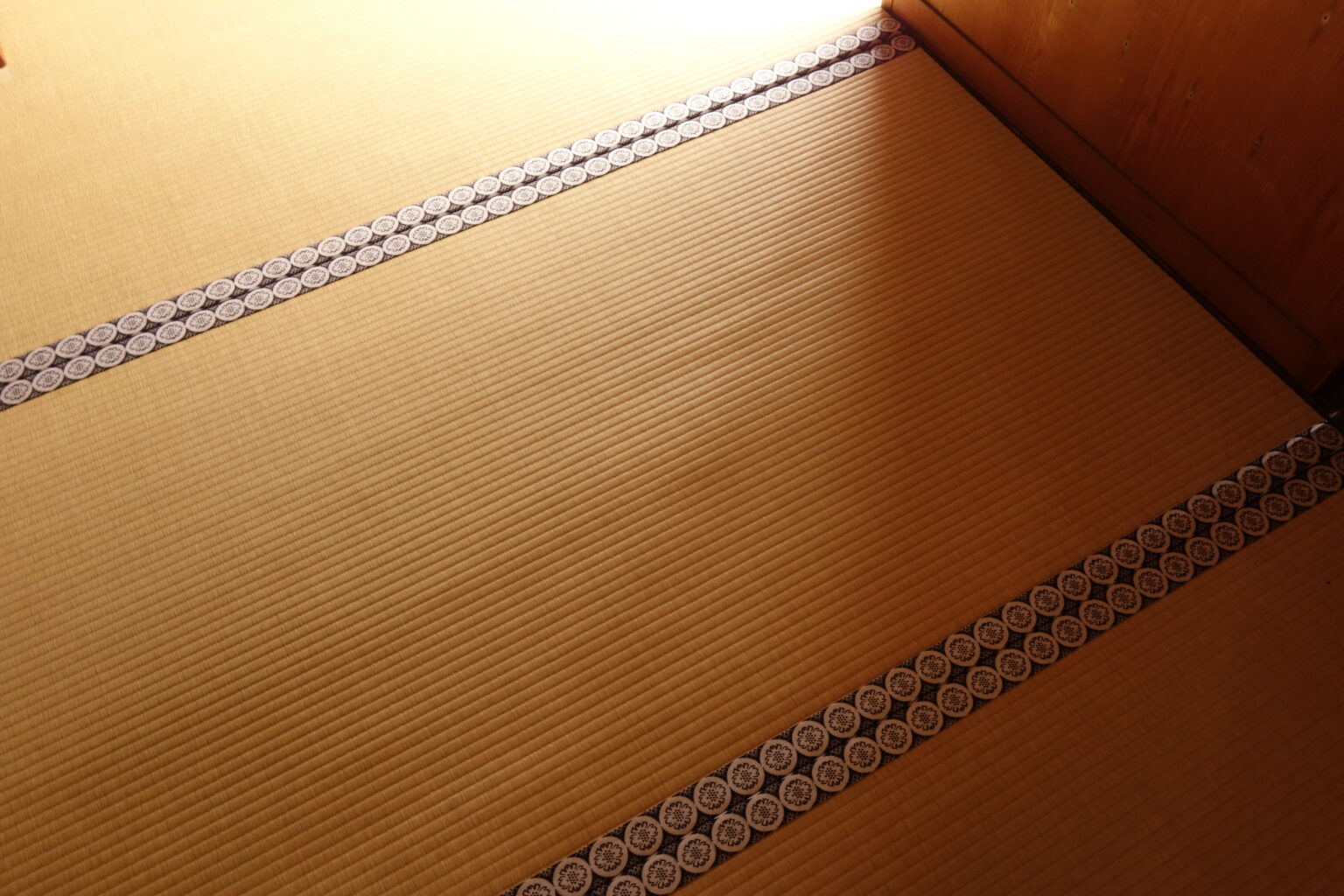
A traditional tatami has distinct layers. The rice straw belongs to the core, while the surface you touch is woven from igusa, a type of rush. Cloth borders finish the long sides. The All Japan Tatami Business Cooperative describes these parts separately.2
| Part | Its role |
|---|---|
| Tatami-doko Core | The supporting base, traditionally made from compressed, stitched layers of rice straw. |
| Tatami-omote Woven covering | The rush surface that meets your feet, cushions and bedding. |
| Tatami-heri Cloth border | Protects and reinforces the edges, while adding color or pattern. |
Modern cores can use wood-based boards and polystyrene foam. Borderless designs also exist, so the familiar outline is a starting point for understanding tatami’s construction.29
The border also makes the layout easy to read. Follow its lines across a room and you can see how the individual rectangles meet and turn. A decorative detail becomes a guide to the floor’s arrangement.
The floor begins in a field
For a natural rush covering, the story starts well before the mat reaches a workshop. Japan’s Ministry of Agriculture, Forestry and Fisheries describes an igusa-growing cycle in which seedlings are planted in the main field in late November and harvested from late June to mid-July. Cutting takes place in the cooler early morning or evening to preserve freshness.3
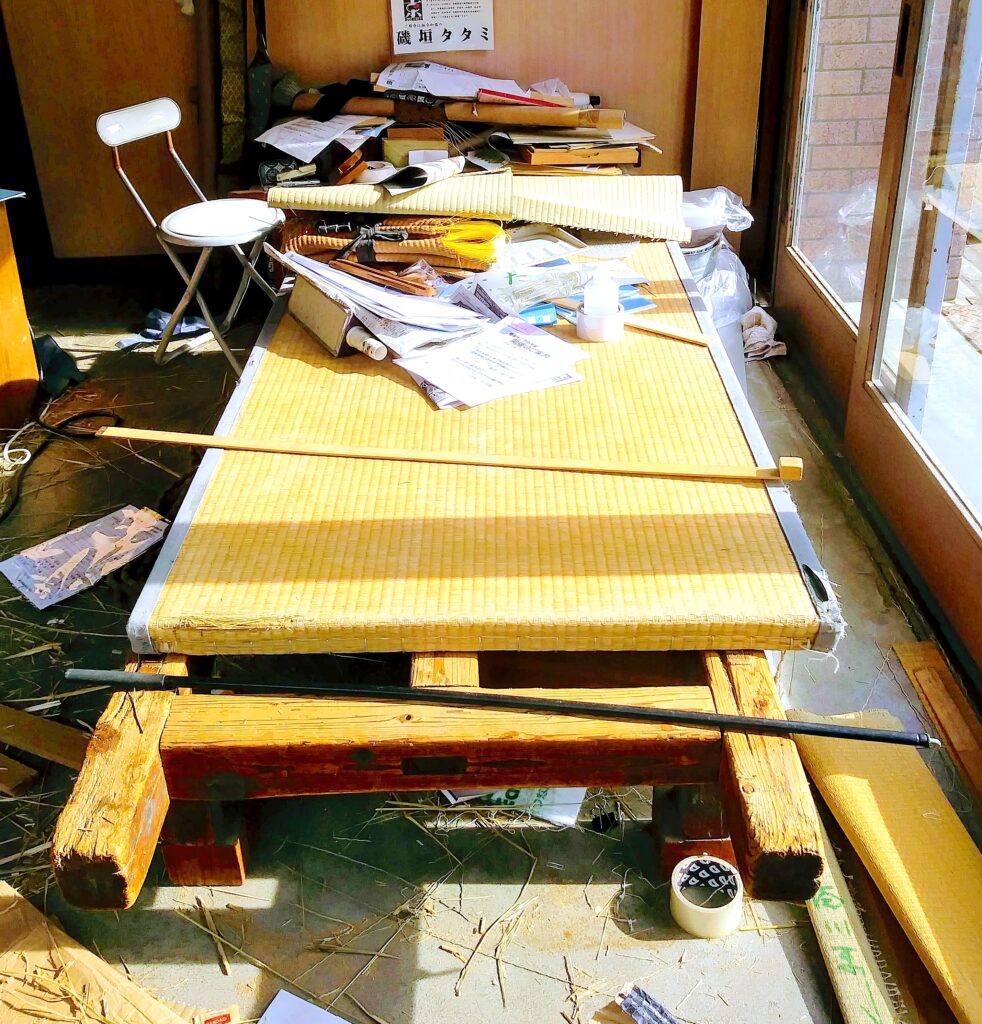
The cut rushes are dipped in water containing fine natural clay, a treatment called dorozome. This helps produce the characteristic color, scent and sheen, and supports even drying. After drying, the rushes are sorted by length and woven into coverings. Farmers carry the work through weaving and inspection; tatami makers then attach the covering to a core and sew on the borders.3
Those fine parallel lines on the finished floor therefore hold several kinds of labor. A quiet interior has an agricultural life behind it.
A measured fit for a particular room
Tatami also provides a way to describe space. Rooms are commonly expressed by the number of mats they accommodate: a six-mat room, for example. But the physical size of a mat varies. DAIKEN’s building glossary gives different dimensions for the Kyōma and Edoma formats, so the same mat count does not always produce the same floor area.14
Fitting requires attention beyond choosing a format. Japan’s Agency for Cultural Affairs describes measuring the room accurately and adjusting individual cores to its shape. In decorated borders used in historic buildings, craftspeople may also align patterns across neighboring mats. The apparent simplicity of the finished grid depends on careful work at its joins.5
How the mat became the floor
Tatami did not always cover an entire room. The Agency for Cultural Affairs traces earlier uses as coverings on raised beds and as separate places to sit or sleep in elite residences. Mats were later arranged around rooms or spread across their floors.5
Around the Muromachi period, in Japan’s medieval era, the development of shoin-zukuri architecture helped spread the practice of fitting tatami throughout a room. From the early modern period onward, the practice gradually reached ordinary homes. The wall-to-wall tatami room emerged through changes in architecture and daily life over time.5
A living room by day, a bedroom at night
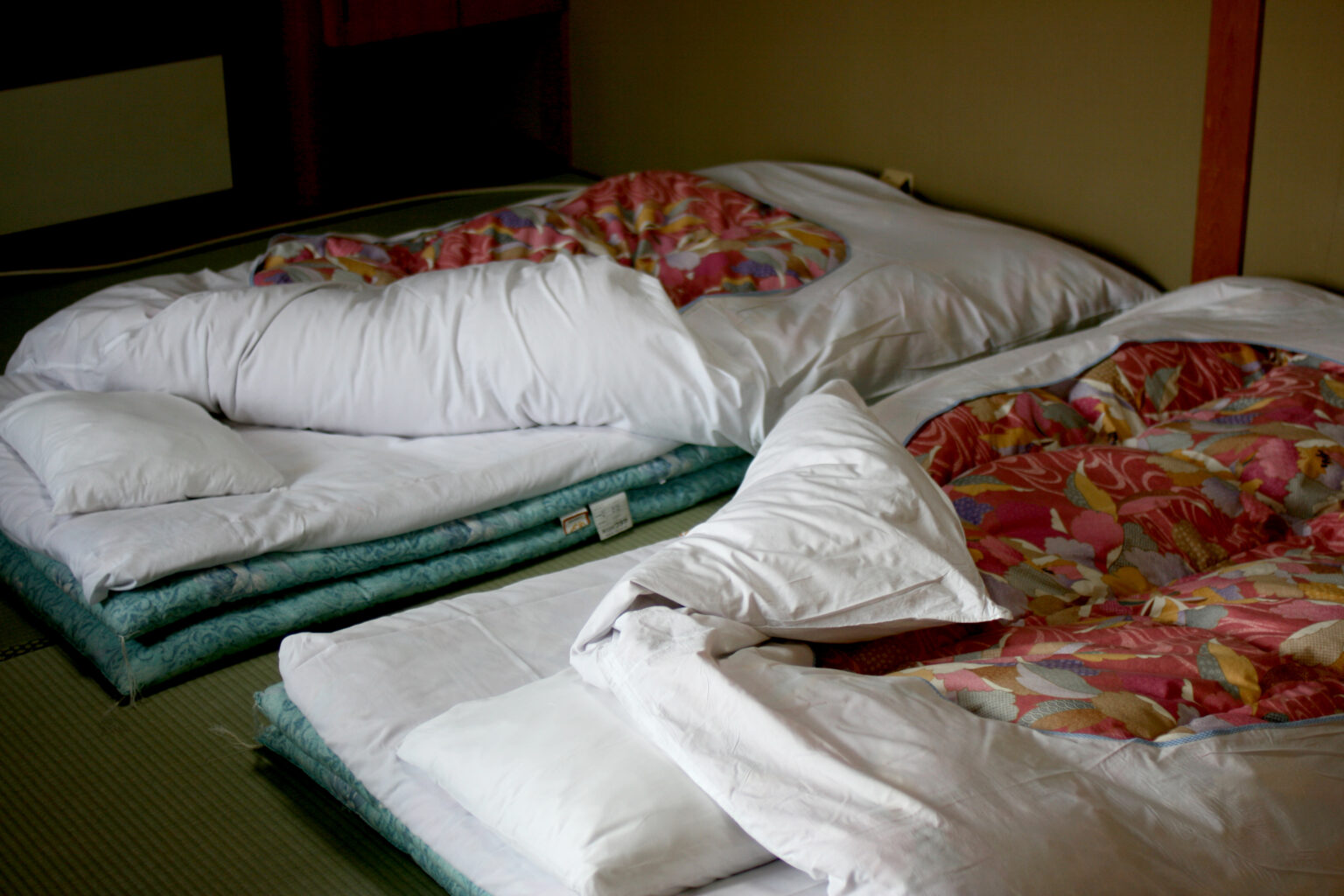
That floor can accommodate changing arrangements. As Web Japan explains, a traditional room can serve for living and dining during the day, then become a bedroom when futon bedding is laid out. In the morning, the bedding is folded and stored in an oshi-ire, a closet.1
The open space between activities matters. Removing the bedding makes the floor available again. Moving a table changes where people gather. For a visitor, the room’s apparent emptiness becomes easier to understand once it is seen at different times of day.
A surface that can be renewed
Tatami invites close contact, and its care reflects that use. Indoor slippers come off before entering a tatami room, as Web Japan’s guide explains. For routine cleaning, the tatami cooperative recommends gentle vacuuming along the weave and keeping excess moisture out of the surface.67
The cooperative also emphasizes ventilation, especially during humid weather. For heavy furniture with legs, it advises using a board underneath to protect the mat. Looking after the floor becomes part of arranging the room: making space to clean, allowing air through and considering where weight rests.7
A worn covering can also be renewed. In omotegae, the existing core stays while the covering and border are replaced. Another technique, uragaeshi, involves removing the covering and sewing it back with its reverse side facing upward. Whether that is suitable depends on the covering’s quality and condition. The craftsperson works with the separate components of the mat.8
Making room for tatami today
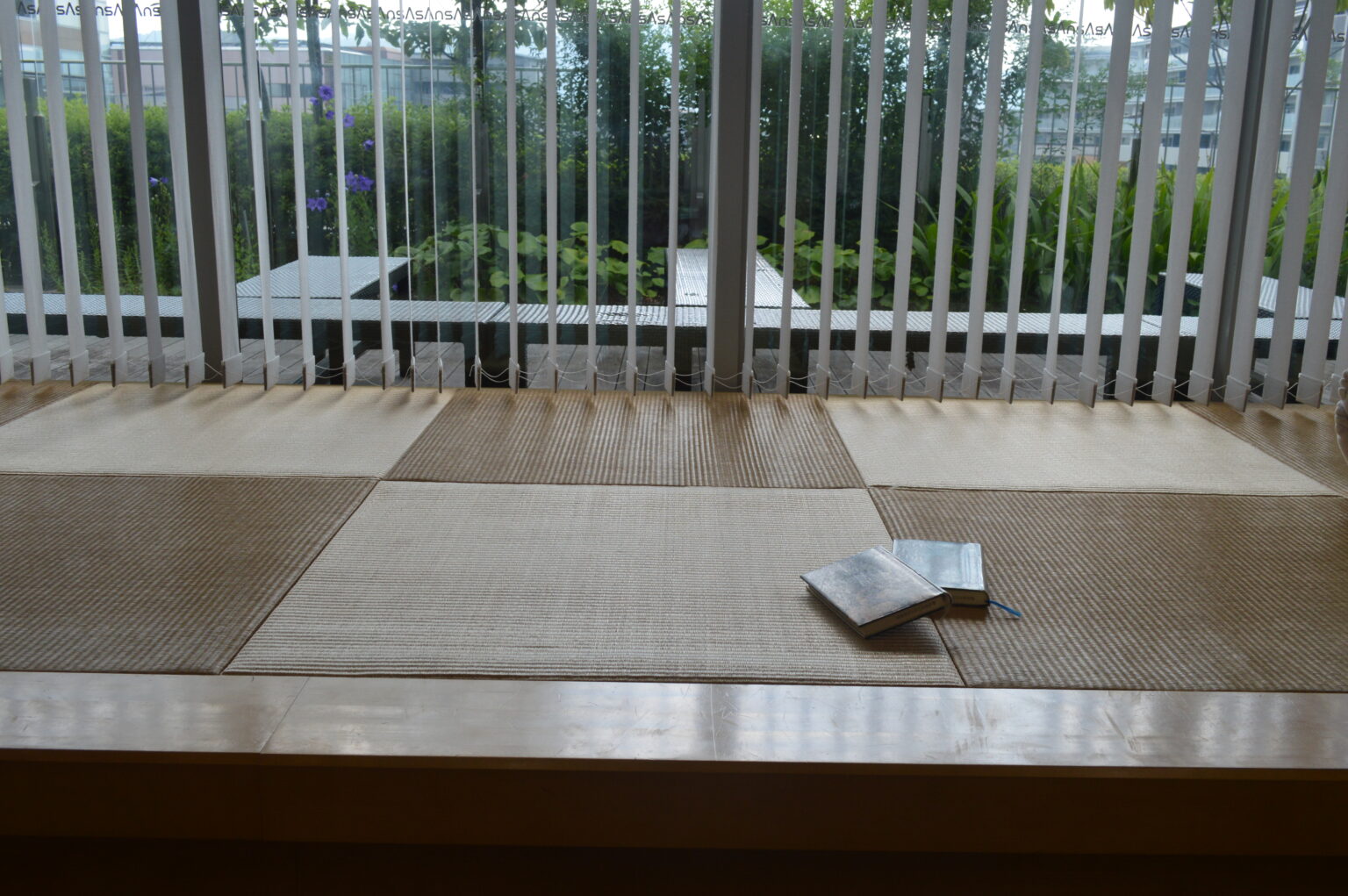
Tatami can occupy just one part of a room. The national tatami industry association presents thin mats, borderless mats and square half-mat formats among the available variations. Alternating the direction of the weave in square mats can create a checkerboard effect, drawing attention to the way the surface catches the light.9
Materials have expanded too. DAIKEN makes coverings from machine-made washi paper and offers mats that can be placed over wooden flooring. A sitting area can therefore become part of a room that also contains other flooring and furniture.10
The setting can change as well. In the photograph below, tatami forms a raised sitting area in a public library, with books on the mat and daylight at the window.
The next time you enter a tatami room, notice the edges, the direction of the weave and what has been placed on the floor. Then imagine the furniture and bedding being moved. The mats give the room a lasting structure while leaving its daily arrangement open to change. That combination helps explain why such an ordinary surface can tell so much about a way of living.
Continue exploring
More from everyday Japan
Sources & further reading
Sources checked on October 19, 2026. Public cultural and agricultural resources, tatami industry guidance and a manufacturer’s specifications support the article’s history, materials and everyday practices.
- Web Japan, Ministry of Foreign Affairs — What’s a traditional Japanese room like?. Room arrangements, futon storage and measuring rooms by mat count.
- All Japan Tatami Business Cooperative — The structure of tatami. Cores, rush coverings and cloth borders. Japanese.
- Ministry of Agriculture, Forestry and Fisheries — Igusa and tatami coverings. The growing cycle, clay treatment, weaving and the work of farmers and tatami makers. Japanese.
- DAIKEN — Building glossary: tatami. Different mat formats and dimensions. Japanese.
- Agency for Cultural Affairs — Tatami making — cultural heritage database. Historical uses, room fitting and the alignment of decorative borders. Japanese.
- Web Japan, Ministry of Foreign Affairs — Why do the Japanese take off their shoes when entering the house?. Footwear customs, including removing slippers in tatami rooms.
- All Japan Tatami Business Cooperative — Caring for tatami. Cleaning along the weave, moisture, ventilation and protecting mats from heavy furniture. Japanese.
- All Japan Tatami Business Cooperative — Tatami work: types and considerations. The distinction between omotegae and uragaeshi. Japanese.
- Japan Tatami Industry Promotion Association — Tatami variations. Borderless mats, thin mats, half-mat formats and the effects of weave direction. Japanese.
- DAIKEN — Washi tatami. The manufacturer’s machine-made paper coverings and mats for placement over wooden floors. Japanese.
Photograph credits, original titles and reuse licenses appear with each image. Photograph dates are given in the captions.











Comments