Akihabara: How Tokyo’s Electric Town Became an Anime Wonderland
Behind Tokyo’s glowing anime billboards lies a fascinating history of radio components, independent shops and fans who found a place to belong. Discover Akihabara beyond its neon image.
8 MIN READ
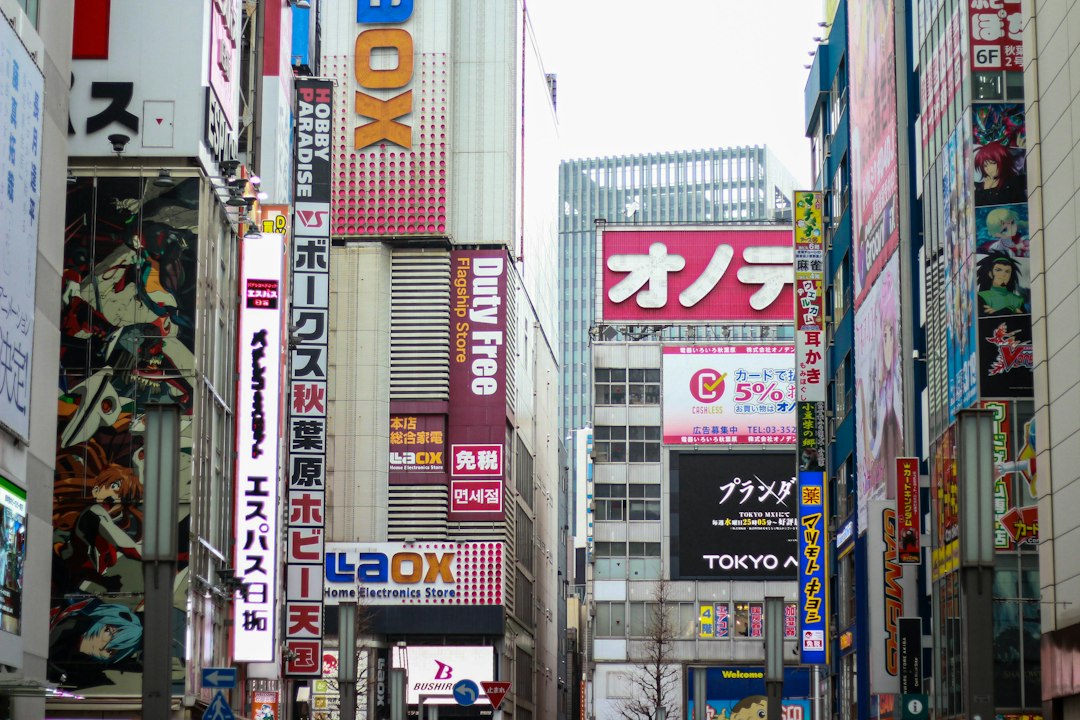
Photo: Tan / Unsplash.
The first impression of Akihabara is almost impossible to take in at once. Signs climb the sides of buildings. An electronics store competes with a wall of anime characters. Upstairs, someone is looking for a rare game; downstairs, another customer is buying a tiny electrical component.
This is Akihabara, often shortened to Akiba, a shopping district in central Tokyo famous for electronics, manga, anime, games and fan culture. It is sometimes introduced as an “anime paradise,” but that description leaves out the most interesting part of the story: long before figures and collectible cards filled its shops, Akihabara was a place for people who loved taking technology apart and putting it together.1
Why is it called Electric Town?
Akihabara’s identity as an electronics district grew dramatically after World War II. Street merchants sold wires, radio parts, vacuum tubes and other electrical goods in an economy where making and repairing equipment mattered. As the district developed, its small stalls became a cluster of specialist businesses.2
It would be too simple to say that the entire story began with a postwar black market. The local Electric Town Promotion Association notes that electrical wholesalers and radio businesses were already active in this area before the war. Postwar trade intensified an existing relationship with technology rather than inventing it from nothing.3
Under and around the railway tracks, merchants selling components helped create a distinctive shopping culture: knowledgeable sellers, narrow counters and customers arriving in search of something very specific. In an ordinary department store, the aim is to find what you need quickly. In Akihabara, finding exactly the right part could be the reason for the whole trip.
From radios to computers to anime
As Japan’s economy changed, so did the things on sale. Radios were joined by household appliances, then calculators, audio equipment, personal computers and video games. During the period of rapid economic growth, Akihabara became a symbol of Japan’s fascination with technology.1
Later, the same habit of specialized shopping helped anime, manga and game-related businesses flourish. People who wanted limited-edition products or obscure titles already knew that Akihabara was a place to search, compare and talk to sellers who understood their interests.
That continuity is easy to miss. A person buying a circuit board and a person hunting for an out-of-print character figure may be looking for very different things, but both value expertise, detail and the excitement of finding an object that matters to them.
What does “otaku” mean here?
The Japanese word otaku is often used for someone with a deep interest in a particular subject—frequently anime, games, idols, trains or other highly detailed hobbies. The term’s social meanings have changed, and it is not always a precise equivalent of the English words “geek” or “nerd.” In Akihabara, many fans use it openly and proudly to describe what they love.4
That love takes many forms. One visitor may follow a new anime series, another may collect old game consoles, while someone else searches for miniature figures, trading cards or elaborate model kits. This is why the district is more interesting than the idea of a single giant “anime shop.” Its stores reflect many different communities.
Step into Radio Kaikan
Close to the station’s Electric Town Exit stands Akihabara Radio Kaikan, a landmark that brings several hobby shops together under one roof. Despite the name, it is now best known for anime figures, character goods, cards and other fan collectibles. The Tokyo Metropolitan Government’s visitor guide highlights it as an easy first stop for understanding the area’s specialized retail culture.5
Browse floor by floor rather than treating the building as a race to the top. Some shops offer newly released goods; others cater to collectors looking for particular editions or older items. Packaging, condition and whether an object is official merchandise may affect the price, especially for second-hand goods.
If you do not already know the characters, that is perfectly fine. Notice how products are arranged and how narrow specializations can support entire businesses. What looks overwhelming at first becomes much easier to understand when you choose one shelf or one category at a time.
The electronics shops did not all disappear
Anime advertisements are visually loud, but electronics remain part of the district’s identity. Large retailers sell everyday devices, while smaller shops and arcades still deal in specialty parts, components and equipment. The Akihabara Radio Center is one of the names connected to that older trade.1
Look beyond the biggest shopfronts and you may find a counter filled with switches, connectors or other pieces of technology. These objects are less photogenic than a towering character figure, yet they tell the story that made this neighbourhood possible.
If you plan to buy a device, check its voltage, power plug, operating language, region restrictions and warranty conditions. A shop advertising tax-free sales does not automatically mean that every device will work or be serviced in your home country. Ask before paying, especially for expensive electronics or older equipment.6
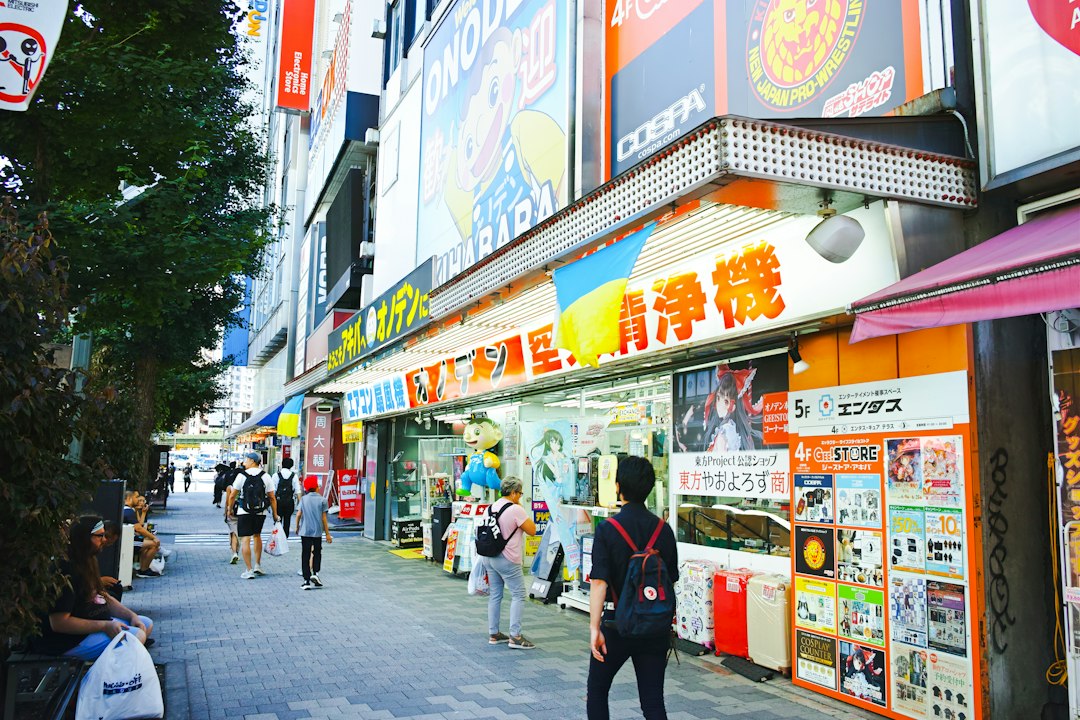
Photo: taro ohtani / Unsplash.
A second life for old video games
For many visitors, Akihabara is a place to rediscover games that were part of their childhood. Specialist shops such as Super Potato have helped make retro gaming one of the district’s best-known attractions. Familiar console names sit beside titles that never received wide releases overseas.4
There is a difference between browsing a collection and buying something that will work at home. Japanese game hardware, cartridges and discs can have region, language or power requirements. Before purchasing a treasured old game, check compatibility and ask about the shop’s return rules. Condition and completeness can also make a large difference to collectible prices.
The appeal of these stores is more than nostalgia. They show how entertainment technology becomes cultural history. A box illustration, a controller shape or an instruction manual can preserve a memory of what people once imagined the future of play would look like.
Capsule toys: a city of tiny surprises
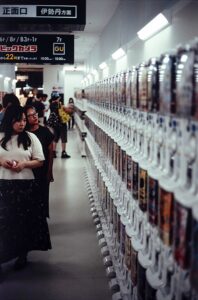
Another side of Akihabara is the endless delight of gashapon or gachapon, capsule toys purchased from vending machines. Some contain miniature food, animals and everyday objects. Others feature anime and game characters. You choose a series rather than an exact item, so there is always a small element of chance.5
Dedicated stores such as Akihabara Gachapon Hall make the format easy to explore. A machine offers a set of possible designs; a few coins—or another payment method, depending on the machine—produce one capsule. You can study the tiny workmanship without needing to understand a story or speak much Japanese.
The most interesting miniatures often imitate something ordinary: a food bowl, a vending machine, a household tool. In a city famous for technology and fantasy, these little versions of daily life are unexpectedly charming.
For a closer look at why collecting tiny objects matters in Japan, see Japan’s Capsule Toys: Small Objects, Big Curiosity.
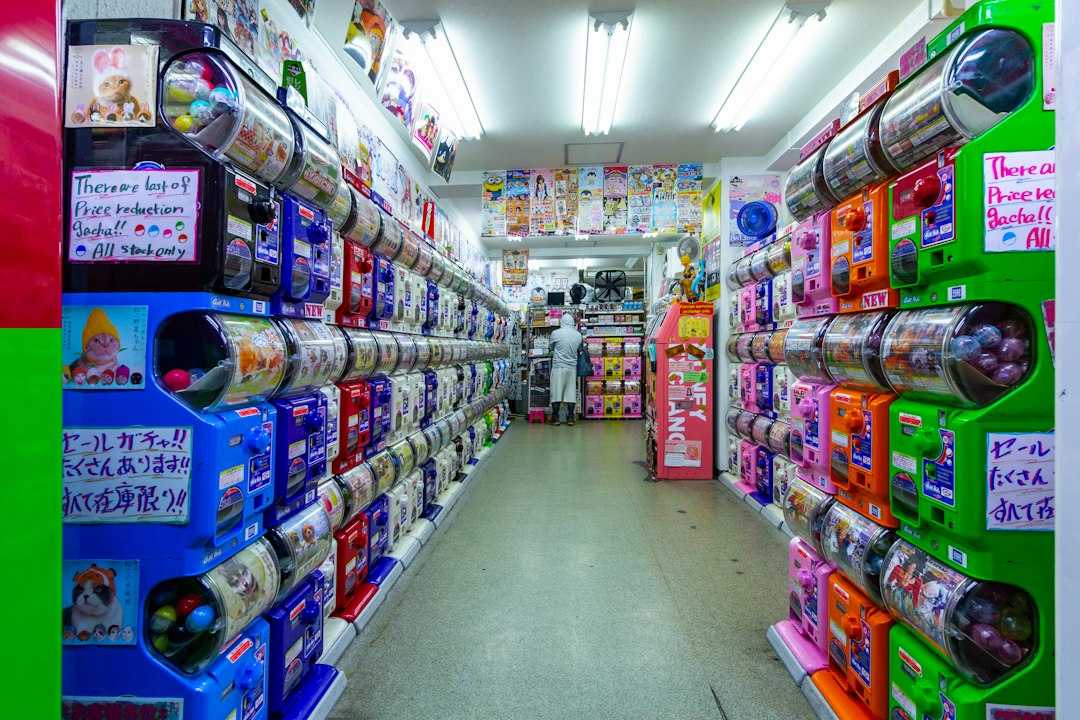
Photo: C M / Unsplash.
What is a maid café?
Among the district’s themed entertainment venues are maid cafés, where staff in stylized uniforms greet customers and serve drinks or food in a theatrical setting. For visitors who have never encountered one, the experience can feel unfamiliar. It helps to understand that it is a type of hospitality performance rather than an ordinary café with unusual clothing.4
Every venue has its own rules and pricing. Some charge an entrance or seating fee, and photos with staff may be limited to paid services or not permitted at all. Read the information at the entrance before ordering, ask what the total cost will be, and respect the staff’s personal boundaries.
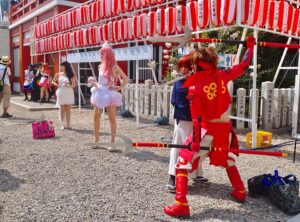
You do not need to enter one to appreciate Akihabara. The district is full of other ways to see fan culture in action. And no one should be photographed on the street without consideration simply because their clothing is interesting.
On Sundays, Chuo-dori becomes a pedestrian street
Akihabara has an unusual weekly rhythm. On many Sunday afternoons, the main avenue, Chuo-dori, is closed to motor vehicles and becomes a hokosha tengoku, often shortened to hokoten—a pedestrian paradise.7
The Akihabara Electric Town Promotion Association lists the following regular hours: 1:00–6:00 p.m. from April through September and 1:00–5:00 p.m. from October through March. The route is approximately 570 metres between the Sotokanda 5-chome and Manseibashi intersections.7
Bad weather or exceptional circumstances may cause cancellation, so check the current official pedestrian-zone notice before making a special trip. The rules prohibit street performances, selling goods, riding bicycles and other activities that would obstruct pedestrians. It is a pleasant opportunity to see the avenue from a different angle, not an open stage for any activity you like.
The old shrine near the new culture
Akihabara’s streets are surrounded by more traditional Tokyo. Nearby Kanda Myojin Shrine is associated with the historic Kanda area and is especially well known for the Kanda Festival. Its proximity provides a wonderful reminder that a neighbourhood can contain very different layers of identity.1
If you are interested in the contrast, allow time for a walk towards the shrine. Move respectfully through the worship spaces, and check opening arrangements if you hope to visit a museum or special exhibition. The point is not to label one part of Tokyo “old” and another “new,” but to notice how they continue to coexist.
A first visit that does not feel overwhelming
Akihabara rewards wandering, but a little structure helps. Here is a route that offers a taste of electronics, fan shops and the street atmosphere without turning the day into a frantic shopping marathon.
- Begin at Akihabara Station. Follow the Electric Town Exit to the main shopping area. JR Yamanote, Keihin-Tohoku and Sobu lines, the Tokyo Metro Hibiya Line and the Tsukuba Express all serve the neighbourhood.1
- Walk the main streets first. Notice how electronics shops, hobby shops and advertisements share the same buildings and road frontage.
- Browse Radio Kaikan. Choose one or two floors of interest rather than trying to inspect every product. Look at the huge range of character goods and specialized collections.
- Find a small electronics shop. The Radio Center area and nearby side streets provide a link to the neighbourhood’s original Electric Town identity.
- Make time for games or capsule toys. Visit a retro game seller, a game centre or the Gachapon Hall according to your own interests.
- Take a break. Stop for a meal, or walk towards the quieter shrine area before returning to the station.
Plan half a day if you want to browse several shops; a couple of hours is enough for a shorter first impression. The district itself is a public area and does not have an entrance fee, but individual cafés, games and shopping activities cost extra. Opening hours vary from one store to another.5
Before you buy: a few practical details
Akihabara’s variety is exciting, but shopping is more satisfying when you know what you are looking at. Check whether a figure is new or second-hand, whether a box has been opened, and whether a retro console will work outside Japan. For high-value collectibles, ask for a receipt and understand the seller’s return policy.
Photography is another area where expectations differ. Outdoor street views are generally easy to enjoy, but shop interiors, staff members, private displays and themed cafés may restrict pictures. Follow signs and ask before taking close-up photographs of products or people. If there is a crowd, leave room for people who are simply trying to get to work or shop.
Questions about Akihabara
Is Akihabara only for anime fans?
No. It is also known for electronics, specialist parts, games and shopping. You can enjoy the street architecture and its unusual concentration of niche businesses without knowing a single anime series.
When is the pedestrian paradise?
On many Sundays from 1:00 p.m. to 5:00 p.m. between October and March, or until 6:00 p.m. from April to September. It may be cancelled for bad weather or other reasons. See the official schedule for the latest information.
How do I get to Akihabara?
The simplest choice for many visitors is JR Akihabara Station. Use the Electric Town Exit for the main shopping streets. Tokyo Metro’s Hibiya Line and the Tsukuba Express also serve Akihabara.1
Can I go to a maid café if I do not speak Japanese?
Some cafés are accustomed to international visitors, but services, English support and pricing vary. Read each venue’s rules, fees and photo policy before entering. You are never obliged to use a café to enjoy Akihabara.
Is it better by day or by night?
Daytime is practical for browsing shops and specialty stalls. After sunset, the illuminated signs make the streets feel especially dramatic. Shop and arcade closing times differ, so do not assume every business stays open late.
The real magic is in the details
Akihabara’s visual identity is loud, but its most interesting history is surprisingly small-scale: a radio component behind a counter, a carefully boxed game, a figure that someone spent years hoping to find.
Its culture has changed from electrical parts to household appliances, personal computers and entire worlds of fictional characters. Underneath all those changes is a constant: people come here because they care deeply about the things they collect, build and enjoy. That shared intensity is what gives Electric Town its enduring energy.
Sources and further reading
- Tokyo Metropolitan Government: A Guide to Akihabara — history, culture, shopping and station access. Updated December 2025.
- Akihabara Electric Town Promotion Association: Postwar History — radio parts trade and early stores beneath the railway.
- Akihabara Electric Town Promotion Association: Origin of Akihabara — name and prewar businesses.
- Japan National Tourism Organization: Akihabara — retro games, anime culture and themed cafés.
- Tokyo Metropolitan Government: Akihabara Electric Town — specialist shopping, Radio Kaikan and opening conditions.
- Tokyo Metropolitan Government: Explore Akihabara — shopping circuit and international warranty advice. Some older venues on this archival itinerary have closed; verify live businesses before visiting.
- Akihabara Electric Town Promotion Association: Pedestrian Paradise — Sunday dates, seasonal hours, weather cancellations and street rules.
Shop tenants, hours, availability and temporary events change. Verify individual businesses and official notices before visiting.




Comments