Himeji Castle: The White Heron Built for Beauty and Defense
Behind Himeji Castle’s dazzling white walls lies a labyrinth of gates, stonework and steep timber staircases. Discover the architecture that makes Japan’s White Heron Castle both beautiful and formidable.
8 MIN READ
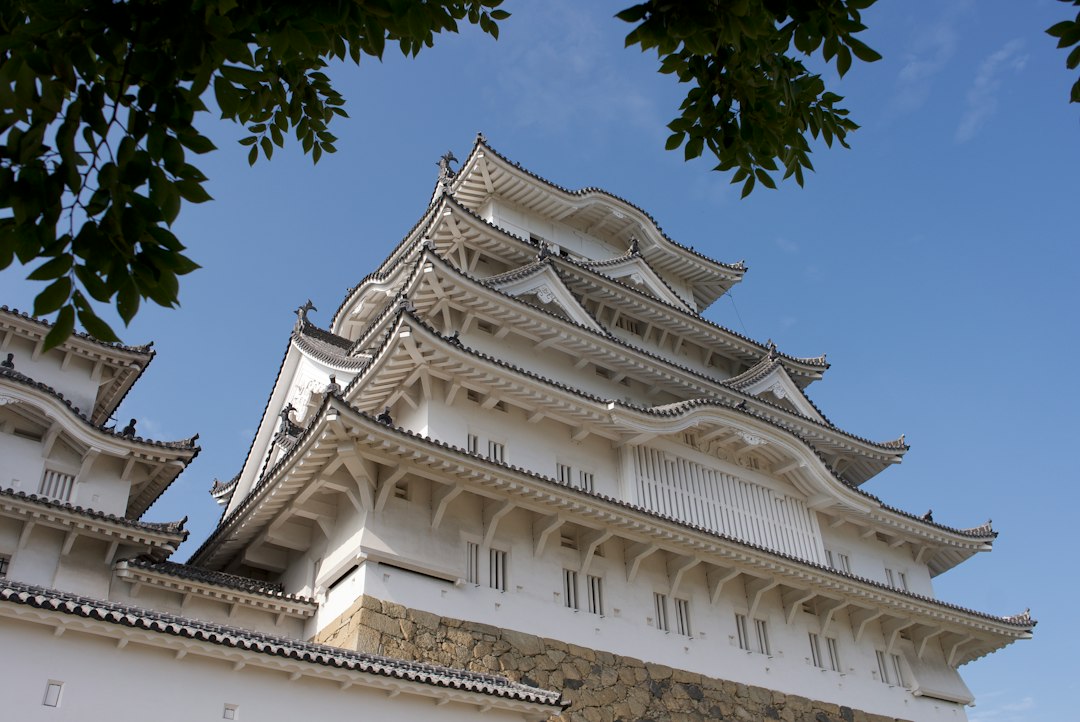
Photo: Eva Balogh / Unsplash.
From the street below, Himeji Castle looks almost delicate. White walls climb above a stone base, and roof after roof stretches out like layers of folded wings. It is easy to forget that this elegant silhouette was designed for a very practical purpose: defending the centre of a feudal domain.
Himeji Castle, in Hyogo Prefecture, is one of Japan’s most impressive surviving early-seventeenth-century fortresses. Known as Shirasagi-jo, the White Heron Castle, it was inscribed as a UNESCO World Heritage Site in 1993. Its beauty is famous, but the real surprise begins as you walk towards the keep and discover how carefully its defenses were arranged.1
Why is it called the White Heron?
The nickname comes from the castle’s white-plastered surfaces and its graceful roof forms. They have been compared to a white heron spreading its wings. From the broad lawn of Sannomaru, the ensemble of multiple towers looks almost like one enormous creature resting on the stone ramparts.2
But the whiteness is not simply cosmetic. Himeji’s lime-based plaster helped protect wooden structures against fire, a serious danger in traditional Japanese castles. The pale coating extends across walls and around curved roof tiles, visually unifying a complex collection of buildings and protective surfaces.3
Notice how different the castle looks from the gleaming, gold-accented image many people have of Japanese architecture. Himeji’s identity comes from restraint: white surfaces, dark roof tiles, large stones and the repeated geometry of gables.
Four centuries in the same place
Fortifications existed at Himeji long before its present appearance. The site was important because of its position on routes linking western Japan with Kyoto and beyond. Successive military leaders rebuilt and enlarged it as political power shifted.4
The form that visitors recognise today is most closely associated with Ikeda Terumasa. His large-scale building project culminated in 1609, shortly after the Tokugawa shogunate was established. The resulting castle complex became a powerful statement of military authority as well as a functioning administrative centre.4
Himeji is especially valuable because its historic wooden keep still survives. Many famous Japanese castle towers today are modern reconstructions, sometimes built with concrete and fitted with museum interiors. Himeji’s main keep, by contrast, preserves a remarkable amount of early-seventeenth-century fabric and construction logic.1
It has endured natural disasters, major changes in government and the air raids of World War II. Conservation work has been essential to its survival, including major repairs completed in 2015. The building you see is both an extraordinary inheritance and the result of continued care.2
A beautiful route designed to slow an enemy
Now imagine approaching the keep without a visitor map. The route turns unexpectedly, narrows between walls, rises and passes through heavily protected gates. The castle that looks so open and graceful from a distance begins to feel like a deliberate maze.3
That was the point. In an attack, direct access to the centre would have been dangerous for defenders. A winding approach gave soldiers time to react and created opportunities to observe and control anyone advancing through the gates.
The Hishi Gate, one of the principal entrances to the inner defenses, leads into a landscape of walls, small courtyards, turns and rising stone paths. Nothing about the approach was casual. From the visitor’s point of view it may feel a little confusing; from the designer’s point of view, confusion was a defensive tool.
Take a moment to look backwards after passing a gate. The position of the walls often makes more sense when you see how a person would have had to move between them.
The tiny openings in the white walls
Along the defensive walls are openings known as sama, or loopholes. Some are round, others triangular, square or rectangular. These were positions from which archers or gunmen could defend the castle while remaining sheltered behind the walls.3
The small holes make a wonderful design lesson. The same wall that appears beautifully plain from a distance is carefully equipped for conflict. A few inches of opening change the relationship between the protected interior and the exposed space outside.
The castle also includes ishi-otoshi, or stone-dropping openings, positioned to defend the base of the walls. These details are easier to understand once you stop looking only at the keep above and begin noticing how the lower parts of the fortress work together.3
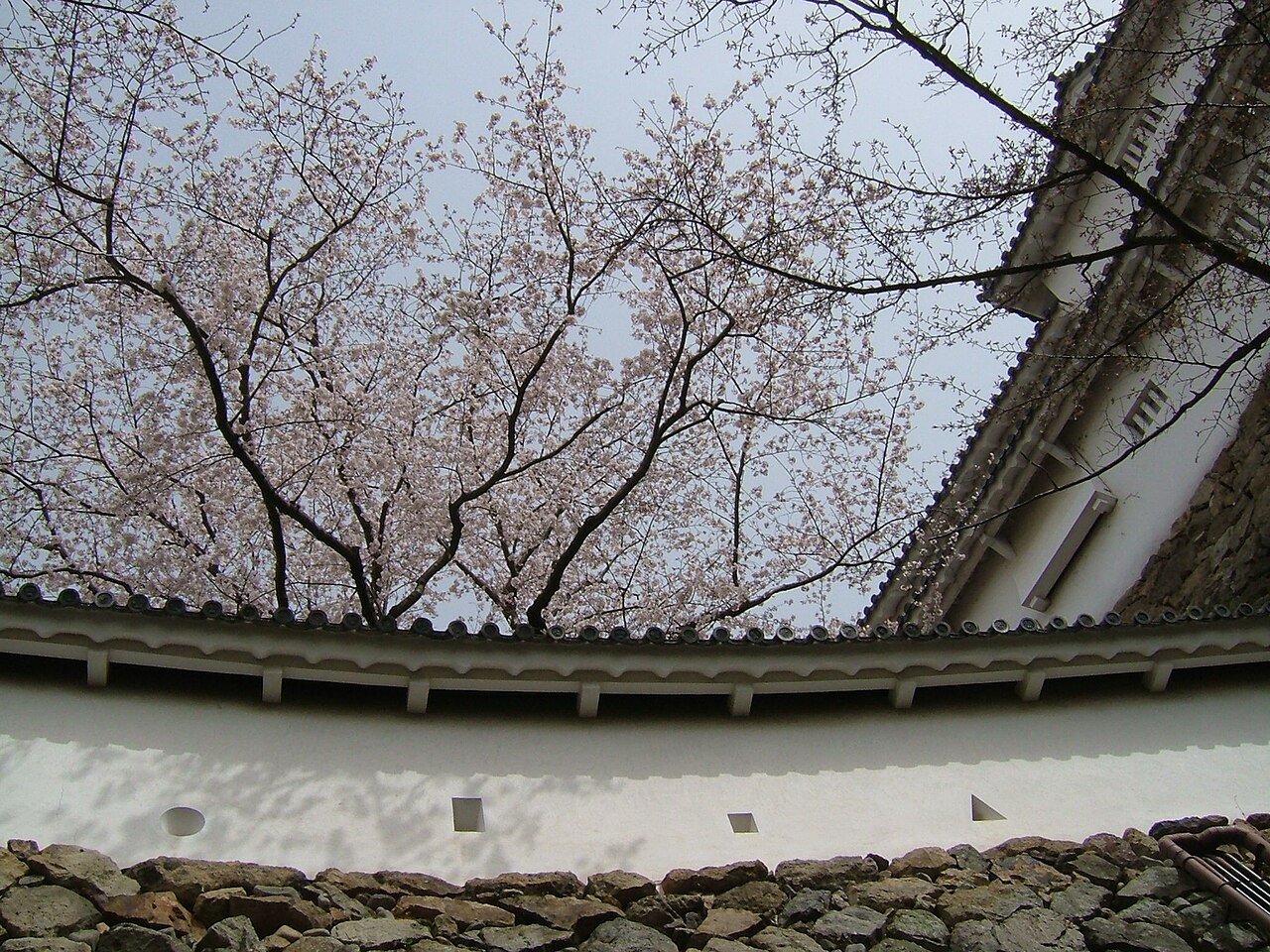
Photo: Sakurai Midori / Wikimedia Commons · CC BY-SA 3.0. Wikimedia Commons resized version, uncropped.
Inside the keep: timber, stairs and darkness
Once inside, the castle changes character again. Decorative white walls give way to heavy timber columns, exposed beams and wooden floors. The light is softer, the rooms feel more restrained, and the steep stairs immediately remind you that this was not planned as a modern tourist attraction.
As you climb, each level of the keep becomes smaller. There is no elevator inside the tower. The official castle website warns visitors that the stairs are steep and narrow, and that the climb through the castle grounds can feel like walking up a small mountain.5
The internal structure is a powerful reminder that an imposing exterior does not necessarily require extravagant interior finishes. The craftsmanship lies in the proportions of the timbers, the arrangement of the floors, and the way the building can stand with so much weight above its stone foundation.
From the upper windows, the view over Himeji and the surrounding plain explains why this high point mattered. The castle’s silhouette was visible across the city, while its occupants could look outward from a defensible position.
Why the wooden interior changes how you visit
The rules for entering Himeji’s buildings are different from many modern museums. Visitors remove their outdoor shoes before entering the main keep and other historic interiors. The castle encourages visitors to bring a shoe bag and comfortable socks or indoor footwear, since the wooden floors may be slippery or rough.5
For November 2026, the official website advises that visitors will be given a carrying bag after passing the ticket gate if needed. Keep both hands free for the handrails on the stairs and follow the route marked by staff.5
Wheelchair access is not possible inside the main keep and towers, and the grounds contain slopes, steps and uneven paving. It is important to consider those limitations in advance rather than assuming that an elevator or alternative indoor route will be available.
UNESCO recognition is about more than survival
Himeji was inscribed on the World Heritage List in 1993, among Japan’s first UNESCO properties. The recognition is not just a reward for the castle’s photogenic exterior. It reflects the completeness of its defensive plan, the quality of its early-seventeenth-century architecture and the sophisticated use of timber, plaster and stone.1
The castle’s historical significance also comes from the relationship between its different elements: keeps, passageways, gates, walls and enclosed courtyards. Studying just one tower would not tell you why the whole fortress matters.
Spring blossoms and a quieter garden beside the castle
Himeji is famous in spring for the cherry trees in and around its grounds. Pale blossoms soften the fortress walls, turning the strong geometric composition into a delicate landscape. But the castle is rewarding in other seasons too, when you can study its forms without the competing colours of the flowers.
Nearby Koko-en Garden makes an excellent companion visit. It is a Japanese stroll garden developed on land associated with the castle’s former western residence and samurai quarters. Its nine individual gardens offer different arrangements of ponds, planting, walls and paths, giving visitors a quiet contrast to the military landscape.6
The garden does not attempt to recreate the castle’s defensive purpose. Instead it shows how carefully designed outdoor space can guide a slower kind of movement: along water, past trimmed trees and through smaller sequences of views. If you enjoy design or landscape history, visiting both places makes for a rewarding day.
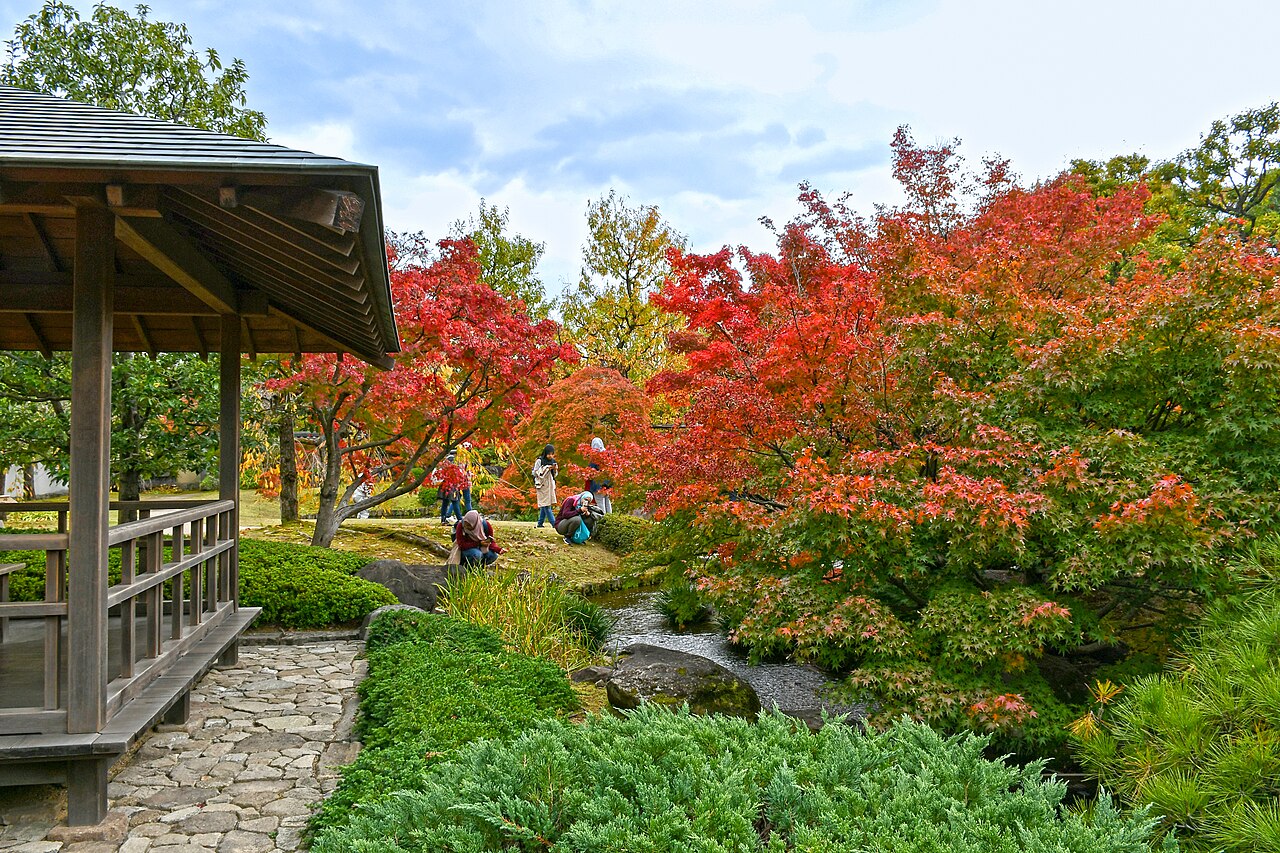
Photo: ScribblingGeek / Wikimedia Commons · CC BY-SA 4.0. Wikimedia Commons resized version, uncropped.
A first-visit route that makes sense
The castle is easy to reach by rail, including as a day trip from Osaka or Kyoto. It is also worth planning your walking route rather than trying to rush from the station straight to the top floor.
- Start at JR Himeji Station. Leave by the north exit and walk towards the castle along Otemae-dori. The main approach takes roughly 15–20 minutes on foot, and buses also serve the entrance area.7
- Enjoy the view from Sannomaru. This broad outer area gives one of the best views of the White Heron Castle. Allow time to see how the many rooflines fit together.
- Enter through the paid area and follow the gates. Notice the changing directions, narrow paths and defensive openings in the walls.
- Climb the main keep if you are comfortable with stairs. Remove your shoes where instructed and move carefully on the wooden floors. Do not feel obligated to complete the climb if the stairs are unsuitable for you.
- Return through the grounds. Look back at the castle from different angles and observe how the stonework and plaster help create its silhouette.
- Finish at Koko-en Garden. Explore its paths and ponds, and consider a tea break if the facilities are operating.
The castle’s official FAQ estimates 1.5–2 hours for a regular visit, with extra time required during busy periods. With Koko-en Garden and a relaxed meal, plan a comfortable half day or longer.8
Admission fees and opening hours in 2026
Himeji Castle changed its admission fees on March 1, 2026. As of November 2026, general admission is ¥2,500 for visitors aged 18 and over. Adult residents of Himeji City pay ¥1,000, while visitors under 18 are generally admitted free of charge (with a specific extension for students turning 18 before the end of the school year). The resident discount depends on having an address registered in Himeji City, not on nationality.9
The Himeji Castle + Koko-en Garden combined ticket costs ¥2,600, making it an especially good value for adults who want both experiences. From the main official English website, the posted opening hours are 9:00 a.m. to 5:00 p.m. with last entry at 4:00 p.m., and scheduled closures on December 29–30. Always check the current official notices for possible seasonal changes.9
At night, the castle’s exterior is illuminated and can be admired from outside without entering the paid areas. The official website states that the standard white illumination generally runs from sunset until midnight, with special colours on designated days.5
Questions before visiting Himeji Castle
Is Himeji Castle an original castle?
Yes. Its historic main keep is one of the rare surviving original Japanese castle towers. The buildings have required repair and conservation over centuries, but the site is not simply a modern concrete reconstruction.1
Can I enjoy the castle without climbing the keep?
Yes. You can see the main silhouette from the broad outer grounds and appreciate the castle’s architecture without climbing its steep internal stairs. Access to specific parts of the paid grounds depends on mobility and conditions.
Is the ticket ¥1,000 or ¥2,500 in 2026?
For adults, the standard visitor fee is ¥2,500. The ¥1,000 ticket applies to adult residents registered in Himeji City. This distinction began in March 2026; older travel guides may still show the previous general price.9
Can I enter the castle with shoes on?
You will be asked to remove outdoor shoes before entering the main keep and other historic buildings. Bring a shoe bag and comfortable socks, and follow the castle’s current guidance.
What else should I see nearby?
Koko-en Garden is an easy addition beside the castle. The nine gardens create a pleasant contrast to the fortress and the combined ticket is often the most convenient choice.
Grace and strength in the same structure
Himeji Castle rewards two kinds of looking. From a distance, it is a graceful white shape above the city. Up close, it becomes a lesson in the realities of early modern defense: the detours, firing slots, gates and narrow stairs of a place built to resist an enemy.
That combination is why it remains so compelling. Its beauty is not a layer placed over its military purpose. Form and function developed together—and, four centuries later, both are still visible to anyone willing to look closer.
Sources and further reading
- UNESCO World Heritage Centre: Himeji-jo — 1993 inscription, historic construction and defensive design.
- Japan National Tourism Organization: Himeji Castle — White Heron nickname, history, access and seasonal highlights.
- Himeji Castle: History and Architecture — white plaster, gates, loopholes and defensive features.
- Japan National Tourism Organization: Castle History — Ikeda Terumasa and completion in 1609.
- Himeji Castle: Official Visitor Information — 2026 footwear, stair accessibility and night illumination notices.
- Visit Himeji Official Travel Guide: Koko-en Garden — nine gardens, former western residence site and features.
- Visit Himeji Official Travel Guide: Himeji Castle — access and visit planning.
- Himeji Castle: Frequently Asked Questions — expected visit duration, safety and admission rules.
- Himeji Castle: Current Tickets and Hours and Visit Himeji: March 2026 Price Revision — ticket prices, resident distinction and under-18 admission.
Ticket conditions and opening hours can change. Check the official website before visiting.





Comments