Japanese Curry: The Comfort of an Everyday Favourite
A plate of rice and curry can tell a story of travel, adaptation and home. Follow it from the family kitchen to a crisp cutlet and a bakery counter.
6 MIN READ
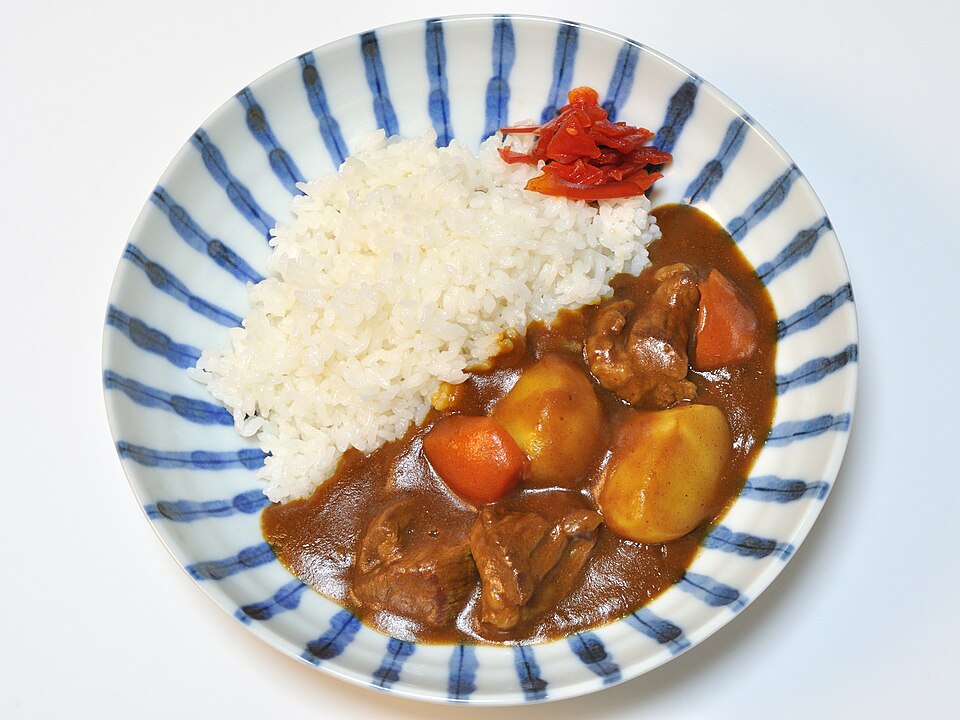
Photo: Ocdp / Wikimedia Commons · CC0 1.0. Resized from the current Commons version, cropped by the original author in 2025; no additional crop.
A spoonful of rice, a little sauce, a soft piece of potato. Japanese curry invites you to settle into a meal. In the first photograph, the ingredients are easy to recognise, and the pleasure begins with deciding what to put on the spoon together.
Curry rice belongs to the everyday side of Japanese food. Its story runs through home kitchens and school lunches, where convenient curry roux helped it become familiar to generations of diners.1 For a visitor, that makes a simple plate worth paying attention to. It offers another way into the country’s food culture, alongside sushi and ramen.
A well-travelled dish that found a home
Japanese curry developed through international exchange. British-influenced versions of Indian curry reached Japan in the nineteenth century and became part of yoshoku: Western-influenced dishes adapted within Japanese cooking.2 House Foods’ historical timeline records a Japanese book explaining curry preparation in 1872.1
Over time, the dish became easier to make at home. Solid curry roux, which spread in the postwar period, put much of the seasoning and thickening into a convenient form. Home cooks could prepare the other ingredients, dissolve the roux and bring the meal together.1
There is something appealing about that journey. A dish can arrive through trade and travel, change in local kitchens, and eventually feel thoroughly familiar. The curry on a dinner table carries that longer story without needing to announce it.
The little blocks behind a familiar sauce
If you have seen a box of Japanese curry in a shop, you may have wondered what is inside. A common format is solid roux, divided into portions. It combines spices with ingredients such as flour and fat, helping turn the liquid in the pot into a thicker sauce.3
These three products do different jobs, so the label matters when you are planning a meal:
| Product | What it does |
|---|---|
| Curry powder | A blend of spices and herbs for seasoning. It needs other ingredients to become a finished sauce. |
| Curry roux | A concentrated mix that seasons and thickens the liquid in a pot of curry. |
| Ready-made curry | A prepared sauce, often sold in a pouch, to heat as directed and serve with rice. |
A familiar home-style combination includes onion, carrot, potato and meat. S&B’s basic recipe is one example.4 Other kitchens make different choices: the ingredients, toppings and balance of flavours leave room for the cook’s preferences.2
That flexibility is part of the interest. Look at the size of the vegetables, how much sauce sits beside the rice, and whether the dish is smooth or full of distinct pieces. Small decisions change the experience of each spoonful.
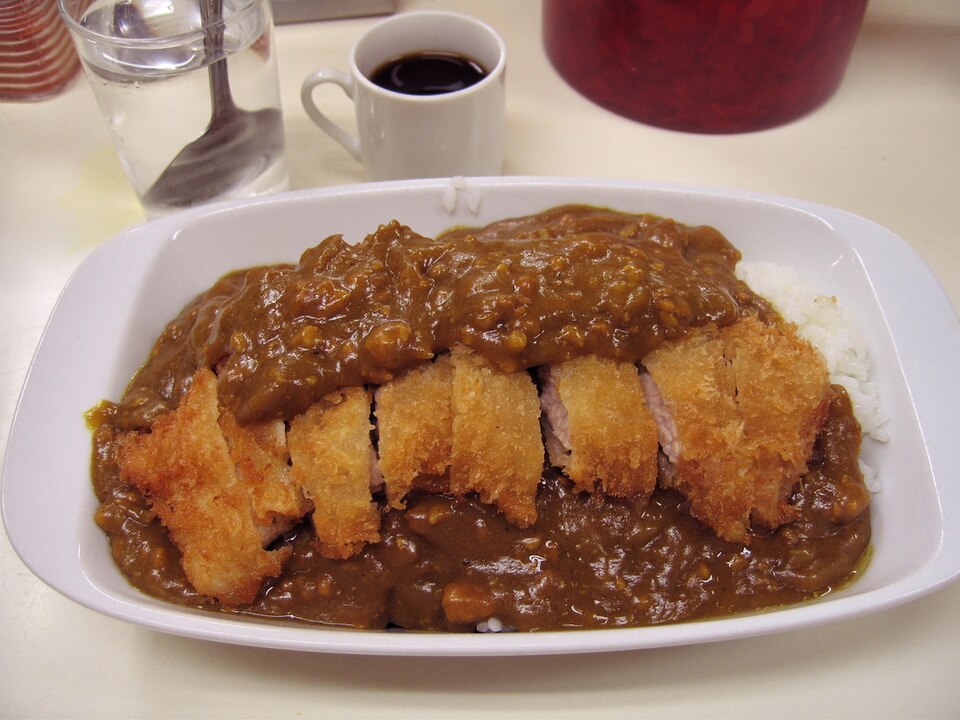
Photo: luckypines / Wikimedia Commons · CC BY-SA 2.0. Colour and brightness adjusted by Ubcule in the Commons version; resized, with no additional crop.
What makes it katsu curry?
Katsu refers to a breaded, fried cutlet. Katsu curry brings that cutlet together with rice and curry sauce. The word names the cutlet, rather than the sauce itself.2 Pork and chicken are both possibilities; S&B’s recipe offers either, coated with flour, egg and breadcrumbs before frying.5
In the photograph, the cutlet is sliced across the plate. Some of its golden surface remains visible, while sauce covers other parts. That arrangement makes the contrast in texture easy to imagine: crisp crumbs at one edge, softened coating where it meets the curry, and rice underneath.
If you are choosing between curry rice and katsu curry, think about the meal you want. A cutlet adds another texture and a substantial topping. The simpler plate lets you focus on the sauce and the ingredients cooked within it. Both are good ways to begin exploring.
Warm spices, with a choice of heat
Japanese curry comes in different heat levels. For example, S&B’s roux range includes mild, medium hot and hot versions.4 Check the description when choosing a product or ordering a dish, especially if you have only tried one version before.
While eating, give the flavour a moment to unfold. Notice the aroma first, then the sauce’s richness and the way the rice changes each bite. Heat is one part of that experience. You may find that your favourite plate is the one whose texture and seasoning feel most balanced to you.
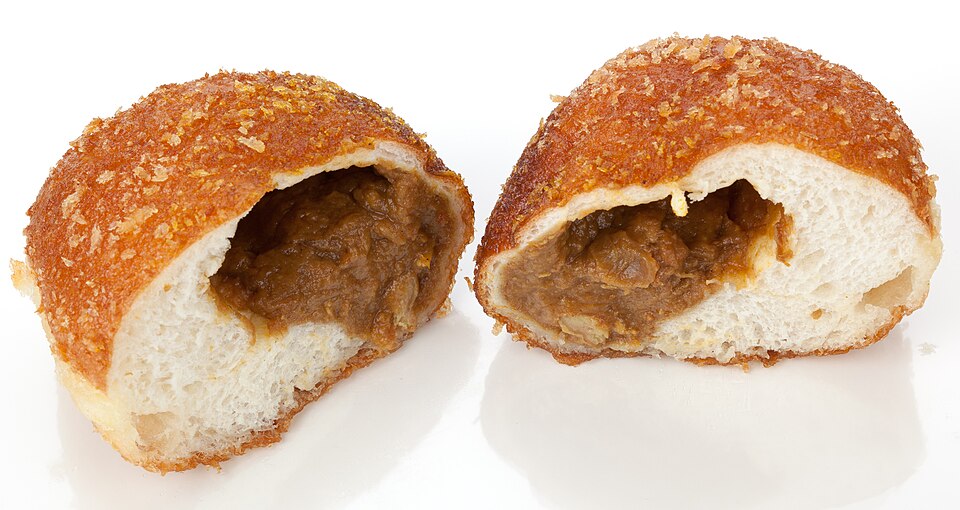
Photo: Laitr Keiows / Wikimedia Commons · CC BY-SA 3.0. Resized; original composition retained.
Curry takes a turn at the bakery
Curry bread, or kare pan, puts the filling inside dough. The familiar fried version has a breadcrumb coating and a crisp, golden exterior, enclosing the curry within.6 In the photograph, cutting the bread in half reveals three distinct layers: the rough outer crust, soft dough and dark filling.
It offers a different way to enjoy the same family of flavours. The bread becomes part of each bite, and the filling arrives in a smaller, enclosed portion. Try comparing it with a plate of curry rice on another day. The change from rice to bread gives you something concrete to notice beyond the seasoning.
Making a first pot at home
For a straightforward introduction, choose a curry roux and follow the quantities on its packet. A typical method is to sauté bite-sized meat and vegetables, add the specified water and simmer until the ingredients are cooked and tender. Turn off the heat before stirring in the roux, then return to a gentle simmer, stirring as directed until the sauce thickens. Serve with cooked rice.4
Keep your first batch simple. Taste it before adding extra seasonings, and note what you would change next time: a different vegetable, a different heat level, or a different balance of rice and sauce.
That is an enjoyable place for this story to end: with a dish becoming familiar in another kitchen. A meal with a long journey behind it can still leave room for your own small preferences.
Sources & further reading
- House Foods: The history of Japanese curry — Early curry cookbooks, the spread of solid roux, home cooking and school lunches.
- Taste of Japan: The story of how katsu curry conquered the UK — Culinary exchange, yoshoku, the meaning of katsu and variation between kitchens.
- S&B Foods: All about Japanese curry — The differences between curry powder, roux and ready-made sauce.
- S&B Foods: Japanese curry — An example of a home-style recipe, cooking sequence and heat-level choices.
- S&B Foods: Katsu curry — Pork and chicken cutlets with breadcrumbs, curry sauce and rice.
- Web Japan / Niponica: Tokyo’s unique culture of bread — The breadcrumb coating, fried dough and filling of curry bread.
The photographs illustrate particular dishes; recipes and presentation vary. Credits, licences and image adjustments are listed beneath each image. Cooking guidance is introductory; follow the instructions for the product you use.





Comments