Food & Everyday Tables
Dagashi in Japan: Small Snacks and the Joy of Choosing
A crunchy puff, a tiny candy can, one more packet: Japan’s dagashi culture invites you to make a small selection of your own.
FOOD & EVERYDAY TABLES · 5 MIN READ
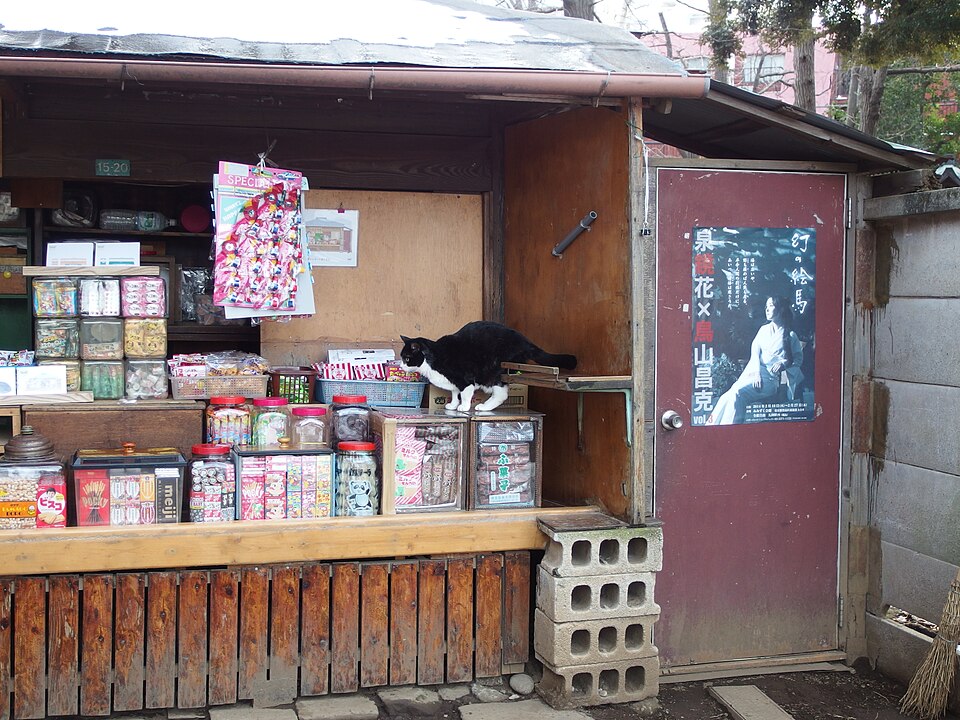
Photo: Guilhem Vellut / Wikimedia Commons · CC BY 2.0. Reduced resolution; full composition retained. Photograph remains under this license.
The photograph above is full of small decisions. A jar on the counter, a packet in a basket, another bright wrapper tucked behind it. Before anything is opened, there is the pleasure of looking.
That is a useful way into dagashi (駄菓子): inexpensive Japanese sweets and snacks associated with the small purchases children could make with pocket money. A shop selling them is a dagashiya (駄菓子屋). The Japan National Tourism Organization describes this pocket-money connection in its introduction to Kawagoe’s candy alley.1
For a first-time visitor, the interesting question is not simply which snack is famous. It is what happens when you can put together a few different things: something crunchy, something sweet, perhaps one item whose packaging you cannot yet work out.
A candy shop with a savory side
The English phrase “candy shop” only gets you part of the way. Dagashi can also be salty, crisp and airy. Looking at the snacks outside their wrappers makes that easier to understand.
Take Cabbage Taro (Kyabetsu Tarō). Despite its name, this is a corn snack. Yaokin’s product page describes bite-sized, rounded pieces resembling cabbages; its ingredients include corn, sauce and aosa, a type of green seaweed.2 The photograph below shows those light-looking puffs and the flecks on their surface. It is a good reminder to read beyond a translated product name.
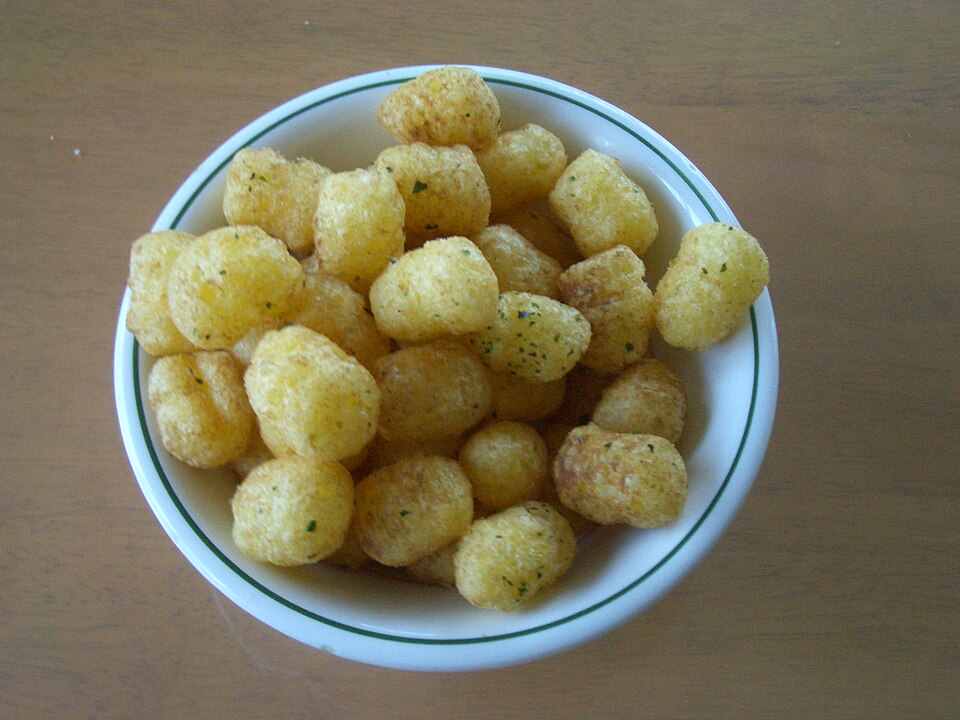
Photo: B. K. Bullock / Wikimedia Commons · CC BY-SA 3.0. Reduced resolution; full composition retained. Photograph remains under this license.
Umaibo offers another way to explore the savory side: a long, individually wrapped corn snack. Yaokin dates the brand’s launch to 1979, and describes its cheese version as a crisp corn snack with a mild cheese flavor.34 Choosing a flavor is a manageable first step if a whole shelf of unfamiliar names feels overwhelming.
You do not need to buy every recognizable brand. One small savory snack and one sweet make a useful comparison: how much of the experience comes from flavor, how much from texture, and how much from the wrapper that made you stop?
The tiny can contains candy
Packaging can be part of the joke. Orion’s Mini Cola looks like a very small canned drink, but inside are cola-flavored ramune candies. Here, ramune means small candy tablets, rather than the bottled soft drink you may already know.
Orion says Mini Cola arrived in 1978 and deliberately used a container shaped like a canned beverage.5 The idea is immediately readable even if you cannot read the Japanese: a familiar everyday object, reduced to a playful size. Opening it reveals something different from what the shape first suggests.
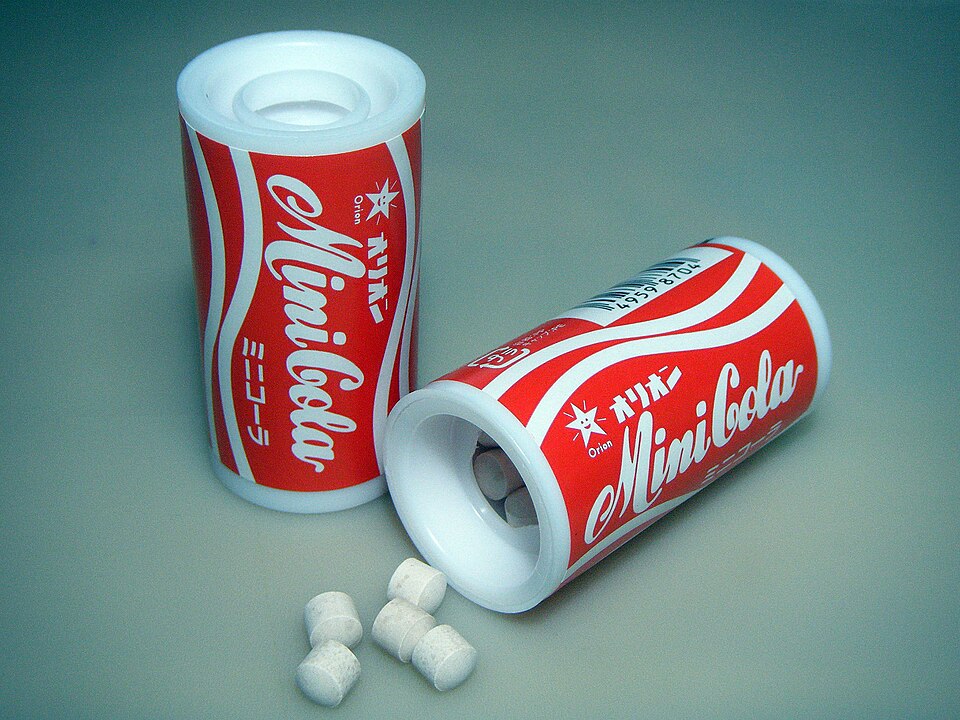
Photo: Hirojin taja / Wikimedia Commons · CC BY-SA 4.0. Reduced resolution; full composition retained. Photograph remains under this license.
There is a connection here with Japan’s miniature capsule toys. In both cases, a small object can reward close attention. With Mini Cola, that attention moves between the container and what comes out of it. The photograph shows both, so the snack is more than an unexplained piece of colorful packaging.
A small budget changes the choice
Try giving yourself a modest spending limit before browsing. Use the prices displayed in the shop, rather than an old guide’s promise that everything costs a particular number of yen.
Then make a selection with a little variety. Would you prefer two familiar flavors or one unfamiliar texture? A larger packet or several smaller ones? These are ordinary shopping decisions, but at this scale the choosing itself can become the activity.
For someone who remembers buying these snacks as a child, a package may carry a personal association. For a visitor encountering it for the first time, the attraction can be curiosity. You can enjoy the same shelf without sharing the same memories.
Where the shop becomes part of the story
Kashiya Yokocho in Kawagoe, Saitama Prefecture, gives this subject a place to explore. According to Kawagoe City, confectionery production there began in the early Meiji period. After the Great Kantō Earthquake, the area supplied dagashi to Tokyo.6 Its candy-shop history is therefore also a story about production and trade, as well as individual purchases.
A historic shopping lane offers one setting; a contemporary shop offers another. Yaokin describes its Dagashi no Rakudaya shops as carrying both familiar and newer dagashi, alongside toys.7 That gives you another way to encounter these snacks without making a historic street the whole definition of the experience.
The Tokyo shop in our opening photograph is a separate example, at Kishimojin Temple in Toshima. It is an archival image, not a photograph of Kawagoe or a promise of what is on a shop’s shelves today.
A few useful details before you choose
- Look at the unit being sold. Check whether the price is for a single packet, a bundle or a larger bag before adding it to your selection.
- Read the current package. Product names and pictures are not ingredient lists. If ingredients or allergens matter to you, check the label on the item in your hand; Yaokin also notes that packaging information can differ when products change.2
- Ask before photographing inside. A quick “Shashin o totte mo ii desu ka?” means “May I take a photo?” Keep the counter and browsing space clear for other customers.
Start with a few things you actually want to open. Set them beside their wrappers, look at the shapes, and compare what you expected with what was inside. A small packet can give you plenty to notice.
Sources & further reading
- Japan National Tourism Organization — dagashi and the pocket-money tradition
- Yaokin — Cabbage Taro product description and ingredients
- Yaokin — Umaibo history
- Yaokin — cheese-flavored Umaibo
- Orion — Mini Cola product history and description
- Kawagoe City — Kashiya Yokocho history
- Yaokin — Dagashi no Rakudaya shops
Product examples are used to explain dagashi culture, not to rank or recommend purchases. Availability, packaging and prices vary. Photography credits and reuse licenses appear beneath each image.



Comments