Local Food · Everyday Encounters
Japan’s Unmanned Vegetable Stands: A Small Everyday Exchange
A few vegetables, a price card and a place to leave the money. Look closer, and a quiet roadside stall becomes a small connection between growing food and eating it.
RURAL JAPAN & CITY DREAMS · 5 MIN READ
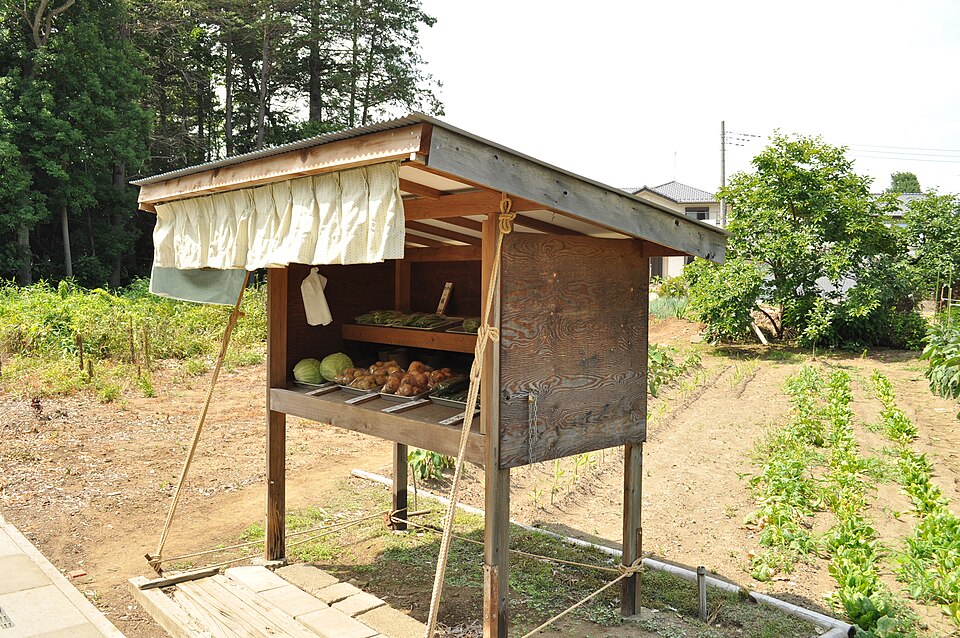
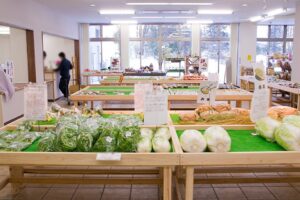
Photo: Ocdp, via Wikimedia Commons · CC BY-SA 3.0. Reduced resolution; full composition retained. This photograph remains under CC BY-SA 3.0.
The first thing you notice may be the person who is not there.
A wooden shelf holds vegetables. A handwritten card gives a price. There is a box for the money, but no one waiting behind a counter. For a visitor used to a checkout, it can take a moment to realise that the shop is already open.
This is one form of mujin hanbaijo (無人販売所), an unattended sales stand. At an open-shelf stand with a payment box, the customer reads the instructions, chooses the produce and leaves the correct amount. The exchange is small, but it makes the relationship between seller and buyer unusually visible.
The countryside can begin inside a city
It is easy to imagine this scene beside a remote country road. Yet farm-direct selling also belongs to urban neighbourhoods. The City of Yokohama describes agriculture existing alongside residents’ daily lives, with produce sold through staffed shops, open-air markets, unattended stands and vending machines.
Those are different arrangements, not different names for the same thing. A farm shop may have someone available to explain the vegetables. An open shelf asks you to handle the payment yourself. A vending locker places each selection behind a separate door.
The useful question is therefore less “Where is the cashier?” than “How does this particular stand work?” Start with what is actually in front of you: the price, the quantity and the payment instructions.
Read the unit before you count the coins
A price card does not always refer to one individual vegetable. It may refer to a bag, a bunch or a group placed together. A few words can help you slow down and check.
| Japanese | What it tells you |
|---|---|
| 無人販売所 mujin hanbaijo | An unattended sales stand. |
| 直売所 chokubaijo | A direct-sales shop or stand. This word alone does not tell you whether it is staffed. |
| 一袋 / 1袋 hitofukuro | One bag. Check the price for that bag, rather than for each item inside it. |
| 料金箱 ryōkinbako | The payment box. |
| 売り切れ urikire | Sold out. |
A useful habit is to read the whole notice before picking anything up. If the quantity or price is unclear, pause; a translation tool can help with the wording, but the seller’s displayed instructions should guide the purchase.
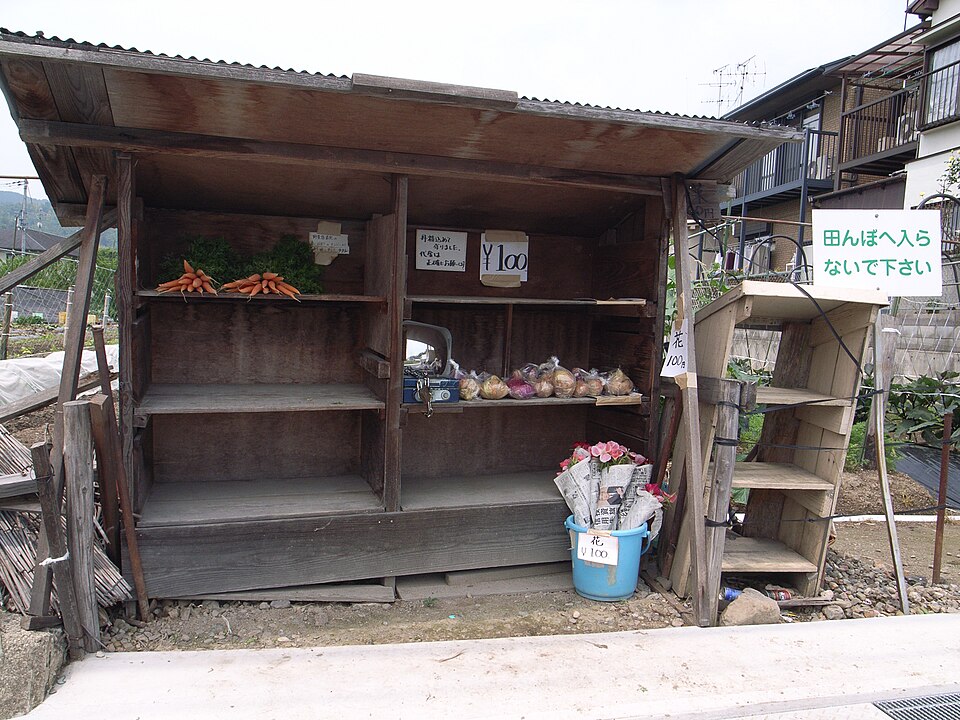
Photo: Toshiyuki IMAI, via Wikimedia Commons · CC BY-SA 2.0. Reduced resolution; full composition retained. This photograph remains under CC BY-SA 2.0.
A payment box can carry a conversation
An account on Yokohama’s Izumi Ward website follows unattended stands along the Izumi River. One grower explained that vegetables originally raised for the family had become more than three related households could eat, prompting a small stand at the front of the home.
Customers began leaving comments and requests in the postbox used for payments. A request from someone who worked during the day led to evening restocking. Interest in the garden’s flowers led to cut flowers joining the vegetables.
This is one grower’s story, not a description of every stand. What makes it revealing is how little equipment the conversation needed: a shelf, a box and a note. “Unattended” did not mean that the grower and customers had no relationship.
Trust is a practice, not a national personality test
It is tempting to turn an open payment box into a sweeping statement about Japan. The photographs support a more modest observation. Sellers set out goods, make requests and provide a way to pay; customers are asked to complete their part of the exchange.
Look at the second photograph. Alongside the price is a request to pay accurately, and another sign asks people not to enter the rice field. These instructions matter. Buying from the shelf does not make the land behind it a visitor attraction.
The most useful response is practical: pay the full amount, leave the display tidy and respect the boundary between the selling area and someone’s working space.
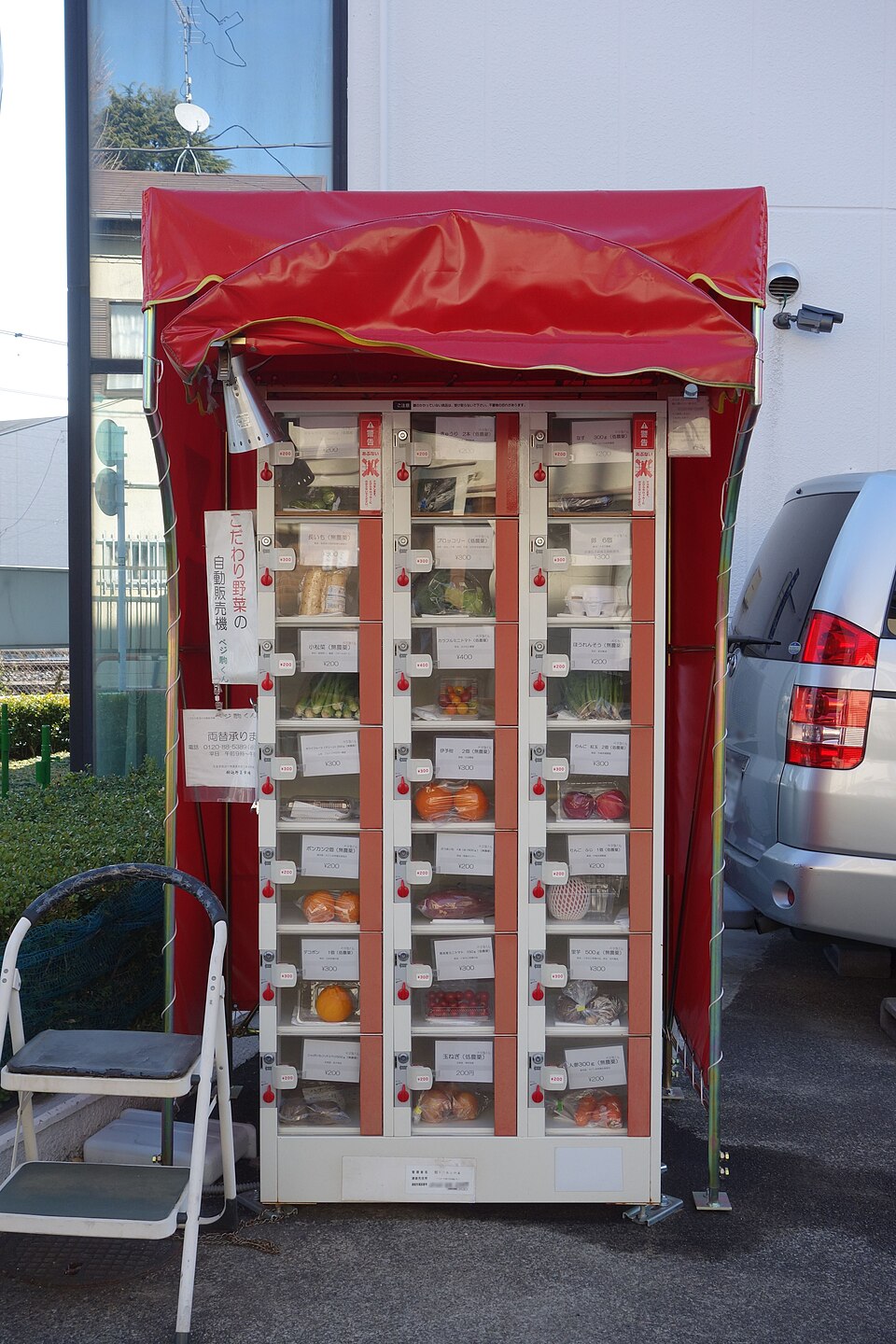
Photo: Hisi21, via Wikimedia Commons · CC BY-SA 4.0. Reduced resolution; full composition retained. This photograph remains under CC BY-SA 4.0.
Three small preparations before you stop
- Carry coins and read the payment instructions. Kanagawa Ward’s farm-direct shopping guide recommends bringing small change because some sellers cannot provide it. Do not assume that an unattended box accepts cards or gives change. At a locker machine, follow its own payment and collection sequence.
- Bring a bag and buy what you can use. A few vegetables can become awkward to carry on a long walk. Think about your plans for the rest of the day and whether you have somewhere to prepare what you buy. You do not have to purchase something simply because the stand is interesting.
- Allow for an empty shelf. Yokohama’s direct-sales map page warns that sales may stop because of weather or finish when stock runs out. A pin on a map is a starting point, not a promise that a particular vegetable will be waiting.
These photographs show examples of selling arrangements. Use current local maps and the notices at the stand for an actual visit; the pictured prices and stock are not current shopping information.
A different way to notice a place
If you would like to find a stand, begin with a municipality’s chokubaijo map rather than assuming every roadside shelf is a shop. Yokohama gathers links to several ward-level maps on one page. Check the location and sale information, then treat a stop as part of a neighbourhood walk.
Keep paths and driveways clear. Ask before photographing people or the private property around the stand. A modest purchase and a little attention to the instructions are enough; there is no need to make an ordinary transaction into a performance.
For an overseas visitor, the memorable detail may be an unfamiliar vegetable, a bunch of flowers beside the onions, or a carefully written request above a box. A small stand offers a view of Japan at the scale of someone’s growing space and someone else’s evening meal.
Sources & image credits
- City of Yokohama: local production and local consumption — Different forms of farm-direct selling, including unattended stands and vending machines.
- Izumi Ward, Yokohama: a walk along the Izumi River — A locally reported account of roadside stands and a grower’s response to customer notes. The experiences described belong to that report.
- Kanagawa Ward: Vegemap guide to farm-direct shops (PDF) — Visitor advice on sale times, limited stock and bringing coins.
- City of Yokohama: farm-direct sales maps — Links to area maps, with cautions about weather and selling out.
Photograph credits and licence links appear beneath each image. The images illustrate different sales formats and do not depict the specific Izumi Ward grower discussed in the text.




Comments