Rural Japan · Michi-no-Eki
Japan’s Michi-no-Eki: More Than a Roadside Stop
A bag of seasonal vegetables, a school building with a second life, a place to pause: Japan’s roadside stations can bring the surrounding community into view.
RURAL JAPAN & CITY DREAMS · 6 MIN READ
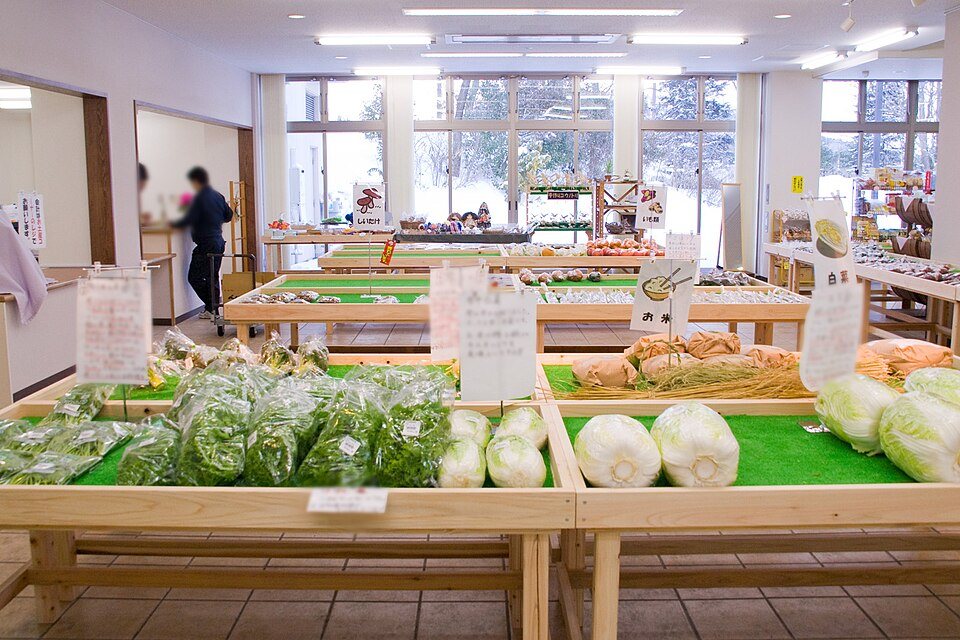
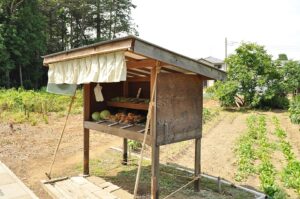
Photo: hashi photo, 14 January 2010, via Wikimedia Commons · CC BY 3.0. Resized and JPEG-compressed for this article; no cropping or retouching by LAYERS OF JAPAN. The source photograph already includes blur applied by its creator.
Sometimes the place you stop becomes the part of the journey you remember.
A roadside stop can be the part of a journey you barely remember. You stretch your legs, find a drink and return to the car. At a Japanese michi-no-eki, it is worth allowing the visit to become a little longer.
Start with the market. Look at what is being sold, where it was grown and what changes with the season. Then look beyond the shelves. Some stations have restaurants and workshops; one in Chiba has made a former elementary school into a place to shop, gather and sleep. The road is what brings you there. The place around it supplies the story.[3], [4], [5]
A station for the road
Michi-no-eki means “road station.” These facilities are part of a registered network, with local governments or eligible public-interest bodies establishing sites and applying for registration through Japan’s Ministry of Land, Infrastructure, Transport and Tourism. The ministry describes their role along ordinary roads: somewhere people can stop comfortably, receive information and connect with the area.[1]
Three functions underpin the idea: rest, information and local cooperation. Free parking and toilets available around the clock form the practical foundation. Road and visitor information help people understand where they are. Facilities connected to local culture and recreation give each station room to express its own character.[1], [2]
For a traveller, that creates a useful change of pace. A map can tell you the distance to the next town. A market or a community room can suggest what happens in the town you are already passing through.
Kawaba: a village through its food
In Gunma Prefecture, Kawaba Denen Plaza brings several parts of village life together in one place. Its official introduction describes a farmers’ market, restaurants using local ingredients, a bakery, a brewery and cafés, set in the landscape below Mount Hotaka. Food is a way of introducing the village itself.[3]
The farmers’ market gives that idea a seasonal shape. Its own product information highlights locally grown vegetables and fruit, including blueberries, corn, grapes and apples. It also lists products such as drinking yogurt, cheese and apple pie. What is available depends on the crop and the time of year.[4]
For visitors, an unfamiliar variety can become a reason to ask a question. What is especially good today? Is this fruit ready to eat? How would someone here cook that vegetable? A translation app can help with a label, while a patient exchange with a member of staff may make the place more memorable than another photograph of distant mountains.
Buy with the rest of your day in mind. Something ready to eat may suit a journey better than ingredients that need a kitchen. If a product needs refrigeration, plan how you will carry and store it. A small, considered purchase gives you more to enjoy than a bag of food you cannot use.
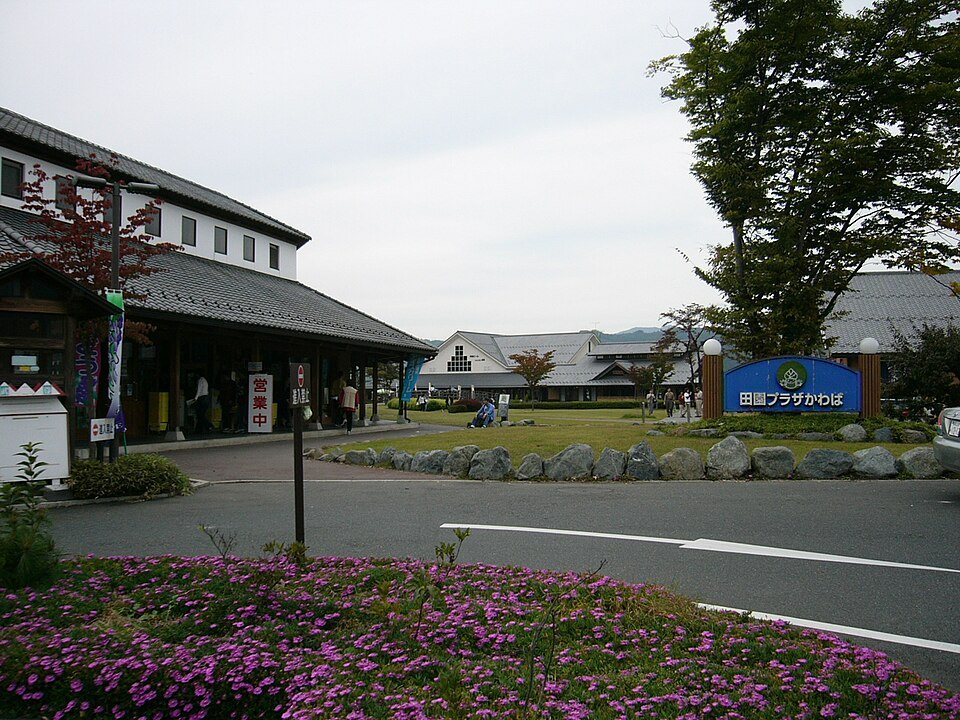
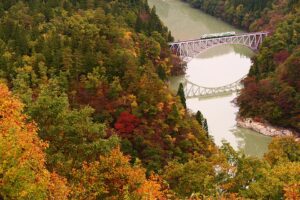
Photo: Filler, 11 October 2003, via Wikimedia Commons · CC BY-SA 3.0. Resized and JPEG-compressed for this article; no cropping or retouching by LAYERS OF JAPAN.
Hota: the school that opened its doors again
In Kyonan, Chiba Prefecture, the story begins with a school closure. Hota Elementary School, founded in 1888, closed in 2014 as the number of children declined. In December 2015, its name and buildings returned to public use as Hota Elementary School Roadside Station.[5]
The conversion kept the earlier building recognisable while changing what people could do inside it. The former gymnasium became a market. The school building gained tourist information and places to eat. Spaces could also be used for activities such as music practice and food-product trials.[5]
The architects’ account adds a particularly revealing detail. Their proposal placed accommodation in former upstairs classrooms and connected the space in front of them to create a shared engawa, or veranda-like area, where local people and visitors could spend time. Reuse meant thinking about relationships as well as rooms.[6]
You can book a stay at Manabi no Yado, the school’s accommodation. Its official page describes classrooms with blackboards, desks, chairs and beds. The old setting gives an overnight visit a very particular character, while operating as an actual lodging facility with its own booking arrangements.[7]
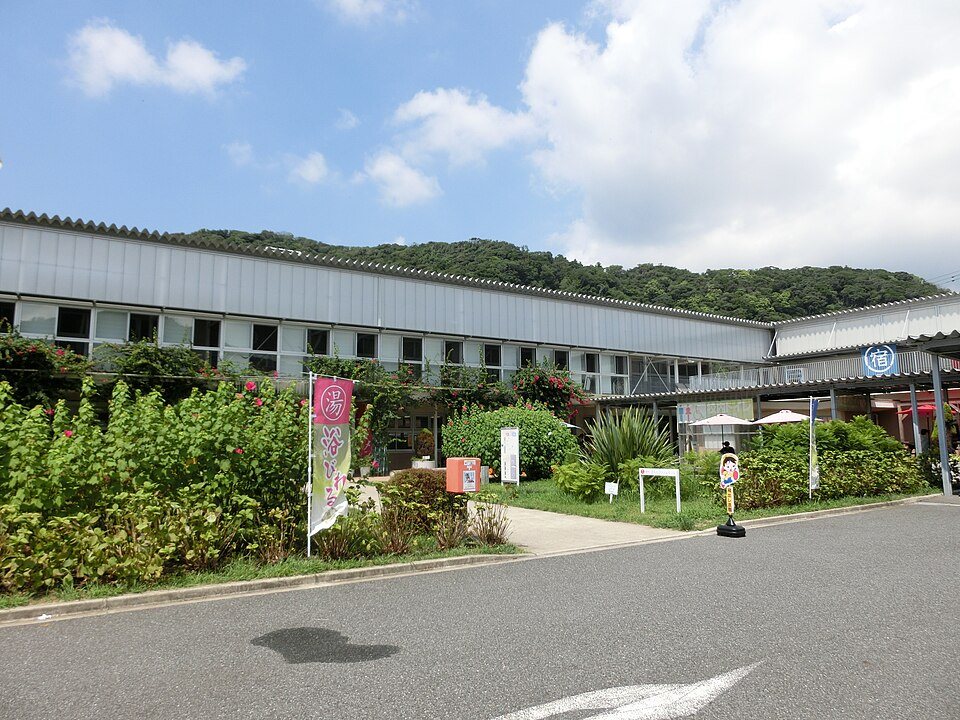
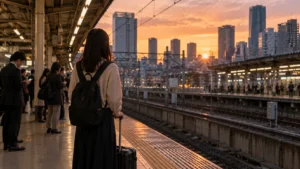
Photo: Abasaa, 18 August 2024, via Wikimedia Commons · Public domain, released by the photographer. Resized and JPEG-compressed for this article; no cropping or retouching by LAYERS OF JAPAN.
Useful to the people who live nearby
It is easy to look at a roadside station only through the needs of a visitor. Hota’s reused rooms invite another question: what can a place like this offer after the visitor has gone home?
The local activities described by the operator—using a room to practise, make something or meet—matter alongside shopping and sightseeing. They turn the idea of “regional cooperation” into spaces that people can actually use.[5]
There is also a wider role in emergency preparedness. Japan has a designated group of bōsai michi-no-eki, stations positioned as regional disaster-response bases. In a May 2025 announcement, the ministry described their role during the Noto Peninsula earthquake and the expansion of the programme. This is a specific designation, rather than a promise that every roadside station provides the same emergency facilities.[8]
That broader view changes what a car park and a low building can mean. They belong to a network of local needs, including needs that are largely invisible on an ordinary day out.
Make room for an unhurried stop
Choose a station that fits your route, then check the particular facilities you want to use. The round-the-clock rest facilities have a different purpose from shops and restaurants, which set their own hours. If you hope to stay at Hota’s school, check the accommodation information and arrange the booking separately.[1], [4], [7]
Once there, leave time to notice a few details: the produce display, a leaflet for somewhere nearby, the shape of a reused building. Follow signs about photography and ask before taking close photographs of people working.
You may leave with lunch, a bag of apples or a new place marked on your map. You may also leave with a clearer sense of how a community introduces itself to passing strangers—and how a short stop can become part of knowing a place.
About the photographs: The photographs document the places in 2010, 2003 and 2024 respectively. They provide visual context; present layouts and facilities may differ. Image credits, dates and reuse terms appear with each photograph.
Sources and useful links
- Ministry of Land, Infrastructure, Transport and Tourism — What a michi-no-eki is and its registration requirements
- National Michi-no-Eki Association — Rest, information and connections with the local community
- Kawaba Denen Plaza — The village and the concept behind the roadside station
- Kawaba Denen Plaza — Farmers’ market, local produce and current shop information
- Hota Elementary School Roadside Station — The school’s history and its present community uses
- NASCA — The design team’s account of the Hota school conversion
- Hota Elementary School Roadside Station — Manabi no Yado classroom accommodation
- Ministry of Land, Infrastructure, Transport and Tourism — Disaster-response roadside stations, May 2025 announcement
Check each facility’s current opening information and access arrangements before travelling.



Comments