Everyday Life · Dogs & Shared Spaces
Dog Runs in Japan: Shared Parks for Dogs and People
A fenced corner of a park can reveal a great deal about everyday life with dogs. In Japan, the details begin at the gate—and continue with the people who care for the space.
DOGS & LIFE TOGETHER · 6 MIN READ
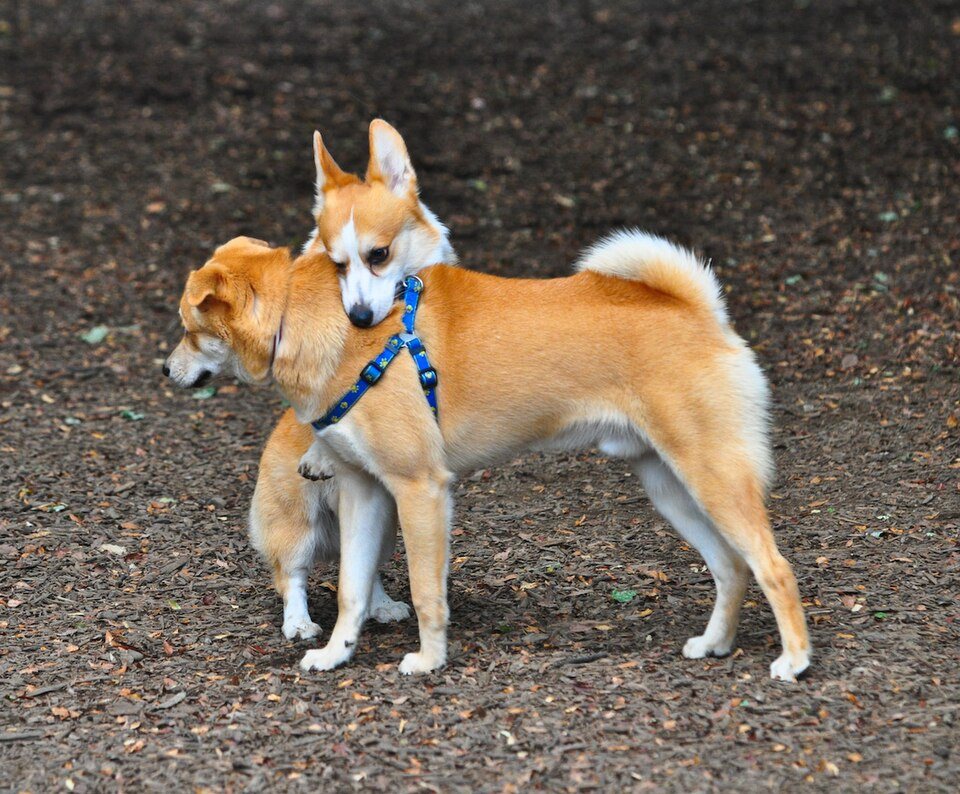
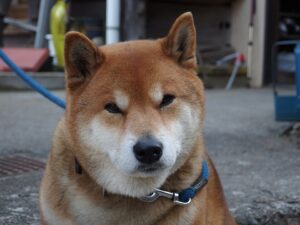
Photo: Jacob Ehnmark from Tokyo, 12 October 2008, via Wikimedia Commons · CC BY 2.0. Resized and JPEG-compressed for this article; no cropping or retouching by LAYERS OF JAPAN.
A little freedom begins with a gate—and with the people who close it behind them.
On a park map in Japan, you may come across the words dog run, or ドッグラン. Think of a designated space where dogs can spend time off the leash, with their owners nearby. The name suggests movement, but the experience also depends on gates, signs, separate areas and the attention of the people using them.
Yoyogi and Koganei parks in Tokyo offer useful examples. Both participate in a shared registration system, yet their arrangements differ. Looking closely at those differences reveals how a place for dogs also becomes a space that people must learn to share.[1], [3]
A small part of a much larger park
Yoyogi’s dog run sits beside Flower Land, north of the park’s central open space. Its supporters’ club describes a facility built around trees that were already there. The setting keeps the dog run connected to the surrounding park, with trees inside the exercise areas rather than an entirely cleared field.[6]
The fence marks an important boundary. Outside the designated dog run, Yoyogi requires dogs to remain on a leash.[8] A visit can therefore include two different kinds of outing: a walk through the wider park and time inside an area intended for off-leash use.
That distinction is easy to miss if you arrive expecting the whole park to function as a dog park. Finding the correct entrance is part of understanding the place.
The visit starts before the gate
Yoyogi belongs to a common registration scheme covering 12 Tokyo metropolitan parks. Owners apply online and wear the registration certificate visibly while using the facility. Registration involves checking the dog’s current annual rabies vaccination tag; a veterinary vaccination certificate alone is not the document the park asks for.[1]
For someone bringing a dog from overseas, the distinction matters. Yoyogi explicitly states that an import quarantine certificate alone does not qualify a dog for registration. Check the park’s instructions and contact its service centre about your circumstances before planning a visit.[1]
Allow time for the application, too. Koganei’s official page warns that issuing a certificate can take one to two weeks, and registration is online rather than at the service-centre counter.[4] A shared system can make repeat visits simpler, but it should not be mistaken for instant entry.
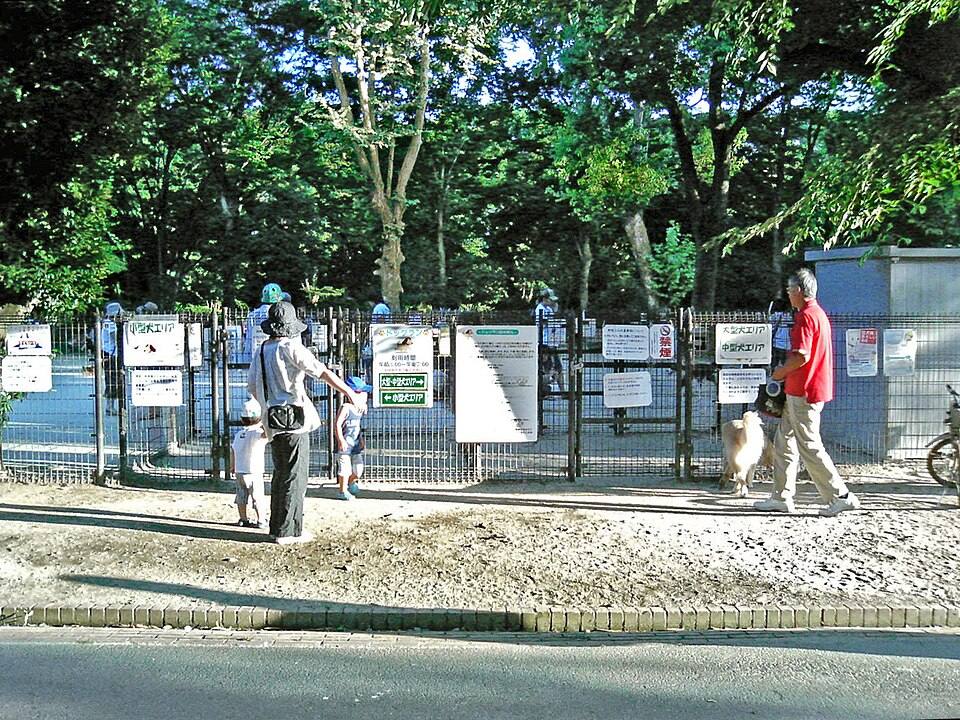
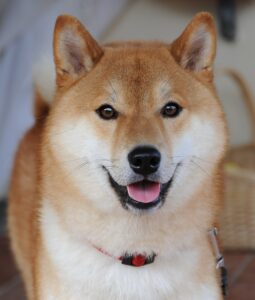
Photo: Tokorokoko, 15 August 2009, via Wikimedia Commons · Public domain, released by the photographer. Resized and JPEG-compressed for this article; no cropping or retouching by LAYERS OF JAPAN.
One registration, different places to play
Yoyogi divides its dog run by weight: one area for dogs up to 5 kilograms, another for dogs up to 12 kilograms, and a third for dogs weighing 10 kilograms or more. There is no all-size free area. Toys and balls are prohibited.[2]
Koganei has a different arrangement: a small-dog area for dogs under 10 kilograms, an area for dogs weighing 10 kilograms or more, and a play area without a weight limit. Toys are permitted only in that play area. Its facility page also carries additional notices about toy use, so check those before packing a favourite ball.[3], [4]
The practical lesson is straightforward: read the rules for the park you are entering. Registration and the right to use a particular area are separate questions. The sign on a gate can matter as much as the certificate you carry.
A different layout in Fukuoka
Uminonakamichi Seaside Park in Fukuoka provides another example. Its dog run includes an all-size free area and a small-dog area defined by height: 40 centimetres or less. It also has a separate relaxation area where dogs stay on their leashes and owners can eat or feed their dogs. Food and treats are restricted in the off-leash areas.[5]
The park has its own admission procedure and dog-run fee, in addition to park admission. These details show why “dog run” describes a type of facility rather than a single nationwide system. Even the way a small dog is defined can change from one place to another.[5]
The people who keep the space working
A fence does not make an off-leash area self-managing. Koganei’s rules require owners to watch their dogs, respond when behaviour disturbs others, close gates properly and take waste home.[3] These are practical responsibilities shared by everyone inside.
There is also work beyond an individual visit. The Yoyogi Dog Run Supporters Club helps with maintenance alongside the metropolitan government and the park service centre. Its invitation to new members includes the opportunity to observe regular meetings and learn about the group’s activities.[7]
That volunteer role adds another layer to the scene. A dog run can be understood as a small piece of community infrastructure: somewhere people enjoy, use repeatedly and help look after. The space depends on both formal management and everyday participation.
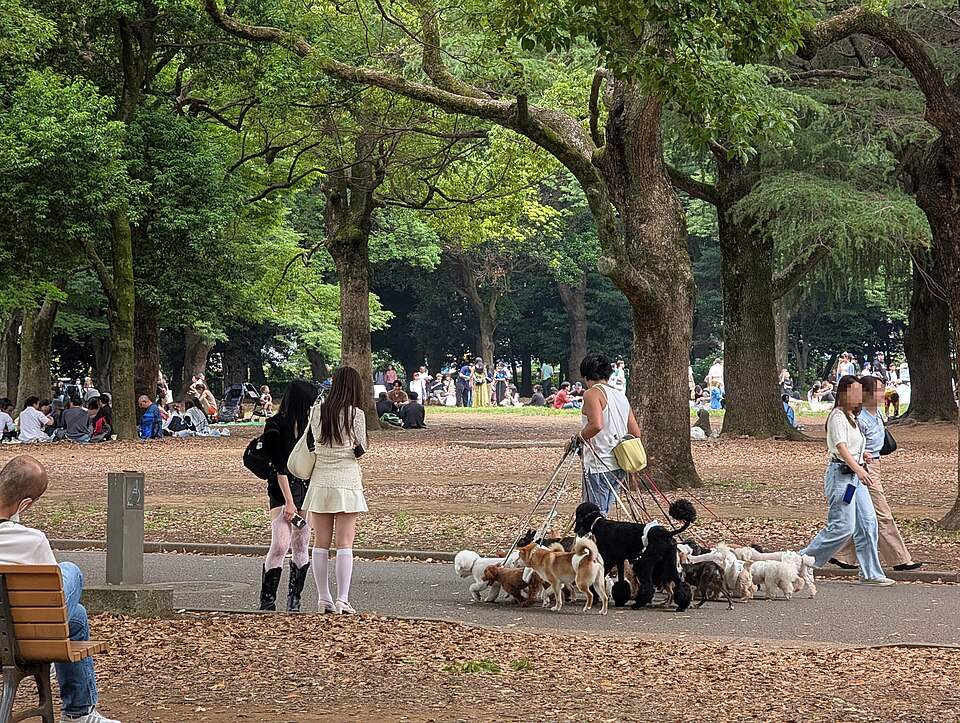
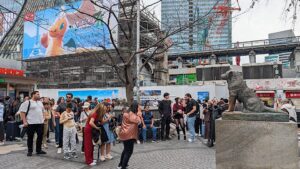
Photo: Syced, 8 June 2025, via Wikimedia Commons · CC0. Resized and JPEG-compressed for this article; no cropping or retouching by LAYERS OF JAPAN. Face pixelation is present in the source photograph.
Visiting with consideration
For owners, a useful first step is to check registration, area restrictions and any temporary notices before leaving home. Inside, attention belongs with the dog. A conversation with another owner should still leave room to notice what is happening nearby.
For travellers without a dog, these facilities are not walk-in petting attractions. Both Yoyogi and Koganei prohibit entry by people without dogs.[2], [3] Uminonakamichi also asks visitors to get the owner’s permission before touching someone else’s dog.[5]
You can still appreciate this side of daily life during a walk through the surrounding park. Dogs, people and ordinary routines belong in that wider picture. The dog run is one carefully defined part of it—a place where a little freedom depends on everyone continuing to pay attention.
About the photographs: These photographs were taken in 2008, 2009 and 2025. The entrance photograph shows Tokorozawa, a separate park from the facilities discussed in the text. The images provide visual context and are not a guide to current layouts or rules.
Sources and useful links
- Tokyo Metropolitan Park Association — Yoyogi Park facilities and dog-run registration
- Yoyogi Park — dog-run rules, March 2026 (Japanese PDF)
- Koganei Park — dog-run rules, March 2026 (Japanese PDF)
- Tokyo Metropolitan Park Association — Koganei Park facilities and current notices
- Uminonakamichi Seaside Park — dog-run areas and visitor information
- Yoyogi Dog Run Supporters Club — the setting and facilities
- Yoyogi Dog Run Supporters Club — volunteer participation
- Yoyogi Park — keeping dogs on a leash outside the dog run
This article introduces selected features of the parks. Consult each facility’s full current rules, registration instructions and notices before visiting.



Comments