Beyond the Shiba Inu: Japan’s Six Native Dog Breeds
A familiar face is the beginning. Look closer, and Japan’s native dogs lead to mountain communities, regional names and a century of preservation.
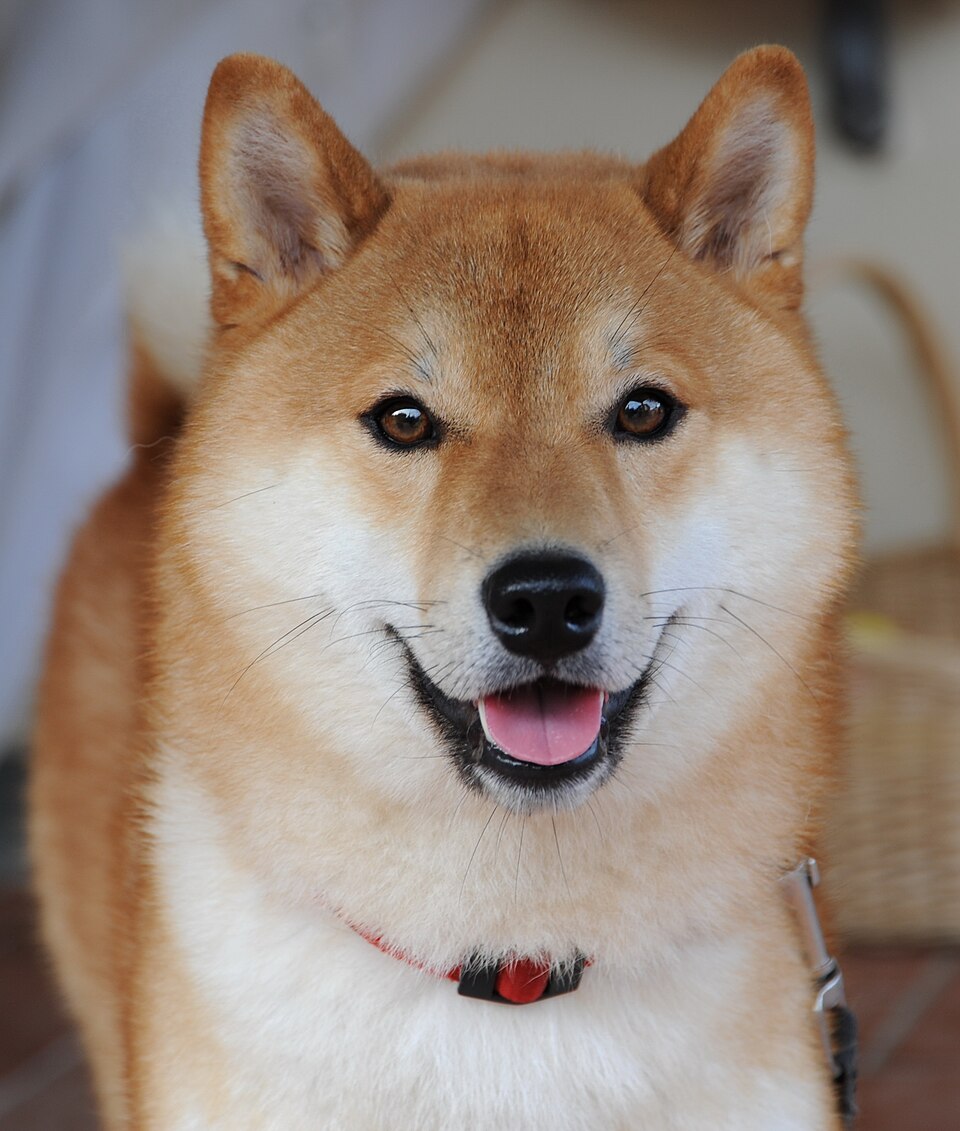
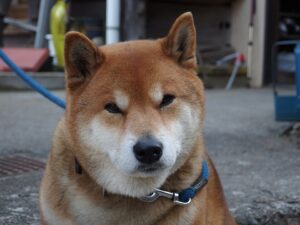
Roberto Vasarri / Wikimedia Commons, Public domain. Resized to 960 pixels wide; composition unchanged.
The Shiba Inu is an easy place to begin: upright ears, a compact body and an expressive face. But Japan’s native dogs have more than one familiar silhouette.
The six breeds usually meant by Nihon Ken are Shiba, Akita, Kai, Kishu, Shikoku and Hokkaido. The Japanese Dog Preservation Society, known as NIPPO, groups them into small, medium and large types. All six have received national Natural Monument designation.[1]
These names can be read as clues to a landscape. Some point directly to a region; others carry histories of hunting, local breeding and later efforts to preserve dogs whose numbers and forms were changing. Knowing a little of that history makes a breed name more interesting than a label under a photograph.
Six breeds, three sizes
The simplest starting point is scale. The Shiba is the small type, the Akita the large type, and Kai, Kishu, Shikoku and Hokkaido belong to the medium group.[1] The table adds a regional clue for each.
| Breed | Regional connection | A detail to notice |
|---|---|---|
| Shiba | Mountain areas facing the Sea of Japan | Compact build; red, black-and-tan or sesame coats.[2] |
| Akita | Akita, northern Honshu | A larger, more substantial frame.[3] |
| Kai | Kai, present-day Yamanashi | Brindle stripes through the coat.[4] |
| Kishu | Kishu, in present-day Wakayama and Mie | White is common, with red and sesame also recognized.[5] |
| Shikoku | The mountains of Kochi on Shikoku | An athletic build; sesame coats are characteristic.[6] |
| Hokkaido | Hokkaido and its Ainu hunting history | A sturdy medium-sized dog with several coat colors.[7] |
The regional descriptions summarize breed histories, not the birthplace of every individual dog. Appearance offers clues; it cannot establish a dog’s pedigree.
The Shiba: small, with a working past
The Japan Kennel Club traces the Shiba to dogs used for hunting birds and small animals in mountainous areas facing the Sea of Japan. Its account describes regional differences, followed by preservation efforts as crossbreeding with imported dogs reduced the number of older local types.[2]
The familiar red coat is only one possibility. Black-and-tan and sesame forms also belong in the picture.
The JKC standard gives a central shoulder height of 39.5 cm for males and 36.5 cm for females, allowing 1.5 cm either way.[2] Scale matters: a close-up portrait can make a small Shiba and a much larger Japanese dog look deceptively similar.
The Akita: Hachiko’s breed has its own history
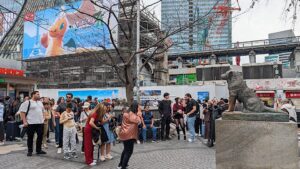
If you have just read our story about Hachiko, you have already met an Akita. A modern Akita’s broad head and substantial body are worth noticing before focusing on its coat.
For comparison, the JKC standard gives 67 cm for males and 61 cm for females at the shoulder, with a 3 cm allowance in either direction.[3] Photographs without a person or another reference for scale can hide that difference from the Shiba.
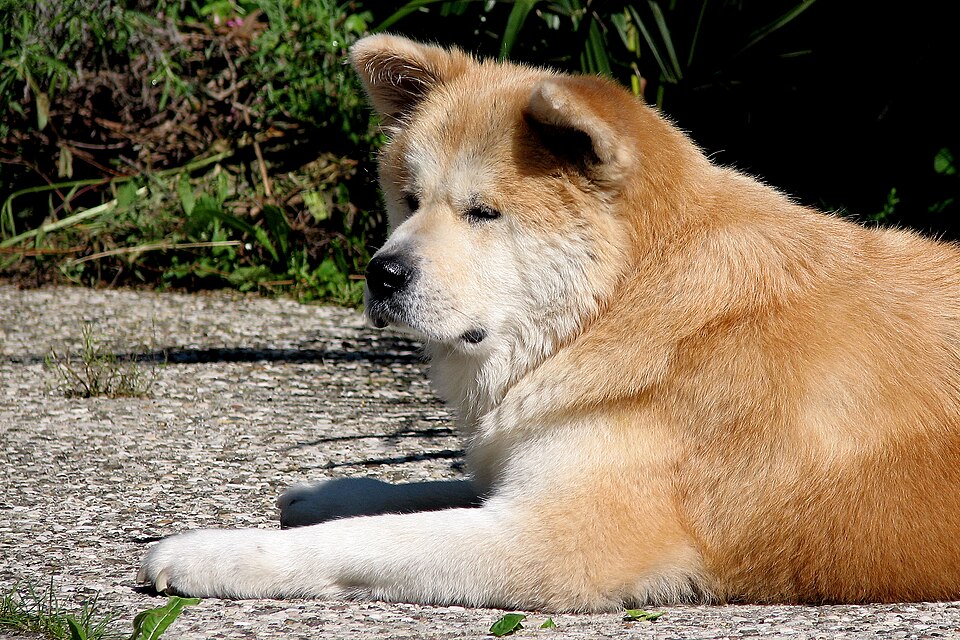
Ivanfurlanis / Wikimedia Commons, CC BY-SA 3.0. Resized to 960 pixels wide; composition unchanged.
The Akita’s history also resists the idea of a breed remaining unchanged through time. JKC describes earlier hunting dogs in the Akita region, periods of crossbreeding, severe disruption during the war, and later breeding work that shaped the modern Japanese Akita.[3] The result belongs to a history of human decisions as well as regional inheritance.
Four medium-sized dogs, four regional stories
Kai: the striped dog from Yamanashi
The Kai developed in the mountainous Kai region, now Yamanashi Prefecture. Its history includes hunting boar and deer. Brindle is the visual clue: JKC recognizes black brindle, red brindle and brindle, and notes that stripes can become more apparent as a puppy grows.[4]
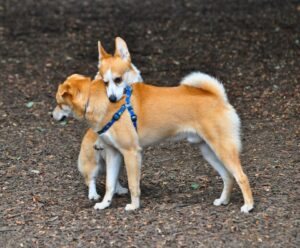
Look at the darker bands along the dog’s body in the photograph below. They give the coat a different rhythm from the red-and-pale pattern often associated with a Shiba.
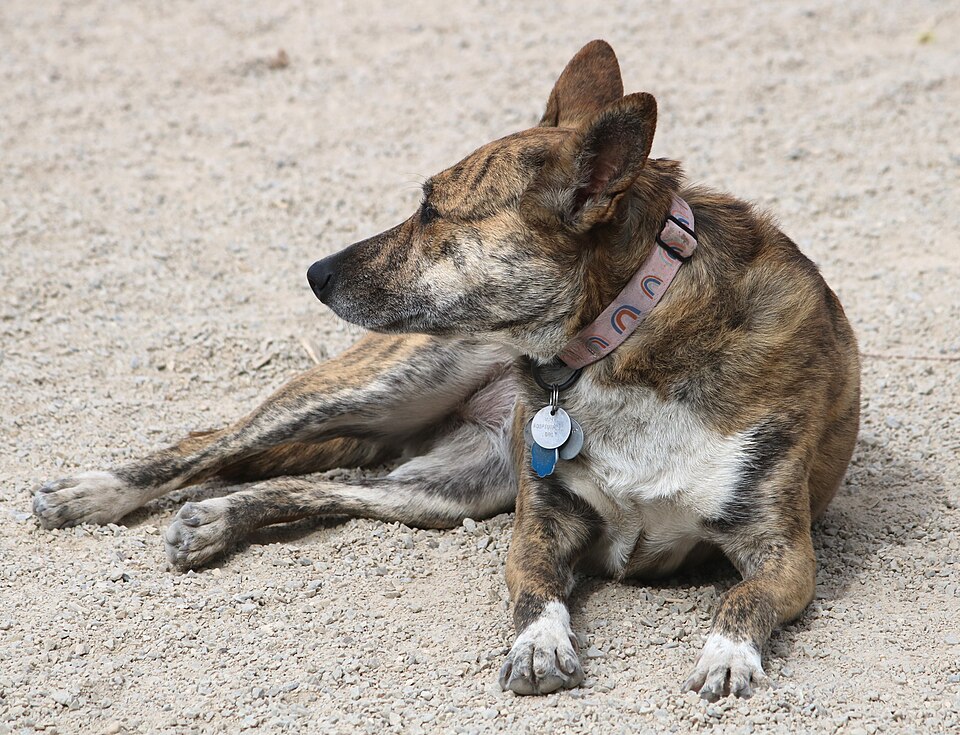
claralieu (Art Prof) / Wikimedia Commons, CC BY 2.0. Resized to 960 pixels wide; composition unchanged.
Kishu: a name from the Kii Peninsula
The Kishu’s regional roots lie in the mountain areas of Wakayama and Mie. It was used especially for boar hunting. Although white coats are common today, red and sesame are also recognized. Its upright ears can accompany either a curled tail or a sickle-shaped tail carried over the back.[5]
Shikoku: a mountain hunting background
The Shikoku is associated particularly with Kochi’s mountains and boar hunting. JKC describes a muscular, agile medium-sized dog and identifies sesame as a characteristic coat color. It also records regional lines within the breed, a reminder that even a single breed name can contain local histories.[6]
Hokkaido: a history that includes the Ainu
The Hokkaido, also historically called the Ainu dog, is connected with the Ainu people’s hunting of bears and other animals. JKC describes its adaptation to severe cold and snow. Its recognized colors include white, red, black, black-and-tan, brindle and sesame.[7]
White fur alone, then, will not reliably separate a Hokkaido from a Kishu. A single memorable image of a breed can make its actual range of appearances easy to miss.
Why preservation belongs in the story
NIPPO was founded in 1928. Its first national show took place on the roof of the Matsuya department store in Ginza in 1932, with 81 dogs gathered from around Japan. Hachiko attended as a specially invited dog.[8]
That scene connects the famous individual dog with the larger preservation movement. The society published its Nihon Ken Standard in 1934, setting out a framework for the small, medium and large types.[9] Recognition, records and shows helped define what people were trying to pass on.
The six-breed grouping is useful for understanding that movement; it is not a claim that every Japanese-origin breed belongs to these six. Nor does a breed standard describe every individual dog’s character.
Names are a way to look more closely
You may encounter both inu and ken in these names. Both are readings of the Japanese character 犬, meaning dog. Learning the names opens a conversation, but the dog in front of you still has its own preferences.
If you meet one on a walk, ask the owner before approaching or taking a close photograph. Then notice one detail: the scale of an Akita, the stripes of a Kai, or the particular shade of a sesame coat. A familiar face can become a starting point for seeing more of Japan’s regional life.
Sources & further reading
- Nihon Ken Hozonkai (NIPPO) — the six native breeds and size groups
- Japan Kennel Club — Shiba: history, appearance and standard height (Japanese)
- Japan Kennel Club — Akita: history, appearance and standard height (Japanese)
- Japan Kennel Club — Kai: regional origins and brindle coats (Japanese)
- Japan Kennel Club — Kishu: regional origins and coat colors (Japanese)
- Japan Kennel Club — Shikoku: history and appearance (Japanese)
- Japan Kennel Club — Hokkaido: history and appearance (Japanese)
- NIPPO — preservation society history and Hachiko’s appearance at its first national show (Japanese)
- NIPPO — the Nihon Ken Standard and commentary
Breed descriptions draw on preservation-society and kennel-club sources. Photographs illustrate individual dogs; credits and reuse terms appear below each image.




Comments