Food & Everyday Tables
Nagoya Morning Service: The Breakfast That Starts with a Drink
Toast, an egg and a cup of coffee: how the morning menus of Nagoya and nearby Ichinomiya turn a drink order into breakfast.
By Maki Kakudate · 5 minute read
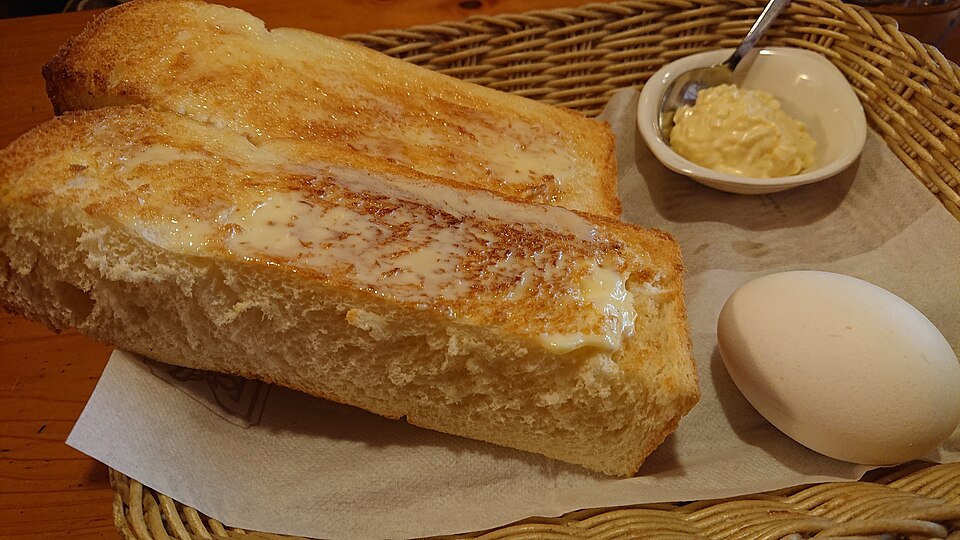
Why would a coffee order come with toast and an egg?
In Nagoya and the surrounding Aichi region, that question has a familiar answer: mōningu, or morning service. At participating coffee shops, a drink can come with breakfast food at no additional charge. The Nagoya-meshi guide describes this as an established part of the region’s coffee-shop culture.1
For a visitor, the first surprise may be the bill. The more interesting question is how a small breakfast became something people leave home for.
What is included in morning service?
The basic idea is a drink accompanied by food during a shop’s designated morning hours. Toast and a boiled egg are familiar examples, but the contents and pricing depend on the establishment. Ichinomiya’s morning-service council describes local offers that include food in the drink price, alongside shops that add a small charge.2
That makes the wording on the menu useful. A photograph of a large breakfast may include paid extras. Before ordering, find the drink price, the food included with it and any additional amount shown beside an upgrade.
Three details to check
The hours: When does this shop’s morning offer end?
The combination: Which drink and food choices qualify?
The total: Is the food included, or is there a separate charge?
There is no need to memorize every possible set. Start with the current menu in front of you and ask the staff to explain anything unclear.
Why is Ichinomiya part of the story?
Ichinomiya, a city in Aichi, connects its morning culture to the local textile industry. Its morning-service council traces the custom to the late 1950s, when coffee-shop proprietors began adding boiled eggs and peanuts to drinks for textile workers during the industry’s boom.2
This is a local origin story rather than a settled claim to the first breakfast offer in Japan. The Nagoya-meshi guide also records Toyohashi among the places associated with the custom’s beginnings.1
Ichinomiya’s council describes family visits to coffee shops on days off as part of the city’s continuing morning culture. It also recommends that meals presented as “Ichinomiya Morning” include an egg dish and, where possible, locally produced ingredients.2
Read together, those details suggest why the custom has a place in local identity: the offer gives an ordinary coffee shop a recurring role in the day. Breakfast can be an outing with a familiar destination.
How does Komeda’s morning menu work?
Komeda’s Coffee provides a clear example. Its official menu currently offers morning service from opening until 11:00 a.m. With a drink order, customers choose toast or a round robe-pan bread roll, accompanied by one of three options: a boiled egg, egg paste or sweet ogura-an bean paste.3
The menu also offers a choice of spread. Additional sides, such as salad and yogurt, cost extra, and availability varies by branch.3 The photograph above shows accompaniments for two orders in 2020, so it should not be read as today’s allowance for one drink.
This example helps explain the ordering logic: choose the drink, then the breakfast options attached to it. Another café may arrange its menu differently, so check its own combinations and cutoff time.
Why put sweet red beans on toast?
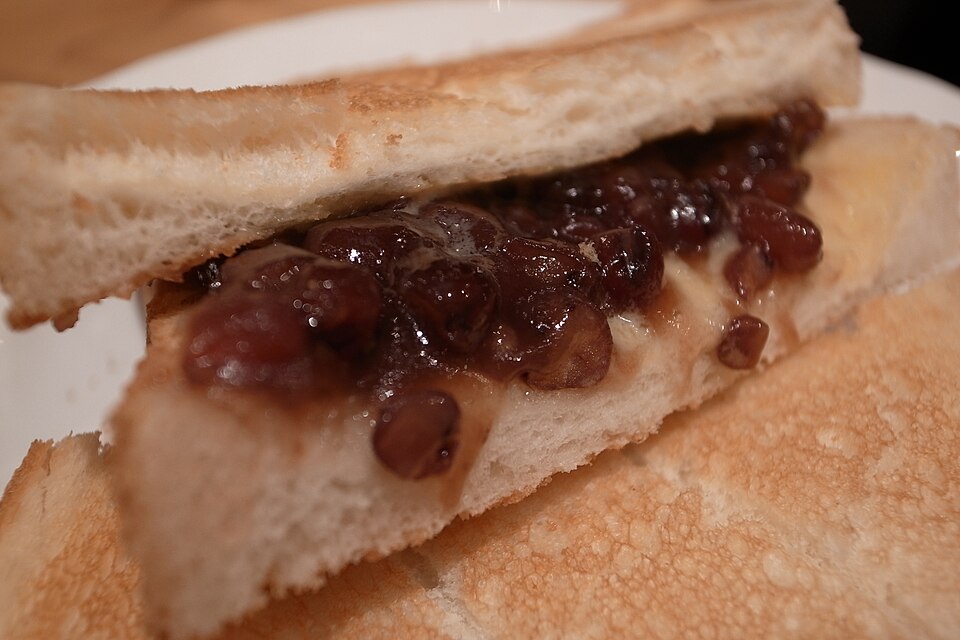
Ogura toast combines toasted bread with sweet red-bean paste and butter or margarine. Nagoya’s official visitor guide describes the appeal of the pairing as the contrast between the salty spread and the sweetness of the beans.4
If beans usually mean a savory dish to you, the menu can be surprising. Here, the paste supplies the sweetness. Look closely at the serving in the photograph: the filling sits between pieces of toasted bread. The name can lead to a different presentation from the open toast you might have imagined.
At Komeda, ogura-an is one of the morning choices; it does not mean that every version of ogura toast on every café menu is included with a drink.3 Check the morning section before ordering from the regular food menu.
Does “morning” always mean toast?
No. Shirakabe Cafe Hanagoyomi in Nagoya illustrates the range: its own website shows morning options with toast, rice balls and chilled tea over rice. It currently lists its morning service from 7:30 to 10:00 a.m.5 Even within one city, the choice of food and the serving hours can differ.
The Nagoya-meshi guide also notes shops advertising morning service throughout the day.1 Treat that as an offer to look for, rather than assuming that a late arrival will always be fine.
Compare a couple of menus before planning your morning. One may suit a quick coffee and toast; another may offer the rice-based breakfast you prefer. The useful comparison is the meal you actually want, at a time you can comfortably arrive.
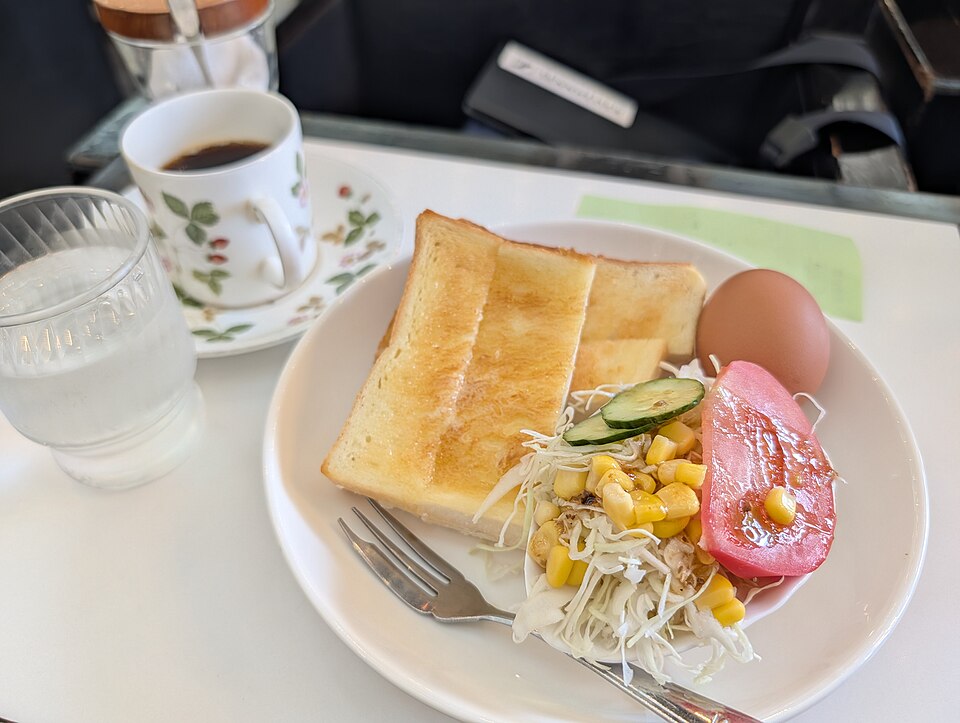
A breakfast stop that fits your day
Pick a café near somewhere you already plan to visit. Check its opening day and morning hours, allow time to order and eat, and avoid building a tight train connection around an unfamiliar queue.
Once seated, there is no special ritual to perform. Order from the menu, follow the shop’s guidance and enjoy the food. If you take a photograph, keep other customers out of the frame and respect any photography rules.
The price may explain why morning service catches your attention. Choosing the place, sitting down and letting breakfast take a little time can explain why you would go back.
Continue around the everyday table
Sources & further reading
Sources checked October 23, 2026. Menus, prices, availability and serving hours may change; confirm the details for the individual shop.
- Nagoya-meshi guide — Morning. Regional associations, competing origin accounts and all-day offers.
- Ichinomiya Morning Council — About Ichinomiya Morning (Japanese). Local history, family breakfast visits, pricing and the council’s recommendations.
- Komeda’s Coffee — Morning Service (Japanese). Current hours, bread and accompaniment choices, paid sides and branch variations.
- Nagoya Convention & Visitors Bureau — Ogura Toast. Ingredients and the sweet-and-salty combination.
- Taiko Honten / Hanagoyomi — Shirakabe Cafe Hanagoyomi (Japanese). Morning hours and examples of toast and rice options.
Photo dates and licenses appear in the captions. The images show particular meals, not a standard portion or current price for all cafés. Suggestions about comparing menus and leaving time for a visit are editorial guidance.



Comments