Food & Everyday Tables · Real Life in Japan
Onigiri in Japan: A Small Meal with Many Stories
Sometimes a meal says more about a country when it fits in one hand than when it fills a restaurant table.
LAYERS OF JAPAN · 9 minute read
Imagine a busy morning in Japan. Someone presses warm rice into a rough triangle before leaving home. At a train-station convenience store, another person reaches for a neatly wrapped package. Somewhere else, a child opens a lunchbox and finds a rice ball tucked beside a few vegetables.
They might all be eating onigiri (おにぎり), one of the most familiar forms of everyday Japanese food. It is small, portable and rarely treated as a special occasion. That ordinariness is precisely why it is worth looking at.
When people outside Japan imagine Japanese food, they often begin with sushi, ramen or an elaborate restaurant meal. But the country also has a food made for the ordinary gaps in a day: a journey, a school outing, a short lunch break, or a moment when cooking a complete meal is simply too much.
An onigiri is more than rice shaped into a triangle. It is a small meeting point between agriculture, family life and modern convenience.
1. What Exactly Is an Onigiri?
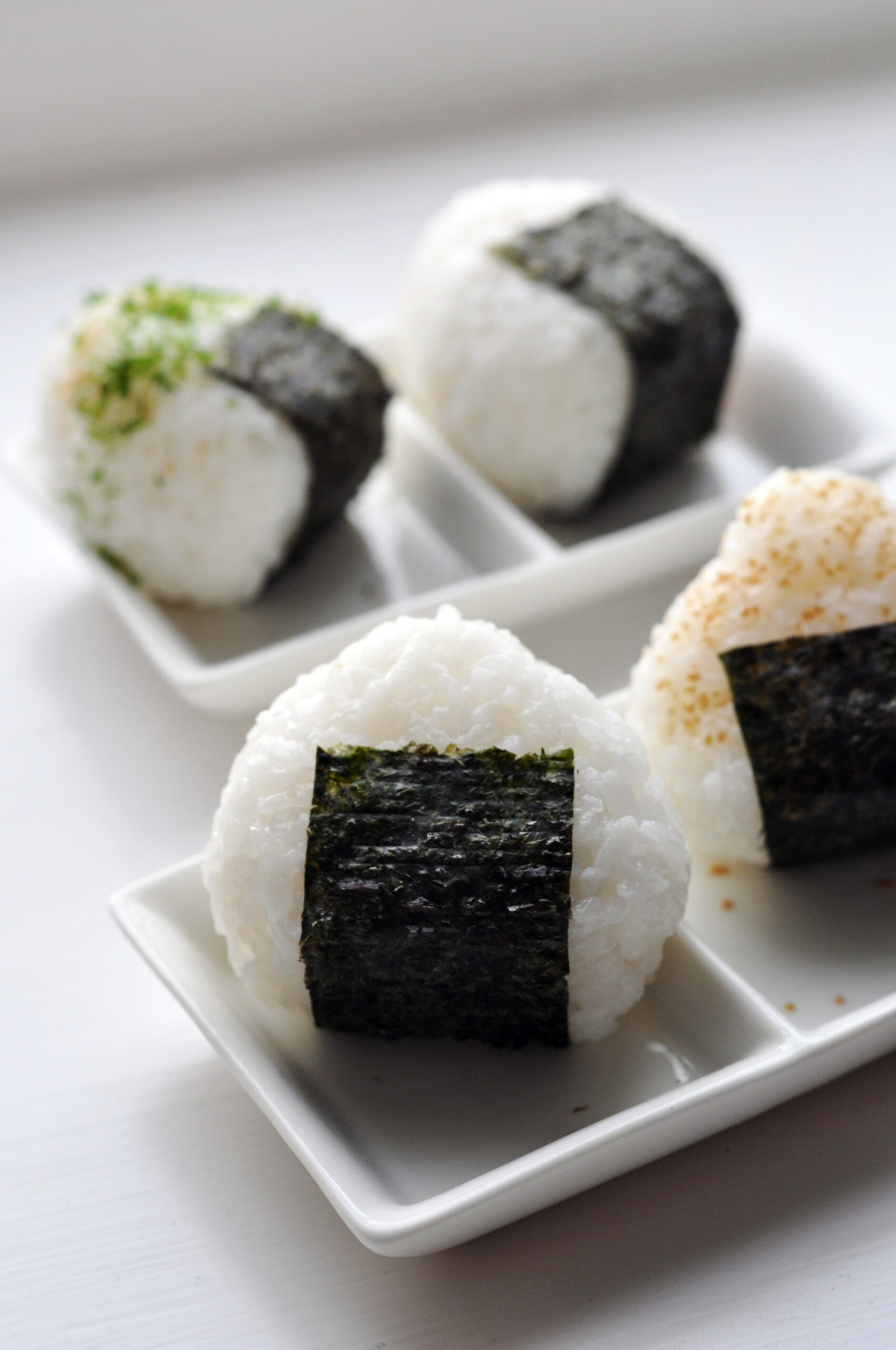
At its simplest, onigiri is cooked rice pressed together so it can be picked up and eaten. It may contain a filling, have seasoning mixed into the grains, or be made with little more than rice and salt. A piece of dried seaweed, called nori, may wrap around the outside, but it is not compulsory.
The famous triangular shape is only one possibility. There are round, oval and cylindrical versions too. A family may prefer small rice balls for young children, while a shop makes large ones intended to be a filling meal.
Onigiri is not sushi in miniature. Sushi generally uses seasoned, vinegared rice; everyday onigiri usually does not. The distinction is about how the rice is prepared, not just its shape or what is tucked inside.
You may also hear omusubi (おむすび) or nigirimeshi (握り飯). These names overlap in everyday speech. There are regional and personal preferences, but a simple rule that one name always means a triangle and another always means a circle would be misleading.
2. The Rice Is the Main Ingredient
In many sandwiches, bread makes room for the filling. In a good onigiri, the rice itself deserves attention. Japanese short-grain varieties cook up with enough cohesion for the grains to hold together when gently pressed. Ideally, the shape stays intact without turning the rice into one heavy, dense lump.
Making an onigiri at home can involve remarkably few gestures. Hands are cleaned; a little salt may be added; a portion of rice is pressed carefully around a filling or shaped on its own. People also use plastic wrap, molds or other tools rather than touching the rice directly.
There is no single perfect level of firmness. Texture depends on the rice, its temperature, the intended filling and personal taste. For many people, that first bite is as much about the rice as what is hidden in the center.
The humble rice ball also reflects a larger food culture. The government’s 2026 Highlighting Japan feature on the Onigiri Project describes how the appeal of this food is tied to Japan’s rice-growing traditions. A small snack carries a much longer agricultural story.
3. A Filling Can Tell You Something About Taste
Some classic fillings are immediately recognizable to people in Japan. Umeboshi is a intensely sour, salty pickled plum. Cooked salmon offers a gentler savory flavor. Okaka combines bonito flakes with seasoning; simmered kombu seaweed brings a sweet-salty taste. Tuna mixed with mayonnaise is a more modern but highly familiar choice.
There are also rice balls seasoned throughout with sesame, greens, beans or mixed rice rather than filled at the center. Some shops experiment with cheese, spicy sauces or ingredients associated with a particular region. The variety changes with the people making them and the customers buying them.
It would be a mistake to imagine every Japanese home keeping the same range of fillings in the refrigerator. Many households repeat only a few favorites. Some people dislike umeboshi; others love it. As with any everyday food, the most revealing detail may be a very personal preference.
For travelers, packaging labels are worth reading carefully. An unfamiliar filling can contain fish, shellfish, soy, sesame or egg, and a rice ball that looks vegetarian may use a fish-based seasoning. When allergies or dietary restrictions matter, check the full ingredient information rather than relying on its appearance.
4. The Homemade Rice Ball: Useful, Personal, Imperfect
At home, onigiri can be a way to use freshly cooked rice, make a quick lunch, or carry food on a trip. It appears in school outing lunches, picnics and packed meals, though the choices vary by household. Many people make them from habit rather than because the result is especially photogenic.
For someone who remembers a parent or grandparent making rice balls, the shape itself may carry a memory: a familiar amount of salt, a preferred filling, a slightly uneven triangle. Other families have no tradition of making them by hand and are perfectly happy to buy them.
That difference matters. Romantic descriptions of Japanese home cooking sometimes make it sound as though someone is always available to prepare everything from scratch. In reality, busy schedules and the work of food preparation affect Japanese households just as they do households elsewhere.
A rice ball made at home can be meaningful. It can also be simply convenient. Those are not competing truths.
5. The Convenience-Store Onigiri
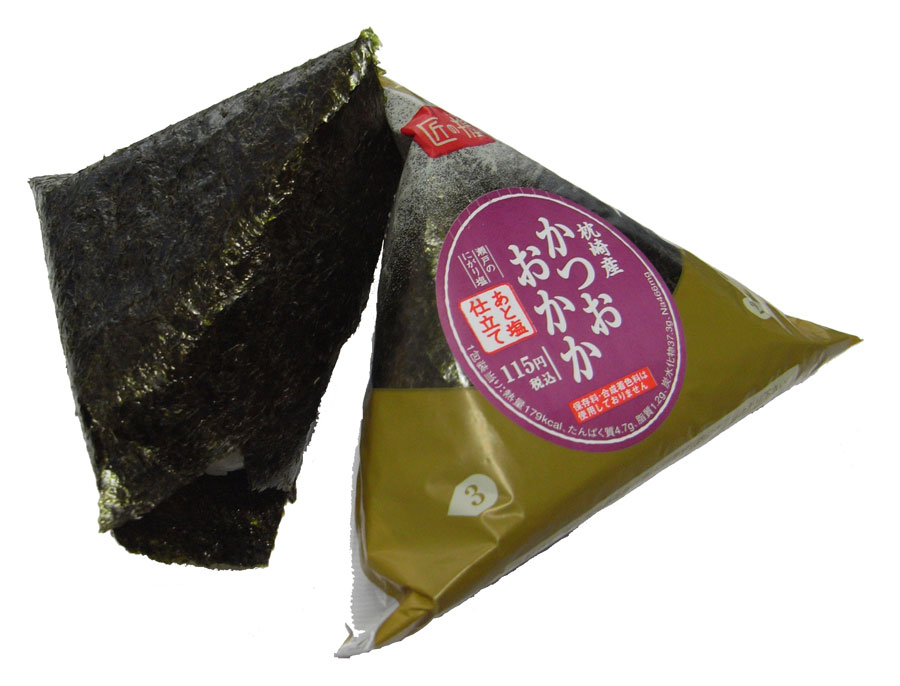
Walk into a Japanese konbini—a convenience store—and you are likely to see a refrigerated display with several kinds of onigiri. Some are wrapped in crisp sheets of nori; others have rice seasoned on the outside or no seaweed at all. Packaging, flavor selection and prices vary among shops and over time.
Perhaps the most ingenious detail is the wrapper on many triangular rice balls. A layer of film keeps the nori separate from the moist rice until the customer opens it. Numbered tabs show how to remove the film, often in a one-two-three sequence. The seaweed can remain crisp even though the rice has been packaged for sale.
For first-time visitors, this wrapper can be surprisingly challenging. The trick is to follow the printed arrows rather than pull away every piece of plastic at once. Not every product uses the same design, so the instructions on the package are the best guide.
Mass-produced onigiri is different from a warm rice ball just made in a kitchen, but it is not a lesser version of an imaginary ‘real’ Japan. It is part of the Japan that commuters, students and workers encounter every day.
6. A Long History, Without Pretending Nothing Has Changed
People in Japan were shaping rice into portable portions long before modern convenience stores existed. Historical writing and archaeological finds point to early forms of compressed rice, though these were not necessarily prepared or eaten like today’s onigiri.
The Onigiri Society’s historical overview describes rice-shaped foods in early records, including a mention of hand-formed rice in the Hitachi no kuni fudoki, compiled in the eighth century. A 2026 article from Nippon.com likewise traces the tradition while noting uncertainty about the purposes and preparation of much older archaeological examples.
That uncertainty is important. Food history is not one recipe handed unchanged from one generation to the next. Rice cultivation, preserved foods, seaweed production, packaging and the speed of city life have all shaped what an onigiri can be.
Modern machinery and carefully designed film wrappers did not erase the traditional food. They changed how it could be bought, carried and eaten. The onigiri kept adapting because people continued to need simple meals.
7. Beyond the Triangle: Yaki-Onigiri and Other Variations
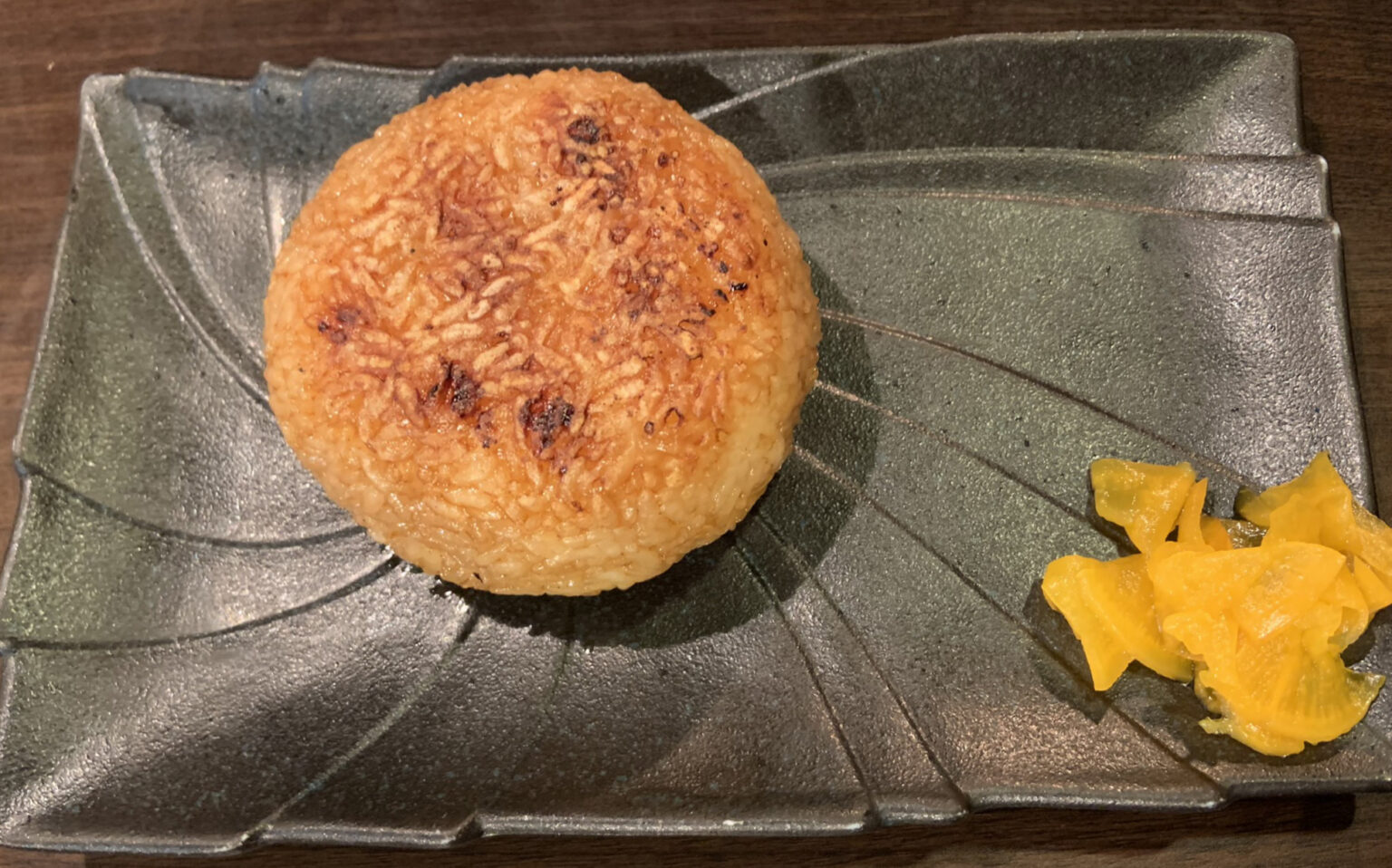
An onigiri need not be eaten plain or cold. Yaki-onigiri is a rice ball browned on a grill or in a pan, often brushed with soy sauce or miso. It develops a toasted outer layer and a warm interior. The smell alone makes it feel quite different from a chilled convenience-store version.
Another variation, tenmusu, includes a piece of shrimp tempura. Other regional shops serve rice balls made with local seafood or pickled ingredients. There is no complete list that captures every version, and the term ‘traditional’ can mean different things from one town to another.
8. What the Onigiri Reveals About Modern Japan
The same basic food can belong to very different moments. In one home, it means someone saved a portion of rice for a family member. At a convenience store, it means a quick choice made between work and a train. At a specialist onigiri shop, it may become the main attraction, with the quality of the rice and fillings given almost restaurant-level attention.
Onigiri is sometimes compared to a sandwich: portable, familiar, and easy to buy. That comparison can be useful, though it does not explain everything. Rice is a particularly important crop in Japan, and the choices behind a simple rice ball connect to agricultural work, food prices and shifting eating habits.
Yet a rice ball is also just lunch. It should not be turned into a symbol that every Japanese person loves equally or eats daily. Plenty of people choose noodles, bread or something entirely different.
The ordinary truth may be the most interesting one: onigiri remains an option people return to because it works in many kinds of lives.
9. If You Want to Try One in Japan
Start with a simple filling you recognize, such as salmon, or choose a plain salted rice ball if you want to focus on the flavor and texture of the rice. Look at the wrapper instructions before opening a store-bought onigiri. If you are curious, compare a packaged one with a freshly made version from a specialist shop.
One practical point: rice-based foods are perishable. Follow storage instructions and consume packaged or homemade onigiri within appropriate food-safety guidance, especially in warm weather. Salt or an umeboshi filling does not make an onigiri safe to leave unrefrigerated indefinitely.
There is no elaborate etiquette to master. You can simply eat it, notice what you like, and move on with your day. That is part of the beauty of this food.
10. The Stories in One Hand
Think again of that ordinary morning. The rice ball from a family kitchen and the neatly wrapped one from a store are not rivals for authenticity. They belong to different rhythms of daily life.
One may carry the memory of the person who made it; the other may make it possible to eat something between appointments. Both depend on growers, cooks, shops and people with places to be.
In Japan, an onigiri can be a little meal—and a surprisingly good way to understand the country beyond the postcard.
Three Quick Questions
Does every onigiri have nori? No. Some are plain, seasoned or wrapped in other ingredients.
Is onigiri the same as sushi? No. Everyday onigiri usually uses ordinary cooked rice rather than sushi’s vinegared rice.
Can onigiri be vegetarian? Yes, depending on the filling and seasoning. Check ingredients for fish-based dashi and other animal products.
Explore More Everyday Food in Japan
Why do the details of an ordinary meal tell such a good story? Continue with what Japanese people really eat at home, discover the convenience store as everyday infrastructure, or step inside a Japanese department-store food hall.
Sources & Further Reading
- Government of Japan, Highlighting Japan — “The Onigiri Project: Promoting the Appeal of Rice” (February 2026). Rice culture and the modern promotion of onigiri.
- Nippon.com — “Onigiri: The Evolving Face of Japan’s Beloved Rice Ball” (February 2026). Everyday onigiri, its history and changes.
- Onigiri Society — History of Onigiri. Historical timeline and background (Japanese).
- Japan Ready-Made Meal Association — Onigiri / Rice Ball. Definitions and common forms (Japanese and English).
Editorial note: The opening scenes are illustrative, not reported interviews. Practices, tastes and products vary among households, regions and shops. Documentary photographs are dated 2007, 2010 and 2019, and should not be taken as current depictions of the named stores or locations. Prepared October 16, 2026.