Culture & Traditions · Real Life in Japan
Momijigari: Why Japan Goes Looking for Autumn Leaves
Japan has a word for going out to find autumn’s colors. What sounds like a hunt is really an invitation to notice that the world is changing.
LAYERS OF JAPAN · 9 minute read
On a cool morning in autumn, the trees outside a station might look different from the week before. A few leaves have turned orange. Someone pauses on the way to work and takes a picture. In a nearby park, a family has chosen the longer path because the trees are brighter there.
Elsewhere, visitors are traveling across the country to see a temple garden at its most colorful. Their journeys may look very different, but they share a small impulse: to go looking for autumn before it disappears.
In Japan, that impulse has a name: momijigari (紅葉狩り).
1. Why Is Looking at Leaves Called “Hunting”?
At first glance, the name is a little strange. The second part, gari, comes from a word associated with hunting. Yet no one needs to catch or collect anything. In everyday use, momijigari means going out to appreciate autumn leaves.
You will also hear the word kōyō (紅葉), meaning the turning colors of autumn foliage. Momiji often brings Japanese maples to mind, but the autumn spectacle is not limited to red maple leaves.
There are no rules for a successful outing. It might be a day trip to the mountains or fifteen minutes in a neighborhood garden. The point is less about gathering something and more about seeing it while it lasts.
In this sense, momijigari resembles the better-known spring tradition of hanami, when people enjoy cherry blossoms. Both draw attention to a brief seasonal change. Yet autumn has its own rhythm: rather than blossoms arriving suddenly, color gathers, deepens and gradually falls.
2. An Old Custom, Not a Frozen Tradition
Japan’s national tourism organization traces autumn-leaf viewing to the court culture of the Heian period, when Kyoto was the capital. Members of the aristocracy traveled to places where the autumn colors could be enjoyed and reflected those scenes in poetry and the arts.
Early literary connections do not mean that every person in Japan was taking organized foliage trips a thousand years ago. The custom changed as travel became easier and the enjoyment of seasonal scenery spread beyond court circles. By the eighteenth century, autumn-leaf excursions had become much more widely popular.
The appeal is easy to understand even without a history lesson. A familiar landscape can look completely new for a few weeks, giving people a reason to revisit it. A winding temple path or a riverbank becomes a place to see again, and then again.
Today, traveling for the autumn colors is one choice among many—not a ceremony that everyone follows. Some people eagerly check the forecast each year. Others notice the leaves only when a tree near home begins to turn.
3. Red Maples and Yellow Ginkgo Trees
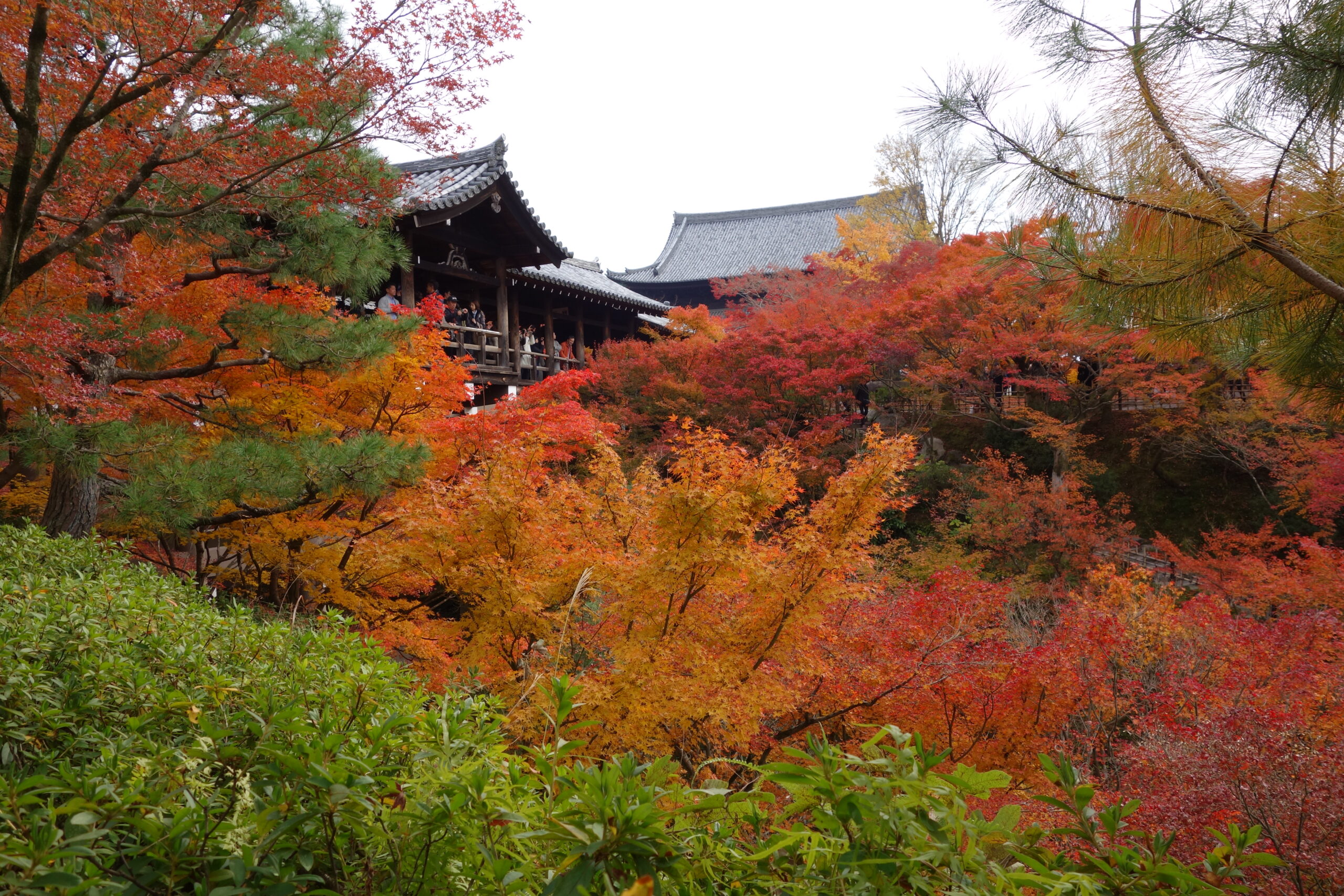
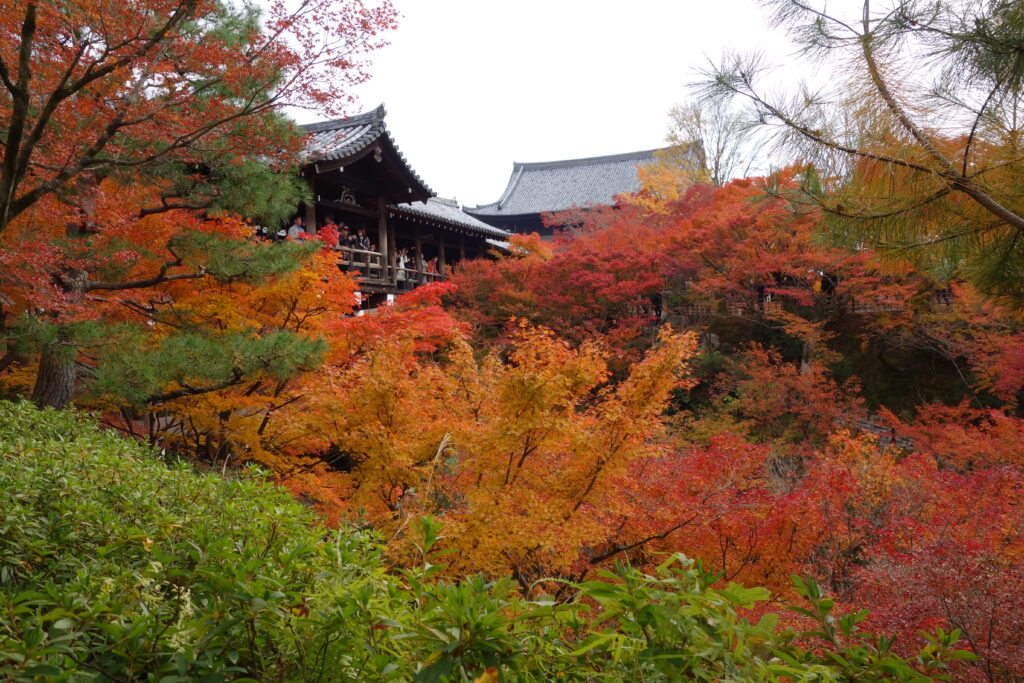
The familiar postcard of Japan in autumn is filled with fiery red leaves. Japanese maples do create some of the country’s most striking colors, particularly against the roofs of temples and shrines. But another color is just as recognizable in many cities: the yellow of ichō, or ginkgo.
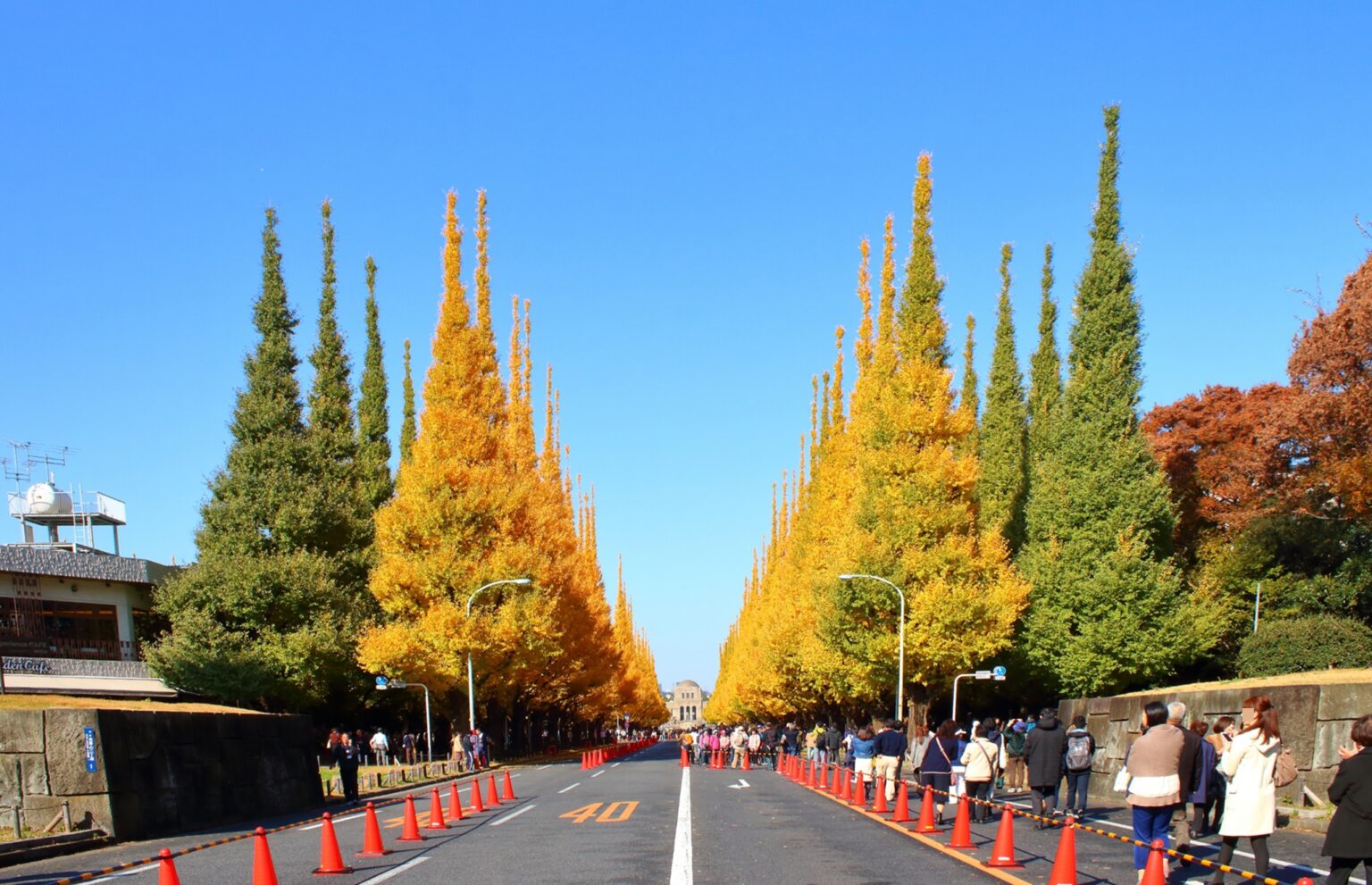
Ginkgo trees line streets and university paths, and their leaves can turn pavements gold. Their fan-shaped foliage gives a different effect from the delicate lobes of a maple. The colors are equally seasonal, but the settings can be worlds apart.
A trip to Kyoto might lead to a centuries-old temple. In Tokyo, a short walk near the outer gardens of Meiji Jingū may lead to a broad avenue of golden ginkgo trees. Neither experience is more authentically Japanese than the other.
4. Autumn Moves Across Japan
Japan is long from north to south, and its mountains have a wide range of elevations. There is no single nationwide date when the leaves become their brightest. Colors generally begin earlier in northern and higher-altitude areas and arrive later farther south or in warmer lowlands.
The exact timing changes with weather and location. A mountain slope may be vivid while trees in a nearby city are still green. A warm autumn can shift the usual pattern, and a spell of rain or wind may shorten an especially beautiful display.
That is why travelers look at foliage forecasts, but it is also why a forecast should be treated as a guide rather than a promise. A dated photograph of a famous temple cannot tell you exactly what that temple will look like on a particular day in 2026.
For many people living in Japan, following the leaves does not require a journey across prefectures. It may simply mean returning to the same tree on the way home and noticing that yesterday’s green is becoming yellow.
5. Why Kyoto’s Autumn Is So Famous
Kyoto is especially associated with momijigari because its temples, gardens and hillsides create beautiful places to appreciate the changing leaves. Red branches may frame a wooden gate, scatter over stone steps or appear reflected in a pond. The combination of architecture and seasonal color is part of what makes the city memorable.
Some temples and gardens also offer autumn evening illumination, allowing visitors to see the foliage in a different light. But hours, ticket arrangements and photography rules vary by venue and date, so it is worth checking the official information before visiting.
There is a more practical side to this beauty. Famous autumn sites attract crowds, and a serene photograph may have been taken before the busiest hours. Visitors are sharing narrow paths and public spaces with local residents and other travelers.
The pleasure of the landscape is real, but so are the queues, train rides and small compromises needed to enjoy it. The Japanese experience of autumn is not always quiet or solitary.
6. A Different Kind of Autumn Outing
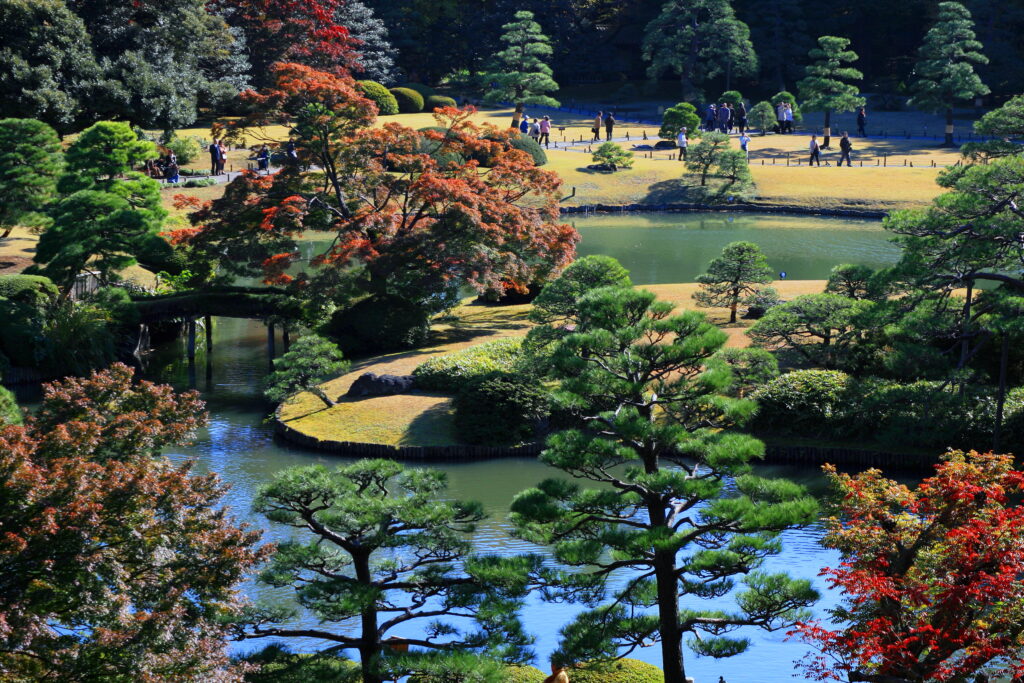
Not everyone heads for Kyoto. Tokyo’s public gardens provide another possibility: a pond, carefully tended trees and winding paths through a landscape that changes color as the season deepens.
One example is Rikugien, a garden in Bunkyō built around literary imagery and a central pond. It draws visitors during the foliage season, but its design also encourages a slower walk: stopping to look across the water, noticing the different shapes of trees, and taking a break from the surrounding city.
Beyond famous gardens, autumn may appear in a neighborhood park, outside a school or along the road to a supermarket. These quieter scenes rarely become international travel photographs, yet for residents they may be the more familiar experience.
7. The Feeling Behind the Photographs
Why go out specifically to look at something that will fall from a tree in a few days?
Part of the attraction may be exactly that it will not stay. A bright branch reminds us that we are looking at one moment in a cycle. It can feel exciting, nostalgic or quietly melancholy, depending on the person and the day.
This is sometimes described as a distinctly Japanese sensitivity to impermanence. Yet it is important not to turn a cultural tendency into a personality trait shared by everyone. Some people go because a friend invited them, others because the colors photograph beautifully, and others simply because the weather is pleasant.
A parent may remember visiting the same path with a child who is now grown. Someone who has moved away from home may recognize a familiar autumn smell. A visitor may know none of that history and still enjoy the view.
Perhaps that is the best thing about momijigari: it offers space for different feelings without requiring anyone to explain them.
8. How to Enjoy Momijigari Respectfully
If you want to experience autumn-leaf viewing in Japan, there is no complicated etiquette to learn. Pick a place that interests you, check its current access rules and seasonal conditions, and allow time to walk without rushing.
At temples and gardens, follow signs about restricted paths and photographs. Do not climb over ropes, remove branches or block a narrow passage for the perfect shot. In very busy locations, a small amount of patience improves the experience for everyone.
You can also begin much closer to where you are staying. A garden near your hotel, a street lined with ginkgo trees, or a quiet park may offer a better glimpse of everyday autumn than a famous destination at its most crowded.
Japan’s autumn is not a single place on a map. It is a season people meet in different parts of their lives.
9. What Remains When the Leaves Are Gone?
By winter, the brilliant colors will be gone. There may be only bare branches, fallen leaves caught in the corner of a street and a photograph saved on someone’s phone.
But the same trees will return the next year, and the landscape will be familiar and different once again. A little ritual of noticing can make an ordinary walk feel like part of a longer story.
Momijigari is not really about hunting for leaves. It is about making time to see the season while it is here.
Momijigari: Quick Questions
What does momijigari mean? Going out to enjoy autumn foliage, even though the name literally suggests “hunting” for leaves.
Are autumn leaves only red in Japan? No. Japanese maples turn red and orange; ginkgo trees, among others, can turn bright yellow.
When is the best season? It varies across regions, altitudes and years. Check current forecasts and individual venue information before you travel.
Keep Exploring Everyday Japan
Seasonal beauty is only one layer of Japanese life. Explore how communities keep local festivals alive, or discover the people and memories behind Japan’s changing shopping streets.
Sources & Further Reading
- Japan National Tourism Organization — History & Culture of Kōyō. Seasonal custom and its historical development.
- Japan National Tourism Organization — Autumn Leaves (Kōyō) of Japan. Differences by region and the meaning of momijigari.
- Kyoto City Official Travel Guide — Seasonal Information. Kyoto’s autumn scenery and temple viewing practices.
- Japan National Tourism Organization — Rikugien Gardens. Garden landscape and fall foliage.
Editorial note: Opening scenes and personal examples are illustrative, not accounts of identified individuals. Foliage dates, public access and crowds vary with location and year. The documentary photographs were taken in 2007, 2016 and 2017 and do not represent current 2026 conditions. Prepared October 16, 2026.