Real Life in Japan · Culture & Traditions
Kotatsu: Japan’s Heated Table and the Comfort of Winter
A kotatsu is a Japanese heated table with a quilt that holds warmth around the legs. Here is how it works, how it has changed and why it belongs to winter life.
By Maki Kakudate · 6 minute read
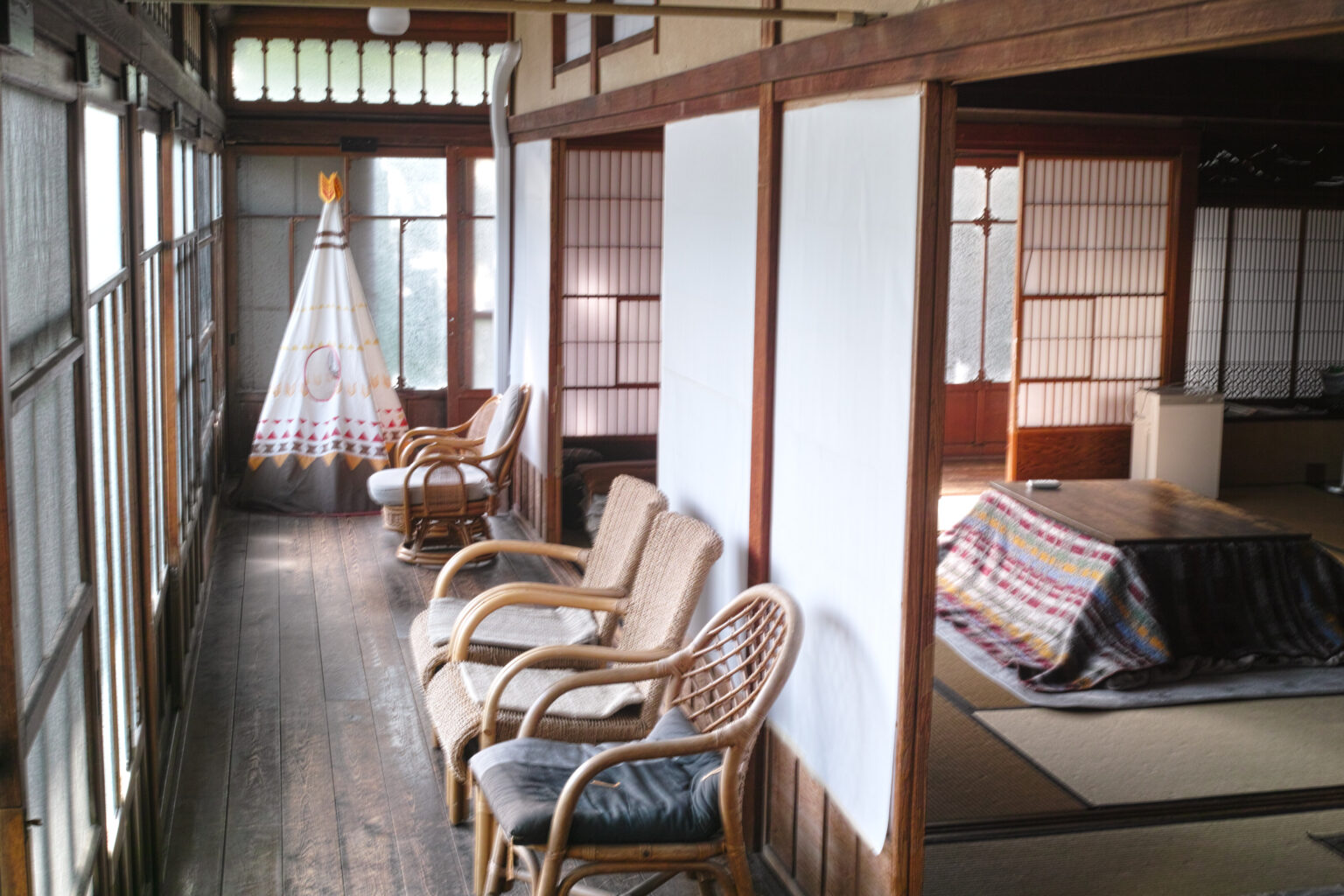
Picture a table wearing a quilt. The fabric reaches almost to the floor, but the tabletop is still free for a cup of tea, a book or a bowl of mandarins. You sit beside it, slip your legs underneath and discover the part the photograph cannot show: the warmth.
This is a kotatsu, a table built around a heat source and a covering that keeps warmth close to the people sitting there. It is one of the domestic objects through which a Japanese winter becomes easier to imagine.1
Its appeal begins with a practical question: where do you want to be warm? Follow that question into the home, and the story becomes one of furniture, changing habits and the pleasure of staying in one place a little longer.
What is a kotatsu, and how does it work?
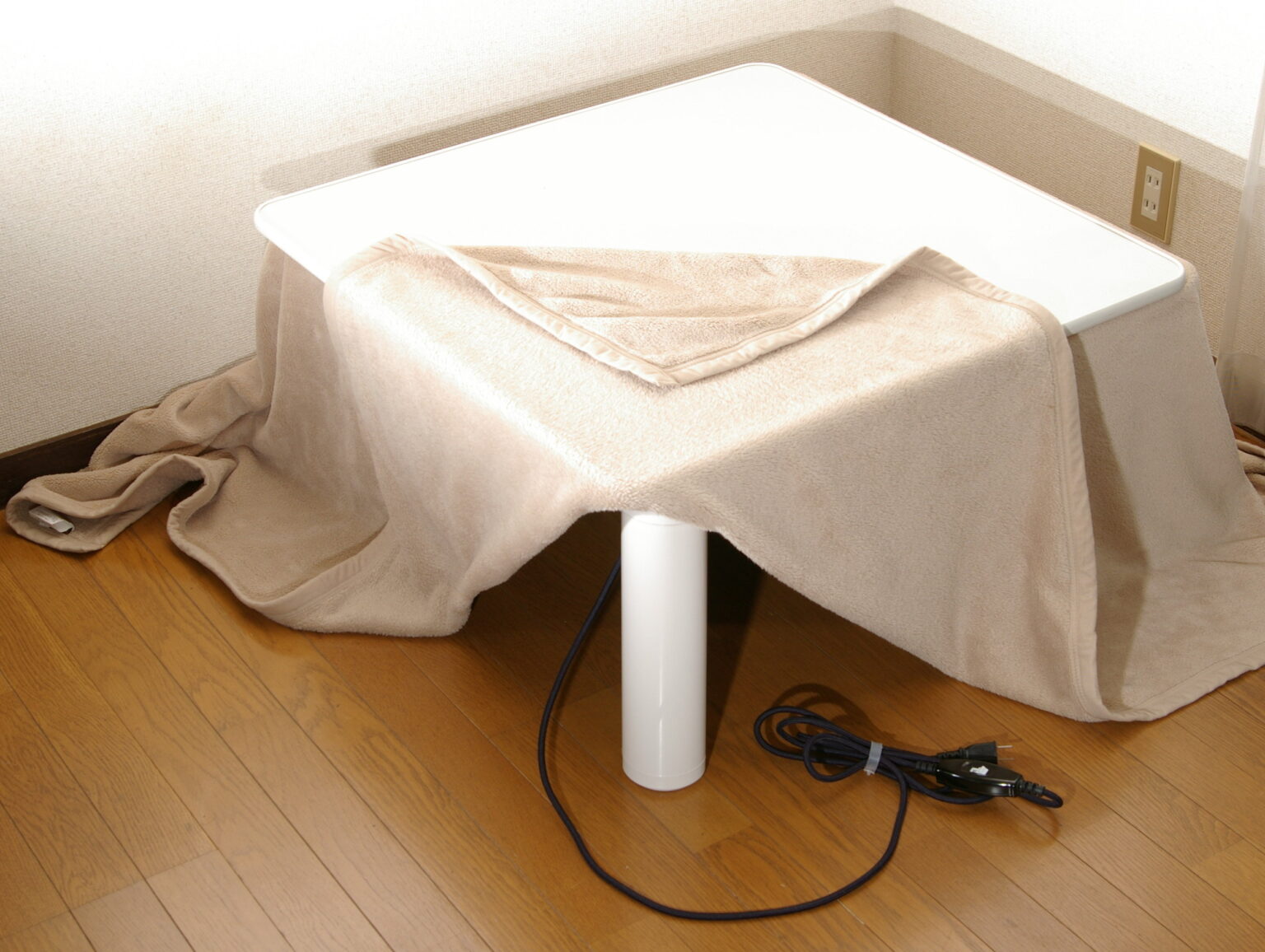
In the familiar modern arrangement, an electric heater is attached beneath the table frame. A thick quilt, often called a kotatsu futon, hangs over the sides, with a separate tabletop resting above it. The covering helps hold warmth around the legs while the surface remains available for everyday use.1
The result combines two experiences at the same spot: the ordinary usefulness of a table and a sheltered pocket of warmth below it. Your hands can turn a page or lift a teacup while your legs stay under the quilt.
That arrangement also makes the photograph easier to read. The fabric is part of the heating system. A kotatsu futon serves as the covering for the heated table; the word futon here refers to that quilt.2
Why the warmth stays close
A kotatsu brings warmth to the place where someone is sitting. JICA’s guide to winter life describes it within a longer pattern of heating people and particular parts of the home. Its small enclosed space is central to how it works.2
That helps explain the feeling of settling into one. You move toward a specific warm place, then arrange your evening around it. A book, a snack and a conversation can all fit within reach.
Japanese homes also use air conditioners with heating functions, other heaters and heated floors. The kotatsu sits within that wider range of choices.1 Its presence in a room does not tell you how the entire home is heated, or what the house next door uses.
An old idea, repeatedly redesigned
Web Japan traces the kotatsu’s roots to the Muromachi period, when a frame and covering held warmth around a hearth. The enduring idea was to keep heat near the people gathered around it.1
The transition to electricity happened in stages. Panasonic’s historical archive lists an electric kotatsu from 1929 and a framed electric version from 1934.3 The electric kotatsu’s history therefore reaches back well before the postwar years.
A record in the National Museum of Nature and Science’s industrial technology database describes a mass-produced 1957 model made by Tokyo Shibaura Electric, later known as Toshiba. Its heater was mounted above the user’s legs; the record explains the work involved in directing heat downward and insulating the upper part.4
These examples reveal a household object being rethought through materials and engineering. The heat source and structure changed, while the aim of keeping warmth close to the body endured.
Why the picture comes with mandarins
The familiar winter pairing is kotatsu and mikan. Mikan are mandarins, and JICA’s winter guide connects the fruit with time spent at the heated table.2 A bowl of them is an everyday detail that helps turn an appliance into a scene.
Imagine peeling one while somebody else reads or watches television. There is a small shared surface for cups and discarded peel, and no particular reason to rush through the moment. The pleasure can be in doing very little.
JNTO’s cultural feature describes the kotatsu as a place for people to gather, while also discussing its use by people working at home.5 That range matters: a table can accommodate company, solitary concentration or a quiet evening without having one fixed meaning.
The design offers one explanation for its appeal: comfort supplies a reason to stay nearby. People do not need to be taking part in the same activity to share the same warm place. The furniture makes room for a kind of togetherness that asks very little of anyone.
The kotatsu has grown taller
The low table on a tatami floor remains a recognizable image. Contemporary furniture shows how many ways that basic arrangement can change.
MUJI’s official range includes kotatsu designed to work as ordinary low tables after the quilt is removed. Its product feature describes slim heaters that leave more room underneath, along with smooth tabletops intended for writing and other daily activities.6
These details make sense when one piece of furniture has several jobs. A surface used for a meal can become somewhere to study; a winter table can remain part of the room in summer. The shape and finish help determine whether it fits comfortably into the rest of the home.
Height is changing too. In an October 2026 announcement, Nitori introduced a kotatsu adjustable to approximately 40, 59 or 65 centimeters. The three settings are intended for sitting on the floor, at a sofa or on a chair.7
The same announcement describes customers wanting the comfort of a kotatsu while finding floor sitting difficult, or wanting to use it with their existing sofa.7 Those requests show how a familiar object can adapt to the person using it. Sitting at a chair and keeping your legs under a warm covering can belong to the same story as sitting on a cushion.
A familiar image, different homes
Recognizing the kotatsu as an image of Japanese winter tells you very little about whether a particular household owns one. The room, the other furniture and the way its occupants prefer to sit all matter.
There is practical work behind the comfortable picture, too. A quilt occupies space around a table. The floor needs cleaning, the covering needs care, and a seasonal change means deciding where things will go. For a household choosing its furniture, those questions sit alongside the appeal of warmth.
A kotatsu can suggest childhood, time with relatives or a place of your own. Those possibilities are worth leaving open. A household object acquires its meaning through the life around it, and different lives give it different associations.
Perhaps that is what makes this table such a useful way into everyday Japan. The view begins with an unfamiliar arrangement of fabric and furniture. Once you imagine sitting down, the wish behind it is easy to recognize: something warm nearby, a place for your cup, and a little time to settle.
Continue exploring
More from everyday Japan
Look beyond the table to the room around it: how tatami mats shape a Japanese room explores another household detail that changes how people sit and use a space.
Sources & further reading
Sources checked on October 19, 2026. Older sources are used for historical and cultural context; contemporary product examples are identified separately.
- Web Japan — Winter Life in Japan. March 2012. Construction and historical background.
- JICA Tokyo — JICA Tokyo Quarterly, vol. 21, page 7: How we spend winter time in Japan. 2013. Local heating and the winter association with mikan.
- Panasonic Holdings — Life around 1930. Historical archive listing electric kotatsu from 1929 and 1934. Japanese.
- National Museum of Nature and Science — Industrial Technology History Database: Yagura kotatsu, record 100611940015. 1957 Tokyo Shibaura Electric model. Japanese.
- Japan National Tourism Organization — Kotatsu: The Japanese Invention The World Hasn’t Cottoned Onto Yet. October 3, 2020. The kotatsu as a social space and its adaptation to work at home.
- MUJI — Appliances for warming personal spaces. Official product feature: year-round tables, flat heaters and surfaces for everyday use. Japanese.
- Nitori Holdings — Three-way height-adjustable kotatsu for floor, sofa and chair use. Company announcement, October 8, 2026. Japanese.
Photograph credits and reuse licenses appear with each image.









Comments