Real Life in Japan · Culture & Traditions
Why Are Clear Umbrellas So Common in Japan?
Everyday convenience, a surprising history, and what happens after the rain.
By Maki Kakudate · 5 minute read
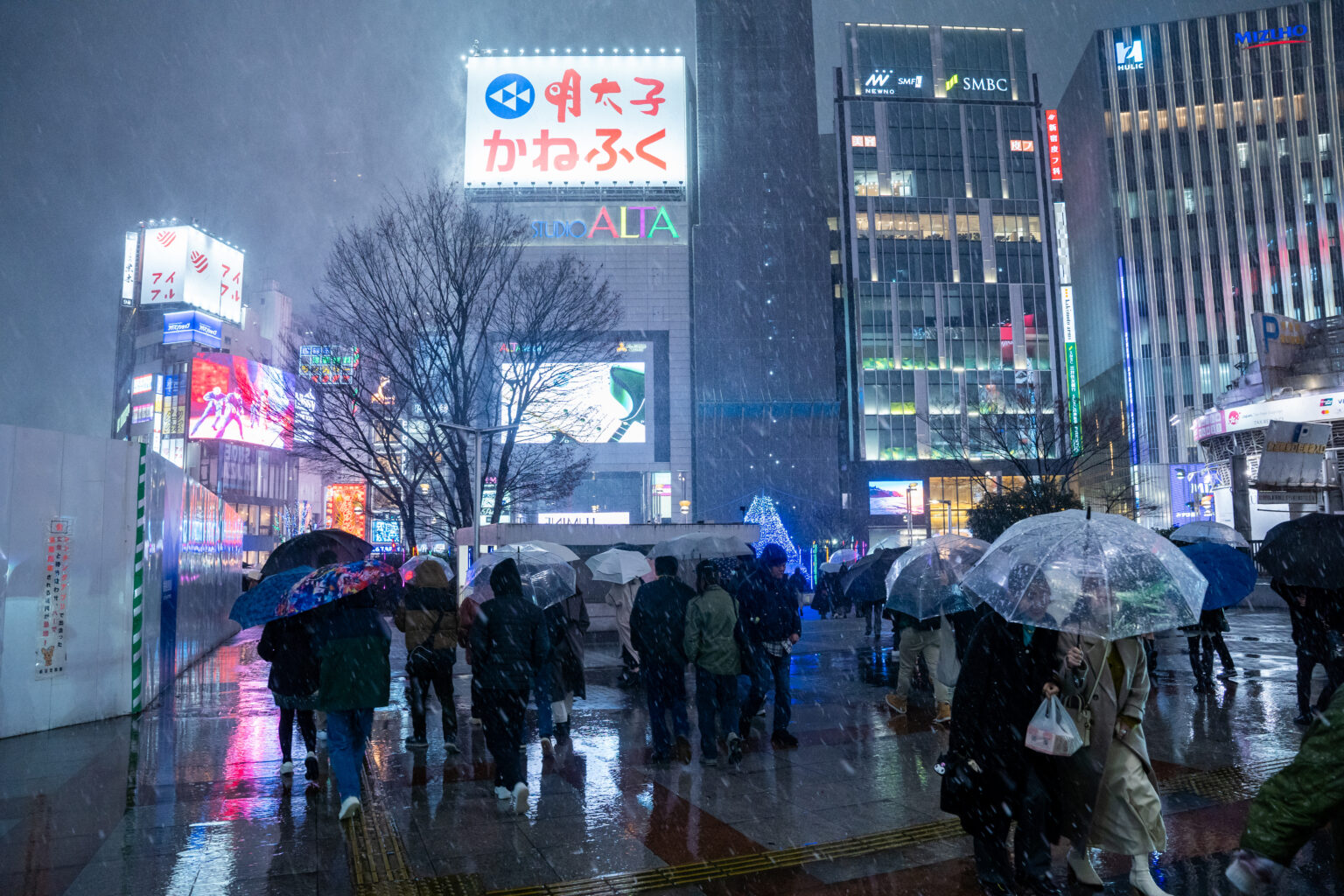
On a wet evening in Tokyo, transparent umbrellas catch drops of rain and reflections from the shops. Seen together, their pale outlines can become part of the pattern of the street. It is an everyday object that can find its way into a visitor’s picture of Japan.
For the person underneath, the appeal may be much simpler: getting to the next place with a dry coat and a view of what lies ahead. Clear umbrellas bring together a practical design benefit and the convenience of an ordinary shop purchase.12
Looking more closely reveals a longer story. Its history includes experiments with new materials, a place in fashion, and changing ideas about buying, keeping and sharing the things we use.
Easy to buy when the day changes
Imagine leaving home without an umbrella, then finding that the short walk from a station has become a walk through rain. The useful purchase is the one available along the way.
Convenience stores provide one familiar route. For example, 7-Eleven’s Japanese product range lists a 65 cm vinyl umbrella for nationwide sale, while noting that individual stores may not carry it. An umbrella is part of the everyday goods offered through the same retail channel as a snack or something needed at home.1
That availability helps explain its place in daily life. Buying one can be a small adjustment to an interrupted journey. It might be chosen quickly, with little thought beyond the distance still to walk.
A view through the canopy
Transparency has a direct use: you can look through the canopy. White Rose, a Japanese umbrella maker, places that visibility at the center of its design philosophy.2
From underneath, the edge of an opaque canopy can hide part of the surroundings. A clear one gives another view through the cover itself. That can make the experience feel more open, whether you are looking toward a shop entrance or keeping someone beside you in sight.
The visual quality that makes a clear umbrella attractive in a photograph is therefore connected to how it works. The street remains visible through the object that is keeping the rain off.
A history that began with an umbrella cover
White Rose’s account of its own history begins with a problem involving older cotton umbrellas: rain could make their dyes run. The company developed plastic covers to protect them. Later, it attached the plastic directly to an umbrella’s frame.3
The company dates its first plastic umbrella to 1958. It also makes an easily missed distinction: those first models were white. Transparent versions came later.3
In its Japanese history, White Rose describes taking transparent umbrellas to shops around Ueno and Ginza. It also recalls vinyl umbrellas sold between 1965 and 1974 at prices comparable to silk umbrellas, with colors and printed patterns contributing to their fashion appeal.4
That history adds another way to look at the object on a shop rack. Before the familiar image of an umbrella bought in a hurry, there was a new material to work with, a new method of making a canopy, and an effort to persuade people that the result was worth choosing.
An everyday name, many kinds of umbrella
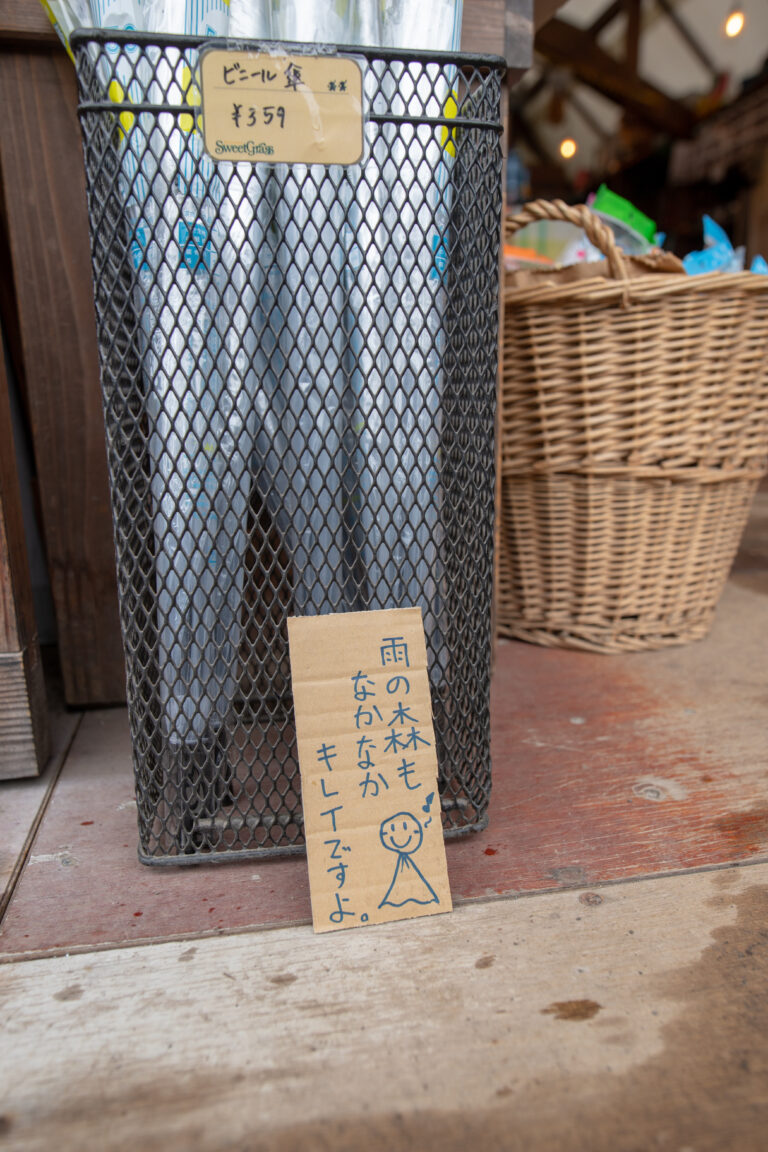
The Japanese term binīru-gasa (ビニール傘), usually translated as “vinyl umbrella,” covers products with different designs and specifications. For example, Wpc.’s Classic plastic umbrella uses a twelve-rib frame and offers several color choices. Its product information identifies the canopy material as polyethylene.5
A clear canopy can belong to an accessory someone chooses for its shape and color. It can also belong to the practical umbrella picked up during a shower. Looking similar from across the street does not tell you how two umbrellas were made, what they cost, or how their owners intend to use them.
White Rose offers another approach through repair. The maker says it designs its umbrellas with the intention that they can be repaired and used for longer. That is the company’s design philosophy; the care and repair options for any particular umbrella depend on its maker and construction.2
What happens when the rain stops?
Once the rain has passed, the immediate need for an umbrella disappears. It is worth noticing that second moment in the story: deciding what to do with the thing that has just helped you get somewhere.
Keeping an umbrella for another day is one possibility. Borrowing one through an organized service is another. iKASA uses an app to help people find a stand, borrow an umbrella and return it to a compatible participating stand. The service presents sharing as a way to reduce the repeated purchase and disposal of vinyl umbrellas.6
For a traveler considering that option, the useful detail is the return location. A shared umbrella belongs within the service’s network, and the app’s instructions matter. Buying, carrying an umbrella from home and using a sharing service fit different journeys.
These choices bring the story back to an ordinary day. An umbrella bought quickly can still become the one that stays beside the door, ready for the next shower.
The small relief of staying dry
For a visitor, a clear umbrella might become part of the memory of a rainy afternoon: lights reflected on the pavement, a walk shortened by a café stop, or the view of a street through beads of water.
For someone who lives there, the same object might simply belong to getting home with the shopping. Its usefulness can be quiet and immediate.
Both experiences fit beneath the same transparent canopy. The umbrella can be an image of Japan and a very ordinary possession at once. The rain passes, the umbrella folds, and an ordinary journey continues.
Sources & further reading
Official sources consulted on 17 October 2026. Historical details above are attributed to the manufacturer’s own accounts.
- 7-Eleven Japan — 65 cm vinyl umbrella product listing. Official product range and store-availability note.
- White Rose — Product philosophy: visibility, repair and longer use. The manufacturer’s stated design approach.
- White Rose — Company interview on the history of its plastic umbrellas. Historical account of umbrella covers and the white plastic model introduced in 1958.
- White Rose — The White Rose story. The company’s account of transparent umbrellas, retail promotion and fashion.
- Wpc. — Classic plastic umbrella: design and specifications. Official product page, including canopy material.
- iKASA — Umbrella-sharing service and instructions. Borrowing, participating stands and compatible return areas.









Comments