The hidden work, everyday habits, and shared responsibilities behind Japan’s reputation for cleanliness.
LAYERS OF JAPAN · 13 minute read
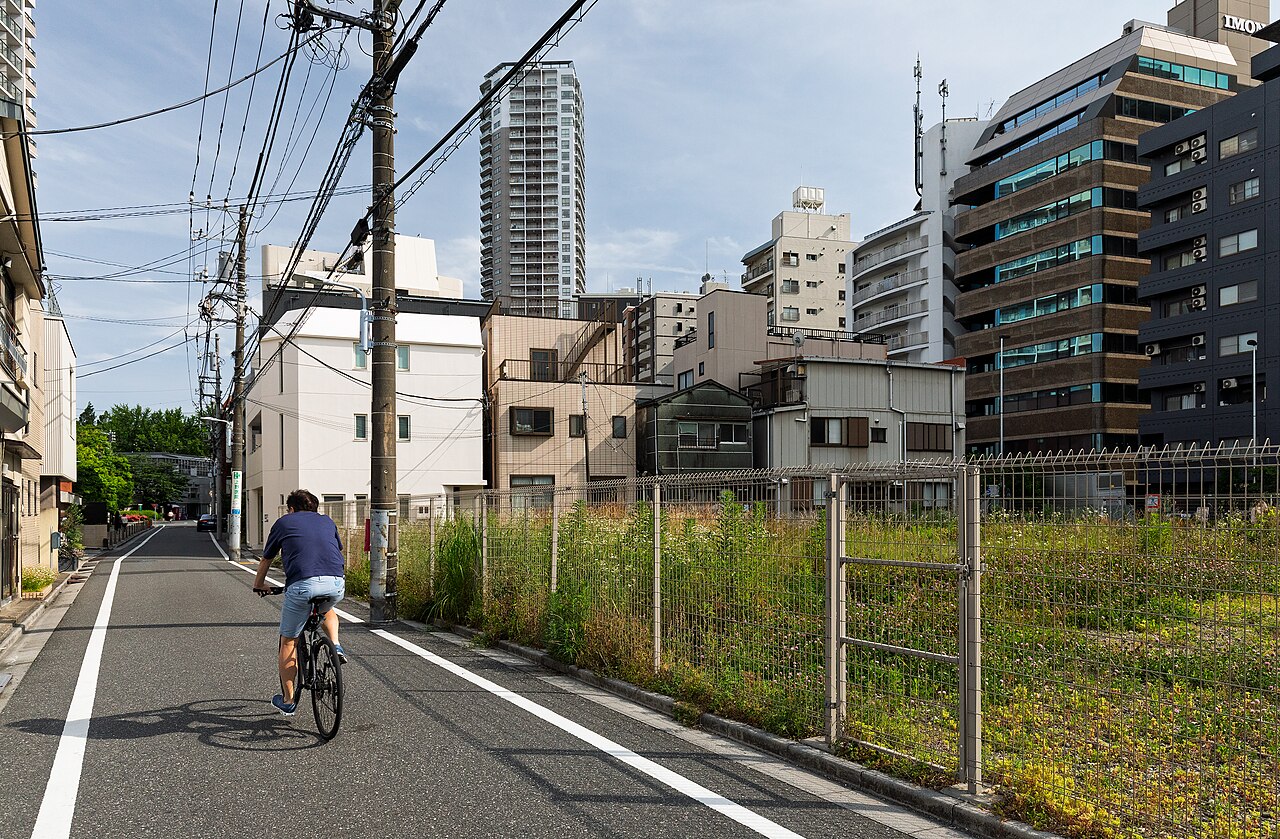
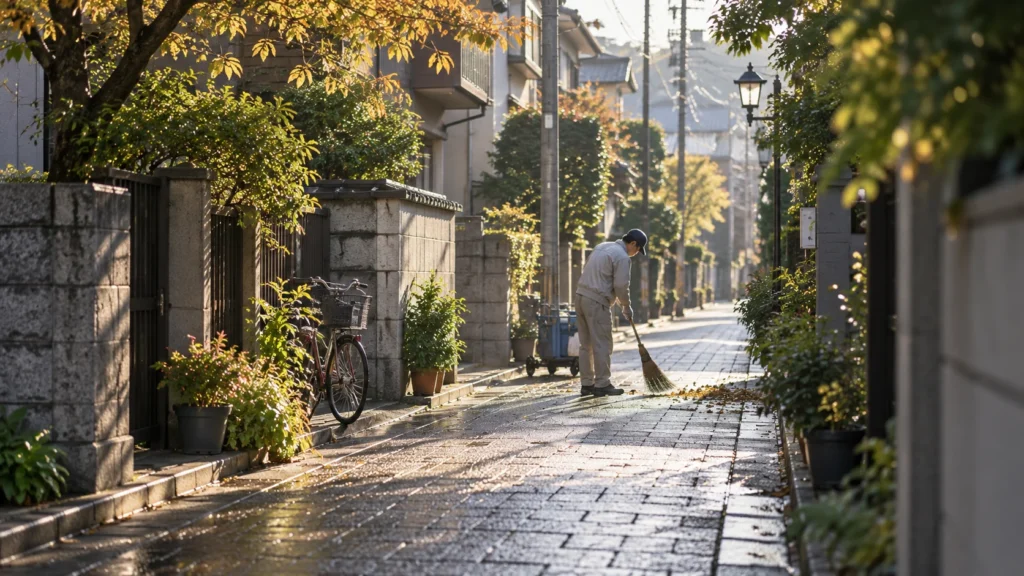
Early in the morning, a narrow Japanese neighborhood street is almost silent. A bicycle leans beside a wall. The plants outside a home have been watered. There is barely a wrapper on the pavement.
A little farther down the road, someone is sweeping fallen leaves into a small pile.
For a traveler, this kind of street can seem astonishingly orderly. Japan has become famous for public spaces that look clean even when there are few places to throw anything away. The scene invites a familiar question: Why are Japanese streets so clean?
It is tempting to answer with one word: culture.
But culture does not collect garbage, empty containers, clear drains, sweep pavements, or sort the contents of a collection truck. People do those things. So do organizations, businesses, schools, and local governments working within systems that require time, money, and cooperation.
The appealing image of a clean street is real in many places. The work behind that image is real, too.
A street does not stay clean because nobody ever makes a mess. It stays clean because countless people work to prevent messes—and deal with them when they happen.
1. The Mystery of the Missing Trash Can
One of the first things visitors notice in Japan is the surprising scarcity of public waste bins in some places.
Someone buys a drink, finishes it while walking, and begins looking for somewhere to throw away the empty container. One corner passes, then another. The container is still in their hand.
The Japan National Tourism Organization (JNTO) explicitly warns travelers that public bins may be limited and advises carrying a small bag for rubbish until it can be disposed of properly. In other words, the absence of a bin is not an invitation to leave a cup beside a vending machine or on a station platform.
But there is no single national rule saying that every street must be bin-free. Availability varies by location, transport operator, business, and facility. Some stations and shopping areas provide clearly marked containers; other places provide few or none.
It is also misleading to claim that a single historical event explains every missing trash can in modern Japan. Security, maintenance, costs, and local policies have all shaped how facilities manage waste, and the arrangements are not uniform.
The practical lesson is simpler than the history: in some places, you are expected to take responsibility for the waste you produce until you reach an appropriate disposal point.
That habit can help a street remain pleasant. Yet it only works fairly when there are also accessible, well-managed ways for people to dispose of rubbish.
2. Cleaning Begins at School—But It Is Not a Magic Explanation
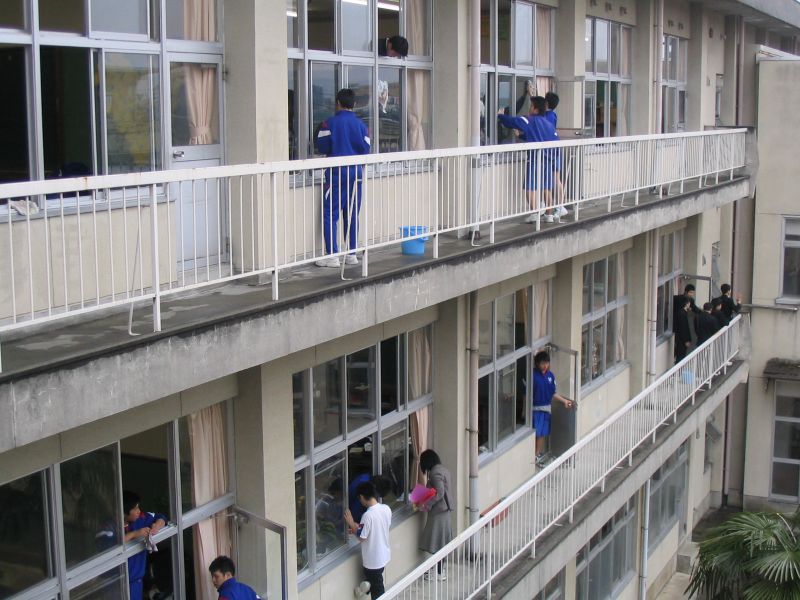
In many Japanese schools, children help clean their classrooms and shared spaces.
They may sweep floors, wipe surfaces with cloths, or work with classmates to tidy corridors. Older pupils may show younger ones how to do the job. The activity can be mundane, cooperative, occasionally boring, and surprisingly meaningful.
A November 2025 article from JNTO’s Japan Educational Travel program explains that school cleaning is treated as an educational activity intended to help pupils understand work, cooperation, and participation in community life. Its discussion draws on the experience of an educator formerly involved in Japan’s national curriculum administration.
Importantly, that source does not say that every Japanese school follows one identical cleaning schedule. Arrangements vary, and cleaning time is not simply a standardized academic subject with the same timetable in every school.
Nor does having cleaned a classroom as a child prove that a person will never litter as an adult.
What the practice can teach is more modest and more interesting: shared spaces require effort, and the people who use a space can take some responsibility for maintaining it.
That connects naturally with another side of Japanese school life—students cooperating over classroom duties, meals, and school events. Our feature on school life beyond anime explores how these routines can be both empowering and demanding.
3. Before the Garbage Truck Arrives
Keeping a street tidy also depends on what happens at home.
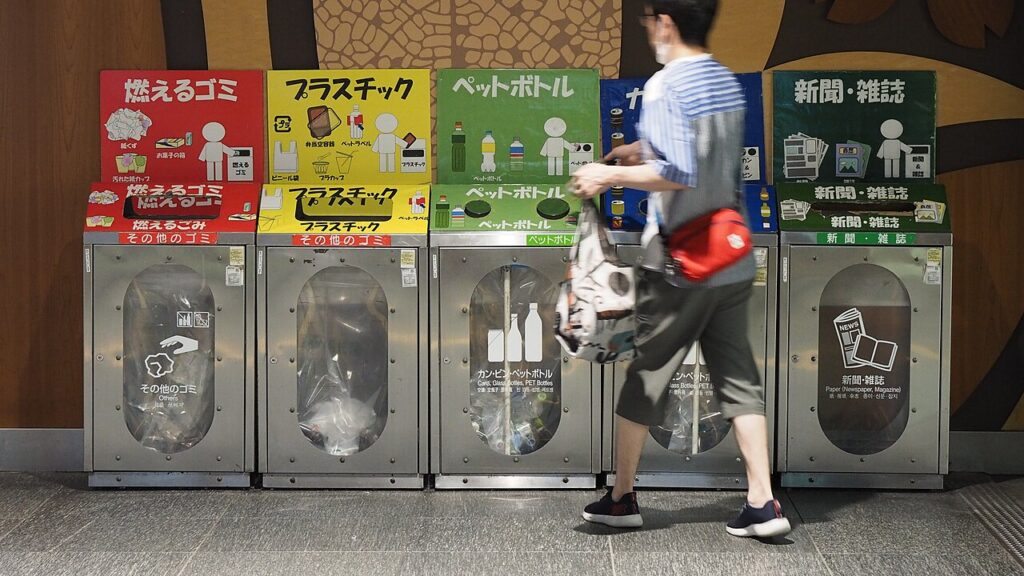
In many communities, residents must separate household waste into categories and place it outside only at designated times and locations. The instructions can be detailed: combustible waste, recyclable bottles, cans, paper, plastic items, and bulky household objects may follow different routes.
The rules are not identical across Japan.
Matsudo City in Chiba Prefecture, for example, explains in its English-language guidance that waste categories and collection days differ considerably by municipality. Its materials for overseas residents describe sorting practices and the need to follow local schedules. Tokyo’s municipal sanitation organizations likewise explain that the arrangements differ among the city’s wards.
A street can look remarkably orderly at one moment because bins and bags have already been collected. At another hour, the same street may display neatly arranged household waste awaiting pickup.
Neither image tells the whole story.
Residents must learn the schedule. Someone must produce translations and explanations. Collection staff must arrive reliably. And local systems must deal with mistakes, damaged bags, stray animals, bad weather, and items that cannot be put out with ordinary household rubbish.
Waste sorting is sometimes praised as evidence of national environmental virtue. It can support responsible treatment of materials, but separating an item does not automatically mean it will be recycled into a new product. Collection, processing, transport, and disposal still require infrastructure and resources.
The clean-looking pavement is only the most visible end of a much larger process.
4. The Workers We Almost Never Photograph
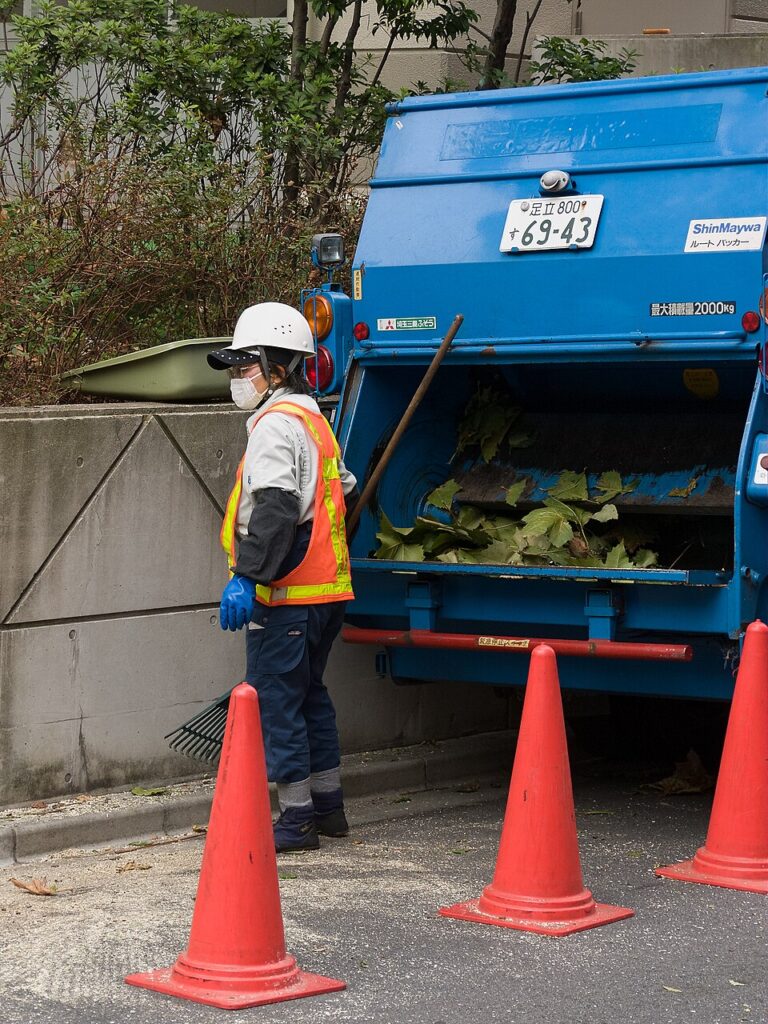
Visitors photograph tranquil streets, colorful shops, and peaceful neighborhoods. They rarely photograph the workers maintaining those places.
Yet road sweepers, sanitation crews, building cleaners, commercial cleaners, collection drivers, and waste-processing staff are part of the explanation for why many public spaces look the way they do.
Consider Tokyo’s twenty-three special wards. According to the Tokyo Twenty-Three Wards Clean Authority, individual wards handle waste collection and transport, while the wards jointly manage intermediate treatment such as incineration and crushing through a separate public organization. That division of responsibility makes clear that cleanliness is a matter of public administration as well as personal manners.
Private businesses have responsibilities, too. A shopfront is not tidied by a cultural value alone; somebody cleans it. A railway station does not remain usable solely because travelers are considerate; people maintain its facilities.
The labor can be repetitive, physically demanding, and easy to take for granted precisely when it is performed well.
This is why a romantic explanation—“Japanese people are simply naturally clean”—can miss the most important point. It turns the effort of real people into an invisible national personality trait.
Respecting a clean place should also mean respecting the people who clean it.
5. The Neighbors Who Show Up with Gloves and Bags
Not every effort begins with a municipal truck or a paid employee.
Neighborhood groups, schools, residents, companies, and volunteer organizations also organize cleanups. A local event may involve picking up litter along a road, removing discarded plastic from a riverbank, or making a park more pleasant for the next people to visit.
This is not merely a sentimental tradition. Such work is still actively promoted.
In August 2026, Japan’s Ministry of the Environment called for participation in World Cleanup Day activities and a three-month cleanup campaign across the Seto Inland Sea watershed. The campaign involves cooperation across fourteen prefectures as part of a wider effort to reduce litter and marine plastic pollution.
The announcement is useful evidence of two things at once. There are people willing to give time to improve shared places. And there is still enough waste escaping into the environment to require organized action.
A volunteer cleanup can help people feel responsible for their surroundings. But volunteering should not be confused with a replacement for professional sanitation services or investment in proper waste infrastructure.
A neighborhood is maintained through many different kinds of work, not one simple moral lesson.
6. Clean Streets, Complicated Social Expectations
There is a social dimension to the story as well.
When a person sees a tidy place, they may be less inclined to leave rubbish there. When residents know their collection day and understand that improper disposal may cause trouble for neighbors, following the rules can become part of daily life.
But an expectation that “everyone knows what to do” can also be frustrating for someone who has just moved into a community, has difficulty reading Japanese, or is unfamiliar with complicated local categories.
A rule is easier to follow when it is explained clearly.
That is why multilingual waste-sorting guides matter. Matsudo and other municipalities provide information in several languages, recognizing that clean streets are a shared responsibility requiring practical communication, not silent assumptions.
The same tension appears in other parts of daily life in Japan: attention to shared expectations can produce thoughtful behavior, but it can also become pressure when expectations remain unexplained. Our article on reading the air in Japan explores that balance in more detail.
The best community rules are not necessarily the strictest or most complicated. They are the ones people can understand, use, and discuss when something needs to change.
7. What Happens When Tourism Meets Everyday Life?
Japan’s image of cleanliness becomes harder to maintain when visitors and residents share crowded streets in very large numbers.
A busy attraction may generate drink cups, food wrappers, takeaway packaging, and overflowing containers in a short period. Streets that work well for an ordinary neighborhood may struggle when tourism brings thousands of additional people.
This is not just a matter of blaming travelers for bad manners. Local authorities must also consider where waste can be collected, who is responsible for servicing bins, how to communicate disposal rules, and how much pressure residents and businesses can reasonably absorb.
Japan’s Tourism Agency explicitly identifies misconduct and overcrowding as challenges in some destinations. Its 2026 visitor-management program lists measures such as smart waste bins among the types of infrastructure that areas may introduce. In June 2026, the Ministry of the Environment also selected three groups for projects intended to reduce litter and improve cleanliness in tourist regions.
If Japan’s streets were automatically spotless, such programs would be unnecessary.
A beautiful tourist image can hide the work needed to protect daily life for people who actually live there.
The solution cannot be only “visitors should behave better,” nor only “put a bin on every corner.” Places need thoughtful choices about waste, staffing, communication, crowding, and the needs of residents.
8. Does Looking Clean Mean Creating Less Waste?
There is another important distinction: a tidy street is not the same thing as a low-waste society.
A disposable cup carried responsibly to the correct bin is still a disposable cup. A carefully wrapped purchase still uses packaging. Sorted waste must still be collected, transported, processed, and sometimes incinerated or disposed of.
Japan has sophisticated systems for handling municipal waste, but the visible neatness of a street does not by itself tell us how much waste is produced or how sustainable the underlying systems are.
Environmental responsibility includes questions that cannot be answered by a photograph: how products are packaged, whether materials are reused, how waste is processed, and whether workers have the resources they need.
The cleanliness that travelers admire can be valuable without being the whole measure of environmental success.
To appreciate Japan responsibly is to hold both thoughts at once.
9. A Small Courtesy for Visitors—and a Larger Responsibility
For a traveler, the most useful habit is also one of the simplest: bring a small bag, keep your own waste with you when no proper bin is available, and follow the disposal guidance of the place you are visiting.
Do not assume that a business’s waste container is available for rubbish brought from elsewhere. Do not leave bags beside a full bin, and pay attention to signs that separate different materials. When in doubt, ask rather than guessing.
These are modest forms of consideration, not uniquely Japanese virtues.
The larger responsibility belongs to the people and institutions that shape public spaces. Visitors cannot personally redesign garbage collection, provide municipal staffing, or decide whether a crowded attraction needs more waste facilities. Communities and government agencies must make those choices.
Personal responsibility matters. So does public responsibility.
10. The Morning After Everyone Has Gone Home
Imagine the street again, early in the morning.
The light falls across the pavement. A bicycle is parked beside a wall. A resident carries a bag to the correct collection point. Somewhere nearby, a worker is finishing a route. Someone else brushes leaves from a doorstep.
There is nothing dramatic about any of these actions.
Perhaps that is why they are so easy to miss.
The streets visitors admire are shaped not only by habits learned at school, but also by municipal services, cleaning workers, neighbors, business owners, and the ordinary decisions people make when sharing a place.
Some streets are cleaner than others. Some communities struggle with litter, tourism, or limited resources. Japan does not offer a perfect solution, and there is no single cultural explanation for everything a visitor sees.
But a clean street can still be something worth noticing—especially when we notice the people behind it.
A clean street is not an accident. It is the result of countless small acts of care—and the systems and workers that make those acts matter.
The next time you walk through a quiet Japanese neighborhood, look beyond the absence of rubbish.
Look at the effort that makes the space feel shared.