Real Life in Japan · People & Community
Do Japanese Neighbors Know Each Other? The Quiet Rules of Community Life
You can live beside someone for years without knowing their name. And still, when something happens, the same street may quietly become a community.
LAYERS OF JAPAN · 9 minute read
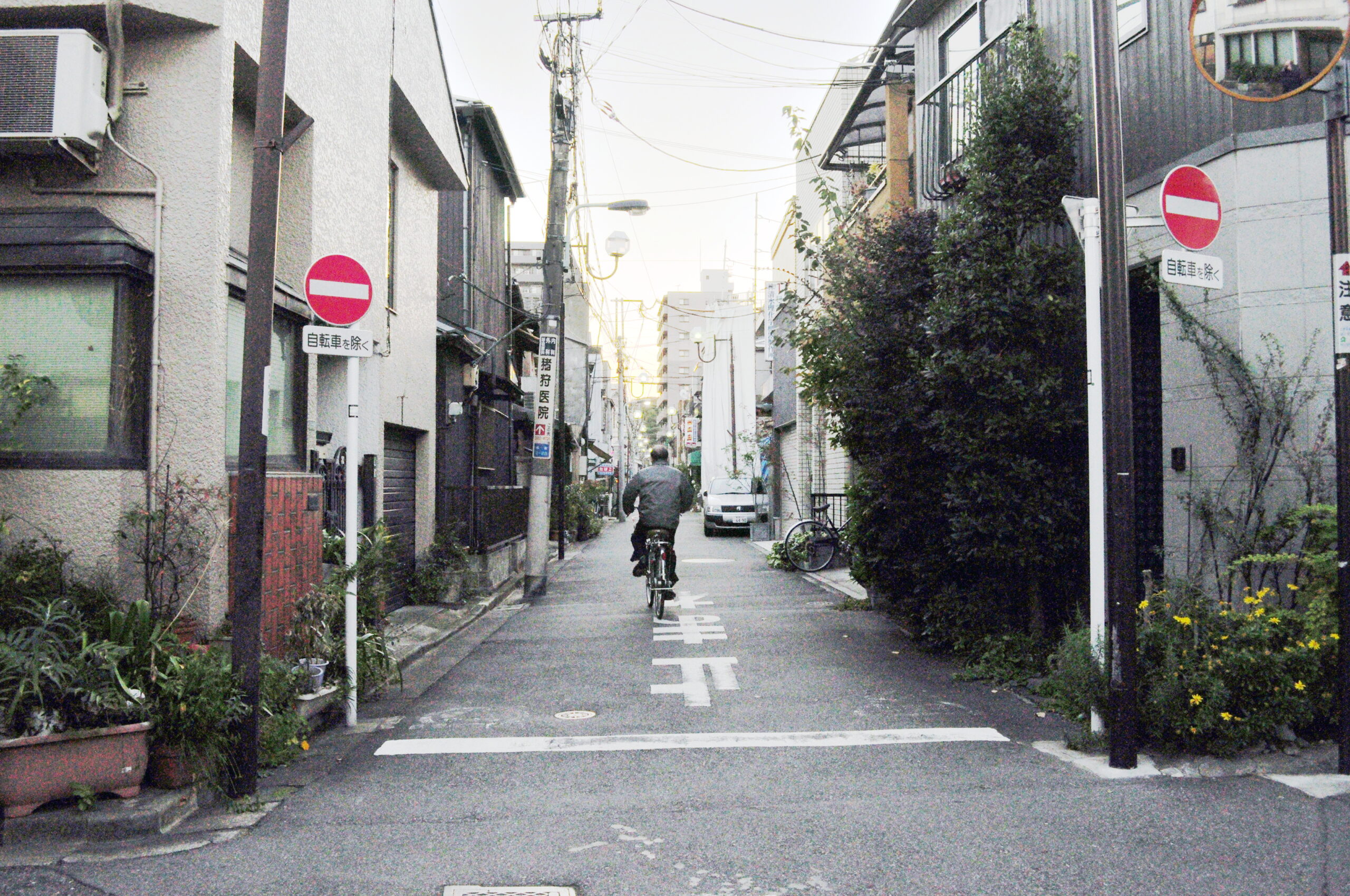
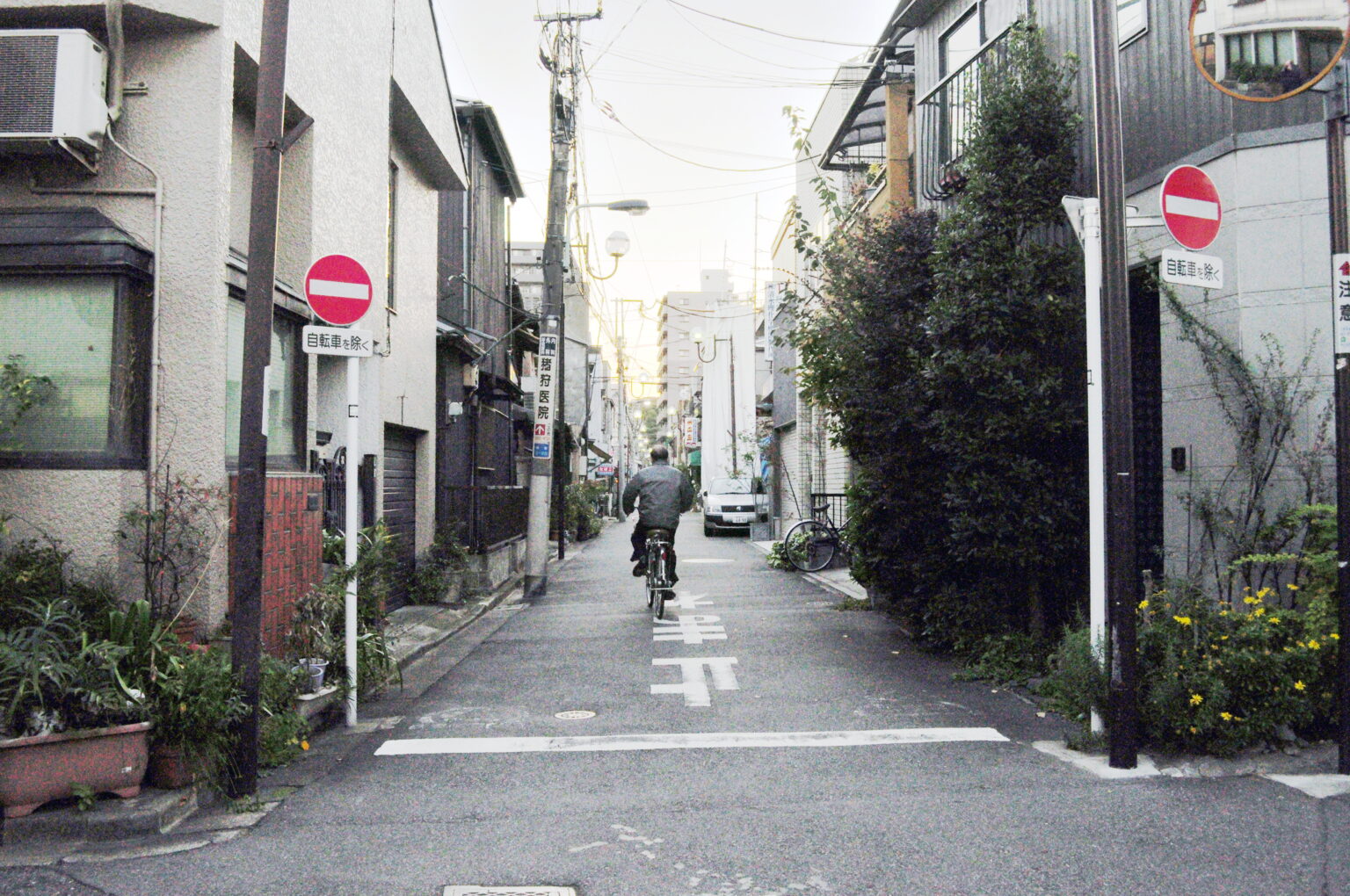
Walk through a residential neighborhood in Japan and the first thing you notice may be how ordinary it is. Bicycles lean against walls. Plants sit outside doorways. Somewhere, a washing machine is running. The streets are not a stage for tourists; they are simply where people come home.
Perhaps two neighbors exchange a brief konnichiwa. Perhaps someone nods without stopping. Perhaps an apartment door opens and closes without a word.
For an overseas visitor, this raises an interesting question. Are Japanese neighborhoods close-knit places where everyone looks after one another—or private places where people try not to intrude?
Both images contain pieces of reality. Neither tells the whole story.
Neighborhood life in Japan is often a negotiation between belonging to a place and giving other people room to live their own lives.
1. A Greeting Can Be Small—and Still Matter
In some neighborhoods, people acknowledge one another with ohayō gozaimasu in the morning or konnichiwa during the day. A short greeting does not necessarily lead to conversation. It may simply mean: I have seen you; we share this street.
Different households have different habits. An older resident who has lived in the same area for decades may know many names. A person who recently moved into an apartment may know only the building manager. A student leaving early for class may encounter almost nobody.
The important point is not that all Japanese people greet their neighbors—or that those who do not are unfriendly. A greeting can be a small expression of recognition that asks very little from either person.
In some households and communities, a newcomer introduces themselves to nearby residents with a short visit. Elsewhere, especially in large apartment buildings, residents may avoid unannounced visits and prefer a note or no formal introduction. There is no single national rule.
2. Living Close Together Does Not Always Mean Knowing Each Other
Japan contains dense city apartment buildings, suburban streets of detached houses, older shopping neighborhoods, agricultural villages and countless arrangements in between. The geography of the home affects how neighbors meet.
In an apartment, a shared elevator or a mail area may be the only common space. People know one another by footsteps, deliveries or the bicycle parked downstairs without ever learning a name. In an older residential street, neighbors may have watched one another’s children grow up.
It is tempting to describe one kind of place as warm and the other as lonely. Reality is more complicated. An apartment building can have a helpful network of residents. A small street can have households that prefer complete privacy.
For some people, distance feels like freedom. For others, it can mean there is nobody nearby to ask for help. Much depends on age, work, family, length of residence and personal preference.
3. Chōnaikai and Jichikai: The Organization Behind the Street
A visitor may never notice the organization that helps arrange a local disaster drill or a seasonal neighborhood event. Depending on the area, it may be called a chōnaikai (町内会), chōkai (町会) or jichikai (自治会)—usually translated as a neighborhood association.
These are local resident organizations that may share community information, organize cleanups, support disaster preparedness, maintain aspects of the local environment or help put on seasonal activities. Their scale and responsibilities differ considerably from place to place.
Importantly, joining a neighborhood association is generally voluntary. Yokohama City’s guidance specifically explains that both Japanese and non-Japanese residents may participate and that membership is a choice, not a universal requirement.
A neighborhood association is also not necessarily the same as a condominium owners’ management association. The latter deals with ownership and management of shared property, while a chōnaikai focuses on local community activities. Confusing them can give a misleading impression of what residents are expected to join.
In a neighborhood where volunteers are active, their work may be so ordinary that outsiders do not see it at all. In another district, the organization may be less visible, and residents may not participate.
4. The Bulletin Board That Tells a Quiet Story
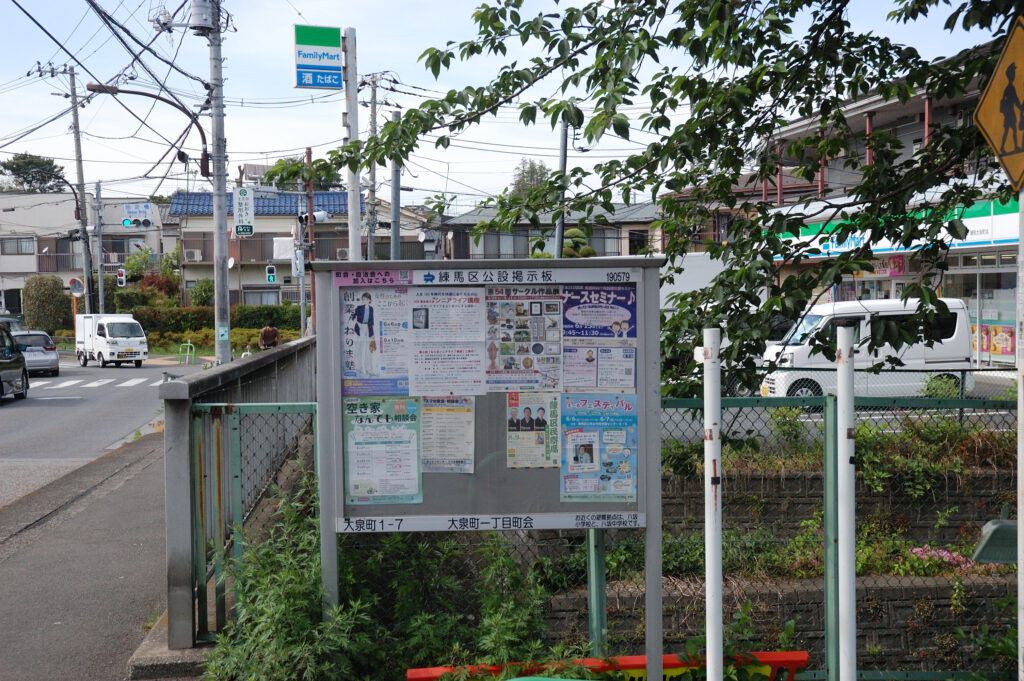
At a street corner or beside a park, you may come across a bulletin board with notices about a festival, a community meeting, a safety message or a local event. It can look modest, perhaps weathered by years of rain.
But such a board reveals something important: a neighborhood needs ways to share information with people who may never meet face to face.
In some communities, information also travels through a kairanban (回覧板), a circular notice passed from one household to the next. The Tokyo Metropolitan Foundation “TIPS” guide describes its use for local announcements such as road works, water-supply information and neighborhood events.
Digital messages, websites and apps now serve some of the same purposes. Different communities rely on different combinations. The paper notice is not evidence that every neighborhood is old-fashioned; it is one practical solution among several.
5. Shared Rules: Garbage Days and the Space Between Homes
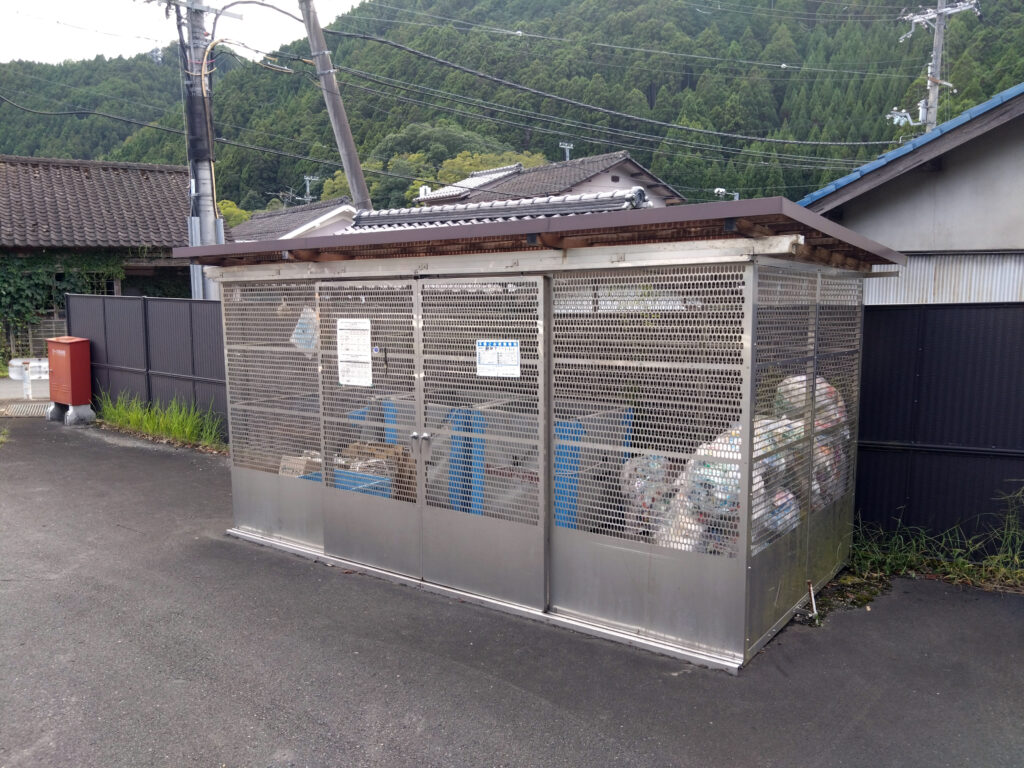
One of the most practical places where neighbors’ lives meet is the garbage collection point. Depending on the municipality and building, residents may be asked to separate different materials, use designated bags, and put rubbish out on particular days and at specific times.
The details are local, not a single nationwide code. Different cities—and sometimes different buildings—have different instructions. A resident who moves between municipalities may need to relearn the schedule.
Why does this matter for relationships? Because a collection point is a shared space. One household’s decisions can affect the next. An overflowing bin, a bag left on the wrong day or loose rubbish can become a small conflict—or a reason residents cooperate to keep the area usable.
Community groups sometimes help publicize the local rules or organize cleanups, as Yokohama City’s description of association activities makes clear. That does not mean every collection area is maintained by volunteers or every person has to join the local association to use public services.
A street is shared, even when the lives behind the front doors remain private.
6. Why Disaster Preparedness Makes Neighbors Important
Japan experiences earthquakes, heavy rain, typhoons and other emergencies. In such moments, the person living nearby may be able to respond before friends or relatives living far away.
Neighborhood associations in some communities help organize drills, provide information about evacuation and keep emergency supplies. Yokohama City lists disaster preparation among their activities, alongside child safety and neighborhood watch efforts.
But it would be simplistic to assume that community organizations automatically solve every problem. Some residents have limited time or mobility. Others are unsure how to participate. A newcomer may not know where information is posted or how to ask a question.
Real preparedness includes public services, accessible information and individual choices as well as volunteer effort. Still, knowing one nearby face—or knowing whom to contact—can make a stressful day feel less isolating.
7. A Community Needs Volunteers, but Volunteers Have Lives
Local cooperation can sound charming from a distance: summer festivals, shared cleanups, safety patrols and neighbors helping neighbors. Yet all those activities require someone’s time.
People may be asked to attend meetings, distribute notices, help with an event or take turns with neighborhood tasks. That can become difficult for households balancing work, caregiving and other responsibilities. Older volunteers may carry a large part of the work, while younger residents may not have the time or the interest to join.
Tokyo’s 2024 report on neighborhood associations examined residents’ attitudes alongside the organizations’ activities and challenges. It is a reminder that local participation is a changing social issue, not a timeless tradition everyone embraces equally.
Some associations are rethinking how they communicate and ask for help. Others are struggling to maintain activities. It is possible to value a shared community while questioning how the effort is divided.
8. How Can Someone New Become Part of the Neighborhood?
If you move to Japan, you do not need to become close friends with everyone on your street. A few practical steps can help you settle in: learn the waste-collection rules, pay attention to building notices, greet people when it feels natural and find out where emergency information is provided.
If a neighborhood group interests you, check the information available at your ward or city office. Yokohama City explicitly welcomes non-Japanese residents to its associations, and multilingual city services can help people learn about local activities.
There may be language barriers and differences in expectations. You may prefer a quiet private life, and your neighbors may prefer the same. Participation is more meaningful when people have a genuine choice.
The goal is not to imitate a supposedly perfect Japanese neighbor. It is to be considerate in the particular place where you live.
9. Does Keeping Your Distance Mean You Do Not Care?
There is an interesting tension in the idea of a good neighbor. One person may show care by checking in regularly. Another may show care by not asking intrusive questions. Both approaches can be helpful, or unhelpful, depending on the circumstances.
In some Japanese neighborhoods, there is room for the kind of friendliness that does not demand intimacy: a greeting, a parcel accepted on someone’s behalf with permission, a warning about a temporary road closure or a small offer of help during a disruption.
Yet privacy can also shade into loneliness. If nobody knows when a person needs help, the absence of contact can become a problem. The balance between being available and respecting boundaries is something communities have to work out rather than inherit as a fixed rule.
For another perspective on the expectations that shape everyday interaction, read our article about the unspoken rules of everyday Japan. For the wider social life of local streets, explore Japan’s changing shopping neighborhoods.
10. The Distance Between Two Front Doors
Return to the quiet residential street. Someone is carrying groceries. A neighbor is watering flowers. The street belongs to people who might have known one another for decades and to people who arrived only last month.
They will not all become friends. They may disagree about noise or rubbish collection. They may also share useful information, enjoy a festival together or help one another when the ordinary routine is interrupted.
It is tempting to search for a grand explanation of the Japanese national character in these small moments. A more useful observation may be that community is never as simple as either closeness or distance.
Sometimes being a good neighbor means having a conversation. Sometimes it means leaving someone in peace. And sometimes it means being there when the quiet street suddenly needs you.
Quick Questions About Japanese Neighborhood Life
Do you have to join a chōnaikai? Neighborhood associations are generally voluntary; check local arrangements and distinguish them from building-management organizations.
Do you need to introduce yourself to neighbors when moving in? Some people do, but there is no universal expectation. Building type and community customs matter.
Are garbage separation rules the same everywhere? No. Collection schedules and sorting requirements vary by municipality and building.
Can non-Japanese residents join neighborhood associations? Yes, local authorities such as Yokohama City explicitly welcome them. Ask the local association or ward office about the relevant procedures.
Keep Exploring Everyday Japan
Discover how neighbors help keep local festivals going, why Japanese streets can look so clean, or how children’s school commutes reflect more than individual parenting choices.
Sources & Further Reading
- Tokyo Metropolitan Foundation “TIPS” — Chōkai, Chōnaikai, Jichikai: Neighborhood Association (2025). Association activities, membership fees and the kairanban circular.
- City of Yokohama — Community Life and Neighborhood Associations (English; updated November 2025). Voluntary membership, welcoming international residents, safety and disaster activities.
- Tokyo Metropolitan Government — Survey of Neighborhood Association Activities (2024; Japanese). Association participation and community-operation challenges.
- City of Yokohama — Introduction to Neighborhood Associations (Japanese). Neighborhood cleanups, disaster drills, child safety and voluntary activities.
Editorial note: Opening and closing scenes are illustrative, not observations of identifiable residents or their relationships. Practices vary among districts, municipalities, buildings, households and individuals. Documentary photographs show streets and facilities on their specified dates—2014 and 2026—and should not be used to infer the character or private lives of any people in those locations. Prepared October 16, 2026.