Food & Everyday Tables
Sushi in Japan: From the Counter to the Family Table
Rice, toppings and the pleasure of choosing: a closer look at sushi in restaurants, on the conveyor belt and rolled by hand.
7 MIN READ
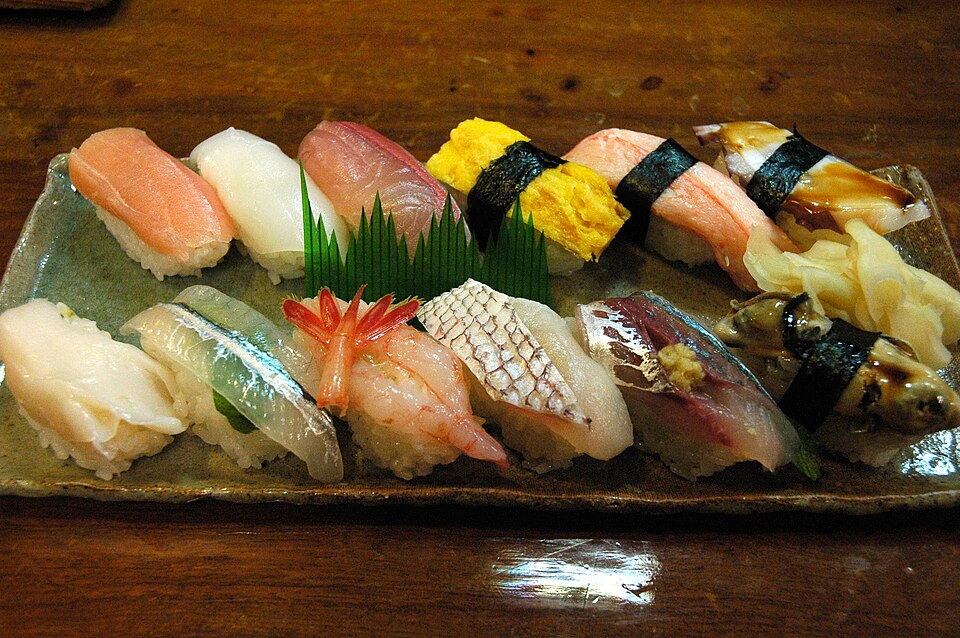
Photo: User: (WT-shared) Jpatokal at wts wikivoyage / Wikimedia Commons / CC BY-SA 4.0. Resized; original composition retained.
The first thing you notice may be the fish: a pink slice, a silver skin, the shine of orange roe. Look a little lower, and another part of sushi’s character comes into view—the rice holding it all together.
That change of attention opens up a familiar food. A platter offers several tastes at once. A counter can bring one piece at a time. A hand roll lets you choose what goes inside. These are different ways of enjoying the relationship between rice and its companions.
Start with the rice, not a test of bravery
In the common modern forms of sushi, rice seasoned with vinegar is combined with ingredients such as fish, egg or vegetables. Raw fish is one possibility, rather than a requirement. Kikkoman’s food glossary places all of these ingredients within the same broad family.1
Sashimi is different: it is served without the sushi rice. JNTO makes that distinction in its sushi guide, which also draws attention to the rice’s seasoning, texture and the amount used in each piece.2 The topping may catch your eye first, but it does not tell the whole story.
For your next piece, notice how the rice feels as you eat it. Does the vinegar stand out? How much rice arrives with the topping? You do not need a critic’s vocabulary. Simply paying attention can make a familiar order feel new.
If you prefer cooked ingredients, that preference belongs at the sushi table too. Japan’s Ministry of Agriculture, Forestry and Fisheries describes prepared toppings in the Edomae tradition, including cooked sea eel, steamed shrimp and egg.3 Check individual menu descriptions when choosing; a dish’s appearance alone may not explain how it was prepared.
Five forms worth recognising
A few names help explain what will arrive, even before you choose the filling. The descriptions below follow Kikkoman’s overview of sushi styles.1
| Name | What to expect |
|---|---|
| Nigiri | A topping placed on a small, hand-shaped portion of sushi rice. |
| Maki | Rice and fillings rolled together, commonly in a sheet of nori. |
| Temaki | A hand roll of nori, rice and fillings, often shaped into a cone. |
| Chirashi | Ingredients arranged over, or mixed into, sushi rice. |
| Inari | Sushi rice tucked inside a seasoned, fried-tofu pouch. |
These names describe forms, not fixed ingredient lists. A picture or a short explanation can be more useful than guessing from the name alone. If you need to avoid an ingredient, ask about the complete preparation, including sauces and fillings.
How a street food became a counter experience
MAFF’s account of nigiri describes its popularity at food stalls in Edo, present-day Tokyo. It connects the later sushi-counter format with that earlier encounter between the person preparing the food and the person eating it.3
The same account follows sushi into a wider range of settings, from specialist restaurants to supermarkets and takeaway counters.3 Sushi can fit a carefully planned dinner or a much simpler meal. The setting changes what you notice: the making of each piece, the freedom to choose several small plates, or the ease of bringing a ready-made assortment home.
Omakase means leaving the selection to the chef. JNTO describes it as one way to experience a sushi restaurant.2 Before booking, check the restaurant’s own course price, reservation conditions and approach to dietary requests. A set menu or individually ordered pieces may suit you better on another day.
At a conveyor-belt restaurant, follow this shop’s system
The photograph below captures a conveyor-belt sushi counter in Kyoto in 2007. Plates pass within reach, making the choice visible. It is a record of that setting, rather than a picture of how every sushi chain operates today.
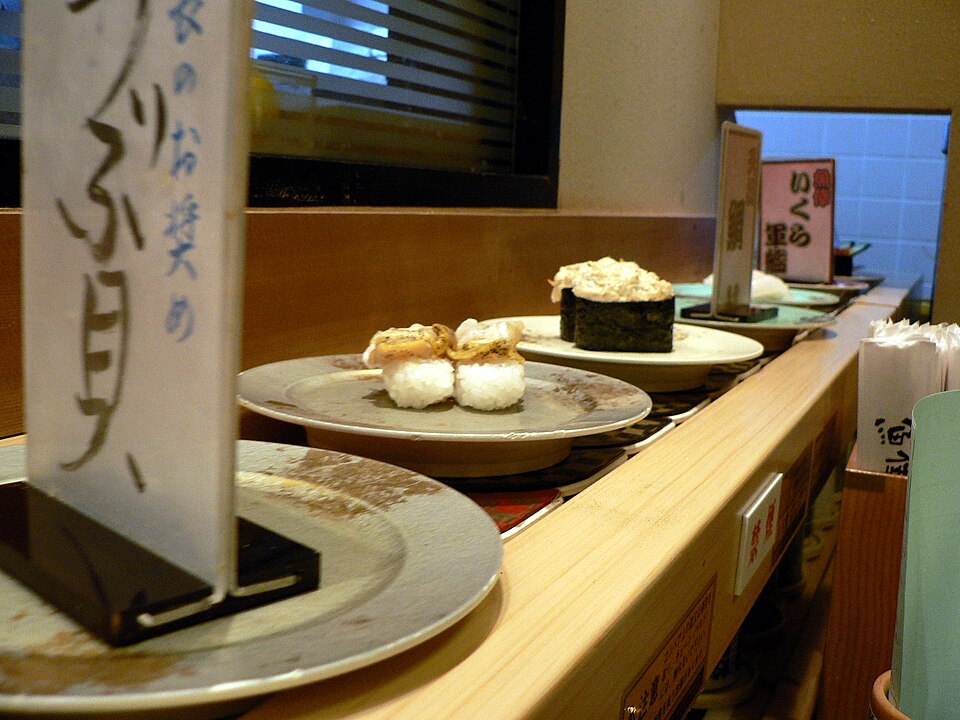
Photo: MissionControl / Wikimedia Commons / CC BY-SA 2.0. Resized; original composition retained.
Ordering systems vary. Kura Sushi’s Japanese visitor guide, for example, describes ordering by touch panel or smartphone and receiving those orders on a dedicated delivery lane.4 This is a useful reminder to look for the restaurant’s instructions before taking a plate.
- Start with the menu and the price. Check what each listed order includes. Choose a few things that interest you, then decide whether you want more.
- Distinguish passing plates from individual orders. Follow the screen, signs or staff guidance for your seat. A plate on a delivery lane may belong to another guest.
- Keep any plate you have taken. Where you may choose freely from a circulating belt, do not return a plate to it.2
- Check how to finish. Plate collection and payment are part of the restaurant’s own system. Kura’s guide, for instance, describes automatic plate counting and an on-screen checkout button.4
There is a small pleasure in building the meal as you go. You might return to something you liked or choose a contrasting texture next. Going with another person also gives you a reason to compare choices, without requiring you both to enjoy the same things.
A few manners that leave room to enjoy the food
Nigiri can be eaten with chopsticks or your hands. JNTO’s manners guide recommends dipping the topping, rather than soaking the rice, when using soy sauce, and keeping wasabi separate from the soy sauce.5 If the chef gives you a specific serving suggestion, follow that guidance.
Pickled ginger, when provided, is intended for eating between pieces rather than piling on top.2 Try a little and notice how the next piece tastes afterwards.
These details have a practical purpose: letting you handle the sushi comfortably and taste the combination in front of you. Start with a small amount of sauce and adjust to your preference. If you are unsure what to do, a brief question to the staff is more useful than worrying through the meal.
Hand rolls bring the choosing to the table
Temaki changes who puts the final piece together. In its account of hand-rolled sushi, Kikkoman describes spreading vinegared rice on nori, adding fillings and rolling it by hand. It also identifies temaki as a food enjoyed with family and friends in Japan.6
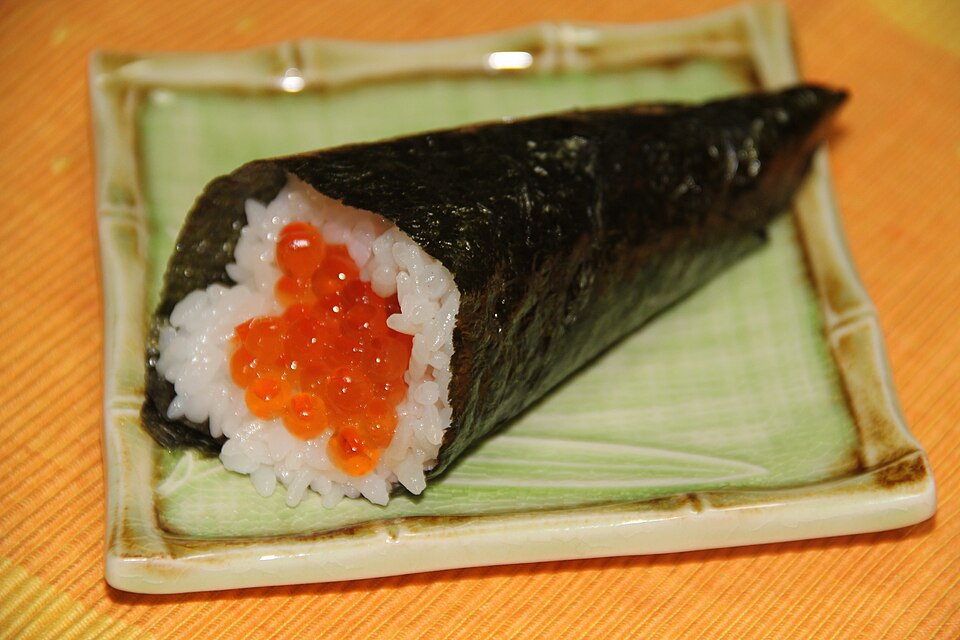
Photo: Arashiyama / Wikimedia Commons / CC BY-SA 3.0. Resized; original composition retained.
The cone in this photograph makes the structure easy to see: nori outside, rice within, and a filling visible at the open end. At a shared meal, that structure leaves room for individual choices.
For a simple introduction at home, you could put out sushi rice, nori and a few ready-to-eat fillings you already like. Cooked egg and cucumber give you an easy place to begin. Let each person assemble a small roll, rather than trying to make every piece identical. A slightly uneven cone can still be a good thing to eat.
Sushi also has a place in seasonal gatherings. Kikkoman’s account of regional traditions describes chirashi-zushi’s association with Hinamatsuri, the doll festival in March.7 A dish spread across a bowl or platter offers a different kind of presentation from a row of nigiri: you see the colours together before serving a portion.
What makes you want the next piece?
For one person it may be the rice, for another the topping, and for someone else the moment of choosing. Think about the last piece you enjoyed: was it soft, crisp, sweet, sharp, or a contrast of several things?
That is a useful way to plan your next sushi meal. Choose a setting that fits the day and give yourself permission to follow your own taste. You can enjoy a carefully made piece at a counter and still love a hand roll you assembled at the kitchen table.
Sources & further reading
- Kikkoman: sushi glossary — rice, ingredients and common forms.
- Japan National Tourism Organization: sushi in Japan — rice, sashimi, dining styles and practical guidance.
- MAFF, Our Regional Cuisines: nigiri-zushi — Edo food stalls, prepared toppings and later dining settings.
- Kura Sushi: visitor guide (Japanese) — one chain’s ordering, delivery and payment system.
- Japan National Tourism Organization: Japanese manners — guidance on eating sushi.
- Kikkoman: food culture exchanges with temaki — assembling hand rolls and sharing a table.
- Kikkoman Food Forum: regional varieties and traditions — sushi and seasonal celebrations.
The photographs are archival illustrations of sushi and a restaurant setting, not current menus or endorsements. They have been resized to 960 pixels wide without cropping. Original proportions are retained, and each image remains under the Creative Commons licence linked in its caption.





Comments