Imperial Family
Why Princess Aiko Chose to Work at the Japanese Red Cross
Her own explanation offers a starting point for understanding the work behind a royal headline.
By Maki Kakudate · 4 minute read
A magazine for volunteers is an unexpectedly useful place to begin a story about Japan’s Imperial Family. In April 2024, Nippon TV reported that Princess Aiko’s work at the Japanese Red Cross Society included editing an information magazine and helping organize training sessions. The report, citing her aides, placed her in the organization’s Junior Red Cross and Volunteer section.1
Aiko, the daughter of Emperor Naruhito and Empress Masako, had graduated from Gakushuin University the previous month. The Imperial Household Agency confirms that she began full-time employment at the Society in April 2024 and combines that work with her responsibilities as a member of the Imperial Family.2
Her reasons appear in written answers released when she joined the organization.
The decision began with people she knew
Aiko traced her interest in volunteering to disaster coverage and a close school friend’s involvement in recovery after the Great East Japan Earthquake. University classes on welfare encouraged her to consider how she could help people facing hardship through employment.3
She attended a Red Cross briefing with her parents and visited an exhibition marking a century since the Great Kantō Earthquake. These encounters helped her understand the Society’s work. Its direct contribution to society appealed to her, and her parents encouraged her choice.3
What does volunteer-related work involve?
The tasks reported when she joined offer a concrete starting point: preparing information for volunteers and organizing opportunities for training. These are the kinds of responsibilities through which a humanitarian organization helps people share knowledge and prepare to act.
They also explain why “working at the Red Cross” can mean something broader than the emergency scenes familiar from television. A publication has to be edited. A training session needs preparation. Volunteers need a way to learn from experience beyond their own local group.
The Society’s own account of its volunteer network describes workshops, practical exercises and training for volunteer leaders. Its areas of activity include support for older people, youth development and disaster preparedness. It also uses publications and online communication to make volunteer activities more widely known.4
This provides context for the work described in the 2024 report. The specific duties in that report belong to that date; they should not be treated as a complete account of Aiko’s current working week.
The organization behind the job
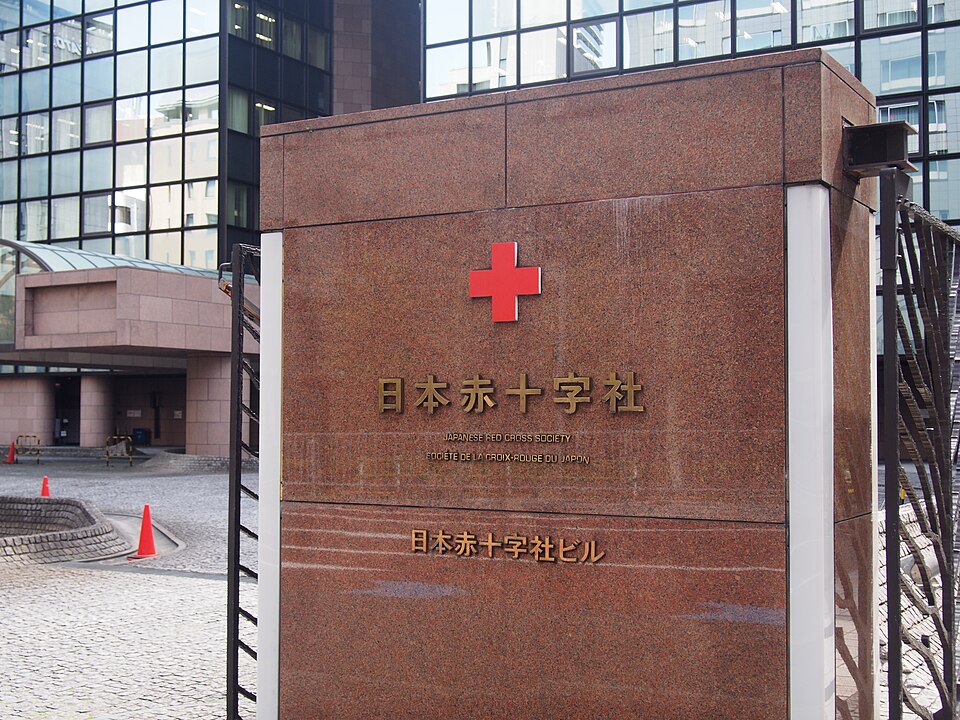
For an overseas reader, the Japanese Red Cross may be most familiar through major emergencies. Its account of domestic disaster response shows the variety of work involved: keeping relief supplies ready, coordinating responses across regional chapters and supporting people in evacuation centres.5
It describes disaster volunteers who gather information, prepare hot meals, move supplies and provide other practical support. Training happens before an emergency, so the response draws on preparation already carried out. Those are the Society’s activities as an organization; they do not imply that every employee personally performs every task.5
There is also an educational side. The Junior Red Cross works through schools, encouraging children to recognize a need, consider it and take action. Its programmes connect health and safety, service to others and understanding across countries. Disaster-prevention materials bring those ideas into classrooms through practical learning.6
Together, these programmes show how humanitarian work depends on continuity: people learning, practising and maintaining relationships between the moments that reach the news.
A job alongside imperial duties
The family’s connection with the Society includes different roles. Empress Masako serves as its Honorary President, as listed by the Japanese Red Cross itself.7 Aiko’s employment is a staff appointment, with the responsibilities of working within an organization.
Her imperial activities continue alongside it. The Household Agency lists poetry readings, lectures, garden parties and other engagements. It also records her September 2025 visit to Niigata, where she attended a disaster-risk-reduction conference and learned about recovery in the Yamakoshi area, which had been badly affected by the 2004 Niigata Chūetsu Earthquake.2
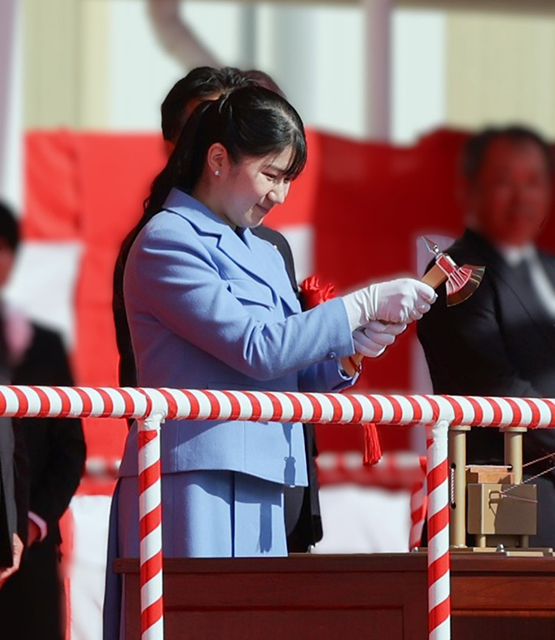
The opening photograph shows another public engagement: the March 19, 2025 launch of the Arctic research vessel Mirai II in Yokohama. Aiko cut the ceremonial rope as the ship was launched. It is a record of that occasion, separate from her Red Cross employment.8
Beginning with a willingness to learn
Aiko also emphasized learning from colleagues and developing useful skills as she began work.3
For readers meeting her mainly through royal photographs, the job supplies another set of questions. What information helps a volunteer? What makes training effective? How does an interest in helping others become something a person can do well?
A photograph records a public moment. Understanding an organization’s everyday work takes us further: towards the preparation that allows other people to help.
Continue exploring the Imperial Family
Sources & further reading
Sources checked October 23, 2026. Aiko’s reasons are paraphrased from her official Japanese written answers. Specific workplace duties are attributed to dated reporting. Descriptions of Red Cross programmes provide organizational context. All photographs are dated in their captions.
- Nippon TV News 24 Japan — Details of Princess Aiko’s job at Japanese Red Cross revealed (April 19, 2024). Reporting on her section and duties, citing her aides.
- Imperial Household Agency — Their Majesties the Emperor, Empress and Princess Aiko, “Activities of Her Imperial Highness Princess Aiko.” Graduation, employment and public engagements.
- Imperial Household Agency — Written answers on Princess Aiko’s employment at the Japanese Red Cross Society (Japanese, 2024). Her reasons for choosing the organization and thoughts on beginning work.
- Japanese Red Cross Society — Members and Volunteers. Volunteer activities, training and communication.
- Japanese Red Cross Society — Domestic Disaster Response. Preparedness, relief supplies, coordination and volunteer support.
- Japanese Red Cross Society — Junior Red Cross. School-based programmes and disaster-prevention education.
- Japanese Red Cross Society — The Society at a Glance. The Empress’s role as Honorary President.
- Ministry of Education, Culture, Sports, Science and Technology — Naming and launch of Mirai II (Japanese, March 19, 2025). The event shown in the opening photograph.




Comments