Imperial Family · Language & Culture
Utakai Hajime: Japan’s Imperial Poetry Ceremony
A shared theme brings the Emperor’s words, family memories and poems from the public into the same New Year gathering.
By Maki Kakudate · 5 minute read
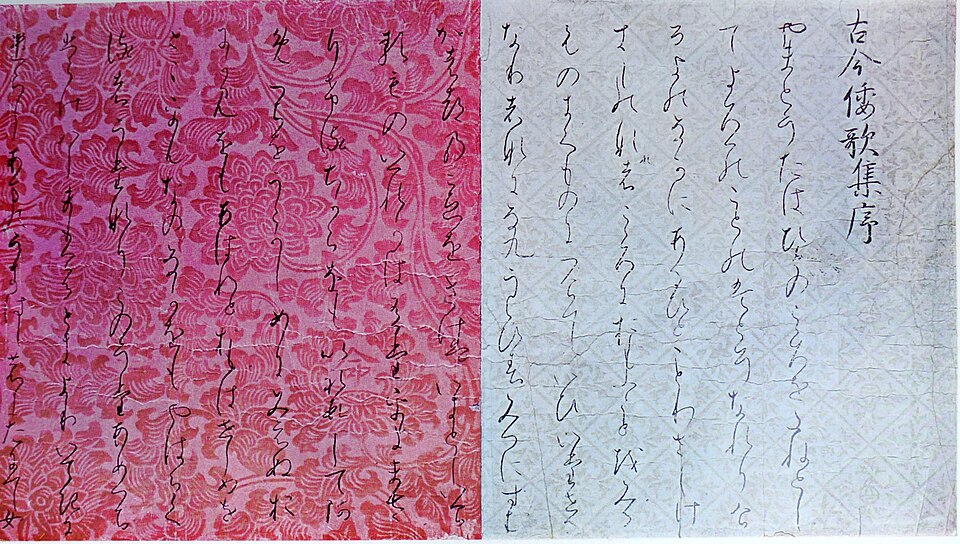
You do not have to belong to Japan’s Imperial Family to have a poem presented at its New Year poetry ceremony. Members of the public can submit their work, and the selected poems are heard in the presence of the Emperor and Empress. Entries come from overseas as well as from Japan.1
The gathering is called Utakai Hajime (歌会始). Its invitation is unusually intimate for a palace ceremony: take one shared theme and find something of your own to say about it. Knowing that changes how you look at the formal room. Among its ceremonial roles is a place for someone whose contribution began as a few lines on paper.
First, what kind of poem is it?
The form is tanka, a short Japanese poem built around five rhythmic units in the pattern 5–7–5–7–7. These are Japanese sound units; English syllable counts do not transfer neatly into the language. English-language tanka often use five lines without insisting on exactly thirty-one syllables.2
That compact form has room for a relationship, a recollection or a change of feeling. The Tanka Society of America’s introduction emphasizes this connection between an outward scene and a writer’s emotional experience. A flower or a journey can carry more than a description of what was seen.2
On the Imperial Household Agency’s website, you will also see the word waka used for these poems. Reading the official translations alongside their background notes is an accessible way to begin.
An old ceremony that changed who could take part
The exact beginning of Utakai Hajime is uncertain. The Imperial Household Agency points to a recorded palace poetry gathering held by Emperor Kameyama on January 15, 1267. That is evidence of the tradition’s age, rather than a securely established founding date.3
Public participation developed much later. Poems from the general public were first accepted for consideration in 1874; selected public submissions began to be read at the ceremony in 1879. After the Second World War, poets from outside the palace were appointed to select the works, and themes were simplified to encourage broader participation.3
Those changes matter to the meaning of the event. Its history includes decisions about whose words can enter the palace and be heard there.
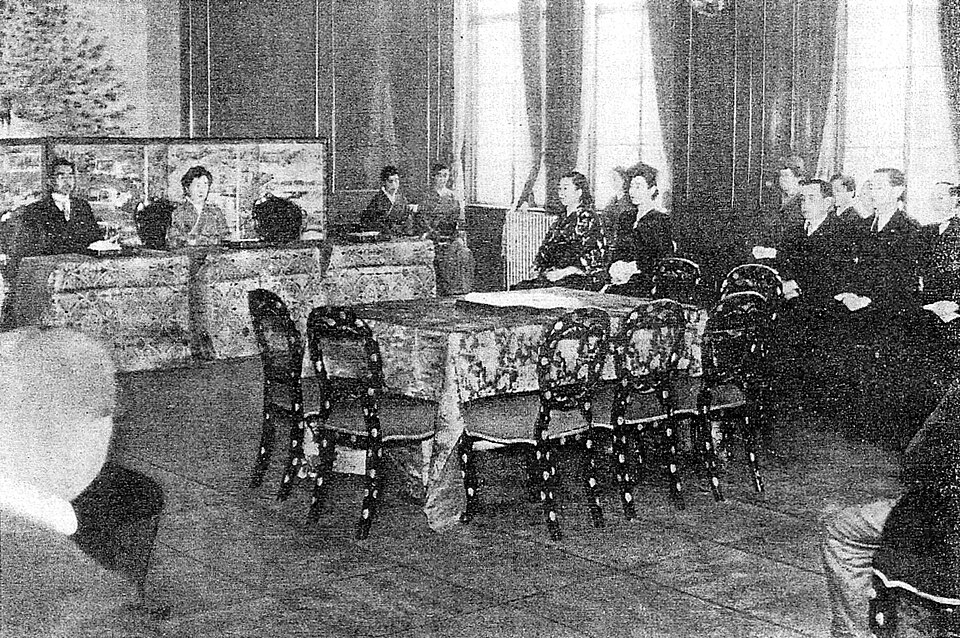
The poems are given a ceremonial voice
Utakai Hajime takes place in January. Its sequence begins with selected public poems and proceeds through works by selectors and an invited poet to those of the Imperial Family, the Empress and, finally, the Emperor.4
The authors do not simply take turns at a microphone. There are designated reciting roles: the kōji reads the poems in a level voice; the hassei begins the sung recitation, and the accompanying kōshō join it. A master of ceremonies, the dokuji, directs proceedings.4
For a first-time listener, it helps to know the poem’s subject beforehand. You can then listen for the pacing and the way a very short text occupies the room.
One theme, three different experiences
The yearly theme gives the writers a common starting point. Recent examples include “friend” in 2023, “harmony” in 2024 and “dream” in 2025.5 The 2025 poems show how widely that starting point can open out.
Three responses to “dream,” 2025
Emperor Naruhito: His poem recalls children he met on visits around Japan, speaking enthusiastically about their hopes for the future.
Empress Masako: Her subject is the couple’s 2024 return to Oxford. Revisiting the university brought back the aspirations of her own student years.
Princess Aiko: Her poem looks toward reunion with friends as each follows a chosen path. The official explanation connects it to her university graduation and the beginning of working life.
These are summaries, rather than translations of the poems. The Agency publishes English versions with background notes, allowing readers to connect a few lines with the occasion that prompted them.6
A walk can become a poem, too
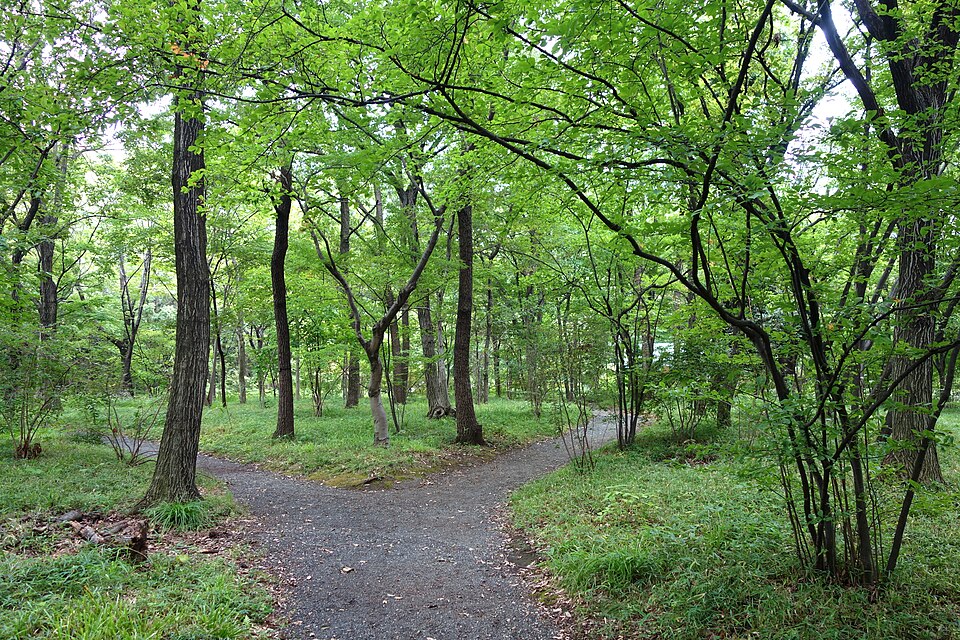
An earlier example brings the scale closer still. For the 2018 ceremony, Emperor Akihito wrote about walking and talking with Empress Michiko and coming upon flowering kinran, a yellow woodland orchid. The official note places the remembered spring encounter in the Ninomaru grove of the Imperial Palace’s East Gardens.7
That gives a reader something concrete to picture: two people in conversation, a walk, a plant noticed along the way. Read beside the poems about children, Oxford and graduation, it suggests a useful approach to imperial poetry—begin with the particular experience the poem preserves.
Can someone outside Japan submit a poem?
Yes: the published rules explicitly provide for overseas entries. For the 2027 ceremony, they require one original, unpublished tanka per person, incorporating the theme character tabi (旅, “journey”). Overseas entrants may use paper of their choice in the specified 24 × 33 cm landscape format and do not have to write with a brush.8
Timing matters. As of October 23, 2026, the September 30, 2026 submission deadline for the 2027 ceremony has passed. Check the Imperial Household Agency’s current entry guidance for the next cycle, its theme and the complete requirements. Overseas eligibility is not a separate invitation to submit an English free-verse poem.
You can begin as a reader without waiting for the next theme. Choose one of the official translations, read its background note, then return to the poem. Which detail did its writer decide was worth keeping?
Continue exploring the Imperial Family
Sources & further reading
Sources checked October 23, 2026. Poem descriptions are editorial summaries of the official English versions and accompanying notes. The images are a historical manuscript, an archival ceremony photograph and a separately dated view of the Ninomaru grove.
- Imperial Household Agency — Introduction to Utakai Hajime. Public participation and submissions from overseas.
- Tanka Society of America — What Is Tanka? Form, rhythm and the relationship between scene and feeling.
- Imperial Household Agency — Ceremony of the Utakai Hajime. Historical record, public submissions and changes after the war.
- Imperial Household Agency — Terms on ceremonies and events. Order of poems and ceremonial reciting roles.
- Imperial Household Agency — Annual themes and waka poems. English-language index of themes and poems.
- Imperial Household Agency — 2025 poems: Yume (Dream) (PDF). Poems and background notes for Emperor Naruhito, Empress Masako and Princess Aiko.
- Imperial Household Agency — 2018 poems: Go (Word). Emperor Akihito’s poem and the Ninomaru grove background note.
- Imperial Household Agency — Submission guidance (Japanese). The page displayed the 2027 theme and rules when checked; its contents may update for later ceremonies.



Comments