Tokyo and Kyoto Imperial Palaces: What’s the Difference?
One occupies the former seat of the shoguns. The other preserves the setting of Kyoto’s imperial court. Their histories explain why a visit feels so different.
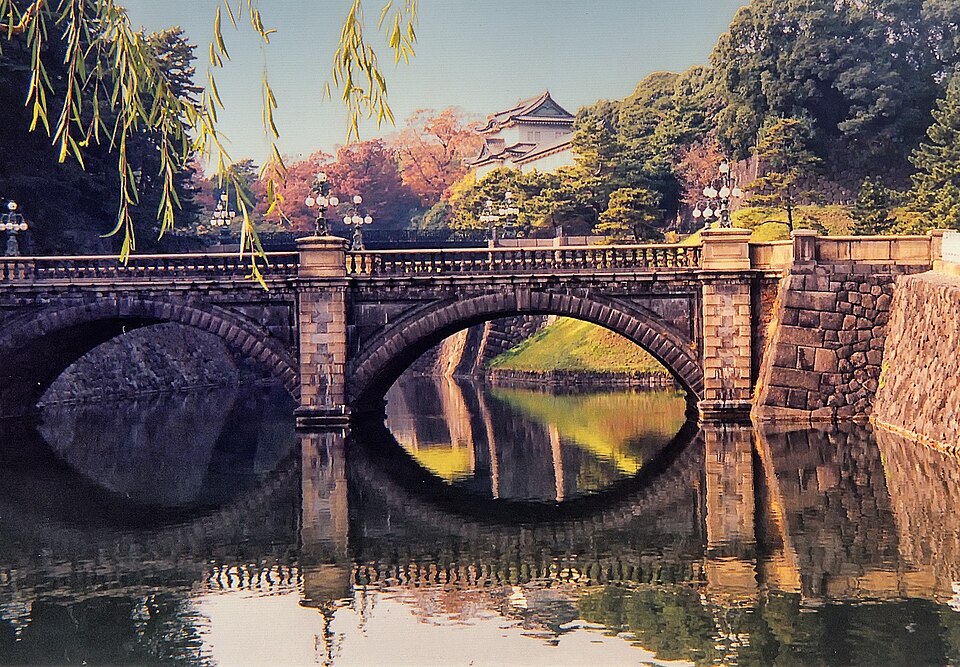
The Imperial Palace in Tokyo began as a shogun’s castle. Kyoto Imperial Palace, despite its much older court traditions, contains buildings reconstructed in the nineteenth century. Neither place fits neatly into the idea of an untouched ancient palace.1, 3
If you are comparing Tokyo and Kyoto Imperial Palaces, start with this distinction: Tokyo is the setting for the present-day imperial institution, while Kyoto preserves an earlier court environment. The names sound similar, but the history, architecture and visitor arrangements tell different stories.
Tokyo: an imperial palace inside a castle landscape
Tokyo’s Imperial Palace, or Kōkyo, occupies the former Edo Castle estate, once the headquarters of the Tokugawa shogunate. It became the Imperial Palace in 1868. The moats and stone defenses therefore belong to a history that began before the emperor’s move to Tokyo.1
The familiar bridge-and-moat view is only one part of a larger estate. The grounds also contain the palace used for ceremonies, Imperial Household Agency offices and the publicly accessible East Gardens. It helps to think of the site as several connected spaces with different purposes and access rules.1
The present ceremonial palace was completed in October 1968 and entered use in April 1969. Its reinforced-concrete structure incorporates traditional forms, including broad, overhanging eaves. A castle landscape and twentieth-century palace architecture sit within the same grounds.2
For the activities behind those buildings, our guide to what Japan’s emperor actually does follows constitutional duties, ceremonies and public engagements.
Kyoto: the architecture of an older court
Kyoto Imperial Palace is known as Kyōto Gosho. Successive emperors lived in Kyoto until 1869, and the present palace site has been used since 1331. That does not mean every structure standing there is medieval: fires repeatedly destroyed earlier buildings, and the current palace was rebuilt in 1855.3
Its importance lies partly in the traditions carried through those reconstructions. The palace preserves architectural forms associated with the much older imperial court, even as individual buildings were replaced. “Old” here describes a continuing design language as well as the age of particular timbers.3
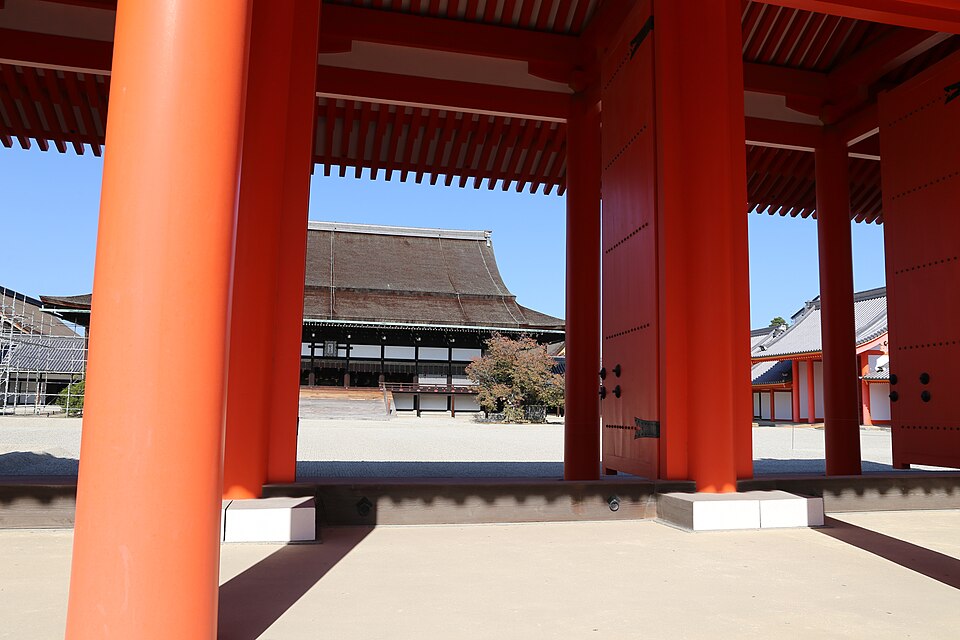
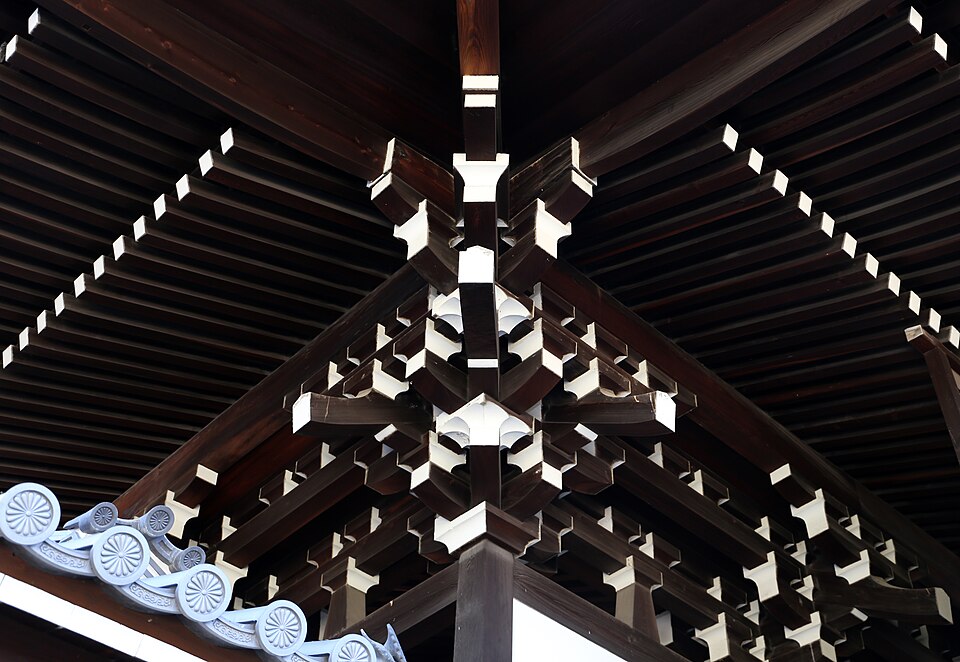
The Shishinden, the main ceremonial hall, makes that continuity visible. The present wooden building dates to 1855 and has a cypress-bark roof. Its deep eaves and elaborate timber supports reward a closer look from the visitor route.4
Kyoto’s ceremonial role did not end immediately when the emperor’s residence moved to Tokyo. The enthronements of Emperors Taishō and Shōwa took place in the Shishinden. This is one reason a simple “old palace versus new palace” description misses part of the story.4
What can you actually visit?
In Tokyo, the palace guided visit and the East Gardens are separate experiences, with their own routes and opening arrangements. In Kyoto, the regular palace visit follows an outdoor route, and visitors do not enter the buildings.6–8
| Visit | What to expect | Before going |
|---|---|---|
| Tokyo palace guided visit | A scheduled outdoor route of about 2.2 km; no building interiors. | Advance applications and limited same-day places. Bring original identification.7 |
| Tokyo East Gardens | A separate, free garden visit within former Edo Castle grounds. | Check the gardens’ own opening calendar.6 |
| Kyoto Imperial Palace | A free walk along the approved outdoor route. | No advance registration for regular admission. Check closures and current works.8 |
The East Gardens offer their own history lesson. They were developed from the Honmaru, Ninomaru and Sannomaru areas of Edo Castle and opened to the public in 1968. Garden paths, the Ninomaru landscape and the surviving base of the castle keep give visitors different ways to read the former castle site.6
At Kyoto Imperial Palace, regular admission is through Seishomon Gate, with security checks at entry. Gravel paths make comfortable shoes a practical choice. The ability to walk in without a reservation does not mean unrestricted access: stay on the visitor route and check the official noticeboard before planning your day.8
Opening days can change for imperial events or other circumstances. Use the official visitor links below close to your visit, especially while conservation work continues in Kyoto.
Which one should you choose?
If your interest is the relationship between the modern imperial institution and the former shogunal city, Tokyo provides that setting. If you want to study court architecture, ceremonial space and the details of wooden construction, Kyoto offers a different focus.
Visiting both gives the comparison its meaning. In Tokyo, begin by noticing the scale of the stone walls and moats. In Kyoto, look at how a roof, a gate and an open courtyard frame the ceremonial hall. Those details make the shift between the two cities easier to picture.
Sources & visitor information
- Imperial Household Agency: The Imperial Palace — estate history and facilities.
- Imperial Household Agency: The Palace — construction and architecture of the ceremonial palace.
- Kyoto Imperial Palace: History — the palace site, fires and rebuilding.
- Kyoto Imperial Palace: Shishinden — architecture and ceremonial history.
- Shishinden conservation project (Japanese) — project dates, scope and updates.
- Imperial Palace East Gardens — opening calendar and garden information.
- Imperial Household Agency: Palace visit information (Japanese) — Tokyo guided visits and identification requirements.
- Kyoto Imperial Palace: Visitor information — admission, route and closures.
Visitor information checked October 24, 2026. Photographs are credited individually with their original dates and licenses.




Comments