Imperial Family
What Does Japan’s Emperor Actually Do?
Documents, diplomatic ceremonies, public visits and poetry: understanding the work behind the title.
By Maki Kakudate · 4 minute read
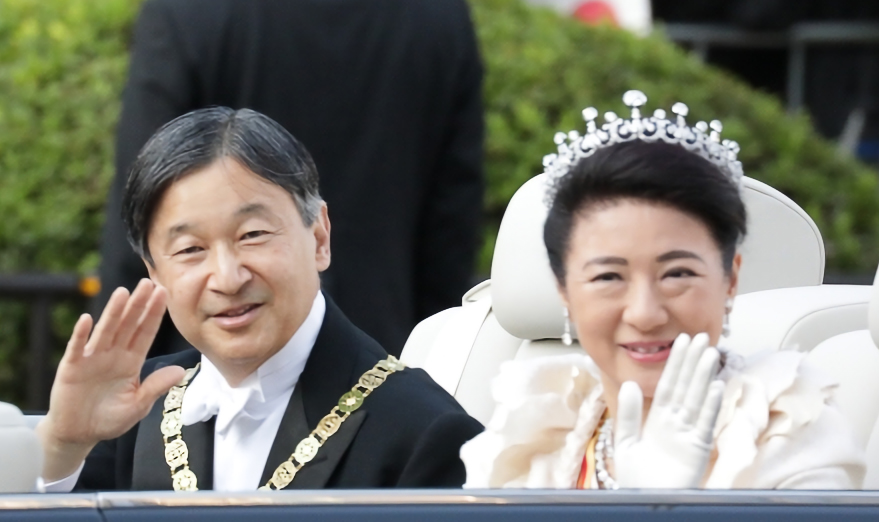
Japan’s Emperor appoints the prime minister. That can sound like a power to choose who governs, until you read the rest of the rule: the person is designated by the National Diet, Japan’s parliament.1
The distinction is a useful starting point. Emperor Naruhito has a defined constitutional role, alongside public engagements and court traditions. Understanding his work means looking at what each activity is for.
The Constitution sets the boundary
Article 1 of Japan’s Constitution places the Emperor in a symbolic role, representing the state and the unity of its people. Sovereignty belongs to the people. Article 4 gives him no powers relating to government, and Article 3 requires Cabinet advice and approval for his acts in matters of state.
Some of those acts concern appointments. The Emperor appoints the prime minister designated by the Diet and the chief justice designated by the Cabinet. Others include promulgating laws and treaties, convening the Diet and awarding honours.
These are formal constitutional responsibilities. Performing them does not give the Emperor authority to set government policy.1
The work that happens at a desk
The Imperial Household Agency explains that documents concerning these state matters are sent to the Emperor after Cabinet meetings. He reviews them, signs and affixes his seal. Its account records 1,049 acts in matters of state during 2025.2
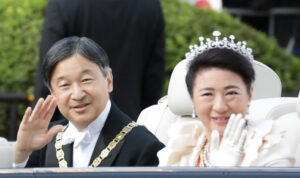
That figure counts a particular category of work; it is not a count of public appearances. It also helps explain why photographs offer an incomplete view of the job. A procession or an arrival at a venue is highly visible. Document work has a different rhythm.
Recognizing work across Japanese society
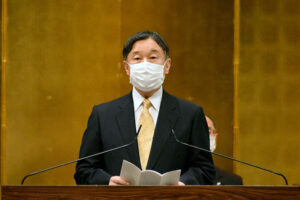
Public engagements can give recognition to a profession or a shared milestone. On September 5, 2022, the Emperor and Empress attended the ceremony marking 150 years of Japan’s modern school system. The education ministry’s report records awards for educators and an address by the Emperor, who expressed hopes for learning that allows each person’s potential to develop.3
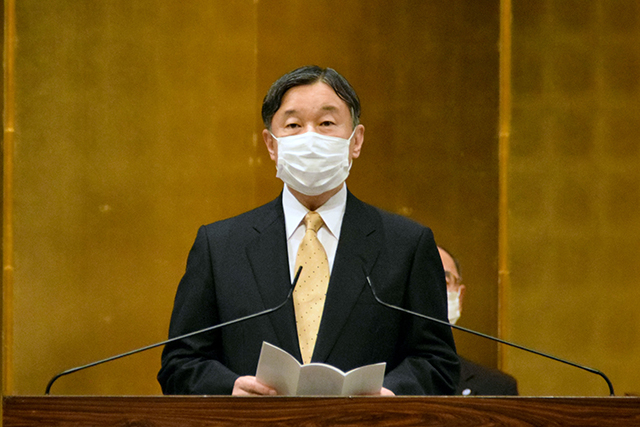
The occasion brought attention to education and the people working within it. Reading the event’s purpose tells us more than a caption saying that the Emperor “attended a ceremony.”
The broader programme includes visits to institutions serving children, older people and people with disabilities, as well as disaster-affected communities. In 2024, for example, the Emperor and Empress visited Wajima and Suzu in March, then Anamizu and Noto in April, following the Noto Peninsula earthquake.2
In such visits, the focus shifts from a national ceremony to a particular place and the people living through its circumstances.
Receiving representatives from abroad
A newly appointed foreign ambassador presents credentials to the Emperor in a formal palace ceremony. The foreign minister or another minister of state stands in attendance. The Household Agency says ambassadors may choose an imperial car or a horse-drawn carriage for the journey to and from the palace.4
That detail explains a scene visitors sometimes associate with royal spectacle: the carriage has a diplomatic purpose. The person arriving is a newly appointed representative of another country, taking part in a ceremony associated with the start of an assignment.
Poetry and the court calendar
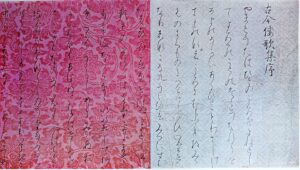
The imperial year also includes cultural occasions. At Utakai Hajime, the New Year’s Poetry Reading, poems selected from public submissions are recited alongside works by members of the Imperial Family, the Empress and the Emperor. People whose poems have been selected can attend the ceremony.5
Here, participation takes the form of writing and listening. The event brings a literary tradition into a setting shared with members of the public.
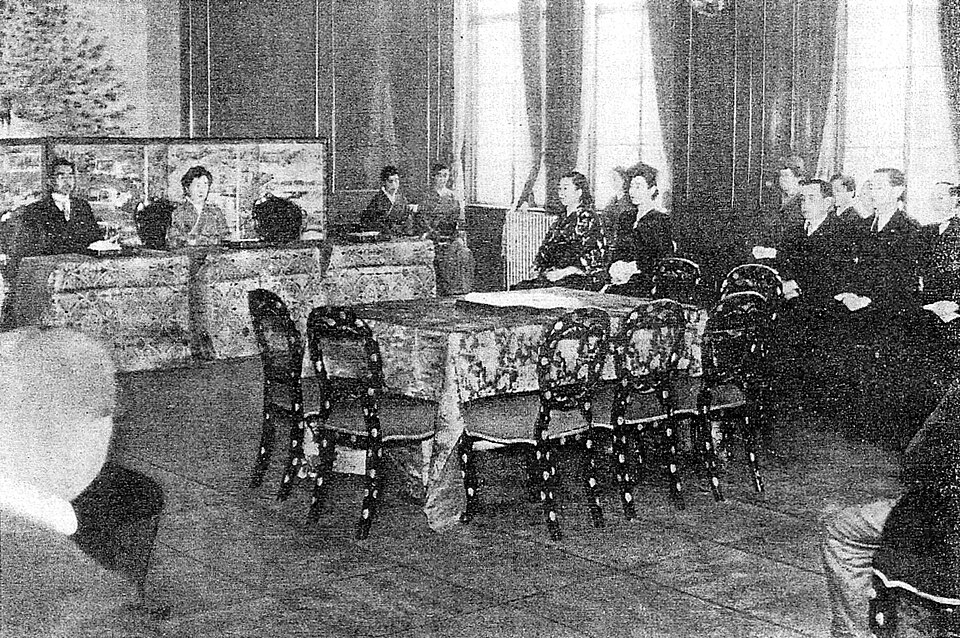
Court religious observances form another strand of the calendar. At Niinamesai on November 23, the Emperor offers newly harvested crops to ancestral and other deities, gives thanks and partakes of the offerings.6 A poetry reading and a harvest rite have different purposes, even though both recur in the imperial year.
What one month actually looked like
A published schedule makes the range concrete. The Household Agency’s record for April 2026 includes these activities involving the Emperor:
| Date | Activity |
|---|---|
| April 2 | Meeting and luncheon with the French president and his wife, together with the Empress. |
| April 6–7 | Visit to Fukushima with the Empress and Princess Aiko to observe recovery from the Great East Japan Earthquake. |
| April 9 | Sowing rice seed at the palace’s Biological Research Institute. |
| April 15 | Credentials ceremonies for the ambassadors of Timor-Leste and Austria. |
| April 17 | The spring garden party at Akasaka Imperial Gardens. |
These are selected entries from one month. The record also lists document work and briefings.7 It is a varied schedule, shaped by the needs of each occasion.
For an overseas reader, the most useful question about an imperial appearance is therefore: what is happening here? An appointment completes a constitutional process. A community visit creates an opportunity to listen. A poem joins an annual cultural gathering. The title remains the same; the purpose of the work changes.
Explore the work in more detail
Sources & further reading
Sources checked October 23, 2026. The annual total refers to 2025; the example schedule refers to April 2026. Archival photographs are dated in their captions.
- House of Representatives — The Constitution of Japan, Articles 1, 3, 4, 6 and 7. The Emperor’s constitutional position and acts in matters of state.
- Imperial Household Agency — Activities of the Emperor, Empress and Princess Aiko, especially “Official Duties” and “Official Visits within Japan.” Document work, the 2025 total and regional visits.
- Ministry of Education, Culture, Sports, Science and Technology — Ceremony marking 150 years of the modern school system (Japanese, September 5, 2022). The imperial couple’s attendance, educators’ awards and the Emperor’s address, paraphrased here.
- Imperial Household Agency — Ceremony of the Presentation of Credentials (Japanese). The ceremony and transport arrangements for newly appointed ambassadors.
- Imperial Household Agency — Ceremony of the Utakai Hajime. Public submissions, attendance and the order of recitation.
- Imperial Household Agency — Main ritual ceremonies of the Imperial Palace. The November 23 Niinamesai observance.
- Imperial Household Agency — The imperial family’s schedule for April 2026 (Japanese). Selected dated examples of the Emperor’s activities.



Comments