Imperial Family
Emperor Naruhito and Water: A Lifelong Study
From the history of the Thames to the problem of sharing water, a long-standing research interest offers a different way to understand Japan’s Emperor.
By Maki Kakudate · 5 minute read
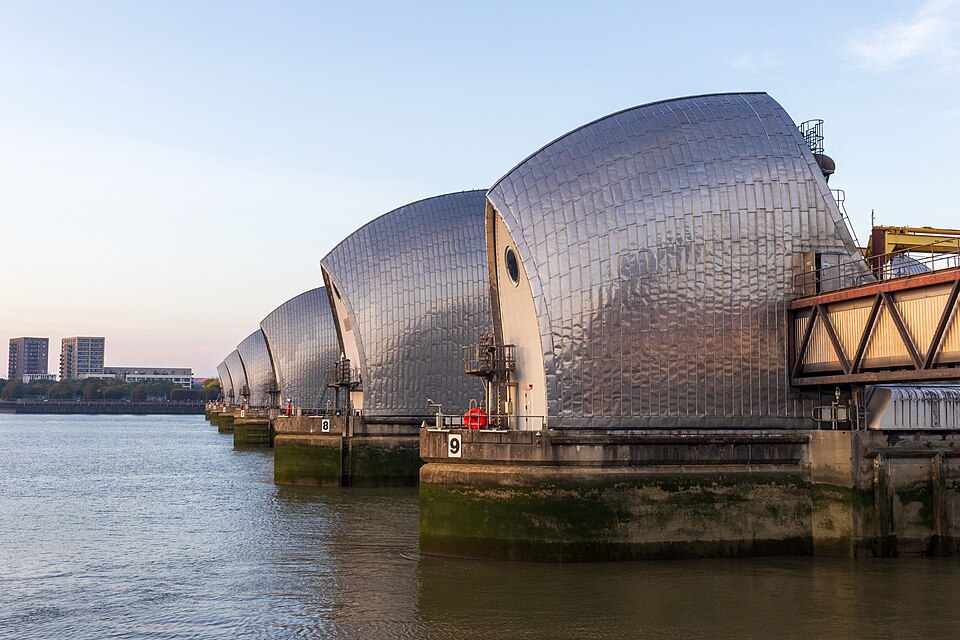
The day before a state banquet at Buckingham Palace in June 2024, Emperor Naruhito visited London’s Thames Barrier. He mentioned the visit in his banquet address, connecting the flood defence to the work of a Japanese scientist who had helped Britain predict storm surges.1
That detail opens a useful window onto the Emperor’s interests. Water has been a subject of his research and public lectures for decades. To follow that work is to move between university history, the organization of everyday life and the practical problem of protecting people from disasters.
The student who studied a river
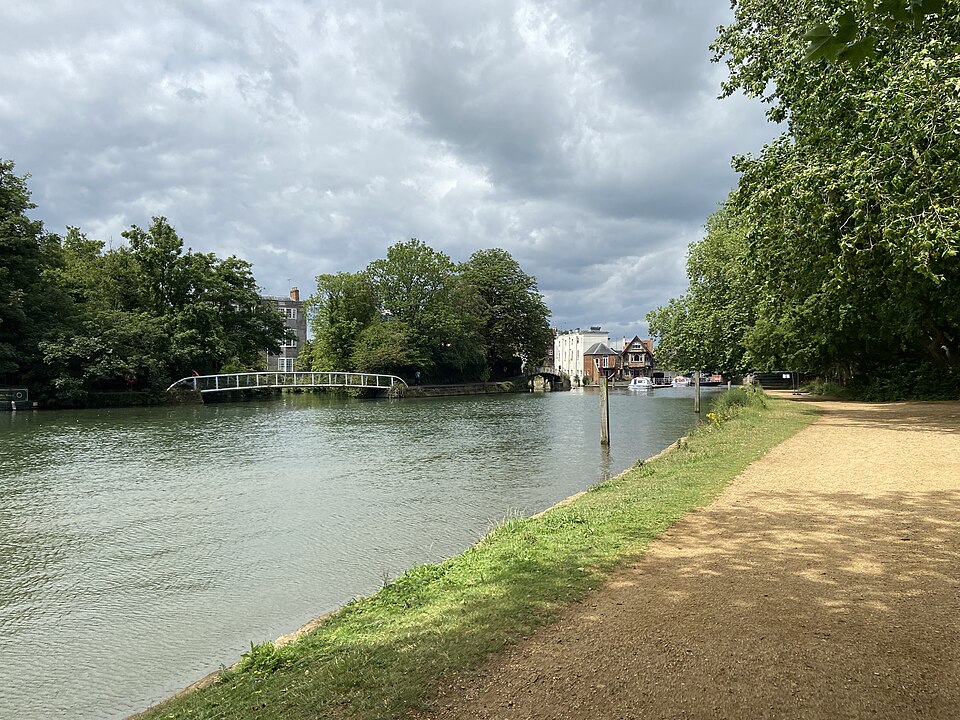
Naruhito arrived at Merton College, Oxford, in 1983 and spent two years studying for an MLitt in History. The college describes his postgraduate research as a study of transportation on the Thames. He later wrote about his Oxford experience in The Thames and I: A Memoir of Two Years at Oxford.2
His academic starting point was historical. A river can be studied through the movement of people and goods, the settlements it connects and the arrangements that allow traffic to pass along it. Thinking in those terms brings a waterway into the history of ordinary work.
The Imperial Household Agency records that his British studies led to an English-language paper, The Thames as Highway, published in April 1989. It also describes his subsequent research on Japanese medieval history as a visiting research fellow at Gakushuin University’s Museum of History, from 1992 to 2019.3
Waterways connecting people in Japan
The subjects of his later talks show how that historical interest developed. At the Third World Water Forum in Japan in 2003, he spoke about waterways linking Kyoto and other regions, focusing on Lake Biwa and the Yodo River in ancient and medieval times. In Mexico in 2006, his address at the Fourth World Water Forum examined water transport in Edo.4
Put beside the Thames research, those topics suggest a recurring question: how does water connect one place with another, and what makes those connections work? Looking at a river this way means paying attention to the human arrangements around it as well as the water itself.
Why the Thames Barrier belonged on the itinerary
The Barrier represents another side of that relationship. The UK Environment Agency describes a structure spanning 520 metres across the river near Woolwich. Its ten steel gates can be raised to protect central London against tidal surges.5
Operating it involves more than lifting a gate when the water looks high. The Agency considers tides, surge levels and river flow, using forecasts and measurements to inform closure decisions. The machinery is part of a system of observation and judgment.5
In his June 25, 2024 speech, Naruhito highlighted Dr Shizuo Ishiguro’s work on storm-surge prediction. Ishiguro, the father of novelist Kazuo Ishiguro, developed an analogue computing model for understanding the North Sea. The Emperor used the example to discuss scientific exchange between Japan and Britain.1
From historical research to international discussion
In November 2007, while Crown Prince, Naruhito’s appointment as Honorary President of the United Nations Secretary-General’s Advisory Board on Water and Sanitation was announced.4 The board worked on drinking water, sanitation and water management before being phased out in 2015. He later joined an informal gathering of its former members in February 2021, alongside King Willem-Alexander of the Netherlands and others.6
His lectures also addressed disaster history. In 2013, he spoke at a United Nations session on water and disasters about what past encounters with water-related hazards might teach a society seeking greater resilience.3
These activities make the connection between scholarship and public engagement more concrete. The historical material becomes a way of discussing problems that communities still have to solve.
Enough water—and a fair share
A July 8, 2025 video message to a UN session on water and disasters gives a particularly clear example. Naruhito began with a familiar fact: safe water from a tap depends on the work of many people between its source and the person using it.7
Two examples from the 2025 address
Sharing scarce water: At Sanbu-ichi Spring in Yamanashi, the Emperor described a local system for allocating water fairly, supported by shared maintenance and community participation.
Diverting floodwater: At the Nishino Waterway in Shiga, he described a community that pooled resources and brought in stonemasons to build a drainage tunnel in the nineteenth century.
He presented both examples as lessons in cooperation: one concerned securing and distributing a limited supply; the other concerned removing dangerous excess water. His wider argument was that partnerships, including those across national borders, matter in responding to water problems.7
Returning to Oxford
When Naruhito and Empress Masako visited Oxford on June 28, 2024, his remarks also returned to student life. He recalled tutorials and coffee with friends. He joked that he and Masako—who studied at Balliol—avoided debating which of their colleges was older.8
It is a small personal detail within a documented academic connection. Merton, the Thames, Japanese waterways and international discussions about water form a line that readers can follow through his studies and speeches.
The question that emerges is accessible even without a background in history: who makes water available, how is it shared, and what happens when it becomes a danger? Reading his work leaves a familiar river looking like a place to ask those questions.
Continue exploring the Imperial Family
Sources & further reading
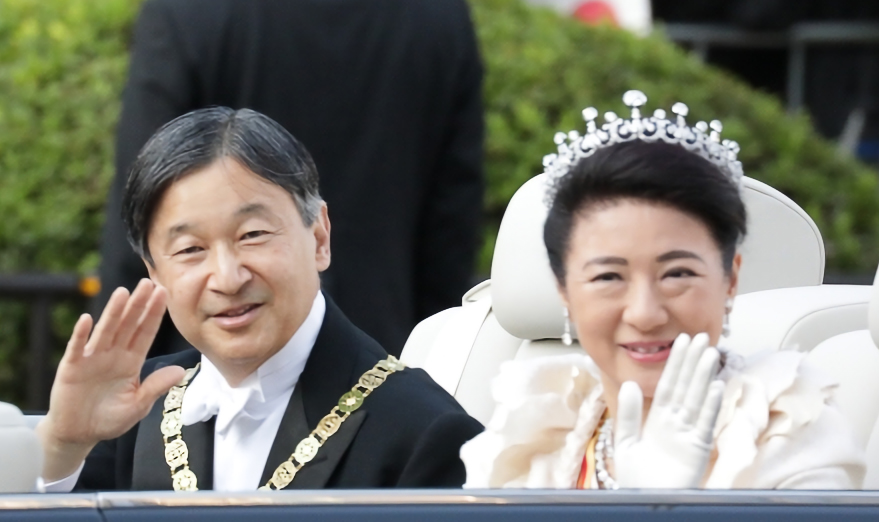
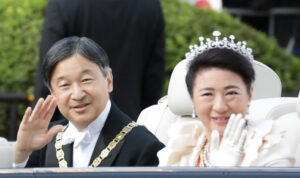
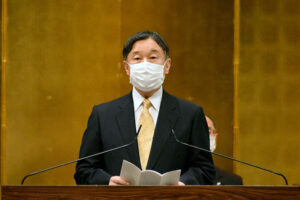
Sources checked October 23, 2026. Events and former appointments are dated in the text. The photographs illustrate the people and places discussed; they do not depict the Emperor’s 2024 Barrier visit.
- Imperial Household Agency — Address at the State Banquet at Buckingham Palace, June 25, 2024. The Thames Barrier visit and Dr Shizuo Ishiguro’s research.
- Merton College, University of Oxford — His Majesty Emperor Naruhito of Japan. Years of study, research subject and memoir.
- Imperial Household Agency — Their Majesties the Emperor, Empress and Princess Aiko, “His Majesty’s Research, etc.” Publications, historical research and water-related lectures.
- Ministry of Land, Infrastructure, Transport and Tourism — Announcement concerning the Crown Prince’s appointment to UNSGAB (Japanese, November 1, 2007). The appointment and the 2003 and 2006 World Water Forum addresses.
- UK Environment Agency — The Thames Barrier. The structure, flood-defence role and operating decisions.
- Royal House of the Netherlands — King attends virtual UNSGAB +5 meeting (February 12, 2021). The board’s work, closure and informal reunion.
- Imperial Household Agency — Keynote message to the Seventh Special Thematic Session on Water and Disasters, July 8, 2025. Community examples and cooperation over water.
- University of Oxford — Japanese Emperor and Empress visit their alma mater (June 29, 2024). The visit and the Emperor’s recollections of student life.



Comments