Imperial Family
Why Japan’s Empress Raises Silkworms
Empress Masako’s seasonal work connects an inherited palace tradition with the delicate thread used to recreate ancient Japanese textiles.
By Maki Kakudate · 5 minute read

On May 30, 2023, Empress Masako visited the Momijiyama Imperial Cocoonery inside the Imperial Palace grounds. She asked staff about the silkworms, checked their condition and fed them mulberry branches and leaves. The Imperial Household Agency’s account records a small, practical task within a much longer seasonal process.1
There is a reason to look beyond the unusual image of an empress feeding insects. Follow the thread from these cocoons and the story reaches museums, ancient weaving techniques and the choices involved in keeping a craft alive.
A palace tradition that began in 1871
Imperial sericulture—the raising of silkworms—began with Empress Shōken in 1871. Empress Masako inherited the practice from Empress Emerita Michiko. The Imperial Household Agency describes it among the Imperial Family’s activities for passing on traditional culture, and identifies Koishimaru, a Japanese silkworm variety, among those raised by the Empress.2
The timing matters. The Japan Foundation places the tradition’s beginnings in an era when raw silk was a major Japanese export and raising silkworms at the palace helped promote the industry. Its later significance grew to include preserving the skills and materials needed for cultural heritage.6
What does the Empress actually do?
The Agency describes Masako’s involvement from spring into early summer, including these stages:1
Four stages of the season
- Hakitate: moving newly hatched silkworms into rearing trays and beginning to feed them finely chopped mulberry leaves.
- Kyūsō: feeding the growing silkworms mulberry leaves.
- Jōzoku: transferring mature silkworms into frames where they can spin their cocoons.
- Mayukaki: removing the completed cocoons from those frames.
The sequence gives the tradition a working rhythm. Each stage depends on the growth of the insects, and the descriptions concern specific tasks rather than a single annual appearance.
First, a cocoon—not yet a piece of cloth
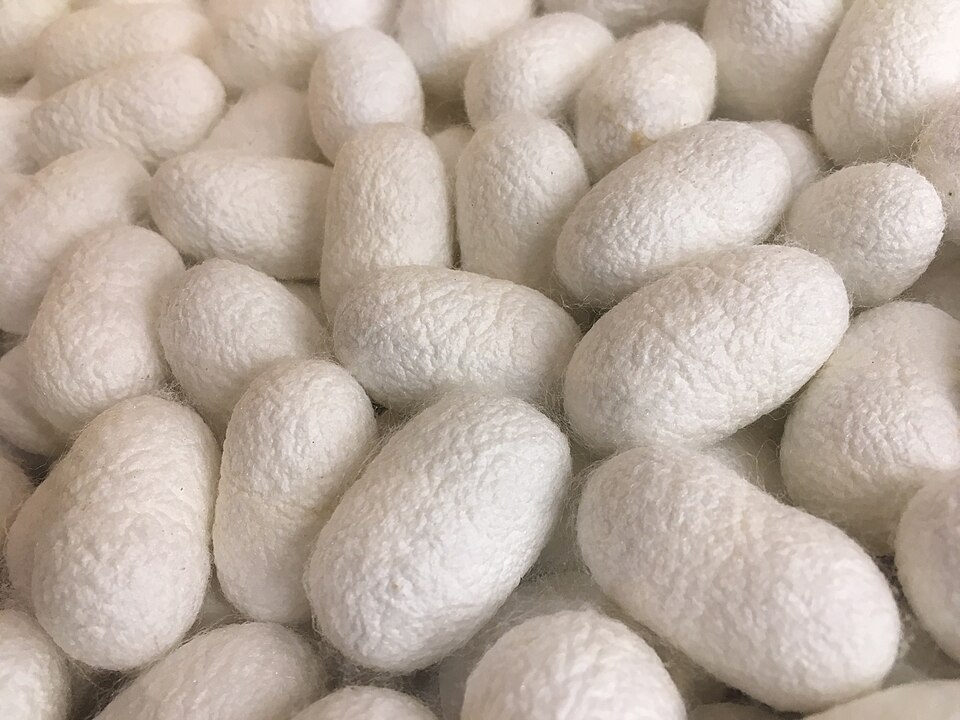
A silkworm is the larval stage of a domesticated moth. Japan’s National Agriculture and Food Research Organization explains that generations of breeding have made these insects dependent on human care; even the adult moths cannot fly. During the larval stage, the silkworms feed on mulberry leaves and molt four times before spinning cocoons around themselves.3
Those cocoons become the raw material for silk. Some are instead kept for breeding, allowing the moths to emerge and lay the eggs for another generation.3 A finished textile begins with this care for a living insect.
Why keep a silkworm that produces less silk?
Koishimaru provides the clearest answer. Nara National Museum’s glossary describes an old Japanese variety whose small cocoons yield about half as much thread as common modern varieties. Once raised commercially, it had largely disappeared from ordinary production by the 1970s.4
For reproducing ancient textiles, however, quantity is only one consideration. The museum explains that Koishimaru’s fine thread resembles silk from the Nara period and has been used in reproductions of Shōsō-in textiles.4
That changes the question a craftsperson is asking. The aim is to find a material suited to an old technique and its particular result. A variety with a lower yield can be valuable precisely because of the qualities of its thread.
From palace cocoons to the Shōsō-in
The Shōsō-in in Nara is associated with treasures preserved for nearly 1,300 years, including belongings of Emperor Shōmu and objects reflecting cultural exchange across Asia. Its reproduction project studies original materials, structures and techniques to recreate how objects looked when first made.5
The Agency records that Empress Emerita Michiko supplied silk thread for the Shōsō-in’s textile work from 1994 to 2009. It also records a separate use in 2005: silk supplied to restore the covers and wrapping cords of the Kasuga Gongen Genki-e, illustrated scrolls from the Kamakura period.2
These are related but distinct kinds of work. Recreating an ancient textile makes a new example through the study of an old one; repairing a scroll’s covering preserves part of an existing object’s surroundings. The distinction helps explain what the silk actually contributes.2, 5
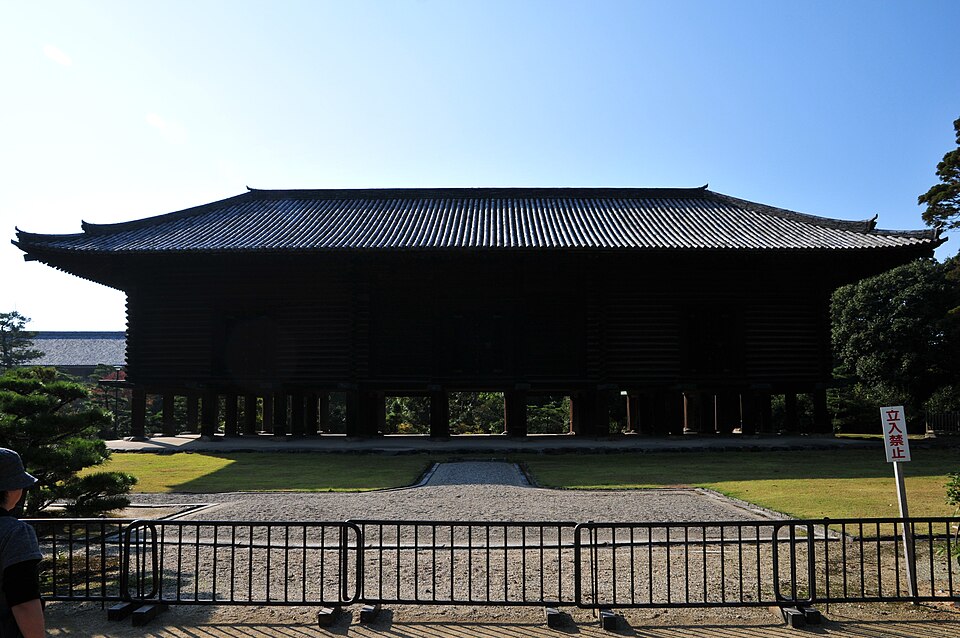
There is also an unexpected musical connection. On January 23, 2024, Emperor Naruhito and Empress Masako visited an exhibition at the Meiji Jingu Museum. Among the objects they viewed was a reproduction of a five-stringed biwa lute whose strings used Koishimaru silk.5
A thread that also leads to France
This history extends beyond Japan. In 2014, the Japan Foundation helped present KAIKO in Paris, an exhibition connecting imperial sericulture, Shōsō-in textiles and exchanges between Japan and France. It looked back to the nineteenth century, when silkworm disease damaged French production and Japan sent silkworm eggs to France. French engineers, in turn, helped establish the Tomioka Silk Mill, completed in 1872.6
The Empress discussed in that 2014 exhibition was Michiko. Keeping the dates and names clear lets us see both the work of an individual and the tradition that Masako now continues.2, 6
Seen through these examples, a tray of cocoons becomes easier to understand. Keeping a craft available for the future can begin long before anyone sits at a loom—with leaves, insects and the decision to raise another generation.
Explore another layer
Sources & further reading
Sources checked October 23, 2026. Historical events are dated in the text; archival photographs are identified in their captions.
- Imperial Household Agency — The Empress feeds silkworms at the Momijiyama Imperial Cocoonery (Japanese, June 2, 2023). The May 30 visit and the stages of imperial sericulture.
- Imperial Household Agency — Their Majesties the Emperor, Empress and Princess Aiko, “Passing on Traditional Culture.” The tradition, its inheritance and silk supplied for cultural heritage work.
- National Agriculture and Food Research Organization — The secrets of silkworms (Japanese, updated July 2, 2024). Domestication and the silkworm life cycle.
- Nara National Museum — Koishimaru, Shōsō-in Exhibition Glossary. The variety’s history, yield and use in textile reproductions.
- Imperial Household Agency — Visit to the exhibition on reproducing Shōsō-in treasures (Japanese, February 2, 2024). The collection, reproduction methods and the biwa’s silk strings.
- Japan Foundation — KAIKO: Sericulture of the Imperial Household, Ancient Textiles from the Shosoin Repository, and Exchanges of Silk between Japan and France (2014 exhibition). Industrial history and international exchanges.





Comments