Food & Everyday Tables · Real Life in Japan
Oden: Inside Japan’s Winter Pot
A pot of daikon, eggs and fish cakes opens a window onto everyday cooking, regional flavors and the pleasure of choosing a few favorite pieces.
By Maki Kakudate · 6 minute read
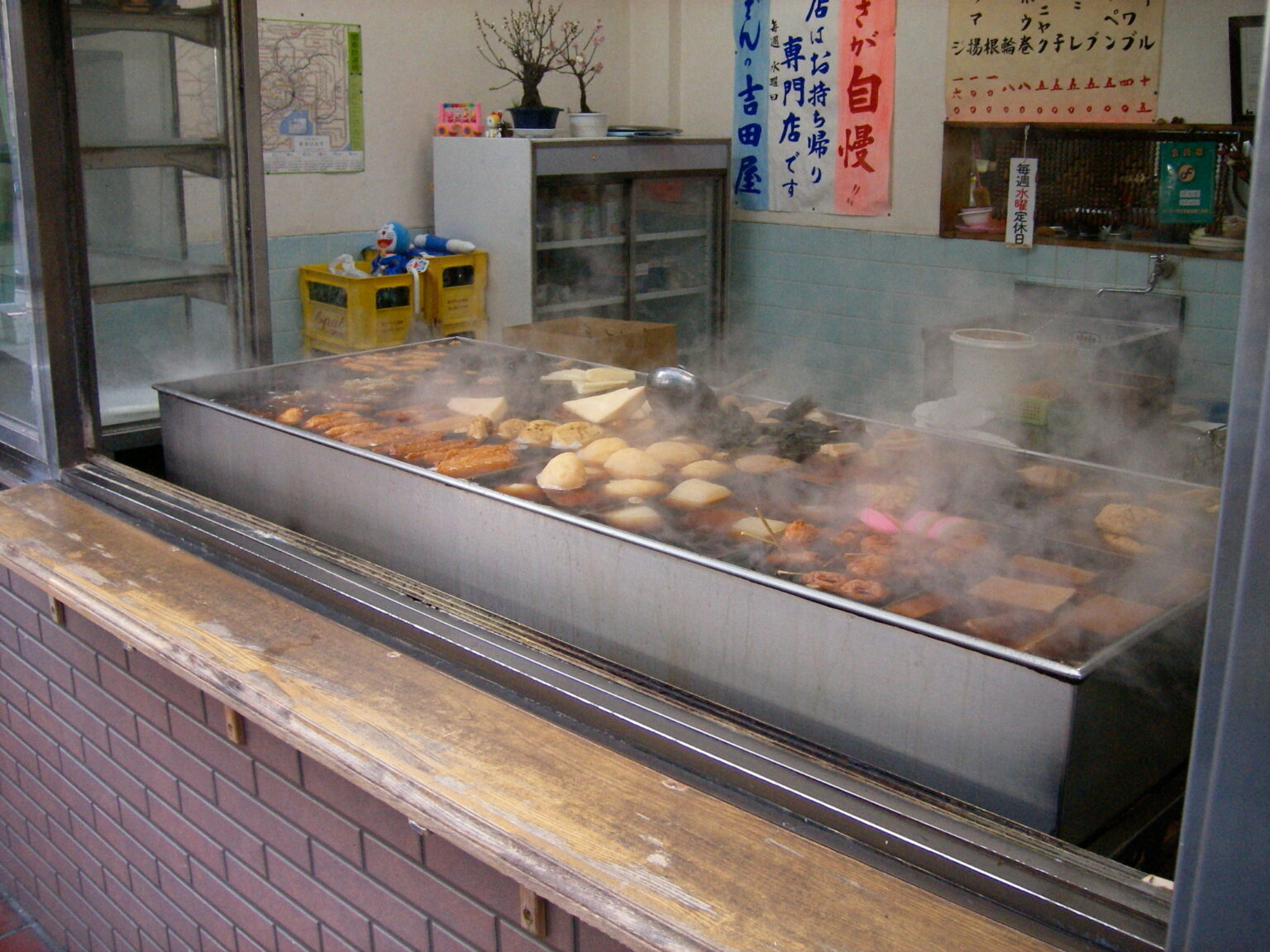
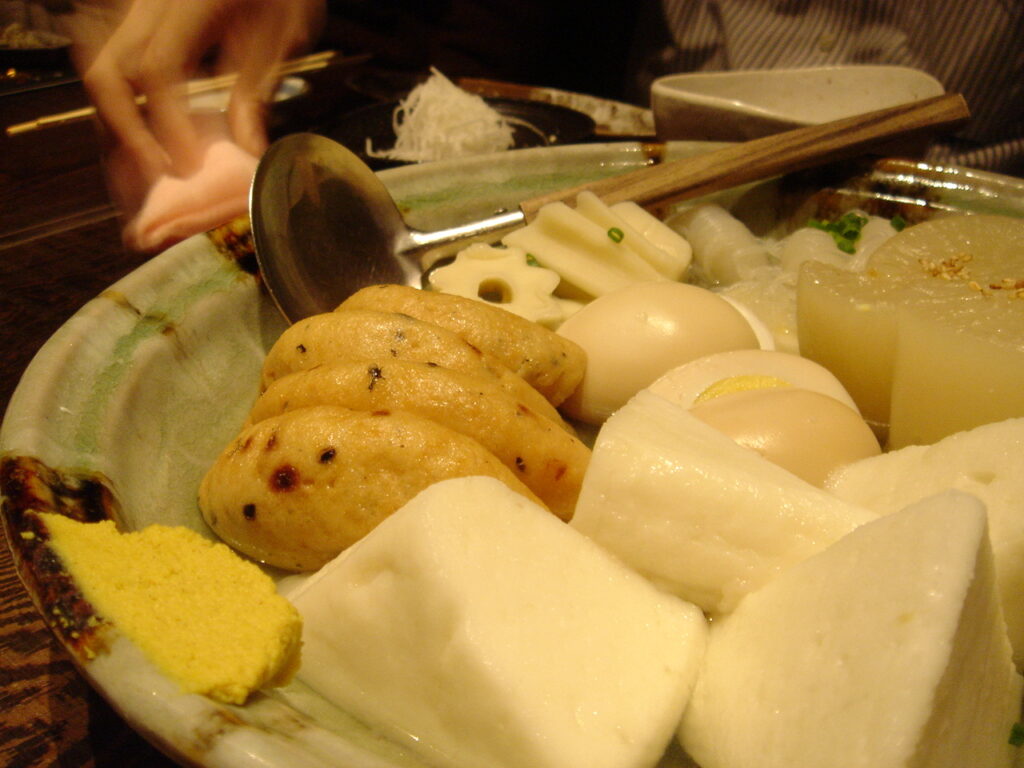
A round of daikon, a peeled egg, a browned tube of fish cake: an oden pot keeps its ingredients easy to recognize. They share a broth, but each offers a different bite. Part of the pleasure is deciding what belongs on your own small plate.
Oden is a dish of assorted ingredients simmered in seasoned broth. In the Tokyo version documented by Japan’s Ministry of Agriculture, Forestry and Fisheries (MAFF), the stock combines dried bonito flakes and kombu kelp, with soy sauce among the seasonings. Daikon, fish cakes, konnyaku and other ingredients become a meal through their time together in the pot.1
Getting to know the ingredients
The ingredients are often called tane. Some need little introduction, such as boiled eggs and thick pieces of daikon radish. Others reveal how much variety can fit into one pot. Konnyaku is made from konjac tuber or its processed flour; shirataki provides a threadlike form, often tied into bundles. A little pouch may be mochi kinchaku: a pocket of fried tofu enclosing a piece of mochi rice cake. Its contents are hidden until it is opened. Tofu takes other forms, too: atsuage is fried tofu, while ganmodoki combines drained tofu with additions such as carrot, hijiki seaweed or sesame before frying.2
One useful distinction is between chikuwa and chikuwabu. Their names and hollow shapes can look closely related, yet chikuwabu is made by kneading wheat flour with water and salt. Its ridged exterior and dense dough give it a different character from the fish cake beside it. Oden rewards this attention to individual ingredients, even when the broth gives them a shared flavor.2
The work already inside a fish cake
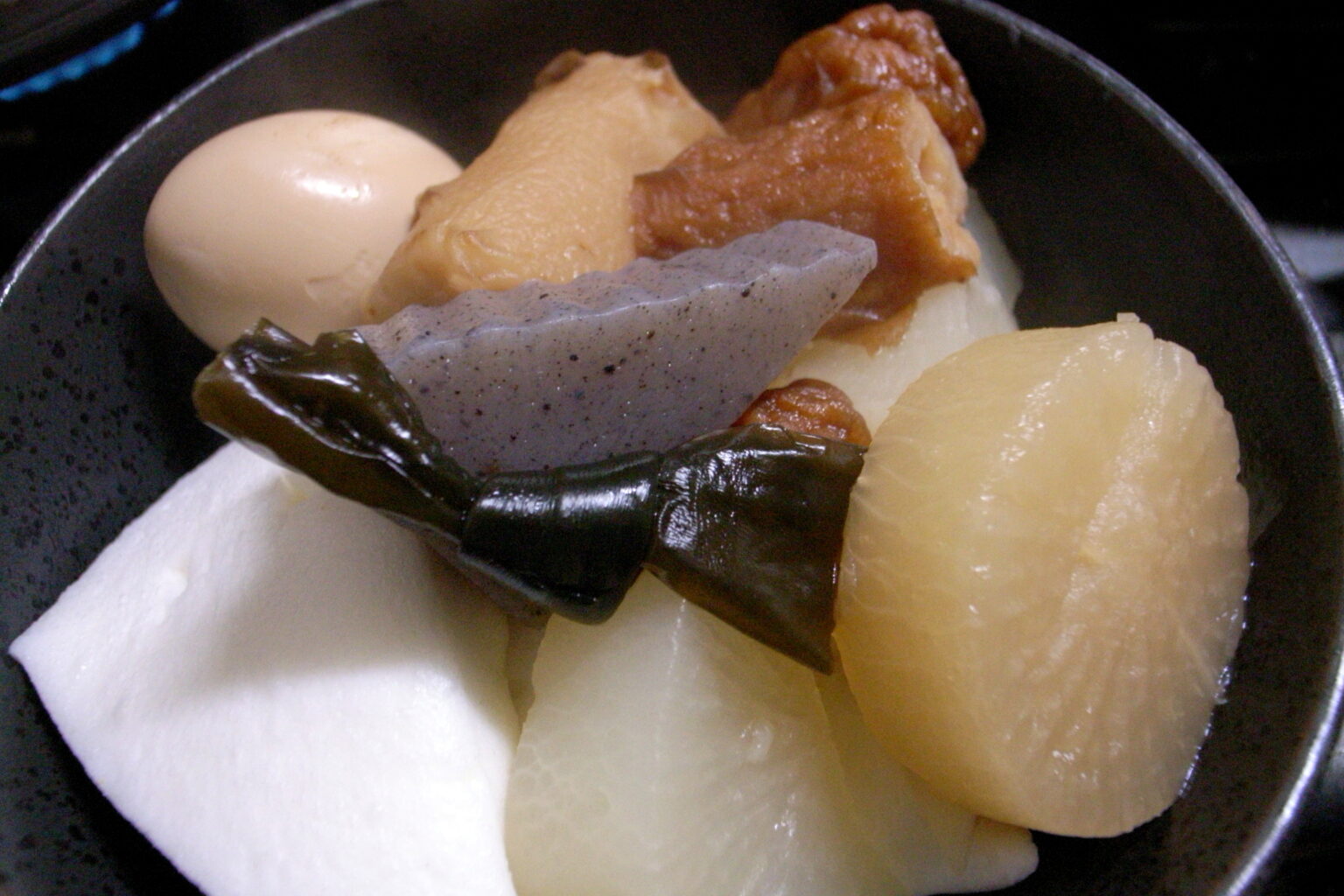
Many oden ingredients have already undergone considerable preparation before they reach the pot. In its account of fish cake production, the manufacturer Kibun describes fish flesh being separated, washed and processed into surimi, then mixed with salt and seasonings. Washing removes blood and fat; refining and dewatering prepare the flesh for the next steps. Shaping and heating turn that paste into distinct foods. Chikuwa is grilled, while satsuma-age is fried. These differences help explain the contrast between a browned tube and a golden patty, even though both belong to the broad family of prepared fish products. By the time they join the daikon and eggs, these ingredients already carry the results of separate cooking processes.3
The white hanpen associated with the Kanto region adds another texture. Air incorporated into the mixture gives it its characteristic fluffiness. That lightness is quite different from Shizuoka’s kuro hanpen, a boiled fish cake made with fish such as sardines and mackerel. The shared word “hanpen” does not guarantee the same food.4
What happens in the broth
The broth changes as the ingredients cook. In an interview published by Kibun, cooking science researcher Yoko Sato explains that dissolved seasoning moves into vegetables through diffusion. Seasoning moves from a more concentrated liquid toward a less concentrated interior. Heating changes the vegetable’s cell membranes, allowing flavor to penetrate. This helps explain how a piece of radish can become seasoned within while keeping a recognizable outline. Meanwhile, fish cakes can release salt and savory compounds into the surrounding liquid. The daikon is therefore taking on a broth that the other ingredients have helped to season.5
This exchange has limits. Prolonged cooking can draw too much flavor out of fish cakes. Kibun’s cooking guidance treats ingredients differently: those that need longer go in earlier, and delicate hanpen is added close to serving. A gentle simmer also helps preserve shapes and keeps the liquid from becoming cloudy. The apparently relaxed pot depends on attention to timing and heat; giving everything the longest possible cooking time would miss the point.6
A longer history behind the winter pot
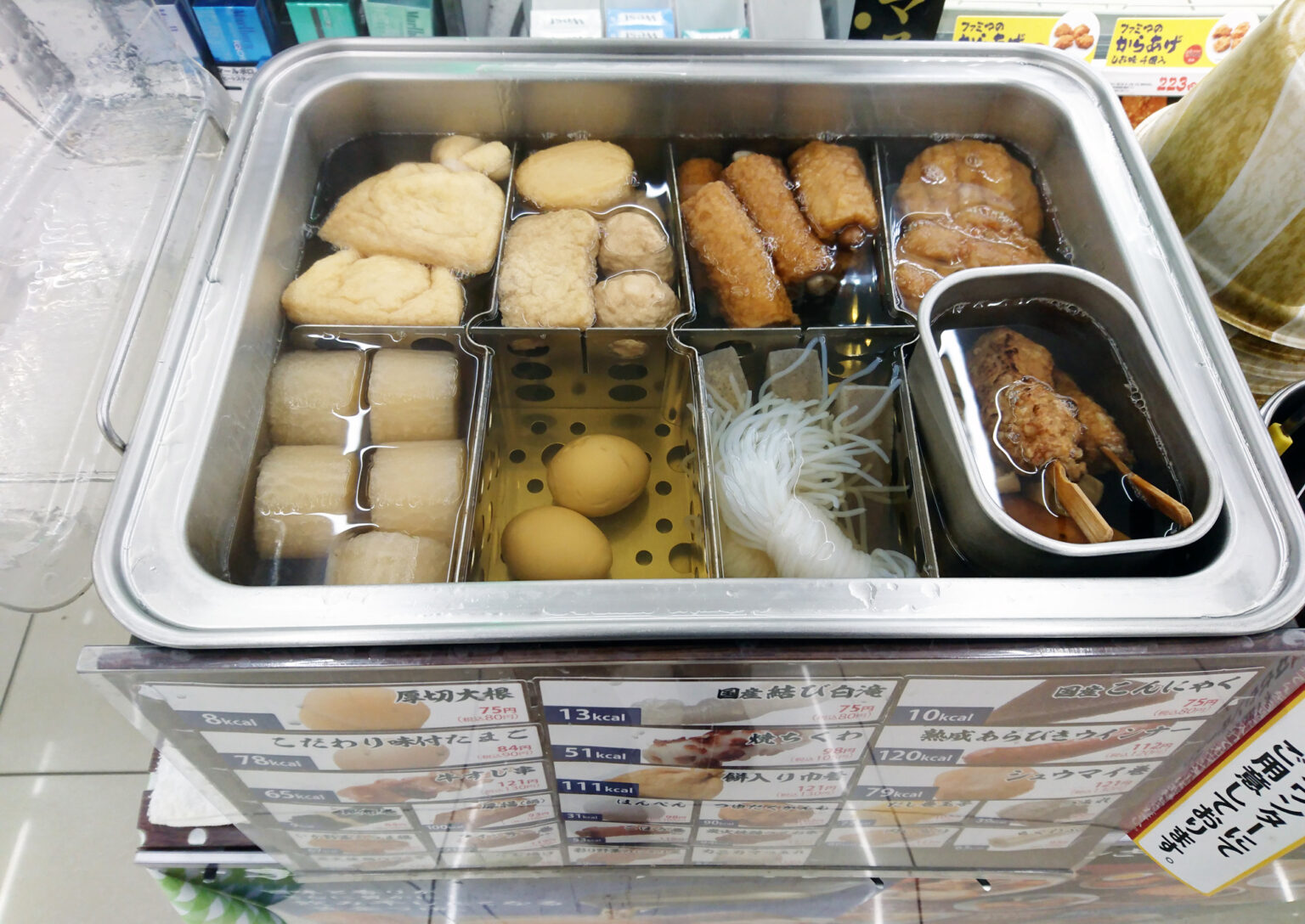
Oden’s past reaches beyond the familiar broth. MAFF traces its roots to tofu dengaku, skewered tofu cooked over heat and associated with a miso coating. Its winter food feature describes a later expansion of simmered oden during the Meiji era, followed by its spread in Kansai during the Taisho era. Ingredients and seasonings developed local variations along the way. This is a broad account of change, rather than a single moment when today’s dish was invented.7
The connection with cold weather is strong, though winter does not have exclusive rights to oden. MAFF’s Tokyo account describes greater demand in autumn and winter alongside year-round service at established specialist restaurants. It also records the household variations that make oden part of everyday cooking. A familiar name leaves room for a cook’s own broth and selection of ingredients.1
One pot, different plates
At a table, that assortment allows a shared meal to take different forms. One plate can hold an egg and daikon; another can make more room for fish cakes. Choosing a second piece changes the sequence of textures without requiring a separate dish. A little karashi, Japanese mustard, is one traditional accompaniment, adding a sharp accent according to taste.1 The pot supplies the common starting point, while each plate becomes a small selection of its own.
How a place changes the pot
Shizuoka provides a particularly recognizable variation. MAFF’s account of the city’s oden describes ingredients on skewers, a dark broth, kuro hanpen, and a finishing sprinkle of fish powder and aonori seaweed. It also records the dish’s connection with dagashiya, neighborhood snack shops, where oden has been eaten as a snack. This setting gives the pot another scale: a skewer or two can belong to a pause in the day as easily as to a larger meal.8
In Himeji, the defining local touch can arrive after the simmer. The Himeji Oden association identifies ginger soy sauce as the common feature, whether the underlying oden is strongly seasoned and sweet or prepared in a lighter style. Even the sauce has variations, including additions of broth or mirin. Local identity here rests on the way oden is finished, with room for differences within the same city.9
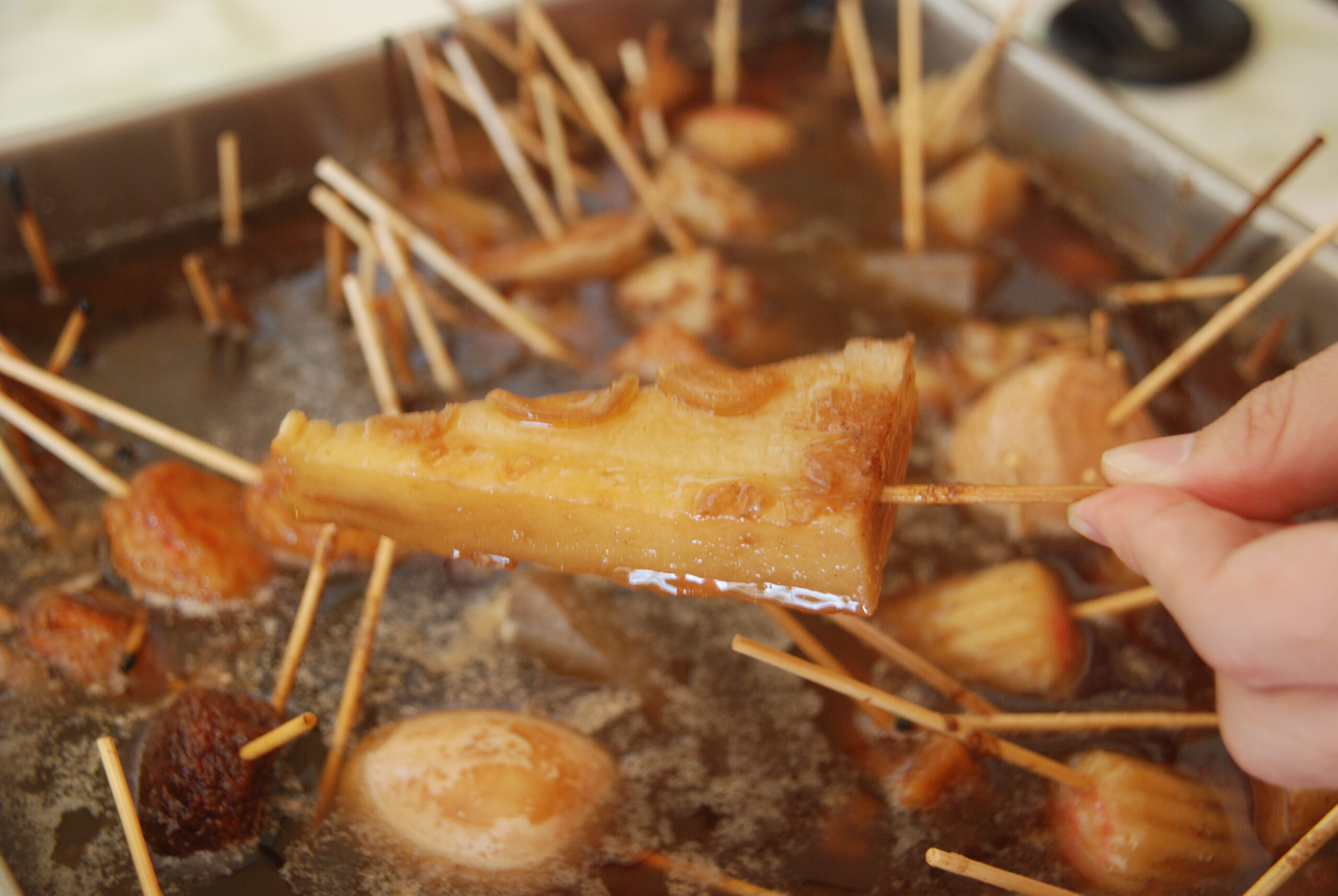
These variations make the ordinary pot worth a closer look. The shape of a fish cake, the broth held by a piece of radish, and the sauce waiting beside a plate all contribute to the meal. Oden offers plenty to notice before the next piece is chosen.
Continue exploring
More from everyday Japan
Sources & further reading
Sources checked on October 19, 2026. Public food-culture resources, local organizations and food producers support the article’s history, ingredients and regional examples.
- Ministry of Agriculture, Forestry and Fisheries (MAFF) — Oden — Tokyo (Our Regional Cuisines). Tokyo’s broth and ingredients, seasonal use, household variations and mustard.
- Kibun Foods — Oden Ingredients and Regional Characteristics. A glossary of konnyaku, shirataki, tofu preparations, mochi pouches and chikuwabu.
- Kibun Foods — How Fish Paste Products Are Made. The producer’s account of fish paste preparation, shaping and heating.
- Kibun Foods — Frequently Asked Questions: Product Characteristics. The texture of white hanpen and the distinction from Shizuoka’s kuro hanpen.
- Kibun Foods; interview with cooking science researcher Yoko Sato — How Flavor Penetrates Oden Ingredients. An interview on how broth and ingredients exchange flavor.
- Kibun Foods — How to Make Classic Oden. Gentle simmering and different cooking times for different ingredients.
- Ministry of Agriculture, Forestry and Fisheries (MAFF) — Learn About and Enjoy Oden in Winter. A historical overview of dengaku and the spread of simmered oden.
- Ministry of Agriculture, Forestry and Fisheries (MAFF) — Shizuoka Oden — Shizuoka (Our Regional Cuisines). Skewers, dark broth, fish powder and oden in local snack shops.
- Himeji Oden Cooperative / Himeji Oden Promotion Committee — About Himeji Oden. The local association’s description of ginger soy sauce and variations within Himeji.
Photograph credits, original titles and reuse licenses appear with each image. The photographs document the dates and places stated in their captions.






Comments