Undokai in Japan: The School Sports Day Children Help Create
A basket, a baton and the work between events: looking more closely at a familiar part of growing up in Japan.
江戸村のとくぞう / Wikimedia Commons, CC BY-SA 4.0. Resized to 960 pixels wide; composition unchanged.
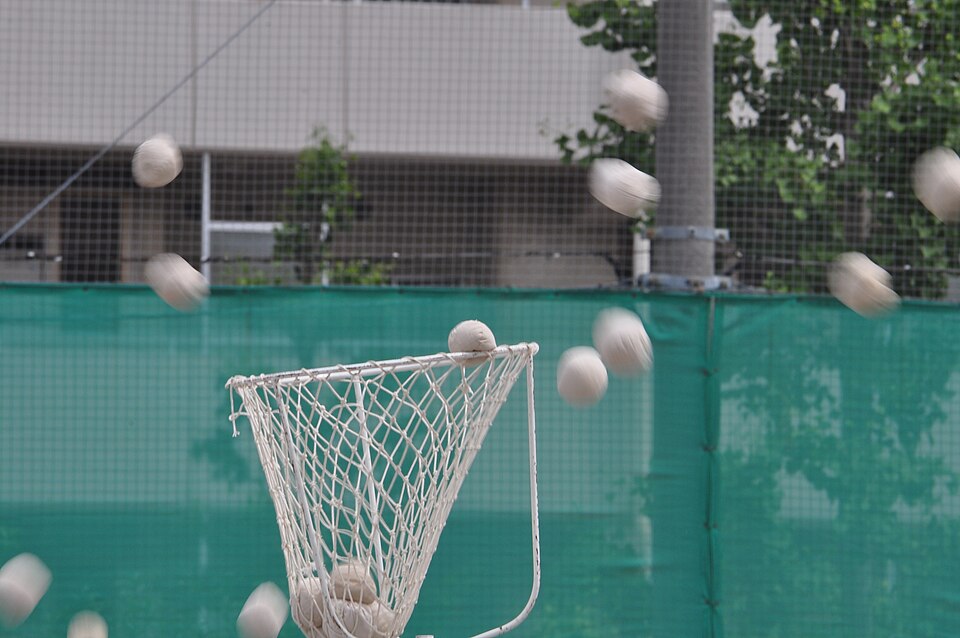
The basket is easy to spot. So are the balls flying past it. In tamaire, a familiar Japanese sports-day game, a whole team throws toward the same target.
For an overseas viewer, that image offers a useful way into undokai: the school sports day. A race gives you a finish line to watch. A group game asks you to follow several people at once. Look beyond the competition, and there are more roles to notice—organizing, announcing, keeping score and cheering.
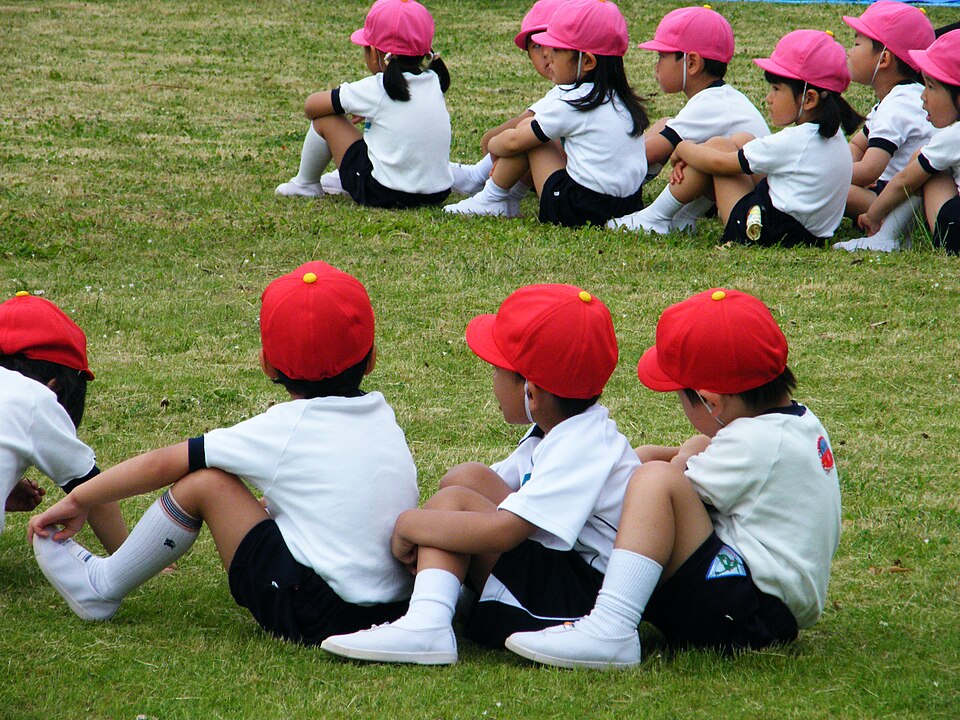
Those roles help explain why this event belongs in a story about school life. The children are participants in the program, and, at some schools, they also help make the program happen.
What happens at an undokai?
Undokai is a school sports day, often held in spring or autumn. Preparations begin before the event itself.[1]
There is no need to learn every game before following the action. Start with the question each event poses: who must move together, what has to reach the finish, and how does the team earn its result?
Tamaire: many small throws, one total
In the beanbag toss, children throw small cloth bags or balls into a raised basket. The team’s successful throws are counted to decide the result.[1] The photograph catches the uncertainty nicely: some balls approach the rim, others miss, and one rests against the edge.
Relay races: the handover matters
Relays connect runners through a baton handover. Kids Web Japan describes them as an anticipated event, sometimes near the program’s end.[1] Watching the exchange gives you something to follow beyond the speed of a single runner.
Large-ball games: follow the local rules
In one large-ball game described by Kids Web Japan, players pass the ball overhead across their raised hands.[1] The name alone may not tell you the exact rules, so look at the program and watch how that school has arranged the game.
An undokai program is a school’s selection of activities. A familiar game in one photograph does not mean every school includes it, or plays it in exactly the same way.
The day starts before the first race
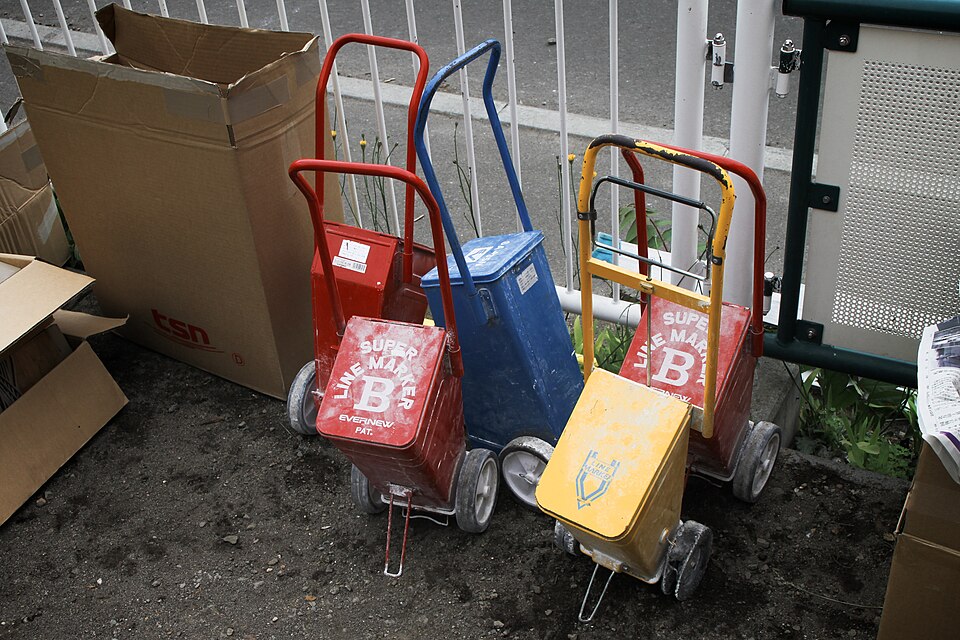
The line-marking carts below are an ordinary piece of equipment, photographed at a kindergarten sports festival. Their worn paint is a reminder that the finished field has to be made ready.
A line on the ground tells a runner where to start or turn. A basket must be placed where the game can happen. A sequence of events must be understandable to the people taking part. These are useful details to look for when trying to understand the work behind a school occasion.
MIKI Yoshihito / Wikimedia Commons, CC BY 2.0. Resized to 960 pixels wide; composition unchanged.
When children help run the event
A government feature on Kozan Elementary School in Kumamoto gives a concrete example. Its principal describes upper-grade pupils helping plan and manage sports day, including organizing competitions and cheering. Children can also take roles in ceremonies and scoring.[2]
The article places undokai within tokubetsu katsudo, the school activities through which pupils practice participating in a group. In the principal’s account, discussing how to approach a relay or team event means listening to different ideas and reaching agreement.[2]
This gives a spectator another way to read the scene. The runner is easy to identify. It takes a little more attention to notice who is explaining the next activity, leading a cheer or helping the group stay organized.
The range of jobs matters: a child’s contribution can extend beyond the moment they cross a finish line.
A shared event, different experiences
Team activities carry educational hopes, but they do not guarantee the same experience for every participant. A review of Japanese school sports events by Takeshi Akiyama discusses cooperation and responsibility while also noting that competition can produce negative feelings in some children.[3]
When watching, try following one role for a few minutes. Notice how an instruction reaches the next group, or how a cheer is picked up by others. This shifts attention toward the small contributions that allow an event to continue.
Emran Kassim / Wikimedia Commons, CC BY 2.0. Resized to 960 pixels wide; composition unchanged.
Why a school notice tells you more than a postcard
It is tempting to imagine one standard scene: an all-day weekend event, families on picnic mats and a large lunch brought from home. A school’s own instructions can tell a more specific story.
Zuiho Elementary School in Owariasahi, for example, has published a notice for a morning-only sports day with school lunch afterward, so no packed lunch is required. It asks visitors to wear name badges and says that reserving places the day before and setting up tents are not permitted.[4]
The program includes activities for different grades and a representative relay, followed by closing proceedings.[4] It is a useful glimpse of how a school fits competition, shared activities and its normal lunch service into one morning.
For families, the notice is therefore part of the experience: it explains where to be, what to bring and how the day fits into school life. For an overseas reader, it is also a reminder that a familiar tradition is organized through local decisions.
If you are invited to watch
- Read the school’s instructions first. Confirm who may attend, which entrance to use and whether registration or a visitor badge is needed.
- Check the timetable and lunch arrangements. Do not assume a full-day event or a family picnic.
- Follow the photography rules. Respect the school’s instructions and families’ privacy when taking or sharing pictures.
- Keep routes clear. Leave entrances, activity areas and the space needed by pupils and staff unobstructed.
A school sports day is a school event. Do not assume that passing visitors may enter; attend only where the organizers explicitly welcome you.
A way to explore the idea from home
The Japan Society offers an educational undokai pack, including an at-home version with eight adapted games and simple equipment. Its teaching resources move through pair work, enjoyment, teamwork and reflection.[5]
For readers outside Japan, that is a practical way to explore how a shared game works without treating a school as a visitor attraction. Choose an age-appropriate activity, read the instructions and give everyone a role.
Then return to the basket in the opening photograph. You can still enjoy the flying balls and the uncertain result. Around that brief moment is a larger event—planned, prepared and made possible by people doing different jobs.
Sources & further reading
- Kids Web Japan — The Excitement of Getting Together on Sports Day. Seasonal timing, preparation, relays, beanbag toss and a large-ball game.
- Highlighting Japan — Undokai (“Sports Day”) Actively Directed by the Children Themselves. Interview with the principal of Kozan Elementary School in Kumamoto.
- Takeshi Akiyama — Undokai and sports events in the Japanese school system, Pediatrics International. A literature review discussing educational aims and possible negative experiences of competition.
- Zuiho Elementary School, Owariasahi — Sports-day notice (Japanese). An example of a school-specific program, lunch arrangements and visitor rules.
- The Japan Society — Undokai: Japanese Sports Day. Educational resources and an adapted at-home games pack.
The three credited archive photographs show different events and illustrate the activities and equipment discussed. They are not photographs of the Kozan or Zuiho school examples. Suggestions for looking more closely are editorial interpretation.





Comments