Tsukiji Outer Market: The Tokyo Food District That Never Closed
The famous tuna auctions moved years ago. But in Tsukiji’s narrow streets, fishmongers, chefs and food sellers still shape one of Tokyo’s most fascinating mornings.
8 MIN READ
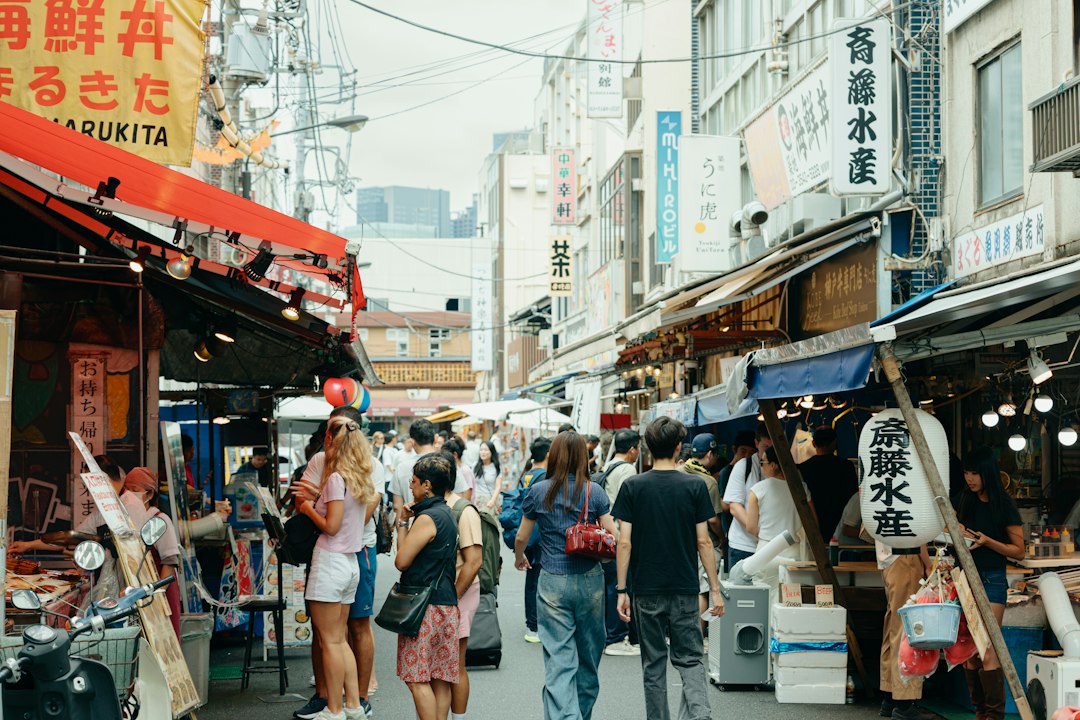
Photo: Connor Gan / Unsplash.
The sound of a knife on a cutting board comes from somewhere behind a shop curtain. A row of golden omelettes is stacked behind glass. Nearby, someone is choosing dried seaweed, while another customer is already sitting down to a bowl of rice topped with fish.
This is Tsukiji Outer Market, one of Tokyo’s most famous food districts. It is often described in old guidebooks simply as “Tsukiji Fish Market”, which can cause a confusing question: didn’t Tsukiji close? The answer is that a major part of its business moved—but the outer market did not disappear.1
Today, the neighbourhood is still filled with food-related shops, merchants and restaurants. Come for breakfast if you like, but stay curious about the people and tools behind it. Tsukiji is not only a place to eat sushi; it is a neighbourhood that reveals how a great food city works.
What moved to Toyosu in 2018?
For decades, the name Tsukiji was associated with Tokyo’s enormous central wholesale fish market. The old inner market opened in 1935 and became internationally known for its seafood trade and tuna auctions. Its wholesale operations closed in early October 2018, then resumed at the new Toyosu Market in Tokyo Bay.2
If you are looking for the wholesale tuna auction today, Tsukiji is no longer the place to go: Toyosu is the new home of those operations. The outer market, however, remained in Tsukiji. It continues to supply food and equipment, serve meals and welcome customers who want to experience the shopping streets.1
The distinction matters for travellers. Tsukiji is not a museum of the old fish market, and it is not merely a memory. It is an active commercial area with its own everyday rhythms, even though its relationship with the wholesale trade has changed.
A neighbourhood built around the work of feeding a city
Tokyo’s restaurant culture relies on more than chefs and fashionable dining rooms. Someone has to select fish, prepare dried ingredients, sharpen knives, deliver vegetables, pack food and sell countless small essentials. A food market is where many of those practical activities become visible.
In Tsukiji, the shops include seafood sellers, specialists in dried bonito flakes and seaweed, tea merchants, greengrocers and vendors of kitchen equipment. Not every shop is aimed at tourists. Many are part of a trading network for cooks and food businesses.3
That is why the official market association asks visitors to respect professional buyers, especially in the early morning. A narrow lane might be a picturesque photograph to one person but a working route for someone carrying goods to a customer.
Why 9 a.m. is a useful dividing line
The association describes 6:00–9:00 a.m. as the time principally for professional buyers and 9:00 a.m.–2:00 p.m. as the main public shopping period. Some shops open earlier, while others close before the afternoon ends. These are general market rhythms, not a guarantee that every shop will be open on a particular day.4
Arriving around 9 or 10 a.m. is a sensible approach for a first-time visitor who wants to browse without disrupting the most intense working hours. You can still enjoy breakfast, compare food products and have time for a slightly early lunch.
Check the market’s official calendar before travelling. Many shops close on Sundays and national holidays, and some also close on certain Wednesdays when the wholesale market has a holiday. Individual businesses may follow different schedules.5
Start with tamagoyaki, then follow your curiosity
One of Tsukiji’s most approachable foods is tamagoyaki, a Japanese rolled omelette. Layers of egg are cooked in a rectangular pan; depending on the shop, the flavour may be lightly sweet, savoury or enriched with stock. Some market vendors serve portions on a stick, warm and ready to enjoy near the shop.6
It is a small bite that says a great deal about Japanese cooking. The ingredients are simple, but the texture depends on controlling heat and folding thin layers at just the right moment. When a shop allows you to watch the cooking process, notice the practiced movements instead of focusing only on the finished snack.
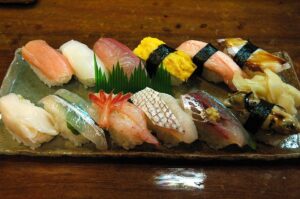
If you want a more substantial meal, look for kaisendon, a bowl of rice topped with slices of seafood, or a sushi counter. There are also grilled seafood stalls, soups, rice balls and plenty of choices beyond raw fish. Prices and ingredients vary widely, so read the posted menus and ask questions before ordering.1
A worthwhile visit does not require trying everything or joining the longest queue. Pick one or two foods that genuinely interest you. Having room to notice what you are eating is more memorable than treating breakfast as a race.
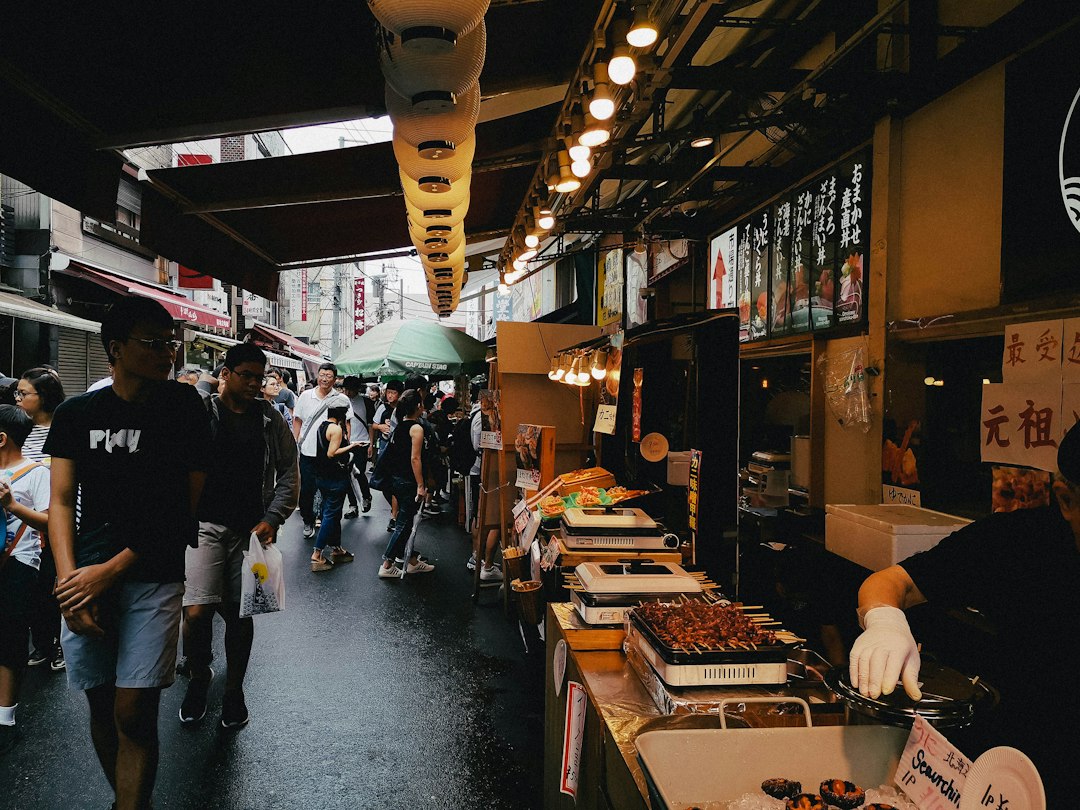
Photo: Michael Wu / Unsplash.
Beyond sushi: the ingredients of Japanese flavour
A particularly interesting way to explore Tsukiji is to think about the foods that make a Japanese kitchen work. A bag of katsuobushi, dried and shaved bonito, may look humble. Yet it is an important ingredient in dashi, the stock used in many soups, simmered dishes and sauces.
Kombu, dried kelp, is another familiar basis for stock. The two may be used together, creating layers of savoury flavour that are hard to understand simply by looking at a finished bowl of soup. Tsukiji’s sellers have long specialised in such ingredients, giving visitors the chance to see them in their raw and preserved forms.3
You can also browse tea, dried seaweed, pickles and seasonings. Some products travel easily as gifts, while others need refrigeration or may face restrictions when you return home. Always check packaging and your destination country’s customs requirements before buying food to take overseas.
A Japanese kitchen knife is also part of the market
For visitors interested in craftsmanship, the stalls selling knives and cookware are especially rewarding. Japanese kitchen knives come in different shapes for vegetables, fish and general cooking. The best choice is not necessarily the most expensive or most elaborate blade, but the one suited to its user’s habits and maintenance needs.
Tokyo’s official tourism guide highlights Tsukiji’s cookware shops as a place where professional chefs and visitors look for long-lasting equipment. Even if you do not plan to buy a knife, notice the care given to the shape of each blade and the differences between wooden handles.6
If you are considering a purchase, ask the shop about sharpening, rust care and safe packing for travel. Airlines generally require knives to be packed in checked baggage rather than carried into the cabin; check your airline’s rules and the import laws of your destination before buying. A kitchen tool is a good souvenir only if you can use and transport it responsibly.
The craftspeople behind the original Tsukiji
Historic photographs of the former wholesale market show workers handling fish in a setting very different from a modern tourist food hall. It was noisy, physically demanding work. Knives, water, carts and carefully timed transactions were all part of a system built to move perishable food through Tokyo quickly.
The wholesale site is no longer operating in Tsukiji, and it would be misleading to present a photograph of those old working floors as a current visitor attraction. But the images help explain the district’s reputation. Its fame did not begin with social media-friendly breakfast menus; it grew from generations of specialised food trade.2
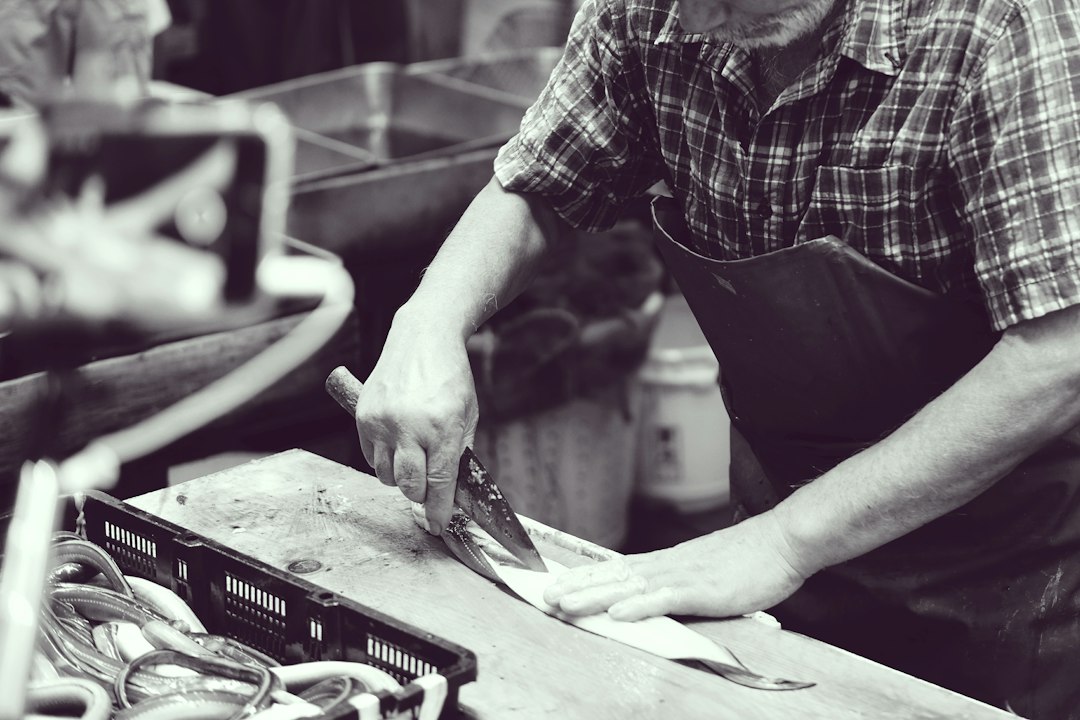
Photo: Erica Leong / Unsplash.
How to be a considerate market visitor
Tsukiji’s narrow lanes are shared by retailers, professional buyers, delivery workers and visitors. The market association offers practical guidance that is worth reading before you arrive.7
- Eat in place, not while walking. Enjoy a snack inside the shop or in its designated eating space. Eating while moving through a crowded lane can cause spills and block others.
- Ask before taking photographs. Some merchants prohibit photographs or video. A shop counter is a place of work, not automatically a public photography set.
- Leave large luggage elsewhere. Suitcases obstruct the narrow passages. There are some lockers near the information centre, but capacity is limited.
- Do not touch products unless invited. Fresh fish, produce and prepared foods need to be handled carefully. Ask the shopkeeper for help.
- Let working customers pass. Step aside for carts, deliveries and people purchasing goods. Especially before 9 a.m., remember that the market’s business comes first.
- Buy at the posted price. Bargaining is not customary. Respect queues and the pace of the smaller restaurants.
These are not merely tourist rules. They are the everyday conditions that allow a real market to function while welcoming people who want to discover its traditions.
Tsukiji Uogashi and the information centre
The Tsukiji Uogashi market buildings add another layer to the district, with shops selling fresh seafood and other professional ingredients. For the wholesale-style areas, shopping before 9 a.m. is reserved for professional buyers with permission; general visitors can shop after that time.8
Near the market is Plat Tsukiji, the local information centre. It is a useful place to check maps, market guidance and practical questions. Before visiting, check its official information page for current services and opening arrangements.
A relaxed morning route through Tsukiji
Tsukiji is best experienced without an elaborate checklist. A short walk can reveal the whole logic of the neighbourhood if you pay attention to more than the most photographed food stalls.
- Arrive by subway. Use Tsukiji Station on the Hibiya Line or Tsukijishijo Station on the Oedo Line. Both are within a short walk of the outer market.1
- Start around 9 or 10 a.m. Browse the main streets after the busiest professional buying period and check which shops are open.
- Choose a small breakfast. Try tamagoyaki, sushi or a seafood bowl in a shop or designated eating place. There is no need to eat while walking.
- Explore the pantry and cookware shops. Look for dried bonito, kombu, tea and knives as well as ready-to-eat food.
- Visit Tsukiji Uogashi if it interests you. Respect the posted rules and professional-only periods.
- Finish with a little time to spare. Leave the narrow lanes before the afternoon shutdown of many shops, or have lunch in the surrounding neighbourhood.
Allow around two to three hours for a relaxed browse with one meal. The public streets do not require an admission ticket, but shops charge for their food and goods. The market is not a single attraction with one universal opening hour or admission price.
Questions before visiting Tsukiji
Did Tsukiji Fish Market close?
The central wholesale market, including the tuna auctions, moved to Toyosu in October 2018. Tsukiji Outer Market remains open as a district of food merchants, restaurants and cookware shops. Do not confuse the two sites.2
Where can I see a tuna auction?
At Toyosu Market, not the Tsukiji Outer Market. Visitor access and auction viewing procedures can change; see the official Toyosu visitor guide before planning an early-morning visit.
What is the best time to visit?
For most first-time visitors, 9–11 a.m. is a good starting window. Professional buyers have priority earlier in the morning, while many retailers wind down by early afternoon. Opening times vary by shop and day.
Is Tsukiji open on Sundays?
Many shops close on Sundays and national holidays. Some also close on selected Wednesdays. Always consult the market’s official calendar and check individual businesses before you travel.
Is eating while walking allowed?
No. The market asks visitors to eat inside restaurants or at designated spaces in front of the shops where food is purchased. Keep narrow pathways clear for workers and other customers.7
Do I need a ticket to enter the outer market?
No ticket is needed to explore the public shopping streets. Food, guided experiences and retail purchases have their own prices, and professional wholesale areas may have restricted access.
The market that survived a change of address
Tsukiji today cannot be described accurately by pretending the old wholesale market never moved. But it would be equally wrong to say that the whole district vanished in 2018.
The real story lives in the narrow passages and shopfronts: the sellers of broth ingredients, the people who sharpen knives, the small counters serving an early meal, and the rhythm of a place that is still doing business. Come hungry if you like. Come curious, and you will discover much more.
Sources and further reading
- Japan National Tourism Organization: Tsukiji Outer Market — ongoing food district, access, shopping and history.
- Japan National Tourism Organization: 2018 Fish Market Relocation — wholesale move to Toyosu.
- Tsukiji Outer Market Association: How to Enjoy Tsukiji — specialty ingredients, seafood, cookware and an example morning route.
- Tsukiji Outer Market Association: Business Calendar — professional and public shopping periods.
- Japan Guide: Tsukiji Outer Market — typical hours and closures.
- Tokyo Metropolitan Government: Tsukiji Outer Market — omelettes, kitchen equipment and market food.
- Tsukiji Outer Market Association: Visitor Manners — photographs, food etiquette, luggage and professional buyers.
- Tsukiji Outer Market Association: Shopping Tips and Tsukiji Uogashi — restrictions before 9 a.m. and visitor practicalities.
Market hours and shop operations vary. Information checked November 2026; verify the official calendar and current shop rules before visiting.

Comments