Culture & Traditions
Why Mount Fuji Became a Symbol of Japan
Sacred shrines, Hokusai’s Great Wave and three real views reveal the stories behind Japan’s most familiar mountain.
7 MIN READ
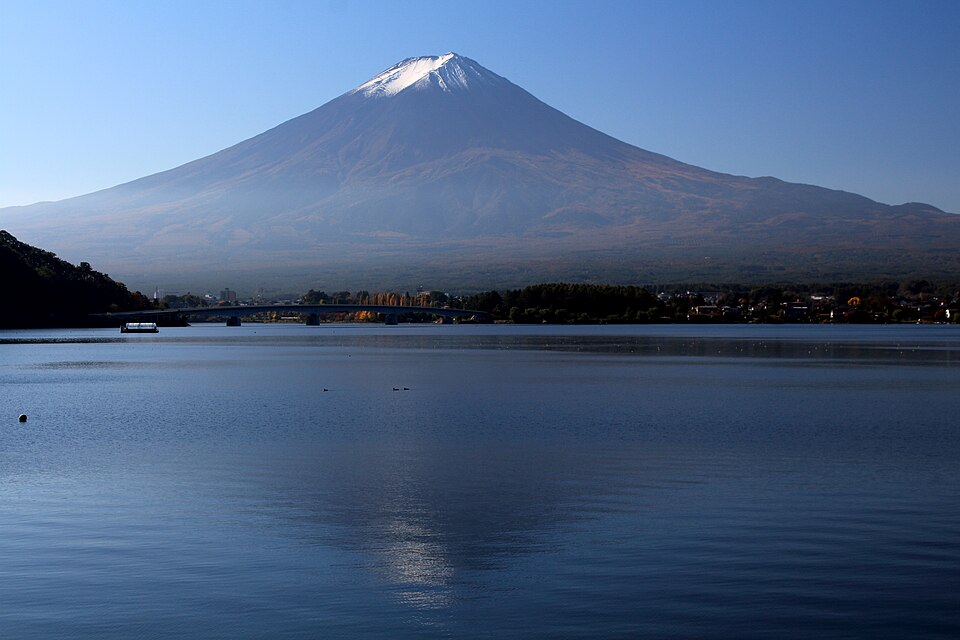
Photo: Alpsdake / Wikimedia Commons / CC BY-SA 4.0. Resized; original composition retained.
You may recognise Mount Fuji before you know where it stands. Two long slopes, a small summit, sometimes a cap of snow: a few lines can be enough to suggest Japan.
That familiar outline has a history. People have approached Fuji through prayer, pilgrimage and art, and those different ways of looking still shape the places around it. A lake view, a shrine visit and a walk beside the sea can each reveal another part of the same mountain.
Why is Mount Fuji a cultural World Heritage site?
UNESCO lists Fujisan as a sacred place and source of artistic inspiration. The property brings together 25 sites, including mountain routes, shrines, former pilgrim lodgings, lakes, springs and waterfalls. Its cultural significance lies in the relationships people developed with this landscape over many centuries.1
This helps explain why the story extends well beyond the summit. The places where people prepared for a climb, worshipped from below or pictured the mountain from a distance all contribute to understanding it.
Look again at the opening photograph from Lake Kawaguchi. The mountain fills the skyline, while the water, bridge and buildings establish a human scale below. Fuji is recognisable on its own; its surroundings tell you how someone encounters it.
A mountain people approached with prayer
The Yamanashi Prefectural Fujisan World Heritage Center describes several traditions of Fuji worship: looking towards the mountain from below, religious ascents, and pilgrimages to sacred places around its foot. It also explains the role of Fuji-ko, religious associations that spread during the Edo period.2
People known as oshi helped guide and care for pilgrims. Their involvement is a reminder that a mountain pilgrimage depended on arrangements made in towns and villages as well as effort on the slopes.2
Begin at Fujisan Hongu Sengen Taisha
In Fujinomiya, Shizuoka, Fujisan Hongu Sengen Taisha is the head shrine of the Sengen shrine network. The Japan Tourism Agency identifies its main sanctuary as an Important Cultural Property built under Tokugawa Ieyasu’s patronage in the early seventeenth century.3
The grounds also contain Wakutamaike Pond. According to Yamanashi’s official visitor guide, water from Fuji’s snow and ice passes through volcanic rock before emerging here. Pilgrims formerly purified themselves in this water before climbing.4
A visit can therefore connect the mountain’s visible form with something less obvious: water travelling through it. Take time for the shrine grounds as well as the main building, while following the signs for access and photography.
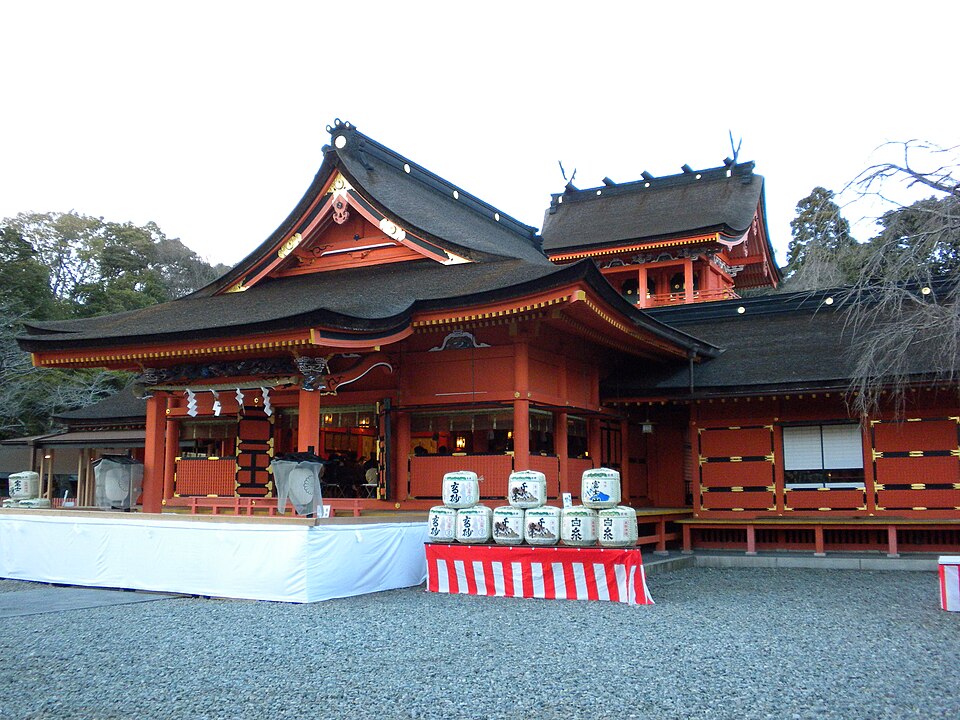
Photo: Ennui / Wikimedia Commons / Public domain. Resized; original composition retained.
The small mountain inside the Great Wave
One of the best-known images associated with Japan places Fuji far in the background. In Katsushika Hokusai’s The Great Wave, the wave dominates the scene, while the mountain appears as a small triangle beyond the boats.
The Metropolitan Museum of Art dates the print to around 1830–32 and identifies it as part of Hokusai’s Thirty-six Views of Mount Fuji. Its account draws attention to the artist’s use of perspective: the enormous mountain becomes visually small within the curve of the wave.5
If you know the image, try finding Fuji before looking at the wave’s crest. That shift changes where your attention rests. The mountain holds its place while the foreground is full of movement.
UNESCO recognises the importance of nineteenth-century woodblock prints in making Fuji an internationally familiar image and influencing Western art.1 The mountain’s fame travelled through pictures as well as through the journeys of people who came to see it.
From Miho, the sea becomes part of Fuji
Miho no Matsubara lies on the coast of Shizuoka, roughly 45 kilometres southwest of Fuji’s summit. Its pine grove and shoreline give the mountain a very different setting from Lake Kawaguchi.6
Here, the foreground matters. The beach draws a line towards the distant peak; the sea puts space between the viewer and the mountain. The photograph below makes that distance visible, with the closest waves and stones much larger in the frame than Fuji itself.
A Japanese government feature on Miho explains its long association with poetry and painting, including works by Utagawa Hiroshige. It also connects the place to the Hagoromo legend, in which a fisherman encounters a celestial maiden, and to the noh play based on that story.7
The grove has its own history of care. Miho’s official cultural website describes periods when trees were cut down and the subsequent work of local people to plant young pines. What looks like a timeless foreground has also depended on people protecting and renewing it.6
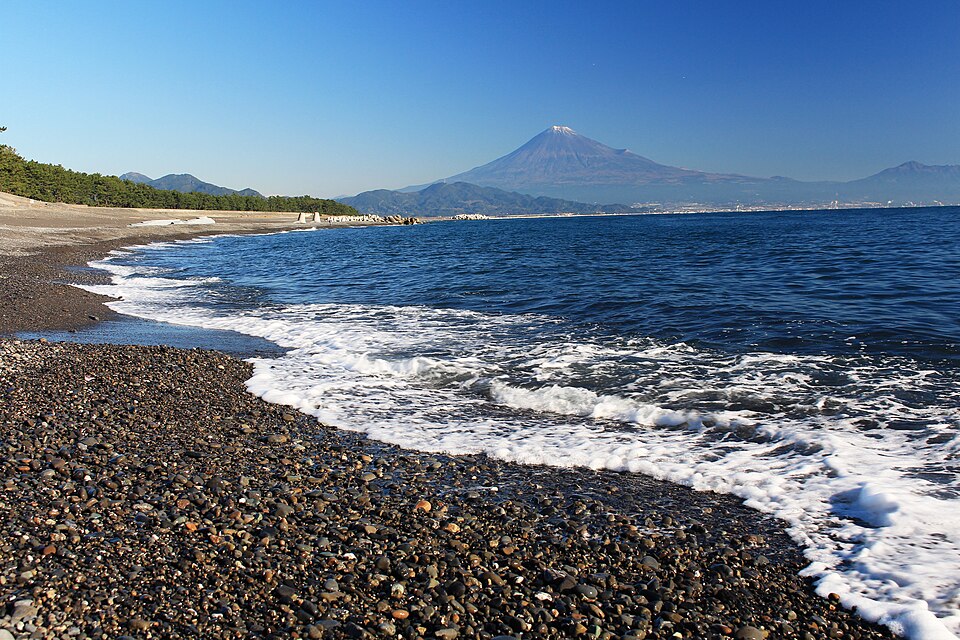
Photo: Alpsdake / Wikimedia Commons / CC BY-SA 4.0. Resized; original composition retained.
How to enjoy Fuji without making the summit your goal
Choose the kind of encounter you want before choosing a route. These three photographs suggest different starting points:
- For the familiar silhouette: a lakeside view such as Lake Kawaguchi gives you space to look at the mountain’s shape and its relationship with the surrounding town.
- For the pilgrimage story: Fujisan Hongu Sengen Taisha brings the shrine buildings, spring water and traditions of worship into the same visit.
- For Fuji in art and landscape: Miho no Matsubara invites you to notice the pine grove and sea as part of the view.
These places are spread around the region. JNTO specifically notes that the World Heritage components require travel between them.8 Choose an area that fits your transport and available time, rather than treating every famous viewpoint as a stop on one quick circuit.
Leave room for the conditions you find. The photographs here record particular moments; they cannot promise a clear summit during your visit. A shrine, museum or walk can give the day a purpose even when the mountain is partly hidden.
Planning an ascent is a separate task. Consult the official Mount Fuji climbing website for current trail openings, restrictions and preparation guidance. Seasonal closures matter; a sightseeing visit around the mountain does not mean the summit routes are open.9
Fuji’s outline may be the first thing you recognise. Stay with the view a little longer, and the details around it begin to tell their own stories: a shrine roof, a stretch of water, a line of pines. That is where a famous image becomes a place.
Sources & further reading
- UNESCO World Heritage Centre: Fujisan — the cultural landscape and its international artistic significance.
- Yamanashi Prefectural Fujisan World Heritage Center: sacred place and artistic inspiration.
- Japan Tourism Agency: Fujisan Hongu Sengen-taisha Shrine.
- Official Travel Guide Yamanashi: Sengen Taisha and Wakutamaike Pond.
- The Metropolitan Museum of Art: Hokusai’s Great Wave — collection record and an image to explore.
- Miho no Matsubara: the landscape, pine grove and preservation history.
- Highlighting Japan: Miho no Matsubara’s place in art and performance.
- Japan National Tourism Organization: Fuji’s World Heritage landscape.
- Official Mount Fuji Climbing Website — check current guidance before planning an ascent.
These are archival photographs of the named locations. Each credit links to its source and reuse terms. All three images are resized to 960 pixels wide, preserving their original proportions and composition. Each photograph retains its stated licence or public-domain status.



Comments