Imperial Family · Food & Culture
Why Does Japan’s Emperor Plant Rice?
Inside the Imperial Palace’s annual cycle of sowing, planting and harvest—and the ceremonies that follow.
By Maki Kakudate · 4 minute read
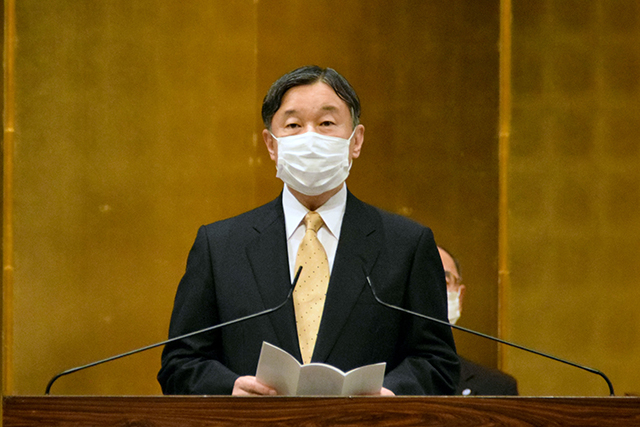
Rice planting appears on Emperor Naruhito’s calendar alongside state visits and palace ceremonies. The Imperial Household Agency describes a yearly sequence: he sows seed in spring, transplants the young plants in early summer and harvests the rice in autumn, continuing a practice inherited from his father and grandfather.1
Why does an emperor grow rice? The answer connects a family tradition with Japan’s agricultural culture and the harvest offerings of the imperial calendar. Following the crop through the year makes that connection easier to see.
A tradition with a specific starting point
The Household Agency’s archived account of Emperor Akihito’s activities dates the beginning of this personal rice-growing practice to 1927, under his father, Emperor Shōwa. Akihito continued planting and harvesting in a paddy within the palace grounds.2 Naruhito now carries on the sequence.1
That date gives the story a useful boundary. “Imperial tradition” can make every activity sound as though it has always taken its present form. Here, the palace’s own record identifies when this particular practice began. Its history can be traced across three generations.
Following one crop through the year
A palace report from 2023 documents the stages particularly clearly:
- April 11: the Emperor sowed rice seed.
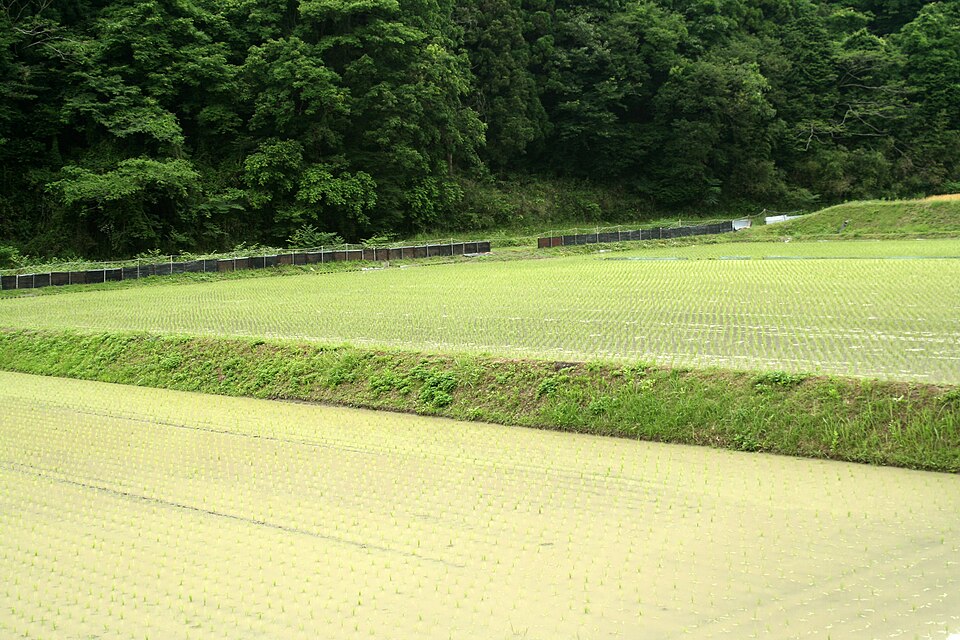
- May 16: he transplanted seedlings.
- September 13: he harvested rice in the paddy beside the Biological Research Institute inside the palace grounds.
The report records him cutting 20 clumps of rice by hand at harvest. These dates describe that year’s activities, rather than a fixed planting schedule for every season.3
Seen together, the three stages change the meaning of a planting photograph. It captures one point in a process that began with seed and would continue for months. The calendar has to accommodate the crop.
Two kinds of rice, two familiar uses
The 2023 report names two varieties: Nihonmasari, a non-glutinous rice, and Mangetsumochi, a glutinous rice.3
Japan’s Ministry of Agriculture distinguishes these broader categories by their composition and everyday uses. Non-glutinous rice, called uruchimai, is the kind commonly cooked for ordinary meals. Glutinous rice, or mochigome, is used for foods such as mochi and okowa, a steamed rice dish.4
The variety names therefore connect the palace paddy to recognizable ingredients. For a reader who knows Japanese rice mainly through a bowl at dinner or a mochi sweet, they offer two different points of entry into the same field.
What happens to the harvest?
The rice has a place in religious observance. At Ise Jingū, the shrine’s account of Kannamesai describes an offering of the first rice from its own fields in gratitude to Amaterasu, the deity worshipped there. Ears of rice grown by the Emperor are also offered. The shrine places the ceremony within an annual ritual cycle shaped by rice cultivation.5
The palace has its own calendar of related observances. Its October 17 Kannamesai includes offerings of new crops and the Emperor’s prayers towards Ise. On November 23, Niinamesai takes place at the Shinkaden, a palace ceremonial hall. The Emperor offers new crops to ancestral and other deities, gives thanks and then eats some of the offerings. Crops he has grown are included.6
This is where the planting and harvest ceremonies meet: grain cultivated during the year becomes part of an act of thanksgiving.
The work beyond a ceremonial photograph
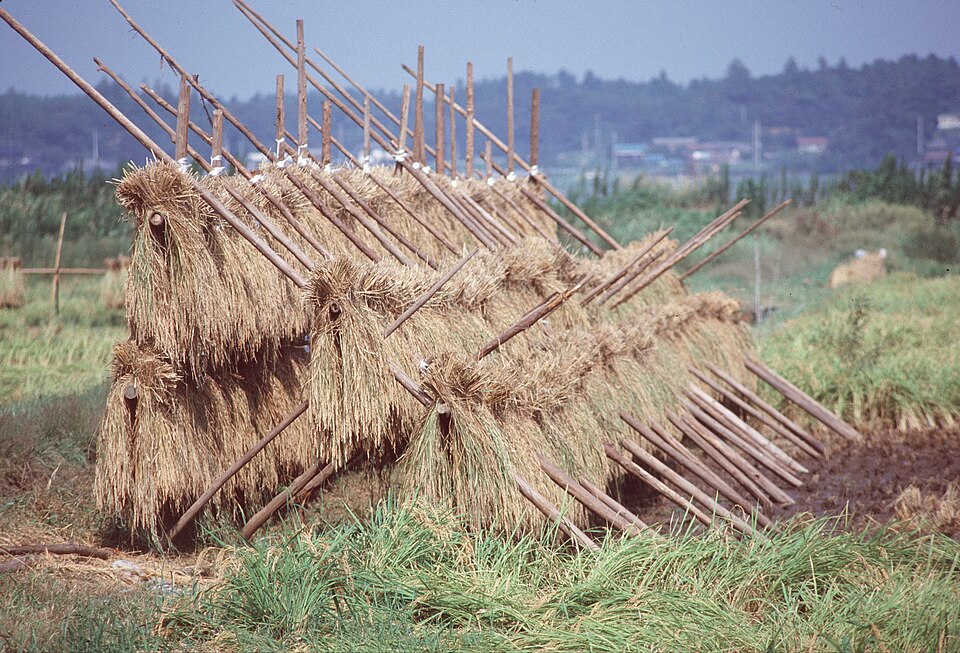
Hand planting is a striking image, but it should not stand in for all rice farming in Japan. The National Agriculture and Food Research Organization traces the practical introduction of rice transplanters to the early 1960s. Machines developed from walking models to ride-on equipment and became widespread. Its research also includes direct sowing, which removes the separate seedling-transplanting stage.7
Nor does a photograph show everything needed between planting and harvest. ZEN-NOH Pearl Rice’s guide to conventional cultivation describes preparing and levelling the paddy, watching plant growth, managing water, and dealing with weeds and pests. Once the crop is ready, harvesting is followed by drying and processing.8
Those practical details deserve a place beside the imperial story. They keep the people, decisions and equipment involved in producing rice in view.
The Emperor’s annual rice-growing activities give a public shape to a crop’s passage through the seasons. When the harvest reaches the ceremonial hall, it brings the year’s agricultural cycle into the palace’s ritual calendar. The next time a photograph of imperial rice planting appears, look for the season as well as the person. The scene is one chapter in the life of the crop.
Continue exploring the Imperial Family
Sources & further reading
Sources checked October 23, 2026. The planting dates above refer to 2023. Photograph dates, locations and credits appear with each image.
- Imperial Household Agency — Activities of the Emperor, Empress and Princess Aiko. The annual sequence of rice cultivation.
- Imperial Household Agency — Archived account of Emperor Akihito and Empress Michiko’s activities. The rice-growing practice begun by Emperor Shōwa in 1927.
- Imperial Household Agency — The Emperor’s rice harvest (Japanese, September 26, 2023). Sowing, transplanting and harvesting dates, with photographs; the two rice varieties.
- Ministry of Agriculture, Forestry and Fisheries — Rice inspection standards explained (Japanese), especially the definitions of uruchi and mochi rice.
- Ise Jingū — Rituals and ceremonies. Rice cultivation, Kannamesai and the imperial rice offering.
- Imperial Household Agency — Main ritual ceremonies of the Imperial Palace. October 17 and November 23 observances.
- National Agriculture and Food Research Organization — Innovations in Rice Transplanting. Mechanization and direct sowing.
- ZEN-NOH Pearl Rice — From the field to the table (Japanese). An illustrated guide to rice production.



Comments