Culture & Traditions
Omamori in Japan: The Small Charms People Carry with Them
A guide to Japanese omamori: what these amulets mean, how to choose one, and what to do with it after the journey home.
By Maki Kakudate · 6 minute read
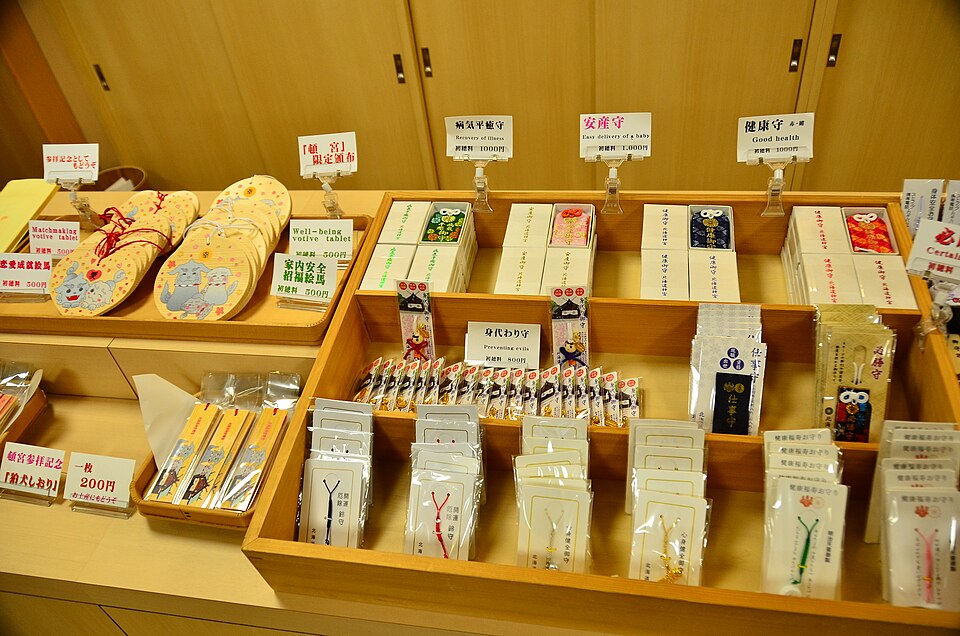
Before choosing the prettiest omamori at a shrine or temple counter, it helps to ask a different question: what is it for?
An omamori is a small Japanese amulet associated with protection or a particular prayer. You can receive them at both Shinto shrines and Buddhist temples. Dazaifu Tenmangu, for example, offers amulets connected with learning, while Tokyo’s Sensoji has charms for concerns ranging from road safety to relationships.1, 2
“Good luck charm” is a useful first translation. Looking at the purpose written beside each one makes the choice more personal: a student’s examination, someone’s health, a journey you hope will end safely.
What is an omamori?
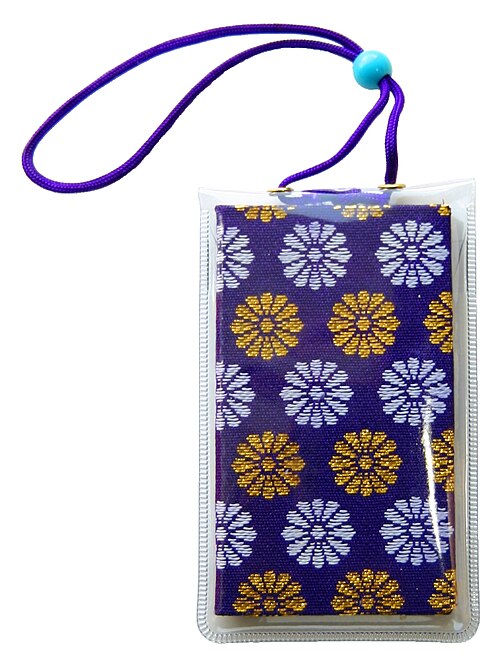
The familiar form is a small fabric pouch, often with the shrine’s name woven into it and a cord for carrying it. Dazaifu Tenmangu describes these pouches as containing a prayer; it also offers other forms, including a bracelet.1 The pouch is one form of omamori, rather than a design every amulet must follow.
In Shinto practice, an omamori is intended to accompany a person. The Association of Shinto Shrines distinguishes it from an ofuda, a talisman enshrined in a household’s kamidana, or home shrine. Both belong to religious practice, but they have different places in daily life.3
That portability is part of their appeal. A small object can remain close at hand while the concern that brought someone to the shrine continues beyond the visit.
Which type of omamori should you choose?
Start with the intention, then ask about the designs available. The following words appear in the names of amulets listed by Sensoji; they are useful clues when reading a display elsewhere, although names and offerings vary by place.2
| Japanese | Reading | Prayer or purpose |
|---|---|---|
| 学業 | Gakugyō | Study and academic achievement |
| 合格 | Gōkaku | Passing an examination |
| 交通安全 | Kōtsū anzen | Road and traffic safety |
| 身体健康 | Shintai kenkō | Good health |
| 厄除 | Yakuyoke | Warding off misfortune |
| 良縁 | Ryōen | Good relationships or connections |
These are the intentions of the prayers, not promises of a particular outcome. A health amulet can express care for someone without telling us anything about their medical situation.
The place matters, too. Dazaifu Tenmangu is associated with Tenjin, the deity of learning, and its amulets often feature the plum blossom that symbolizes the shrine.1 Once you know that connection, a flower on the fabric becomes part of the shrine’s story.
There is no need to infer an amulet’s purpose from color alone. Sensoji specifically directs visitors to ask at its counter about the meanings and blessings associated with its offerings.2
How do you carry an omamori—and can you open it?
Meiji Jingu’s visitor guidance says omamori are usually attached to a bag or placed inside a bag, purse or pocket. It also gives a clear instruction: do not open the amulet.4
For a pouch-style omamori, leave the pouch and its closure intact. You do not need to inspect what is inside to understand its purpose; ask about it when you receive it. If a particular design has different handling instructions, follow those.
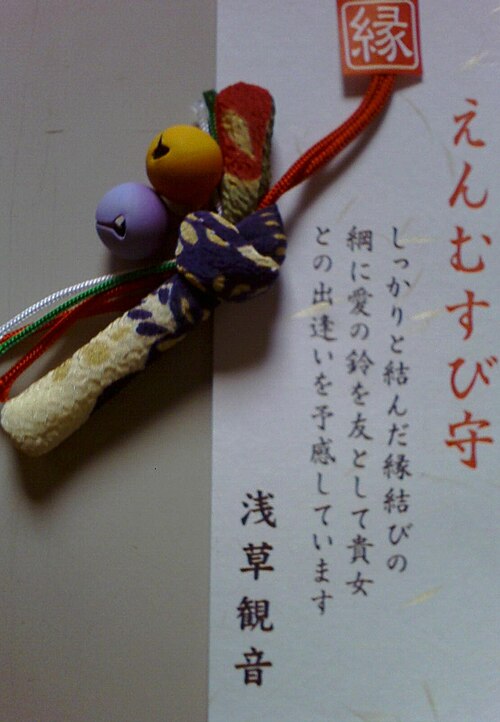
The photographs here show how varied the objects can be. The purple pouch has a long cord, while the Sensoji amulet below uses braided strands and small bells. A photograph helps you notice those details, but it cannot tell you what a particular counter offers today.
Can overseas visitors receive an omamori?
You can approach the counter and ask. The Association of Shinto Shrines welcomes visitors of other faiths to shrine grounds and asks them to behave respectfully. Dazaifu Tenmangu’s English visitor information explains how to receive its amulets through a donation and says staff can help with the choice.5, 1
Three useful questions
- What is this omamori intended for?
- Where should I carry or keep it?
- What should I do when I am ready to return it?
Check the amount displayed at the counter. If you would like to give one to someone else, explain who it is for and ask for help choosing.
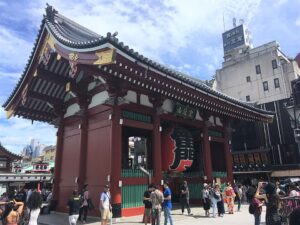
At Sensoji, the setting is Buddhist: the temple is dedicated to Kannon, the bodhisattva associated with compassion.7 A similar-looking amulet does not make a temple and a shrine interchangeable. Take your cues from the place you are visiting.
Do you have to return an omamori after one year?
Annual renewal is a common recommendation in Shinto guidance. It is not the only timeframe described: the Association of Shinto Shrines also says an omamori may be kept until the wish is fulfilled. Meiji Jingu similarly describes keeping one until it has served its purpose.3, 4
For returning an old shrine amulet, the Association recommends the shrine where it was received. If you cannot go there, its FAQ suggests consulting a nearby shrine or sending it back with an offering. If you live overseas, contact the issuing shrine before posting anything and ask what it accepts.6 For a temple amulet, ask that temple about its own practice.
One other worry has a straightforward answer. The Association says there is no need to fear that the kami will quarrel because you have more than one shrine amulet.3
A small object in ordinary life
If you have been reading about ema, Japan’s wooden prayer plaques, omamori offer another way to think about a wish. At Meiji Jingu, a completed ema is hung on the designated rack; an omamori travels with the person who carries it.4
We cannot know a person’s beliefs simply by noticing a charm on their bag. We can, however, pay attention to the care behind choosing it: which place it came from, what it was intended for, and why someone wanted to keep it close.
Keep exploring everyday Japan
Continue with the wishes, places and family milestones behind a shrine visit.
Sources & further reading
Sources checked October 22, 2026. Designs, offerings and local practices may change; follow the guidance of the shrine or temple you visit.
- Dazaifu Tenmangu — An Introduction to Amulets. Forms, academic prayers, plum-blossom designs and receiving an amulet.
- Sensoji — Omamori (Japanese). Amulet names and guidance on asking about their purposes.
- Association of Shinto Shrines — Ofuda and Omamori (Japanese). Personal and household talismans, renewal and carrying multiple amulets.
- Meiji Jingu — Precinct Map: Juyosho and Ema-kake. Carrying an amulet, keeping it closed and the ema rack.
- Association of Shinto Shrines — Q&A. Visitors of other faiths.
- Association of Shinto Shrines — Frequently Asked Questions (Japanese). Returning old amulets.
- Sensoji — English Introduction. The temple and Kannon.
The photographs are archival and illustrate different forms of omamori. Dates and image credits appear in the captions. Practical questions and observations about choosing an amulet are editorial guidance.








Comments