Real Life in Japan · Culture & Traditions
Why Do Japanese Train Stations Play Melodies?
The short sounds that help run a railway and can become part of the way a place feels.
By Maki Kakudate · 5 minute read
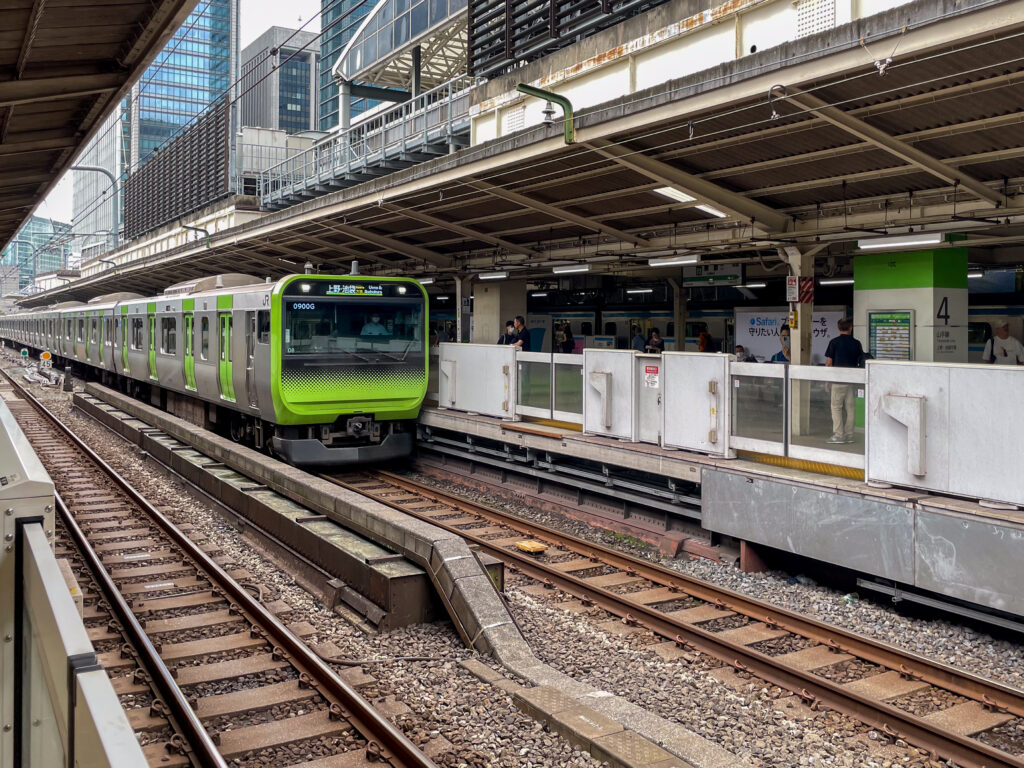
On a railway platform in Japan, a few notes can interrupt the wait. There is a small tune, then an announcement, and the journey moves on. On a first visit, it can feel like an unexpectedly musical detail in an otherwise practical place.
Those sounds have work to do. A departure melody draws attention to a train’s departure. On another railway, a platform tune may announce that a train is approaching. The melody’s role depends on where it is used.12
Once that practical role is understood, another layer becomes interesting: why choose this particular sound for this particular place? Some railway melodies carry a connection to the neighborhood outside the ticket gates. Others are designed around the experience of hearing a brief signal, again and again.
A short tune, with a specific job
Departure melodies are known as hassha merodī (発車メロディー). It helps to separate them from two other sounds you may hear on a railway journey.
| Sound | Where it fits |
|---|---|
| Departure melody | A platform sound that signals an upcoming departure.1 |
| Approach melody | A platform sound announcing an approaching train. Keikyu explicitly describes its station melodies this way.2 |
| Onboard chime | A sound heard inside a train. JR Central used this term when announcing a new chime for its own Shinkansen trainsets in 2023.3 |
The setting matters as much as the tune. A song coming from a platform speaker and a chime inside a Shinkansen belong to different parts of the journey. For a passenger, the useful habit is to take the sound together with the displays and spoken announcements around it.
Designing a sound for everyday listening
One chapter of this story dates to 1989, when new departure sounds were introduced at JR Shinjuku and Shibuya stations. Ide Sound Lab’s account of the project describes two pairs of goals: giving individual lines their own identity while keeping the overall sound harmonious, and attracting attention while preserving comfort.1
That is a demanding task for something so brief. A sound has to register in a busy space. It may also be heard alongside another platform’s sound, by people who return to the same station day after day. The studio’s historical album includes simulations of several platform sounds overlapping with station noise.4
The design question reaches beyond choosing a pleasant little song. It includes how a sound behaves among other sounds, and how it feels when heard repeatedly. The creator’s stated aims help explain the care behind the project; individual listeners can still experience the result differently.
When a melody belongs to a neighborhood
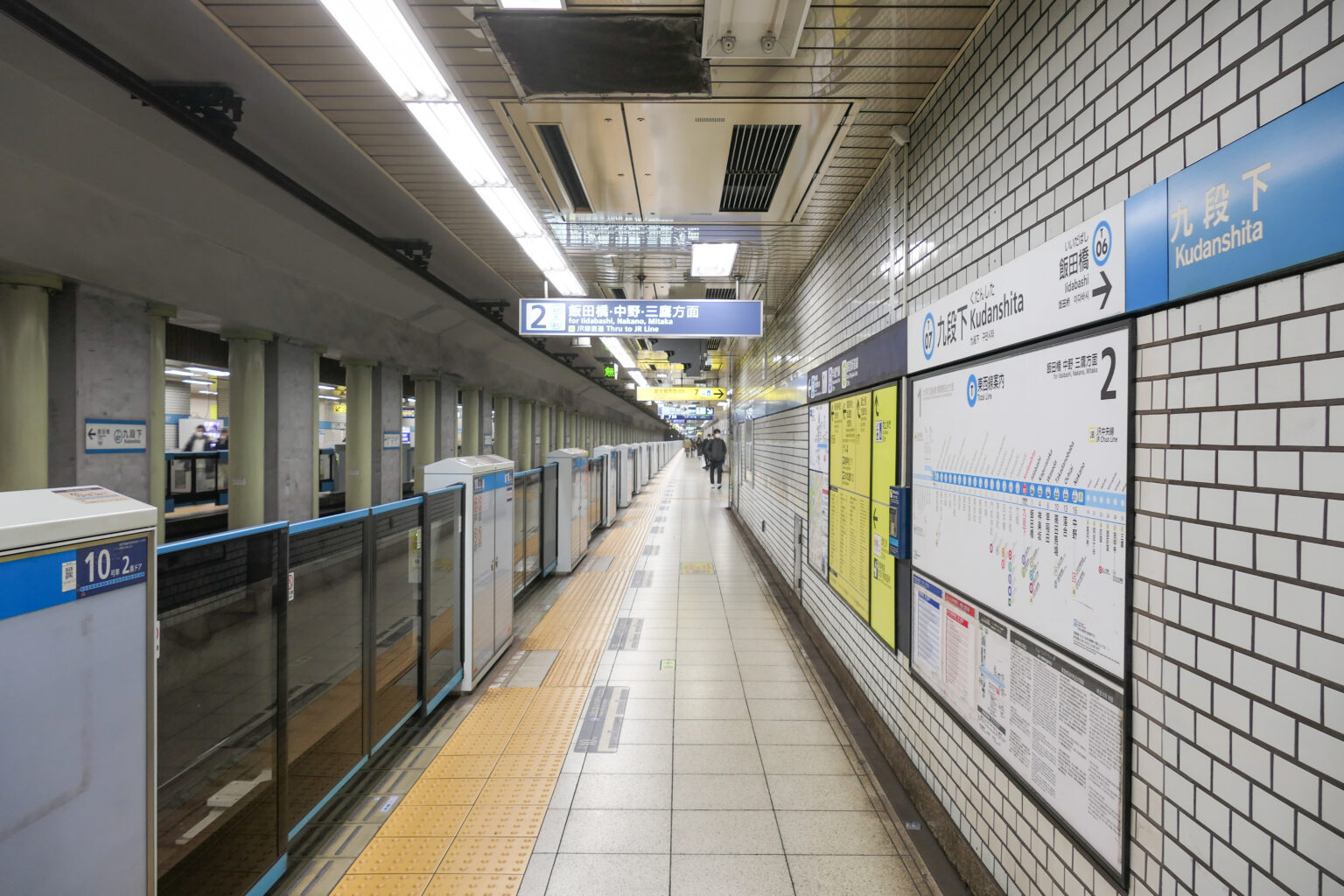
Tokyo Metro’s 2015 announcement for the Tōzai Line shows how local connections can shape a choice. For Kudanshita, it selected Bakufu Slump’s “Ōkina Tamanegi no Shita de.” The operator pointed to the song’s reference to the route from the station toward the Nippon Budokan.5
For Nihombashi, the same project selected the folk song “O-Edo Nihonbashi.” The choices offered two different ways to connect a platform with the city above: a popular song tied to a nearby place, and a traditional song bearing the neighborhood’s name.5
Composer and arranger Minoru Mukaiya also gave the project a larger musical structure. Tokyo Metro explained that the different station melodies were designed to form a single piece when heard in sequence along the direction of travel.5
Knowing the reference adds something to the journey. For someone who recognizes the Kudanshita selection, those few notes can call to mind the walk beyond the gates. Another listener may simply experience them as a tune.
Learning what the melody means
Recognizing a melody and understanding its message are separate things. In a 2015 explanation of sound and voice communication, Railway Technical Research Institute ergonomics researcher Ayano Saito noted that people need to learn the connection between a nonverbal sound and its meaning.6
Once learned, a short signal can communicate simple, frequently repeated information efficiently. Spoken language can carry more detail. Saito also pointed out that adding too many kinds of sound can create confusion or become bothersome.6
This helps explain why the surrounding information matters. A visitor may notice the musical phrase immediately and still need a destination sign or an announcement to understand what happens next. Familiarity with a station can change how much of that information a person has to consciously piece together.
The sound of a route through your life
Station sounds can change. In January 2023, Toei announced a renewal of the departure melodies at 24 Mita Line stations, scheduled from February into March. It said the change would bring the line onto the melody shared across its subway network.7
That is one reason a recording belongs to a particular moment as well as a particular place. A tune remembered from an earlier journey may eventually become part of the station’s past.
For a visitor, a melody might become associated with the excitement of a first trip. For someone using the same station every day, it might belong to a school commute, a first job or the final transfer before home. Another passenger may barely notice it, or find the repeated sound tiring.
The same few notes can sit beside very different experiences. Their meaning does not have to be grand to be personal.
Listen again on your next journey, once you know where you are going. The brief tune belongs to an ordinary moment: a train approaching, a departure beginning, people carrying on with their day. Repeated often enough, an ordinary moment can become the sound of a place you know.
Sources & further reading
Sources checked 17 October 2026. Historical selections and changes are dated in the article.
- Ide Sound Lab. JR Shinjuku and Shibuya station departure sounds. Creator’s account of the 1989 project and its design goals.
- Keikyu. Station melody announcement and explanatory reference. 16 November 2020; the reference section defines Keikyu’s melodies as train-approach cues.
- JR Central. Summer developments for the “Ai ni Ikō” campaign. 29 June 2023, PDF; onboard chime change for JR Central-owned Shinkansen trainsets.
- Ide Sound Lab. Shinjuku Station Sounds (1989). Historical album information, overlapping-sound simulations and an official listening preview.
- Tokyo Metro. New departure melodies for the Tōzai Line. 25 March 2015; Kudanshita and Nihombashi selections and the project’s musical structure.
- Railway Technical Research Institute. Human Science News, January 2015: communicating through sound or voice. Expert explanation by Ayano Saito of the ergonomics group.
- Toei Transportation. Renewal of Mita Line departure signal sounds. 31 January 2023 announcement.









Comments