Dogs & Life Together · Real Life in Japan
Why Do Some Dogs Go to Kindergarten in Japan?
A look at the care, quiet practice and communication behind a surprisingly familiar name.
By Maki Kakudate · 7 minute read
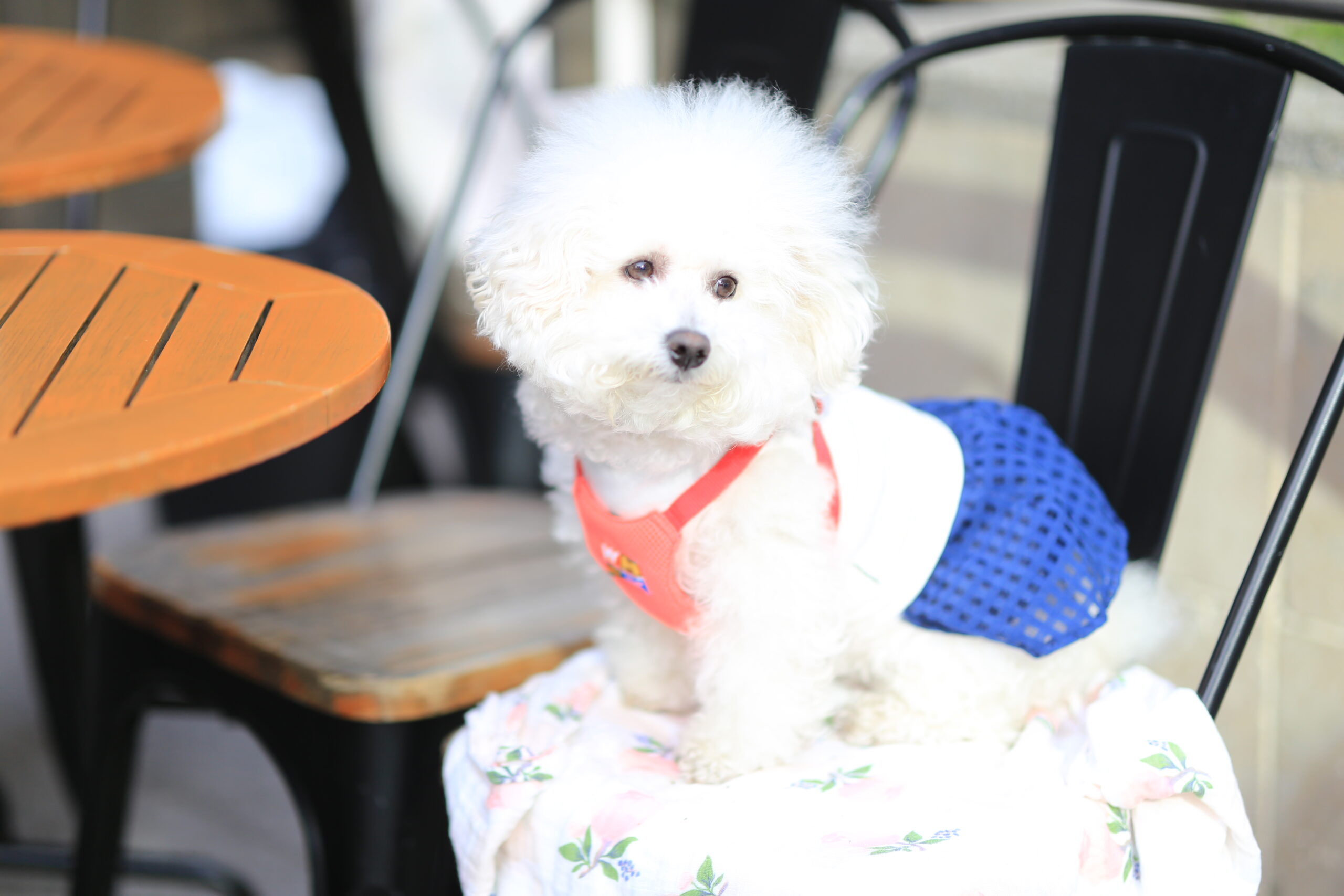
The word “kindergarten” brings a familiar day to mind: arrival, time to learn, a break and something to tell the family afterward. In Japan, some dog-care businesses borrow that vocabulary. Their programs are called inu no yōchien, literally “dog kindergarten,” or inu no hoikuen, “dog nursery.”
The name is an inviting place to begin. The more revealing question is what happens between drop-off and pick-up—and how that day connects with life at home.
The published programs examined here combine daytime care with learning, rest and information for owners. Each puts a different emphasis on those elements. Together, they offer a small window into the work of sharing an ordinary day with a dog.
What does “kindergarten” mean here?
The label leaves plenty of room for variation. Tokyo provider SKYWAN explains that the use of “nursery” and “kindergarten” differs between businesses. A school-like name alone cannot tell you how much of the day involves individual practice, group activity or quiet time.
At WANCOTT in Yokohama, the school offers both a puppy class and a class for adolescent and adult dogs. An initial consultation considers the dog and the household.
These descriptions are useful reminders to look at the actual service. A familiar word on the door introduces the business; the details explain what a particular dog’s day might be like.
Why arrange a day away from home?
For some owners, the starting point is the working day. DOGLY’s kindergarten course explicitly addresses people whose daytime work leaves limited time for exercise and play. It offers day attendance with a return home, and lets owners arrange attendance around their schedules and goals.
Other needs sit alongside that practical one. DOGLY describes opportunities to experience unfamiliar people and things, with groups organized around dogs’ personalities and characteristics. It also offers lessons involving owners.
Read as accounts of everyday life, these services suggest several possible reasons for seeking help. A household may need daytime company for a dog, guidance with ordinary routines, or someone to work through a difficulty with them. Those needs can overlap. Arranging care is also an act of trust: an owner is asking another person to notice what the dog finds easy, enjoyable or uncomfortable.
A day with room to rest
A timetable makes the idea more concrete. PLAYBOW publishes this example of a nursery day:
- 10:00
- Arrival and settling in.
- 11:00
- Toilet practice.
- 12:00
- Basic cues such as sit, wait and come.
- 13:00
- Food for dogs whose usual routine includes a midday meal.
- 14:00
- A nap and practice resting calmly.
- 15:00
- Play or a walk.
- 16:00–18:00
- Pick-up and a report to take home.
This is one provider’s example; other programs arrange the day differently. Even within a schedule, a dog’s usual meals and individual needs matter.
WANCOTT’s own example also includes a rest period, alongside interaction, learning and toy play. It says activities vary by dog. That quiet interval deserves a place in the story: a day of care can have pauses as well as things to do.
Being near another dog can be enough
For a dog uneasy around others, a group activity may begin at a distance. CANUP describes introductions through a gate, allowing a dog to watch or greet others with a barrier between them. It also selects play partners with size and personality in mind.
SKYWAN explicitly says that not playing with other dogs is not itself a problem. Comfortable proximity can be a meaningful goal. Its description of social learning includes unfamiliar people, sounds, surfaces and handling, with the approach adjusted to the dog.
That changes the picture suggested by the word “school.” Progress might be small and quiet: enough ease to observe, a little more confidence with an ordinary experience. In these examples, the dog’s comfort helps set the pace.
The notebook that travels home
One especially tangible detail is PLAYBOW’s communication notebook. Staff record the day and the training, while a comment space lets owners share information from home. The handover becomes a conversation that can continue after pick-up.
CANUP similarly describes sharing the day’s activities and simple practice to continue at home. Its program includes individual learning shaped around household concerns, and the owner has a part in carrying that work forward.
There is something easy to recognize in this exchange, even for someone who has never used a dog-care service. A day spent apart leaves a gap in what a family knows. A brief account—what was practiced, how an activity went, what to try together—gives that unseen part of the day some shape.
What matters behind the name
The method used to teach deserves attention alongside the daily routine. WANCOTT describes learning through rewards. For a broader professional reference, the American Veterinary Society of Animal Behavior recommends reward-based methods for dog training.
A fuller picture of care emerges from the practical details: how staff assess a dog’s comfort, where rest fits, and how the household stays informed. Those details make the work visible.
These dog kindergartens offer a glimpse of the ordinary arrangements beneath the charming idea. Time is organized, responsibility is shared, and small observations travel between people who care for the same animal.
At the end of the day, the dog goes home. What the household does with that shared understanding is part of the story, too.
Sources & further reading
This article draws on published service descriptions, rather than a visit to the facilities. Examples were checked on 17 October 2026 and illustrate these providers’ approaches; they do not establish how common such services are across Japan.
- DOGLY: kindergarten course — attendance, activities and owner lessons.
- PLAYBOW: a nursery day — sample timetable and communication notebook.
- CANUP: about its kindergarten — introductions, individual learning and home practice.
- WANCOTT: dog school — age groups, consultation, rewards and example day.
- SKYWAN: dog nursery and kindergarten — terminology and individual approaches to social learning.
- AVSAB: position statements — professional guidance on humane dog training.
Keep exploring