Culture & Traditions · Real Life in Japan
Why Do Japanese Shops Hang Curtains at Their Entrances? The Meaning of Noren
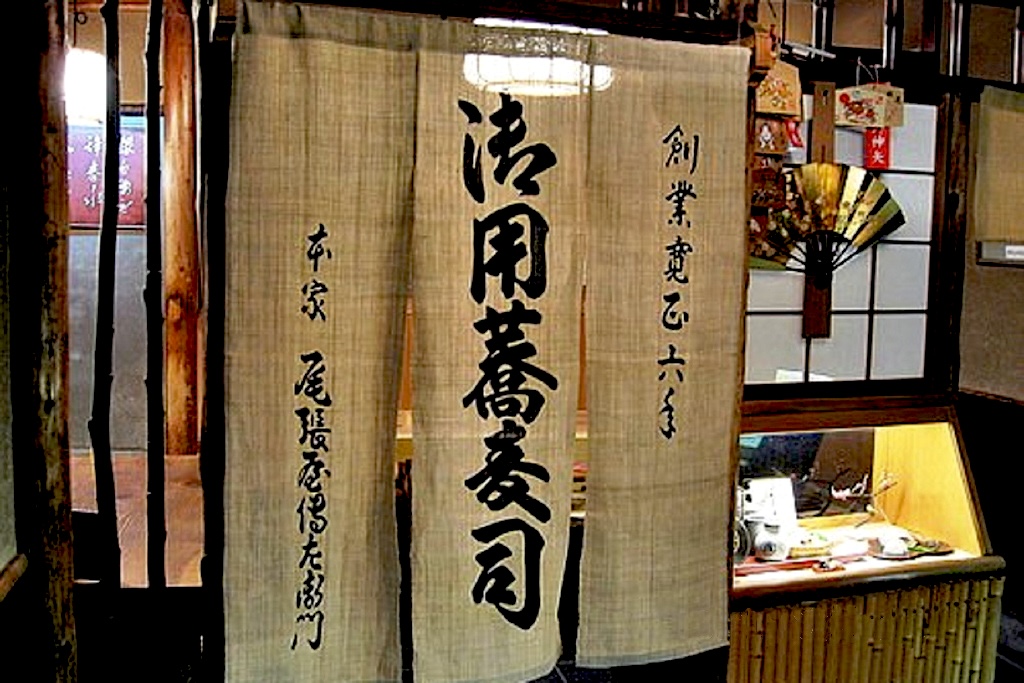
The small fabric sign that tells you a shop may be open can also carry its identity, its craft, and the reputation built behind the door.
LAYERS OF JAPAN · 8 minute read
Walk down an older shopping street in Kyoto, and a doorway might catch your eye before its signboard does. A piece of indigo or cream-colored cloth hangs from a rod. There are Japanese characters across it, and long cuts in the fabric make room for people to pass through.
At first, it looks like a curtain in an odd place. But when someone parts the cloth and steps into a tiny noodle shop, it becomes clear that the curtain is doing several jobs at once.
It is a noren (暖簾). One piece of fabric can signal that a business is welcoming customers, carry the shop’s name, screen a little of what lies inside, and turn an ordinary doorway into something distinctive.
A noren is a shop sign that you walk through. And sometimes the name on that cloth matters as much as anything the shop sells.
At a shop entrance: a noren can identify the business, screen the doorway and signal that customers are welcome. Check the opening-hours sign as well, then gently part the fabric to enter.
1. What Exactly Is a Noren?
A noren is a fabric hanging used across a doorway or inside a room. Many have two or more sections, separated by vertical openings that let people push the cloth aside instead of opening a rigid door. Some are short enough that a visitor can see the room beneath them; others cover most of the entrance.
You will spot them at soba restaurants, ramen shops, traditional confectioners, inns, neighborhood bathhouses, and occasionally modern cafés. They are not required at Japanese businesses, and plenty of shops have never used them. The noren is one recognizable part of the streetscape, not an entrance rule followed everywhere.
The form is simple, but its shape explains its usefulness. The fabric can screen the doorway without sealing it, while the openings allow customers to enter naturally. A signboard stays on the wall; a noren becomes part of the moment of arrival.
2. Does a Noren Mean the Shop Is Open?
At many traditional shops, yes. The curtain is put up when business begins and brought inside at the end of the day. A visitor approaching an unfamiliar restaurant may look for the noren before checking anything else.
That is an appealing kind of communication: no illuminated screen, no announcement, just a visible change to the entrance. The Japanese government’s Highlighting Japan magazine describes this custom in its profile of traditional noren-making. In this setting, hanging the curtain can function almost like turning on an “Open” sign.
But do not make it a universal law. Some establishments leave curtains hanging for decoration, use separate opening-hours signs, or keep an entrance arrangement that does not change during the day. A traveler should still check the hours rather than assuming a piece of fabric guarantees service.
The significance is that an everyday object can carry a public message. The doorway tells a story before a customer has spoken to anyone.
3. Why Put Fabric in a Doorway at All?
A curtain seems less convenient than a sliding glass door—until you imagine an older Japanese shop with an entrance that opens directly toward the street.
Fabric can soften sunlight, offer a degree of privacy, and help screen wind or dust. Such practical functions have long been associated with noren, alongside their use as signs. The cloth also lets people pass without stopping to handle a heavy door.
The divided shape creates an intriguing balance. It does not completely hide the interior; glimpses of movement, light, and shelves can still be visible. Yet the act of stepping through gives the visitor a small transition from public street to private business.
That feeling has a parallel in the Japanese home’s genkan, the entrance where outdoor shoes are removed. A genkan makes a boundary through the floor. A noren makes a softer boundary through fabric. They serve different practical purposes, so the comparison is a way of thinking about design—not an explanation for every Japanese doorway.
4. The Shop’s Name Is More Than a Logo
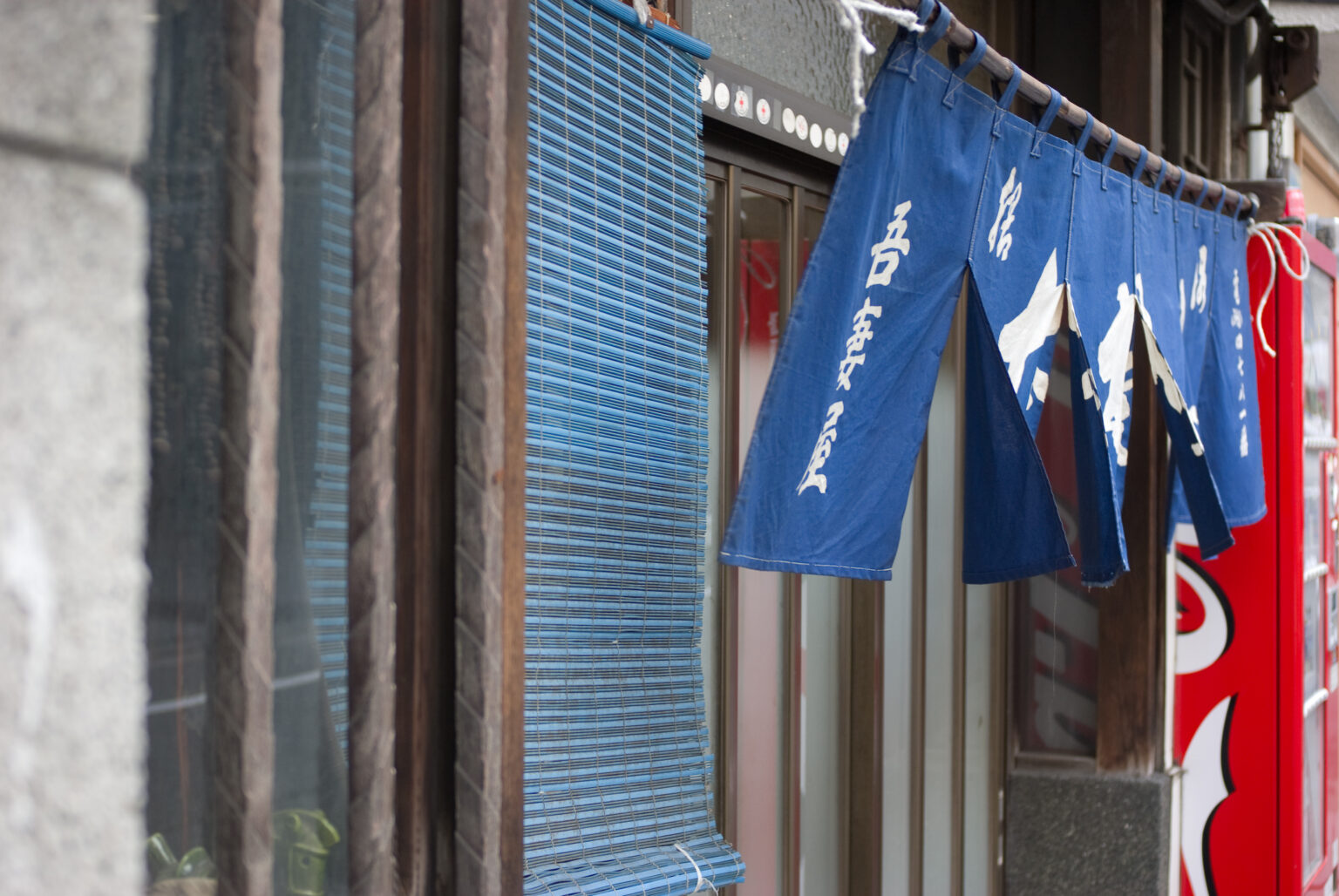
Look closely and many noren show a business name, crest, or distinctive emblem. An indigo curtain printed with bold white characters is instantly recognizable, but there is no mandatory color scheme. Shops choose fabrics and patterns that express their own atmosphere.
The deeper meaning is in the Japanese expression about protecting or damaging a shop’s noren. It is not mainly a warning to keep the cloth clean. Here, noren stands for the business’s hard-earned name: the trust that customers associate with its food, service, and conduct.
The expression noren-wake also uses the curtain as a symbol. Traditionally, it could describe a trusted worker being permitted to establish a related business under an established shop name or identity. This is related to reputation and business relationships; it should not simply be equated with every modern franchise arrangement.
A sign becomes valuable because of what happens behind it, year after year. That is why a small, worn curtain may say more about a neighborhood business than a newly installed advertisement.
5. The Craft Hidden in a Simple Design
A good noren may look effortlessly graphic: dark fabric, pale letters, a few precise cuts. Making that image by hand can be far from effortless.
In a 2020 government feature, the Katayama Noren Dyeing Factory in Tokyo described a traditional process that begins with cutting a paper stencil. Artisans apply a rice-paste resist to fabric so selected parts do not take the dye, then color the cloth and wash away the paste to reveal the design. Cotton and hemp are among the materials used.
It is a craft of practical durability as well as appearance. A shop curtain may face sunlight, weather, and years of repeated contact. The workshop also spoke about the challenge of keeping inherited methods relevant while working with new designs.
Not every modern noren is made by this technique. Printed fabrics and other methods are common, and owners may choose according to budget or purpose. What is interesting is that the same familiar shape can be an everyday commercial product and a canvas for skilled textile work.
That mixture of useful object and personal expression recalls the changing lives of Japan’s local shopping streets, where storefronts reveal the different ways businesses adapt to their communities.
6. Noren Also Belong to Public Bathhouses
Restaurants are not the only places where a noren carries information. At a traditional public bath, or sentō, a curtain may hang across the entrance with the character 湯 or ゆ, pronounced yu, meaning hot water. Other curtains or signs can distinguish changing areas.
The design serves a practical purpose: it helps identify the place and offers some privacy at an entrance where people are arriving to bathe. Some bathhouses use blue or red fabric, but a traveler should follow the words and current signage rather than rely on curtain color alone.
A noren can also appear in a home, where it divides a hallway from a room or partly screens a kitchen. And designers continue to use the form in modern cafés, hotels, and shops that do not look traditional at all.
The pattern changes with the setting; the useful idea remains. Instead of building a wall, a little fabric suggests where one space becomes another.
7. A Familiar Symbol in a Changing City
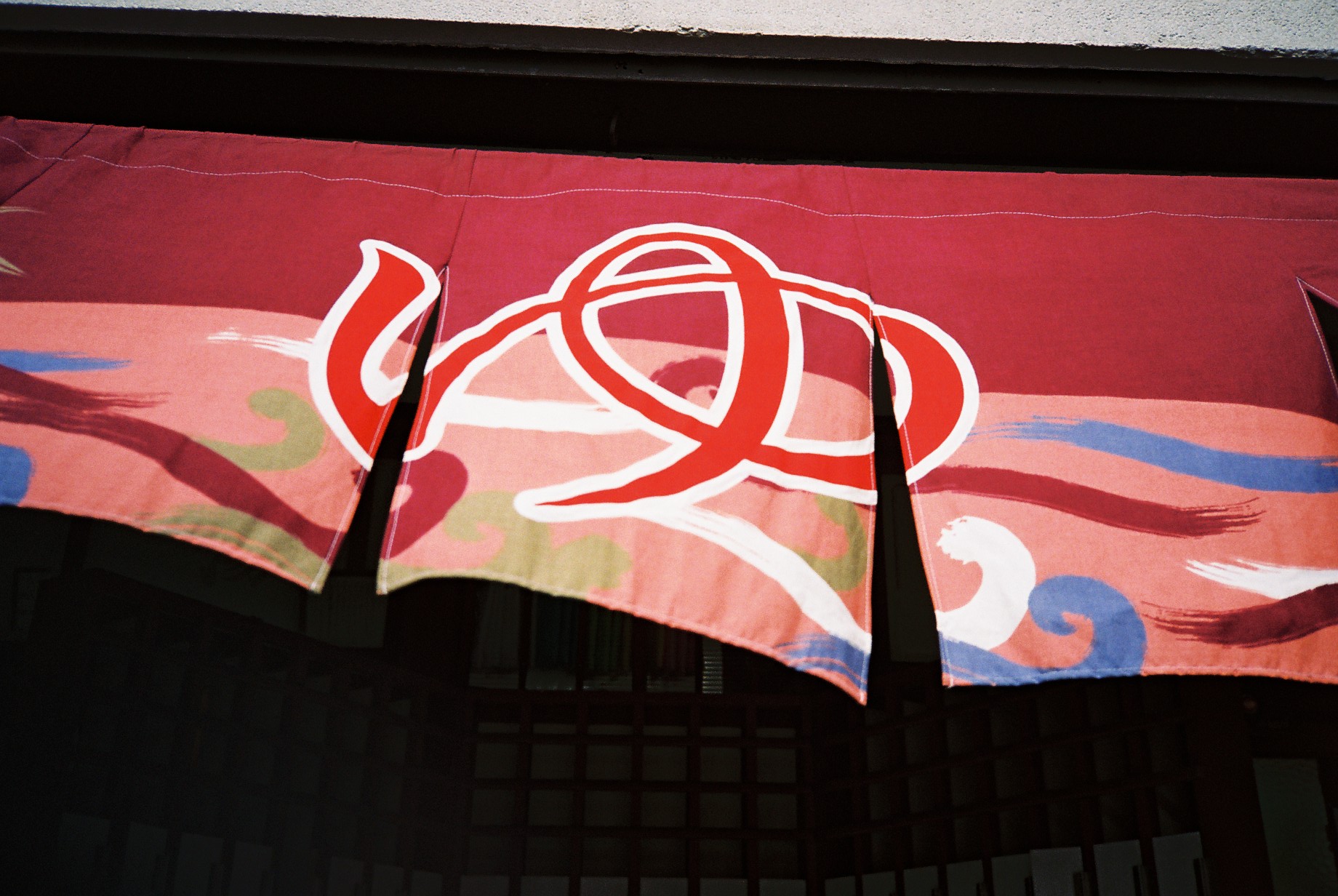
It is easy to treat a noren as evidence of an unchanging Japan. But many curtains have been redesigned, replaced, or newly introduced. A restaurant might commission a minimalist logo. A craft shop might choose a seasonal color. A contemporary business may use the form precisely because customers associate it with hospitality and local character.
There is also a risk of seeing every curtain as proof of deep historical continuity. A newly opened café’s noren can be just as new as its menu. The form has history, but each business has its own story.
The more revealing question is not whether the curtain is “authentically old.” It is what the people running the place want the entrance to communicate—and whether customers find that message welcoming.
8. The Moment You Step Through
If you visit a shop with a noren, there is no elaborate ceremony. Gently part the panels as you enter, take care not to pull the rod or catch the cloth with a bag, and follow any posted signs. If you want a close-up photograph, be considerate of customers and staff, especially at a small doorway.
Then notice the details. Is the fabric a deep blue or a soft natural color? Does it show a name, a single symbol, or an abstract pattern? Is it short enough to reveal a lively interior, or long enough to create a sense of privacy?
Even when you cannot read the characters, you can understand something of the invitation.
Japan has plenty of bright signs and complex technology. Yet at some of its most memorable entrances, the message still moves gently in the breeze: there is a place here, and someone has given it a name worth keeping.
Frequently Asked Questions About Noren
What does noren mean in Japanese?
Noren (暖簾) refers to fabric curtains or hangings used at entrances and as dividers. At businesses, they often carry a shop’s name or emblem and can represent its reputation.
Why is a Japanese noren split into pieces?
Vertical openings let people move through the fabric without taking down the curtain, while preserving some shade, screening, and visual identity.
Does a noren always mean a restaurant is open?
No. Hanging a noren often signals that a traditional shop is open, but customs vary. Confirm opening hours and current signs.
What does the ゆ symbol on a noren mean?
The hiragana ゆ (yu) means “hot water” and commonly identifies a Japanese public bath. The kanji 湯 has the same basic meaning.
Can a modern shop use a noren?
Yes. Noren are still used by contemporary restaurants, cafés, inns, and shops, in styles ranging from traditional hand-dyed designs to modern graphics.
Sources and Further Reading
- Government of Japan, Highlighting Japan: “Noren: The Face of a Shop” (September 2020) — the curtain’s commercial role, traditional dyeing, and the language of reputation.
- The Japan Times, “Curtain Call: Examining the Evolution of Japan’s Humble ‘Noren’” (January 2017) — local shopfronts and the use of noren in contemporary streets.
- MATCHA, “Noren (Entry Curtains): Japanese Encyclopedia” — common uses in restaurants, homes, and public baths.
Editorial note: The opening scene is illustrative, not eyewitness reporting. Noren customs vary across households and businesses. The three accompanying documentary photographs date from 2007–2008 and should not be represented as current views of the establishments.