Real Life in Japan · Behind the Everyday
Why Does Japan Have So Many Vending Machines?
Japan’s glowing drink machines seem to be everywhere. Their surprising everyday success has more to do with space, location and routine than futuristic technology.
LAYERS OF JAPAN · 8 minute read
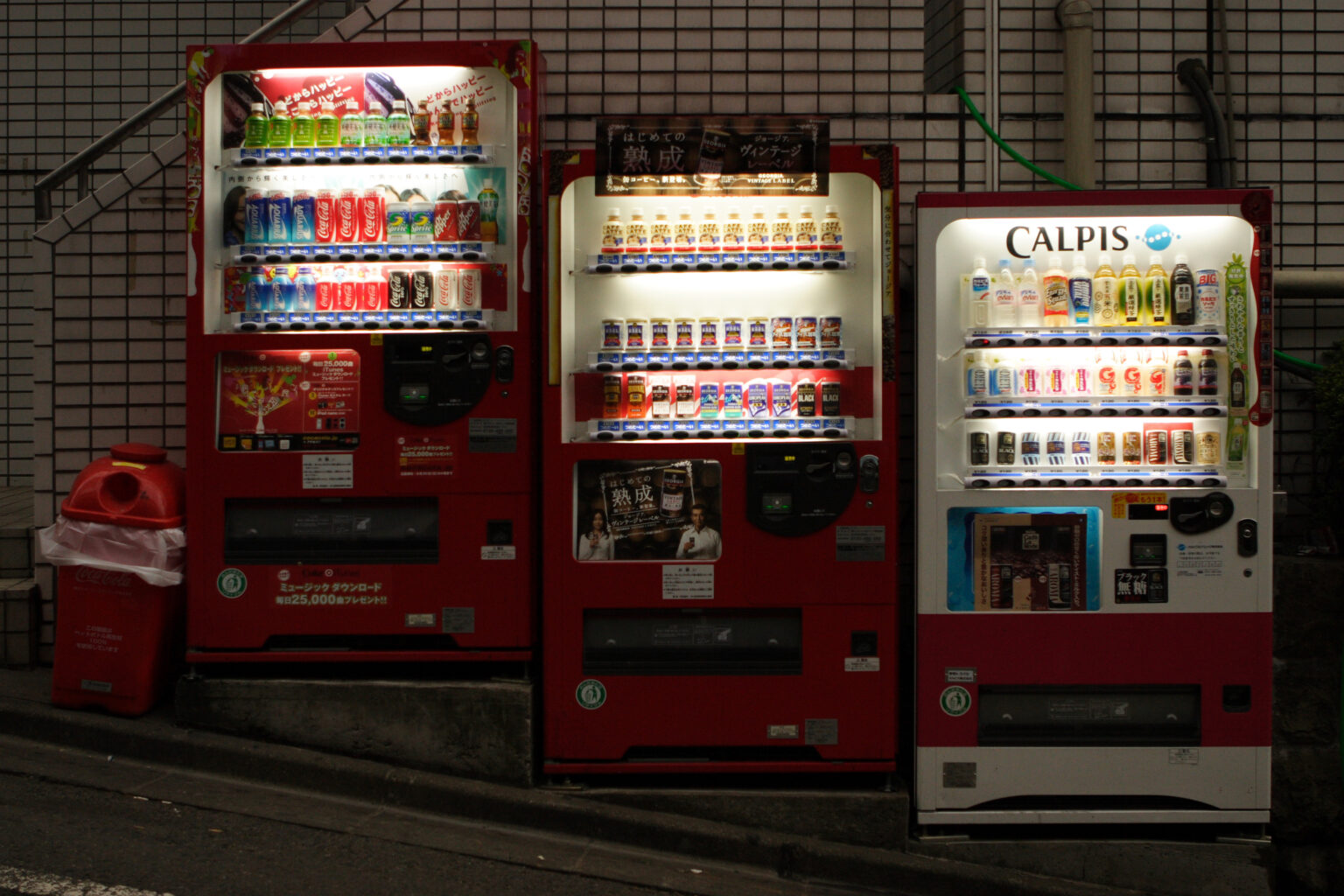
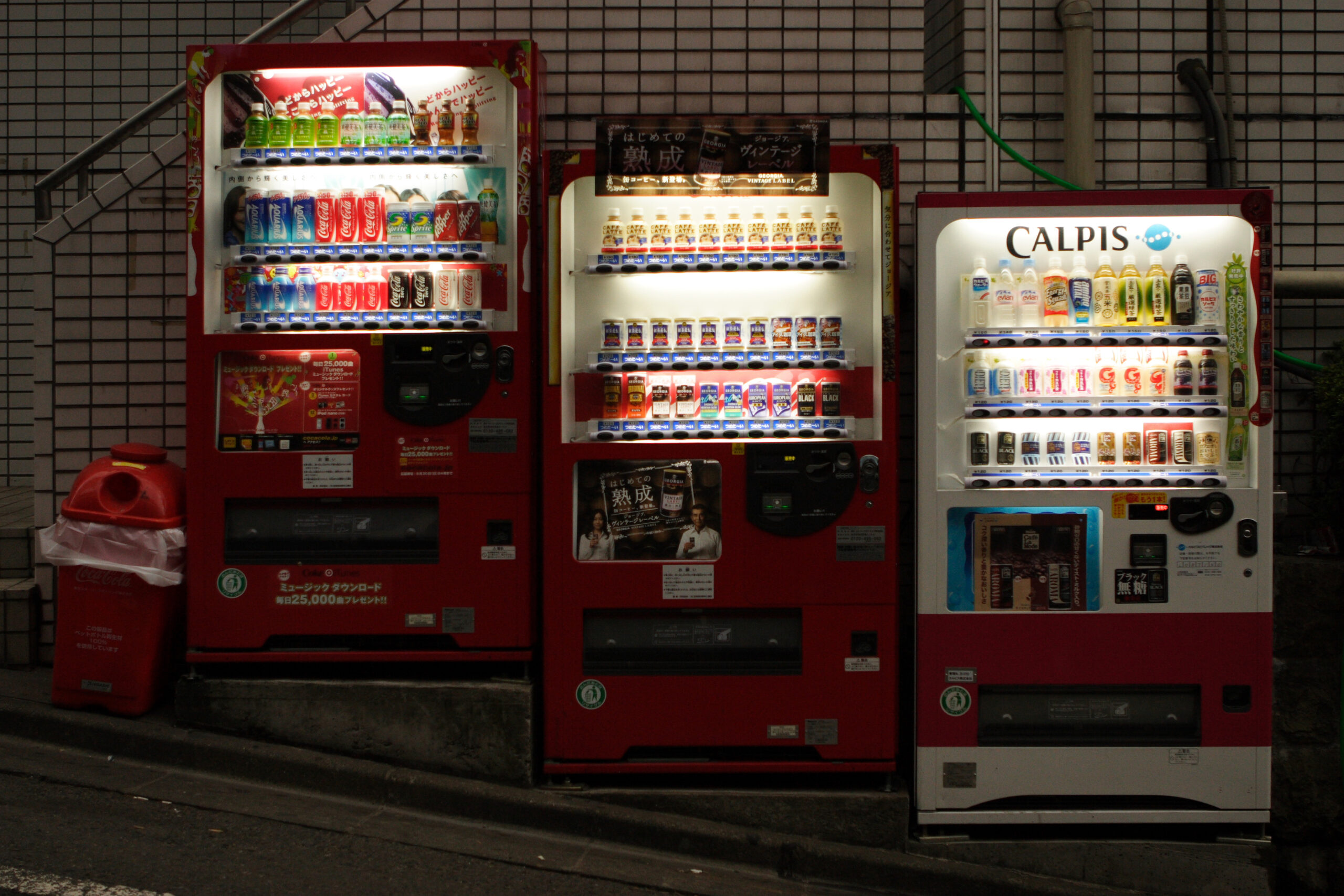
Imagine walking back from a train station on a humid evening in Japan. The shops on a side street have closed. A bicycle leans against a wall. At the end of the block, a bright rectangle illuminates the pavement: rows of iced tea, canned coffee, mineral water and colorful soft drinks behind glass.
You do not need to enter a shop. You do not need to speak to anybody. A few seconds after choosing a drink, a bottle drops into the compartment below.
For a newcomer, the most surprising thing may be that this shop has no shopkeeper—and that another machine may be standing around the next corner.
Japanese vending machines, or jidō hanbaiki (自動販売機), have become shorthand for a particular image of Japan: practical, brightly lit, convenient and quietly futuristic. But those glowing boxes are not magical, and they are not everywhere for the same reason.
Their real achievement is not that they sell things without people. It is that an elaborate network of people and businesses makes buying something feel effortless.
Start with the places where vending machines fit, the everyday purchases they make easy, and the habits that have made them such a familiar sight.
1. How Many Vending Machines Does Japan Actually Have?
The familiar answer is “millions.” The more useful answer requires a little care with definitions.
Figures released by the Japan Vending System Manufacturers Association for the end of 2025 put Japan’s combined stock of vending machines and automated service machines at 3,881,700 units. That number, however, does not mean there are almost four million roadside boxes selling beverages and snacks.
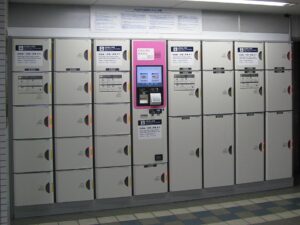
The total includes approximately 2,585,200 product-vending machines, which sell items such as drinks, food, tickets and everyday goods, plus 1,296,500 automated service machines, such as certain payment, rental and locker systems. Beverage machines account for approximately 2.18 million of the narrower vending-machine total.
This is an important distinction because a person photographing drink machines in Tokyo is looking at only one part of a larger category.
It is also important to use a date. Japan’s installed total has been falling: it was approximately 3.91 million at the end of 2024 and 3.88 million at the end of 2025. Industry categories have changed over the longer term, too, which means dramatic decade-by-decade comparisons need some caution.
There are still a remarkable number of machines. But Japan is not adding them forever.
2. A Shop That Fits Where a Shop Cannot
A regular convenience store needs a building, staff, deliveries, refrigeration, lighting and enough customers to pay for them. A drink vending machine also needs electricity, stock, maintenance and a viable location—but it can operate on a much smaller patch of ground.
That difference helps explain the machine by a station exit, outside a warehouse, next to an apartment building or at the edge of a parking area.
A property owner can make use of a small available space without operating a full store. A drinks company can put its products near people who might be thirsty without asking those people to walk several blocks. And a customer can make a small purchase without interrupting the rest of their journey.
This does not mean any empty corner is profitable. Someone has to arrange the installation, power supply, commercial terms and access for delivery vehicles. Sales must justify the operating costs.
The machine may look like a piece of street furniture, but it is a retail business with a carefully chosen address.
3. The Power of Being Exactly Where You Need It
Japan’s vending-machine landscape is not a perfectly even grid. Machines cluster where people pass, work, wait, exercise or gather.
You may find them along station approaches, in office buildings, at sports facilities, outside hospitals and beside local roads. One machine serves the hurried commuter; another catches somebody waiting at a bus stop. A different machine survives because factory workers buy drinks during breaks.
What makes the format effective is not the fantasy that every street in Japan has one. It is the more practical idea that a single well-placed machine can shorten the distance between a small need and an immediate purchase.
That is why a vending machine and a convenience store can coexist, even when they sell similar bottled drinks. One offers a wider range of goods and services. The other wins by being just a few steps away.
For another perspective on Japanese convenience, see More Than a Konbini: The Store That Keeps Everyday Japan Running.
4. Why Do the Machines Sell Hot Coffee and Cold Tea?
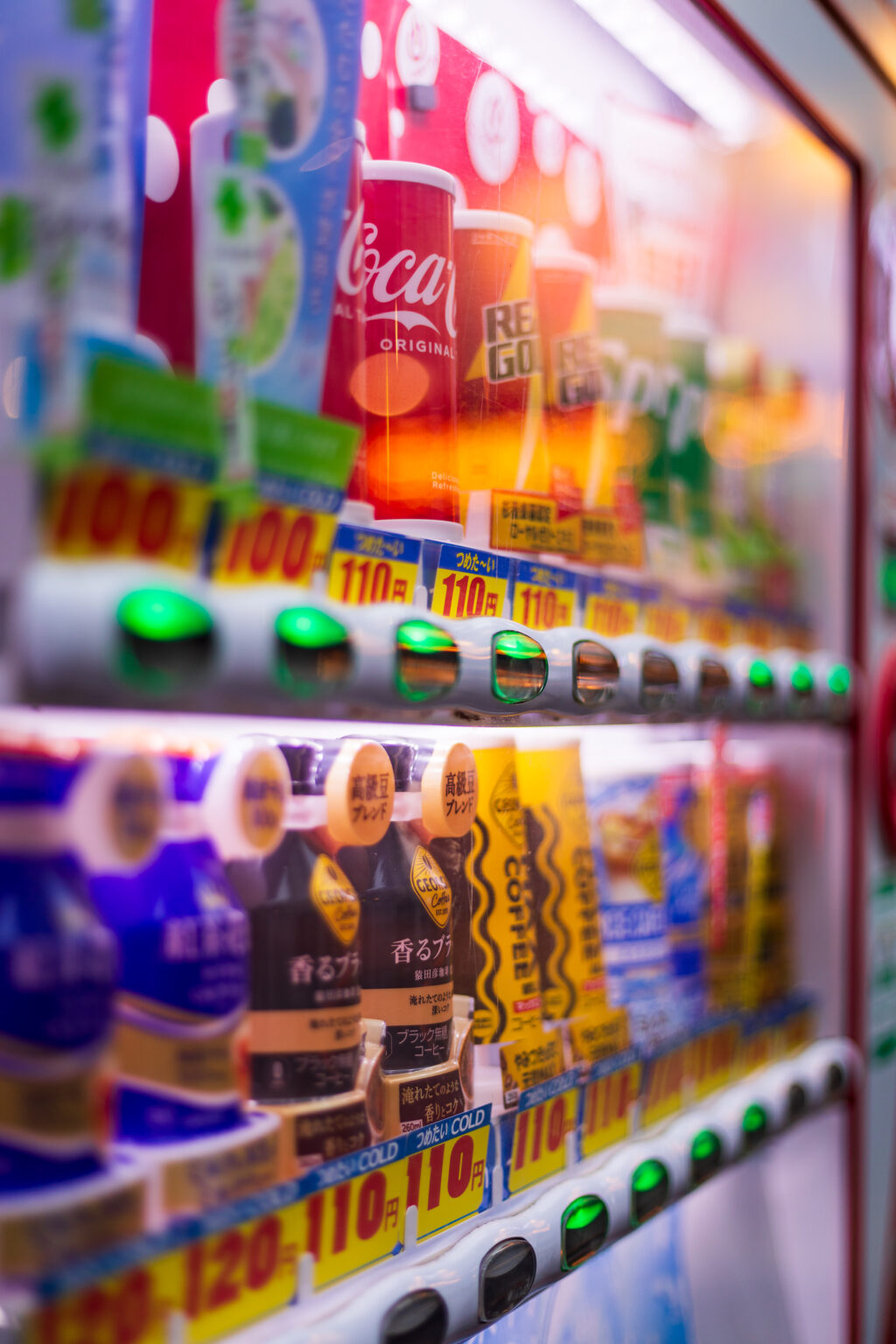
One of the small pleasures of a Japanese drink machine is the seasonal choice. A customer may be able to buy a chilled bottle of green tea and a warm canned coffee from the same cabinet.
Many machines use distinct sections for hot and cold products. The mix changes with season, location and demand: what sells by an office in winter may differ from what sells near a park in August.
This is a reminder that the vending machine is a miniature store rather than a neutral refrigerator. Its shelves reflect decisions about prices, popular flavors, temperature and the habits of people who pass by.
There are also machines selling ice cream, food and other items. Those unusual examples make engaging photographs, but the ordinary drink machine remains a much larger part of the landscape than the most surprising products found on social media.
A hot can of coffee on a winter commute might be a more representative piece of everyday Japan than a machine selling an improbable novelty.
5. Do Japanese Machines Work Because People Are Honest?
You will often hear a cultural explanation: Japan can leave cash-filled machines outside because people are honest and public spaces are safe.
The relative security of a location can certainly affect the economics of unattended equipment. But it is too simple to turn a complicated industry into a moral claim about an entire population.
Vending machines also depend on manufacturers, locks, site selection, property agreements, operators, maintenance and a system for responding when something goes wrong. And not all neighborhoods or installations face identical risks.
Japan is not the only country that uses outdoor vending machines. The more distinctive feature is the scale and visibility of a format that grew alongside particular beverage companies, pedestrian habits and distribution networks.
The story also connects to our examination of Japan’s lost-and-found system: public trust matters, but it becomes more reliable when there are systems and people behind it.
6. Coins, Cards and the Meaning of “Always Open”
For decades, the familiar ritual was wonderfully simple: insert coins, press a button, take a drink. Japan’s widespread use of ¥100 and ¥500 coins helped make small purchases convenient.
Many machines still accept cash. Some also accept transport IC cards, smartphone payments or other cashless methods, but payment options vary from one machine to another. Visitors should not assume every cabinet has exactly the same buttons or payment system.
“Open twenty-four hours” is similarly convenient shorthand, not a guarantee that everything always works. A machine can sell out of a product, suffer a fault, need maintenance or become inaccessible when its building closes.
Unlike an all-night staffed shop, it cannot help you find a lost wallet, change your plans or answer a question. It does one small task quickly—and that limited role is part of its appeal.
7. A Small Convenience With a Very Specific Place
What makes a Japanese vending machine memorable is not only the lights or the buttons. It is the way it fits a moment: a warm coffee on a winter commute, cold tea after a long walk, or a drink bought outside a closed shop. The system works best in locations where those small needs occur again and again.
The harder question is who keeps each machine running—and why some locations are no longer worth maintaining. That story continues beyond the moment a drink drops into the tray.
Frequently Asked Questions About Vending Machines in Japan
How many vending machines are there in Japan in 2025?
Industry figures for the end of 2025 report 3,881,700 vending and automated-service machines combined. Of those, roughly 2.59 million are machines selling products, and approximately 2.18 million are beverage machines. The combined figure includes some automated services that do not sell food or drinks.
Why are there so many drink vending machines in Japan?
Small retail footprints, suitable pedestrian locations, drink-company distribution networks and customer demand have made many installations viable. Relative security and familiar coin payment also helped, but no single explanation accounts for the entire network.
Are Japanese vending machines really everywhere, including rural areas?
No. Distribution varies substantially by location and commercial demand. You may see clusters in urban areas and long gaps in sparsely populated places. It is better not to plan remote walks on the assumption that there will always be a machine ahead.
Do vending machines in Japan take credit cards or IC cards?
Some accept transport IC cards, mobile or other cashless payments; others primarily accept cash. Check the symbols and payment instructions on the actual machine.
Sources and Further Reading
These sources support the published figures and the broader explanation of Japanese vending-machine commerce.
- Japan Vending System Manufacturers Association (JVMA), Vending-machine data and annual installed figures: https://jvma.or.jp/information/information_3.html
- SOMPO Institute Plus, Japan’s Era as a Vending-Machine Giant Is Changing (16 March 2026; Japanese): https://www.sompo-ri.co.jp/topics_plus/20260316-22331/
- Ministry of Economy, Trade and Industry (METI), analysis of vending and automated sales in Japan (25 November 2022; Japanese): https://www.meti.go.jp/statistics/toppage/report/minikaisetsu/hitokoto_kako/20221125hitokoto.html
Editorial note: Figures refer to the end of 2025, not a real-time census. The opening scene is illustrative rather than a reported interview. All photos retain their original credit and licence links in their captions.



Comments