In Japan, a journey can end with a small box of sweets passed from hand to hand. Behind this everyday gesture lie regional pride, old travel routes, workplace relationships—and the occasional pressure to choose the right gift.
LAYERS OF JAPAN · 16 minute read
Picture the last few minutes before a train leaves a major Japanese station.
A traveler has already packed their clothes, found the platform and checked the departure board. Yet there is still one errand to finish. They stop at a brightly lit counter lined with neat rows of local sweets. One box contains twelve little cakes. Another has twenty individually wrapped biscuits. A third is decorated with a familiar regional landmark.
The traveler is not necessarily hungry. The sweets may not even be for the traveler.
They are for the people waiting back home: parents, friends, neighbors, perhaps colleagues who spent the past week at their desks.
This is omiyage (お土産), a word often translated as “souvenir” but associated with a particular kind of giving. You go somewhere, you find something connected to that place, and you bring a little of the journey back to someone else.
Of course, not every Japanese traveler buys gifts, and not every Japanese workplace expects them. But the custom is visible enough that souvenir counters fill railway stations, airports and popular sightseeing districts.
The interesting question is not simply why people buy the boxes. It is what happens when they open them.
1. A Souvenir for Someone Who Wasn’t There
In many places, a souvenir is something a traveler keeps: a postcard pinned to a wall, a magnet on a refrigerator, a piece of pottery that recalls a particular afternoon.
Japanese travelers buy those things too. But omiyage often points in another direction—outward, toward people who did not make the trip.
Imagine a woman returning from Kyoto with a box of sweets for her parents. Perhaps she gives a few to the neighbor who watered her plants. At work, someone places a box on a communal table with a brief note saying where the treats came from.
The gift may be modest, but it establishes a connection between two experiences: the traveler’s time away and everyone else’s ordinary week.
It can suggest, without making a grand announcement, “I remembered you while I was gone.” Sometimes it also says, “Thank you for looking after things in my absence.”
Those are possible meanings, not rules written into every packet of cookies. The relationship and the situation matter more than a dictionary definition.
2. Omiyage, Temiyage and Meibutsu: Three Useful Words
Three Japanese terms help explain what visitors see in souvenir shops.
Omiyage (お土産) usually refers to a souvenir, especially one brought from a journey to give to someone else. Food is especially common, although gifts can also be crafts, small household objects or other local products. The term is not restricted to gifts: it can also describe souvenirs bought for oneself.
Temiyage (手土産) is a gift carried when visiting someone, such as a friend’s home or a business contact. It might be a box of sweets purchased near your own home rather than something from a journey. The difference is the occasion, not merely the packaging.
Meibutsu (名物) means a well-known specialty associated with a particular place. It could be a local cake, a dish or a craft. A meibutsu is something a traveler might choose as omiyage, but the two terms are not interchangeable.
There are other Japanese gift-giving occasions, including seasonal gifts and formal presents. Omiyage is one thread in that wider tapestry, not a synonym for every Japanese gift.
That distinction matters because the picture of Japan as a nation endlessly following precise etiquette rules misses how informal much of this exchange can be.
3. The Monday-Morning Box
One familiar setting for omiyage is the office after someone returns from a holiday or business trip.
A packet of regional sweets appears near the tea supplies. People passing by take one, mention the place on the label and perhaps ask how the trip went. The little box offers an easy way to restart a conversation with colleagues.
In some teams, the gesture also acknowledges that others kept working while a person was away. In others, it is simply a friendly habit, with no deeper implication. Some people buy something for a small group they know well rather than for an entire department. And there are workplaces where no one expects a souvenir at all.
Individual relationships make the difference. Giving something to a colleague because they covered a shift is not quite the same as bringing a family member a favorite sweet.
It is useful to think of the office box not as a nationwide requirement, but as a social possibility—a modest and recognizable way to reconnect.
Anyone who has worked with others may understand both sides: the pleasure of finding a treat at the end of a hard day, and the awkwardness of wondering whether the people who did not travel are now expecting one.
4. Why Is So Much Omiyage Edible?
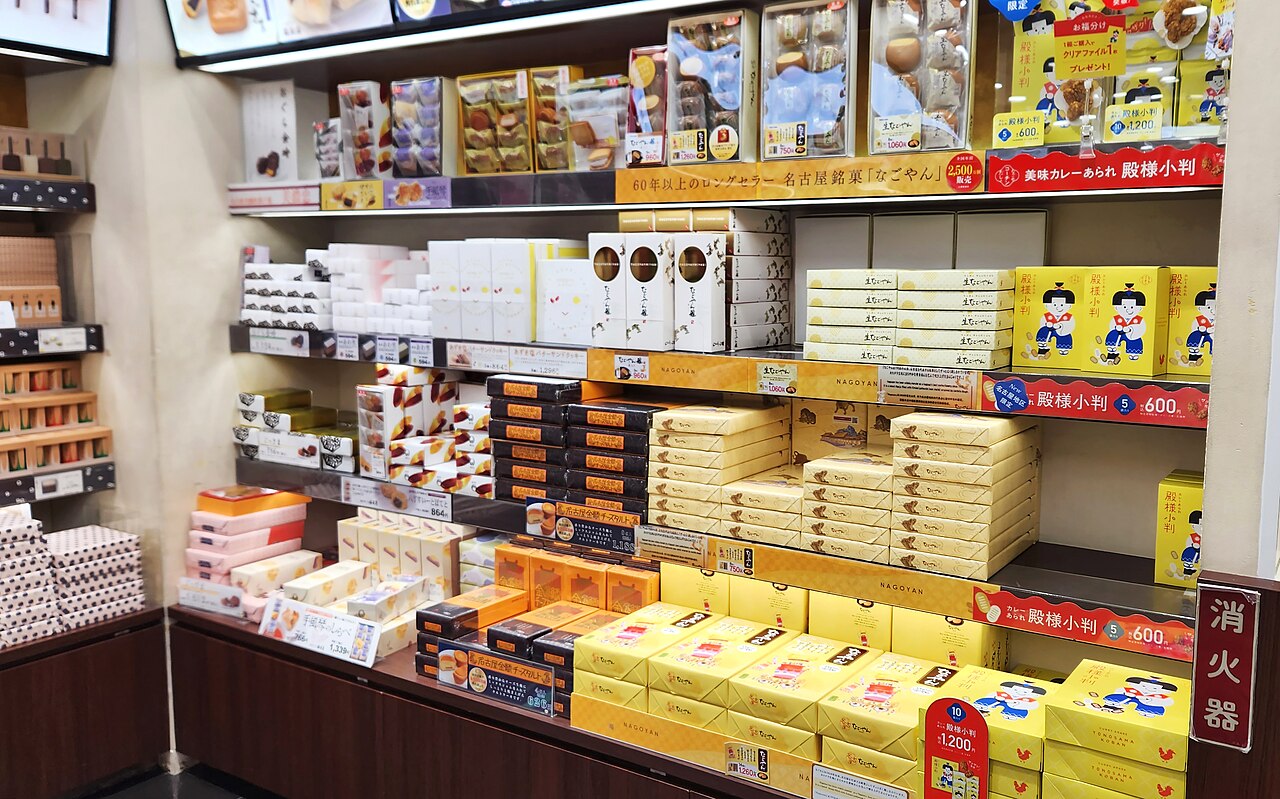
If you examine a Japanese railway-station souvenir counter, you might notice that the shelves resemble a miniature confectionery department store.
There is a practical reason food works so well.
It can be shared and enjoyed without demanding permanent space in someone’s home. A box of twenty small cookies can reach twenty people. A package of rice crackers can be opened during a tea break. After the gift has been eaten, no object needs to be stored or displayed.
The preference is not universal. Some travelers choose tea, condiments, crafts or other useful goods. Yet carefully packaged sweets have become a particularly recognizable form of travel gift.
Japan’s national tourism organization even describes the rows of boxed sweets, crackers and jellies that travelers can find at airports, noting that many are designed to be compact and easy to carry (JNTO, guide to Japanese souvenirs).
A snack is also an accessible conversation starter. Its flavor, color or unusual shape offers something to talk about, even among people who do not know one another very well.
5. A Small Design Problem: Twelve Sweets, Twelve Wrappers
Open a popular box of omiyage and you may find the contents arranged with remarkable precision. There could be twelve small cakes, each in its own packet, divided into tidy rows inside a decorated carton.
That arrangement is not simply an aesthetic preference.
Individual portions make sharing easier. Colleagues can take a snack at different times. The giver does not have to cut a cake, provide plates or ask everyone to gather around. Sealed packets can be easier to transport and handle, though storage requirements and shelf life still vary by product.
The number of pieces can become part of the buying decision. A traveler may be choosing not only a flavor but a quantity: enough for the people they want to thank, without turning a small gift into an extravagant one.
Then there is the packaging itself. Some boxes borrow images from the region: autumn leaves, mountains, historic buildings or patterns associated with a particular city. They are miniature pieces of place branding.
But the convenience comes with a trade-off. Multiple layers of paper and plastic can mean a great deal of packaging for a handful of sweets. The tidy box invites admiration and also a fair question: how much of this wrapping is necessary?
6. A Map You Can Eat
One of the pleasures of omiyage is discovering how regions tell their stories through food.
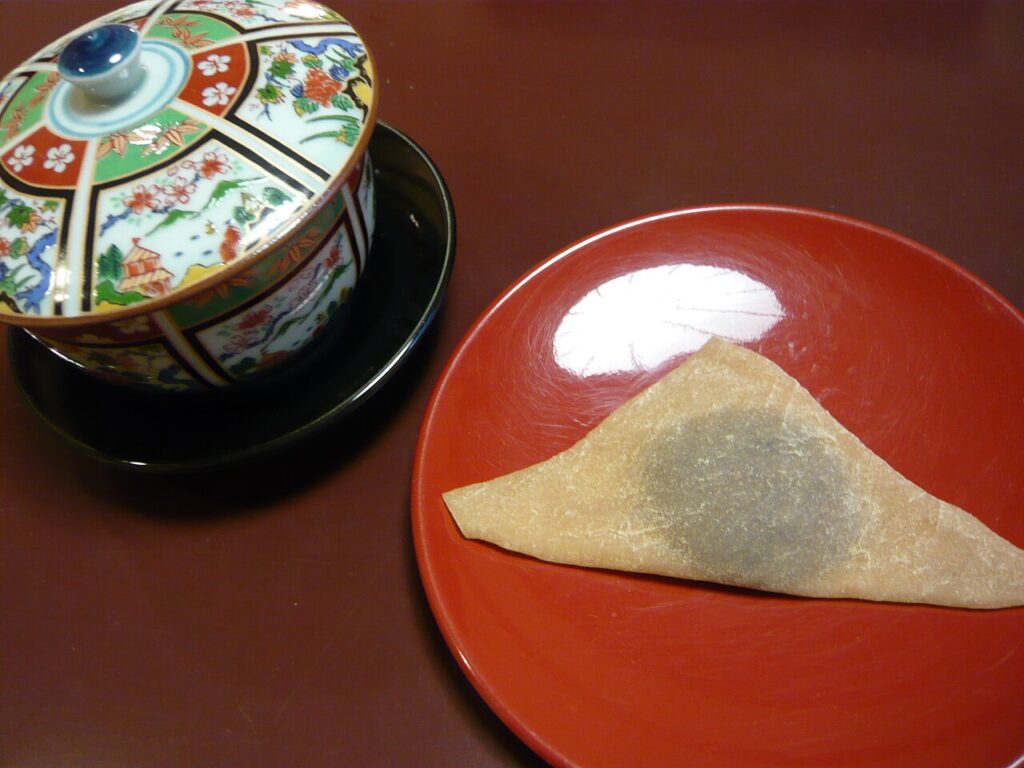
Kyoto: Yatsuhashi. Cinnamon-scented yatsuhashi and softer nama yatsuhashi are closely associated with Kyoto. Some varieties have fillings; others are crisp and simple. The Japan National Tourism Organization traces the sweet’s growth as a tourist souvenir through railway travel and changing patterns of tourism (JNTO, Kyoto’s local flavors).
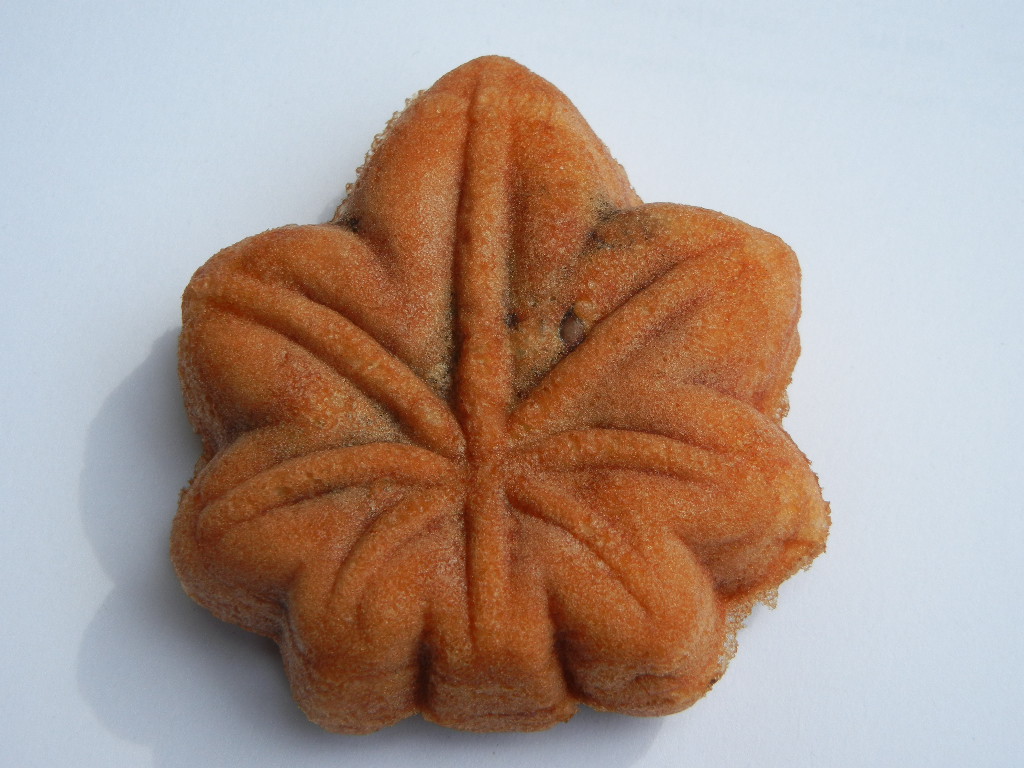
Hiroshima and Miyajima: Momiji manju. These small cakes are molded to resemble maple leaves, linking their shape to the region’s scenery. Sweet bean paste is the traditional filling, though modern versions offer other flavors. The cake becomes a little edible landmark (JNTO, Hiroshima specialties).
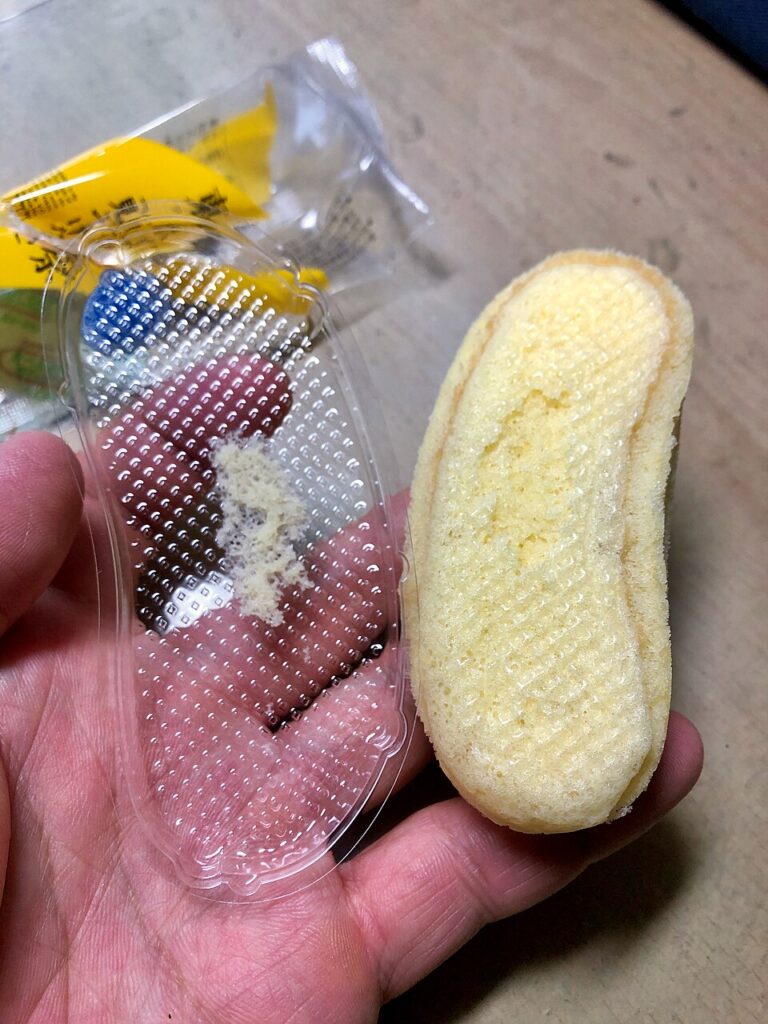
Hokkaido: Shiroi Koibito. The familiar white boxes contain crisp biscuits with a white-chocolate filling. Their association with Hokkaido has become so strong that the brand operates a visitor attraction in Sapporo (JNTO, Shiroi Koibito Park).
Tokyo: Tokyo Banana. A modern, highly recognizable Tokyo-branded sweet demonstrates another side of omiyage: a place’s identity can be expressed through commercial imagination as well as long tradition. Not every famous local product is an ancient recipe handed down unchanged.
These examples are not a ranking of what people ought to buy. They illustrate how a place can be condensed into a flavor, a shape, a box or a name.
And beyond the major brands, smaller confectioners and shops along local shopping streets offer products that may never become famous nationwide. For travelers interested in everyday local life, those shops can be as revealing as the most photographed souvenir counter.
7. Before the Cookie Box: Pilgrimages, Roads and Railways
Today’s individually packaged sweets may look timeless, but the history of omiyage is more complicated.
During the Edo period (1603–1868), travel—especially pilgrimages to shrines and temples—created opportunities to bring items back from places people had visited. The journey itself was significant. A small object could testify that a traveler had reached a famous destination.
According to historian Yuichiro Suzuki, in a study published by Japan’s National Museum of Japanese History, many pilgrimage souvenirs in the early modern period were relatively light, portable non-food objects. Food specialties such as dumplings and buns were sold along roads and near religious destinations, but they were often eaten on the spot rather than taken home over long distances.
Railways changed the possibilities. Travel became faster. Foods that once needed to be eaten locally could reach home in better condition. Makers adapted their products, containers and preservation methods for the new market, while station sales helped certain specialties become widely known.
The transformation was not simply an old custom surviving untouched. It was a meeting between religious journeys, tourism, technology, commerce and local pride (Suzuki, Study of Souvenirs in the Modern Period: Focusing on Tokaido).
A modern station souvenir shop is, in that sense, part of a much longer travel story—one that includes both ancient roads and modern train platforms.
8. Why the Box Can Matter Almost as Much as the Sweet
A souvenir is not only tasted. It is seen, carried, offered and received.
A carefully chosen box can signal that the giver has considered the occasion. The size may be appropriate for a group. The wrapping may identify the destination. A shop’s paper bag can make the present feel ready to give.
In a formal visit, gift-giving etiquette may receive considerable attention. Japan-guide, for example, distinguishes travel souvenirs (omiyage) from gifts brought when visiting someone (temiyage) and notes the importance often placed on presentation (Japan-guide, giving gifts).
But a casual box of snacks left in the office kitchen need not be treated as a ceremony. People adapt their manner to the relationship. The gesture can be beautifully simple: “These are from my trip. Please have some.”
The best packaging does not have to make a gift expensive. Sometimes its job is merely to make sharing easy.
9. The Less Photogenic Part: Duty, Cost and Fatigue
There is a temptation to describe omiyage only as evidence of generosity. That would leave out a very human part of the story.
A holiday is supposed to be restful. But a traveler may spend the last afternoon counting coworkers, comparing box sizes, worrying about allergies or wondering whether it would be rude to bring nothing.
Not everyone enjoys that calculation. Some people take pleasure in choosing the perfect regional specialty. Others feel relieved when gifts are not expected. Both reactions can exist in the same workplace.
A 2026 survey by Nomura Research Institute, covering broader patterns of gift-giving among respondents in Japan’s Kanto region, found that choosing gifts, cost and uncertainty about recipients’ preferences were common sources of strain. That survey was not specifically about omiyage, so its findings should not be used as a direct measure of souvenir pressure. They do, however, help explain why the generous impulse to give can coexist with a wish for less formality (NRI, September 2026).
The tension is recognizable well beyond Japan: a thoughtful gesture feels different when it becomes an obligation.
Those small assumptions can resemble the unspoken rules of everyday Japan: often felt more keenly than they are formally explained.
A custom stays meaningful partly because people can decide when it suits the occasion—and when it does not.
10. Is It Really a Tradition If You Buy It at a Station?
A souvenir shop at Tokyo Station may sell brilliantly branded sweets beside products from long-established makers. Like Japan’s department-store food halls, such counters are designed to make the act of choosing food feel special. Some are closely tied to local ingredients or methods; others have been designed for the modern travel market.
That mix is not a contradiction. Tradition does not exist outside commerce, and commerce does not automatically make a gift meaningless.
Tourist destinations and transport hubs have helped regional identities become recognizable far from their places of origin. The Japan National Tourism Organization describes Tokyo Station as a shopping destination in its own right, with extensive souvenir and sweets options (JNTO, Tokyo Station).
At the same time, a snack bought in an airport may communicate something different from a handmade item found in a quiet neighborhood shop. Neither is necessarily better. They simply tell different stories about a trip.
This is why souvenir culture belongs in conversations about local economies, branding and the changing life of shopping streets—not only in lists of must-buy treats.
11. What If You Visit Japan? Do You Have to Bring Gifts?
No. Visitors are not automatically expected to participate in every local custom, and Japanese hosts are unlikely to assume that every traveler knows the subtle distinctions between omiyage and temiyage.
If you are staying with a host family, visiting someone’s home or receiving a particular favor, a small, thoughtful gift can be welcome. Something associated with your home region may be especially interesting. But you need not purchase a present for every person you meet, and an expensive gift may create more discomfort than delight.
If you do choose edible omiyage, a few practical questions are worth asking. Will it travel well? Does it need refrigeration? Are the ingredients suitable for the recipient? Is the package easy to share? Can a shop assistant help you understand what is inside?
There is no single magical phrase that turns a gift into a meaningful one. A simple explanation of where the item came from, offered with kindness, is often enough.
And if someone hands you a small sweet from their trip, you do not need to study an etiquette manual before responding. A warm thank-you is a perfectly good beginning.
12. A Little of the Journey, Shared
An omiyage box begins as a product on a shelf, with a price, a brand name and a neatly printed design. At that moment it is one of hundreds of objects available for sale.
It changes when a traveler chooses it for someone particular.
Perhaps the recipient likes sweet bean paste. Perhaps the gift comes from the place where a family once lived. Perhaps it is intended for the person who watered a plant, fed a cat or helped keep a small office running. Perhaps it was bought with no grand emotion at all—only the wish to share a good biscuit.
That is the interesting thing about omiyage. The system around it can be elaborate: trains, shops, factories, packaging and social expectations. Yet the exchange itself is small.
One person went somewhere. Another person stayed behind.
For a few minutes, over tea or between meetings, a part of that journey belongs to both of them.
Frequently Asked Questions About Omiyage
What does omiyage mean in Japanese?
Omiyage (お土産) means a souvenir. It is especially associated with bringing a gift, often a regional food, back from a trip for someone else, although the word can also be used more broadly for souvenirs.
Why are Japanese souvenirs often individually wrapped?
Individual packets are convenient for distributing among several people, transporting food and allowing recipients to enjoy a treat at different times. Not all souvenirs are individually wrapped, and packaging practices vary.
Is bringing omiyage to work compulsory in Japan?
No universal rule requires it. Some teams enjoy the tradition; others have little interest in it. Expectations depend on the workplace, its size and its relationships.
What is the difference between omiyage and temiyage?
Omiyage is commonly associated with souvenirs from a trip. Temiyage is a gift brought when visiting someone, such as a host or business contact, whether or not the giver has traveled.
What are examples of famous Japanese omiyage?
Kyoto’s yatsuhashi, Hiroshima’s momiji manju, Hokkaido’s Shiroi Koibito and Tokyo’s Tokyo Banana are recognizable examples. Many regions also have smaller local specialties worth discovering.
Do tourists need to buy omiyage for Japanese friends?
Not automatically. A small gift can be a kind gesture, especially when visiting someone’s home, but thoughtful conversation and thanks are more important than meeting an imaginary rule.