Anime Pilgrimage · Katsushika, Tokyo
Captain Tsubasa in Tokyo: Yotsugi & Tateishi
A football story leads back to its creator’s hometown, where a railway station, bronze teammates and shopping streets make a different kind of Tokyo walk.
ANIME & FANDOM · 5 MIN READ
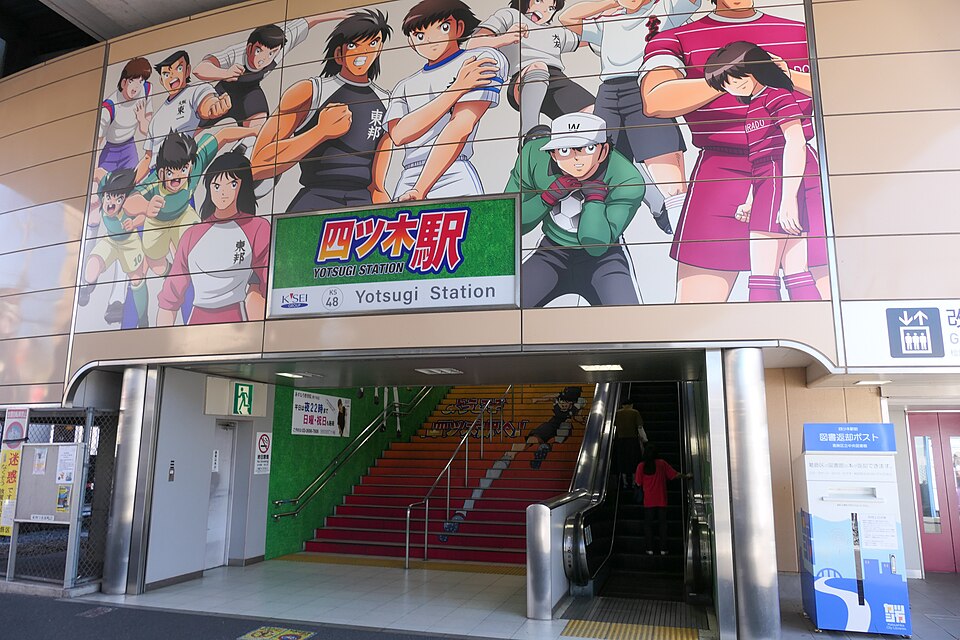
At Yotsugi Station, even old train tickets can become a football hero.
Keisei’s station guide describes a portrait of Tsubasa Ozora assembled from about 110,000 used tickets. It is a fitting introduction to this corner of Tokyo: an everyday place finding an inventive way to celebrate a story loved far beyond Japan.1
A Captain Tsubasa pilgrimage through Yotsugi and Tateishi brings you into the neighbourhood of the manga’s creator, Yoichi Takahashi. Let the station set the mood, then follow the characters out into parks and local streets. There is room for a favourite statue, a leisurely lunch and the small discoveries between them.
Why this part of Tokyo?
Takahashi grew up in Katsushika and comes from Yotsugi. The connection reaches into the story itself: according to Katsushika’s local history, the fictional name Nankatsu was inspired by his alma mater, Tokyo Metropolitan Minami-Katsushika High School in Tateishi.2
Think of this walk as a visit to the creator’s hometown. That gives the neighbourhood a significance beyond finding a view that matches an anime frame. A school name, a railway stop and places used by local families become part of the wider history of a football manga.
Start the visit inside Yotsugi Station
Look around before heading for the exit. Keisei’s guide highlights a welcome in 26 languages, football-shaped light covers outside the ticket gates, and a ceiling illustration of Tsubasa and Taro Misaki performing their twin shot inside the gates.1 These details reward an unhurried arrival, provided you leave space for passengers.
The photograph above records the entrance in July 2021. Keisei renewed the station’s special decorations in November 2023 for the Junior Youth anime, so use it as a dated view of the location. The railway’s current station guide is the better reference for what to look for during your visit.3
Meet Tsubasa in the park
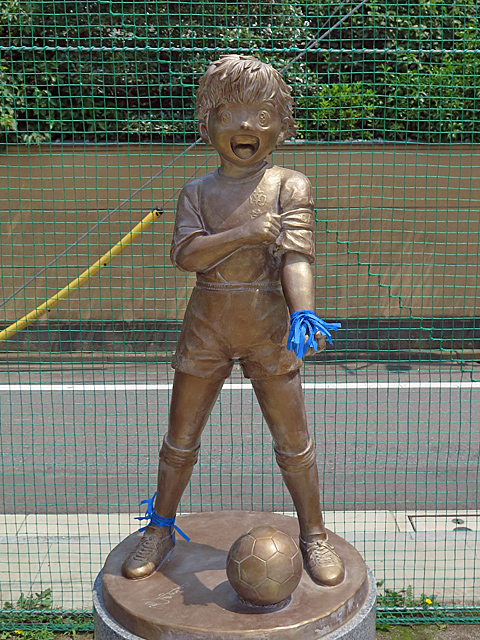
The bronze Tsubasa at Yotsugi Tsubasa Park is a natural first goal. Installed in 2013, it is one of the life-size figures on Katsushika’s official statue list.4 In the photograph below, the smiling player stands with a ball at his feet, bringing a familiar drawn character into the scale of an ordinary park.
Give the setting a little attention too. The fence and playing space behind the figure place him among the routines of the neighbourhood. The visit works best when you allow that everyday life to remain visible: take a photograph, make room for others, and let the park continue being a park.
Choose your teammates
Katsushika’s official guide lists nine statues across Yotsugi and Tateishi. Four useful anchors for a first visit are shown below; use the official English statue map for their positions and the remaining stops.4
| Character | Location |
|---|---|
| Tsubasa Ozora | Yotsugi Tsubasa Park · 1-22-3 Yotsugi |
| Kojiro Hyuga | Yotsugi Park · 1-16-24 Yotsugi |
| Roberto Hongo & Tsubasa | Medaka no Komichi · near 2-3-3 Yotsugi |
| Taro Misaki | Shibue Park · 3-3-1 Higashi-Tateishi |
Pick the characters that mean something to you. A smaller selection leaves time to notice how each figure sits within its surroundings. If you want to complete the whole trail, keep the map handy: the statues are distributed through the neighbourhood, and they vary in size.
Leave time for the streets between
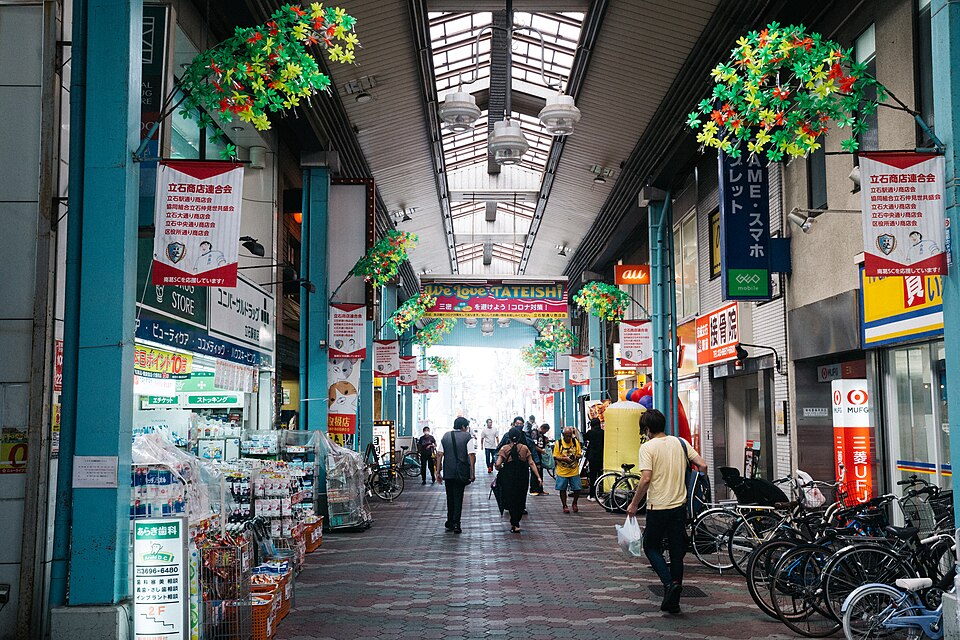
Keisei recommends My Road Yotsugi, a local shopping street with places to eat and browse.5 Towards Tateishi, the official English walking guide also highlights the Tateishi Ekidori shopping street.6 This is where a statue hunt can turn into a more rounded afternoon.
Choose a break according to what is open and appealing on the day. You might buy a snack, sit down for lunch or simply walk slowly enough to notice the shopfronts. Ask before photographing inside a business, and avoid making other customers the subject of your pictures.
Plan a manageable first visit
Arrive at Yotsugi Station on the Keisei Oshiage Line. Keisei lists local trains as the services that stop here, so check the stopping pattern before boarding.7 Download the statue map before setting off and choose a few priorities.
- Begin at the station. Enjoy the displays while keeping stairs, gates and platforms clear.
- Explore the Yotsugi group. Combine Tsubasa’s park with your preferred nearby figures and a shopping-street break.
- Continue towards Tateishi if time allows. Follow the official map to additional statues, then decide where to finish your walk.
This is a suggested approach, not a timed circuit. Weather, opening hours and how long you spend at each stop will shape the day. Wear comfortable shoes, keep entrances clear, and avoid climbing on the statues. The school listed on the full map is an operating school; stay outside its grounds and respect students’ privacy.
A favourite character may be what brings you here. The lasting impression can be the welcome around them: a station saying hello in many languages, a bronze player beside a local playing space, and a neighbourhood carrying its own connection to the game.
Sources & image notes
- Keisei Electric Railway — Captain Tsubasa station guide (Japanese).
- Katsushika City history — Captain Tsubasa and the author’s local connections (Japanese).
- Keisei — station decoration renewal, 27 November 2023 (Japanese).
- Katsushika City — statue locations and downloadable maps (updated 12 May 2026; Japanese, with English map).
- Keisei — attractions around Yotsugi Station (Japanese).
- GO TOKYO — Captain Tsubasa English walking map (PDF).
- Keisei — Yotsugi Station, services and timetable links (Japanese).
Information checked on 25 October 2026. The itinerary is an editorial suggestion. Photographs show real places in 2014, 2021 and 2023; they do not document current shop openings or decoration layouts. Credits and photograph licences appear below each image. The statue photograph accompanies discussion of the public sculpture; the photograph’s licence does not license the depicted character or sculpture. This is an independent travel article.



Comments