Anime Pilgrimage · Chichibu, Saitama
Anohana in Chichibu: A Day Beyond the Famous Bridge
Follow a story of friendship into a real town: a bridge above the Arakawa, a quiet temple and a hillside view that brings the landscape together.
ANIME & FANDOM · 5 MIN READ
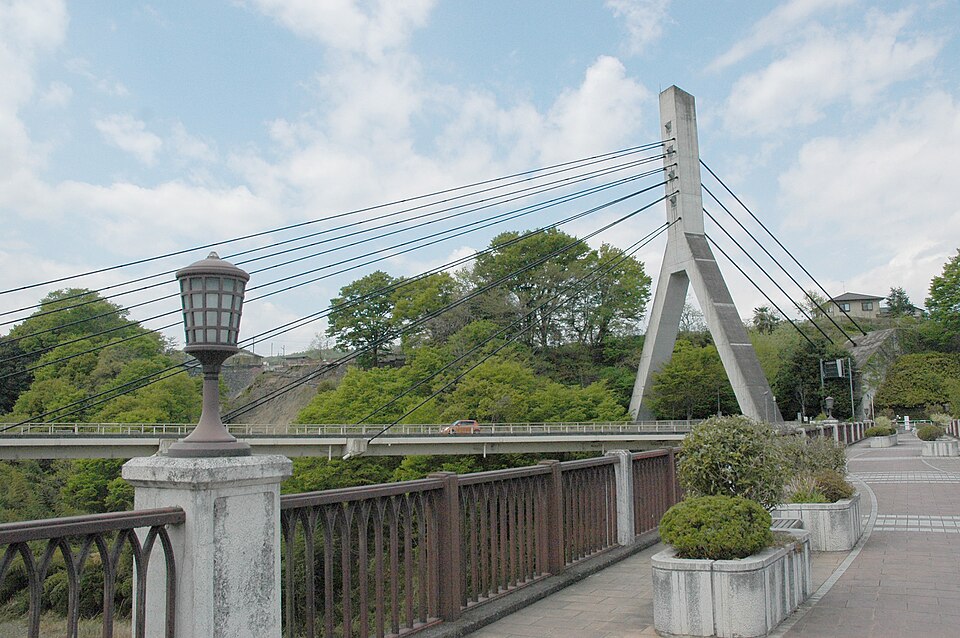
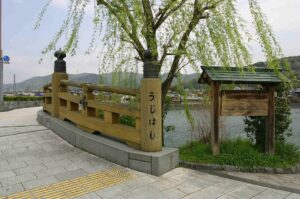
At Old Chichibu Bridge, the familiar scene includes a second bridge.
The walkway, lamps and railings are in the foreground. Beyond them, the cables of New Chichibu Bridge stretch towards its tall concrete support. Recognising how the two structures fit together is a satisfying first step into the landscape associated with Anohana: The Flower We Saw That Day.
The anime follows childhood friends brought back together through their connection to Menma.1 Chichibu, in Saitama Prefecture, supplied the model for its setting.5 For a first visit, three places give that setting depth: the bridge, Jorinji Temple and the view from Hitsujiyama Park.
The bridge: look beyond the familiar frame
Old Chichibu Bridge, or Kyu-Chichibubashi, was completed in 1931 as a three-arch bridge. It later became a bridge-top park, and it appears repeatedly in the anime as well as in its promotional imagery.2 The cable-stayed structure visible beyond it in our photograph is New Chichibu Bridge.
Start by taking in the whole place. Look along the walkway, then towards the river and the greenery around it. A camera can preserve the composition you remember, while a few quiet minutes reveal its scale and surroundings. Leave room for people passing through and stay within areas open to visitors.
Older location guides can make the scene look frozen in time. Chichibu City reports that refurbishment finished in March 2023, including replacement paving, planters and benches.3 The 2011 photograph above records an earlier appearance; small differences on arrival are part of a place continuing to be used.
Jorinji: two kinds of pilgrimage meet
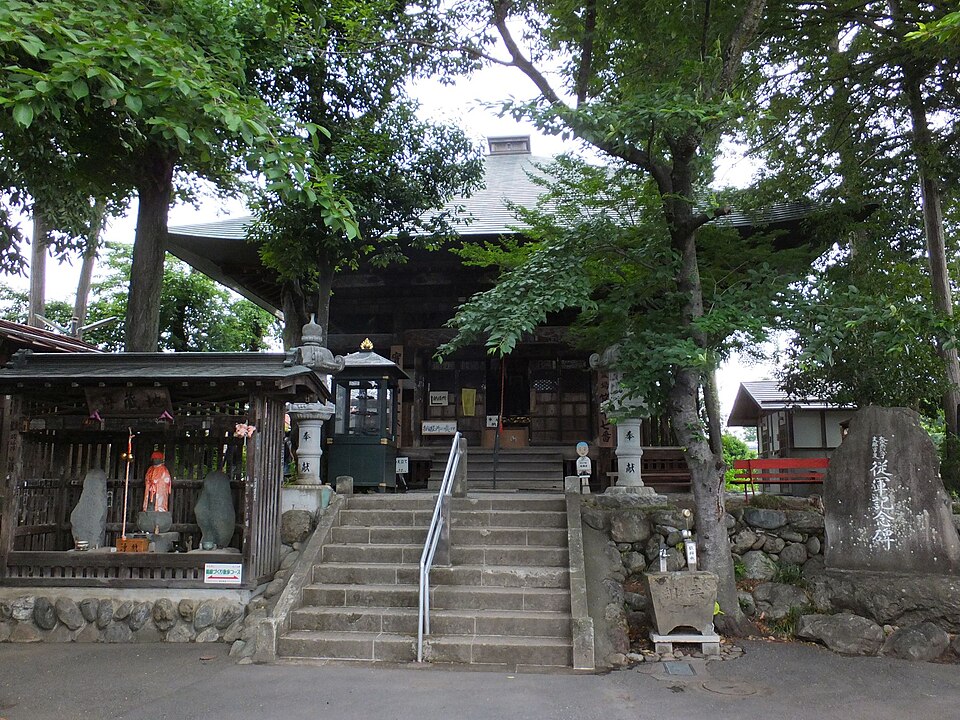
At Jorinji Temple, the connection to Anohana sits within a much longer history of visiting and prayer. The temple is number 17 on Chichibu’s Kannon pilgrimage. Its official guide describes a hall with an open surrounding veranda and carved bird-and-flower details.4
Fans may recognise it from the opening sequence and scenes where the friends gather.2 Once there, give the building time to become more than a remembered backdrop. Look at the steps, the roof and the trees, and notice how the approach slows your pace.
The temple’s bell offers another detail to seek out. The pilgrimage association dates the present bell to 1758 and notes its relief images of the principal deities of the hundred Kannon temples across the Saigoku, Bando and Chichibu routes.4 It is a reminder that visitors have been connecting distant places through meaningful journeys for centuries.
This remains a place of worship. Keep voices low, allow worshippers space, and follow the temple’s photography instructions. Ask before photographing ceremonies or people at prayer.
Hitsujiyama Park: see the town as a whole
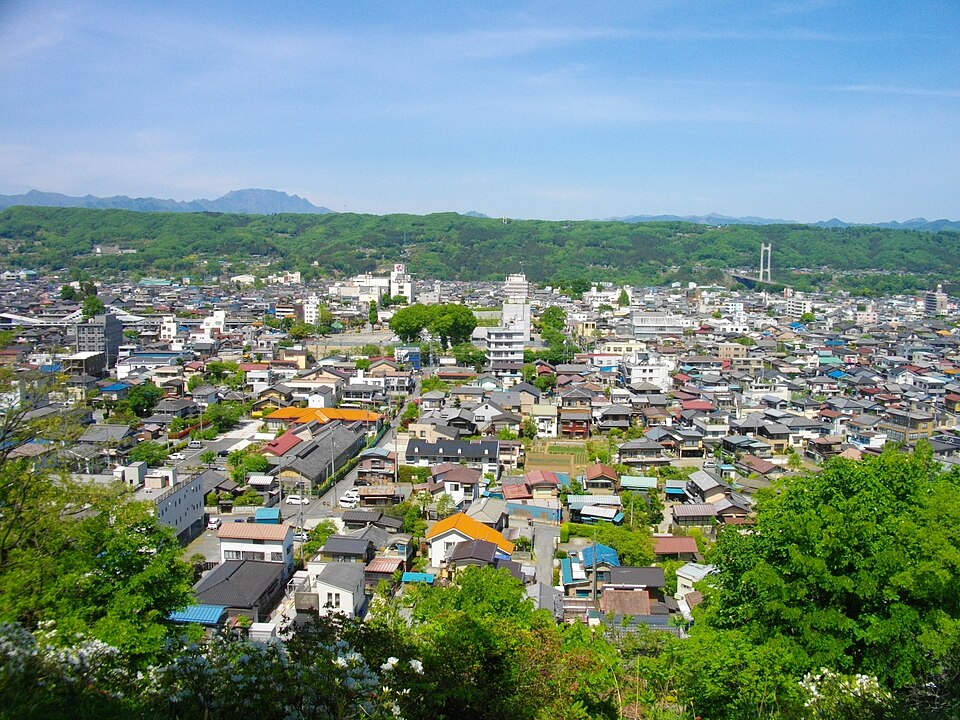
The Miharashi no Oka lookout in Hitsujiyama Park is another location connected with Anohana. Geopark Chichibu explains that the park’s elevated position and the town below form part of a landscape of river terraces shaped over a long period.5
That geography is useful to a visitor, too. From above, streets and roofs become a town surrounded by hills. Places that felt separate on a map begin to belong to the same landscape. The photograph below is a broad view from the park, rather than a reconstruction of a particular animated shot.
Build some flexibility into this stop. Reaching a hillside viewpoint takes more effort than a level stroll, and weather changes what you can see. Choose it when your energy and the conditions suit a longer look. A clear view is a pleasure; a rushed climb just to tick off another location is easy to skip.
Make it a day trip from Tokyo
Seibu Railway’s limited express service connects Ikebukuro and Seibu-Chichibu. A limited express ticket is required in addition to the regular fare.6 Check the current timetable and reserve the journey that fits your day before arranging the sightseeing stops around it.
For planning, treat the park, temple and bridge as separate stops. Saitama Prefecture’s anime itinerary combines walking with local buses, and Seibu’s travel guide also identifies Onohara Station on the Chichibu Railway as an access point for the bridge.72 Compare those options with your walking appetite.
- On arrival: ask at the tourist information centre in front of Seibu-Chichibu Station for a pilgrimage map and advice on local transport.7
- Choose your main stop: give the bridge or temple a comfortable share of the day, depending on which matters most to you.
- Add the wider view: include Hitsujiyama Park if time, weather and energy allow. Keep a proper break for lunch.
- Plan the return: check local bus or train departures before leaving the town centre. Avoid relying on timings printed in older pilgrimage itineraries.
The pleasure of this trip is the shift between recognition and discovery. You may arrive already knowing a railing or a temple entrance. By the journey home, the space between them—the town, its hills and the pauses you chose for yourself—can become part of the memory too.
Sources & image notes
- Aniplex of America — Anohana: The Flower We Saw That Day.
- Seibu Railway’s GRUTTO PLUS — Anohana locations and public-transport itinerary (Japanese; updated July 2024). Used for location identification, not current departure times.
- Chichibu City — Old Chichibu Bridge refurbishment, completed March 2023 (Japanese).
- Chichibu Pilgrimage Association — temple 17, Jorinji (Japanese).
- Geopark Chichibu — pilgrimage, anime settings and the river-terrace landscape (Japanese).
- Seibu Railway — limited express services, tickets and timetable links.
- Saitama Prefecture — Anohana and The Anthem of the Heart pilgrimage course (Japanese). Consult operators for current services and fares.
Information checked on 25 October 2026. The day-trip structure is an editorial suggestion, not a timed tour. Photographs show real locations in 2011, 2014 and 2019. They illustrate the setting and may differ from present-day details. Credits and licences appear beneath each image. This is an independent travel article.









Comments