Dotonbori After Dark: The Stories Behind Osaka’s Neon Streets
Behind the Glico runner and giant restaurant signs lies a canal built for trade, a centuries-old theatre district and a city that still knows how to make an evening memorable.
8 MIN READ
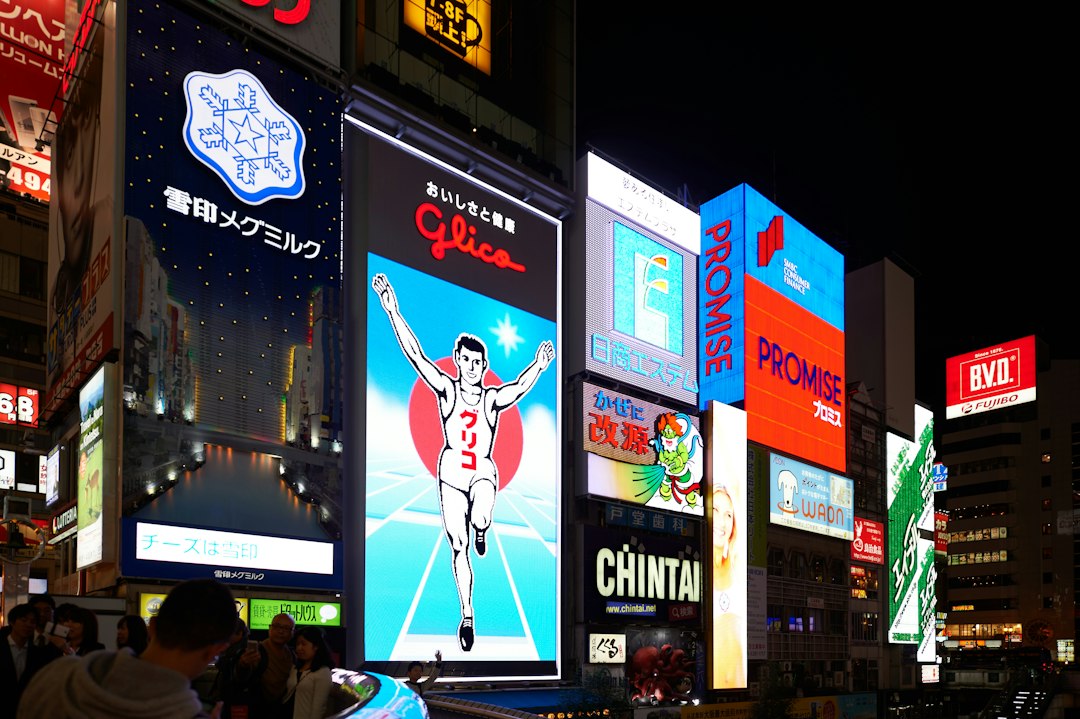
Photo: Kamaruld Salleh / Unsplash.
The first thing you notice is the light. A blue runner stretches his arms above the canal. Shopfronts compete for attention with oversized crabs, octopuses and bright lettering. Below, the water breaks the signs into wavering bands of colour.
This is Dotonbori, the best-known entertainment strip in Osaka’s Minami district. It is a place to eat, look around and feel the excitement of a crowded city. But if you see only the billboards, you miss the older story hidden underneath them: Dotonbori began as a waterway and became a theatre town long before its neon signs appeared.1
The bridge, the canal and the Running Man
Most first visits begin at Ebisubashi Bridge. It is a familiar gathering place over the Dotonbori canal, with the famous Glico Running Man advertisement rising above the buildings nearby. People imitate the runner’s raised arms for photographs, then make way for the next group.2
The first Glico runner sign appeared here in 1935, advertising the confectionery company behind snacks such as Pocky. The display has been renewed over the decades, so the landmark visible today is not the original sign. What lasts is the instantly recognisable pose, which has become part of Osaka’s public imagery.1
Look beyond the runner for a moment. An enormous sign is a form of street theatre: it makes people stop, laugh, point, and take a photograph. Dotonbori’s advertising does not try to disappear into the architecture. It performs for the street.
Before the neon, there was a theatre district
The name Dotonbori comes from Yasui Doton, who committed his resources to the excavation of a new waterway beginning in 1612. The project reshaped the local commercial area. In the seventeenth century, theatres gathered along its banks and attracted audiences for kabuki and puppet performances. Food sellers and teahouses followed the crowds.3
It is a remarkably direct line from then to now. In the old theatre district, people arrived for a show and stayed for food and conversation. Today they come to see the bright signs and do much the same thing. The entertainment has changed, but the street still depends on the pleasure of going out together.
One reminder of that history is Osaka Shochikuza, the theatre that opened in 1923 and later became an important home for kabuki and other live performances. It closed after its May 2026 programme because of ageing facilities. As of November 2026, it is not a venue visitors can enter to watch a performance. Its closure is also a reminder that cultural landmarks need continual reinvention, even in a neighbourhood known for constant change.4
For a deeper look at the performance tradition once associated with this area, explore the art of Bunraku puppet theatre, with its shared movement between puppeteers, musicians and narrators.
Kuidaore: the city that loves to eat
Now follow the smell of hot batter and savoury sauce. The word kuidaore is often explained as eating so extravagantly that you ruin yourself financially. It is a playful expression associated with Osaka’s enthusiasm for good food, not an instruction to spend beyond your means.2
Takoyaki is an obvious place to start. These small round snacks are cooked in a special mould, usually with a piece of octopus inside. A freshly made serving may be much hotter than its neat appearance suggests. Take a moment before your first bite.
Okonomiyaki is another local favourite: a savoury batter-based dish generally made with cabbage and other ingredients, cooked on a hot griddle. And then there is kushikatsu, skewered ingredients coated in breadcrumbs and fried until crisp. Dotonbori has plenty beyond these three, from noodle shops to sit-down restaurants.5
Choose one place you genuinely want to try rather than rushing from one famous shop to the next. Follow each vendor’s directions about where to eat and dispose of packaging. The best part of Osaka’s food culture is not a contest over how many dishes you can fit into an evening; it is the chance to share something satisfying.
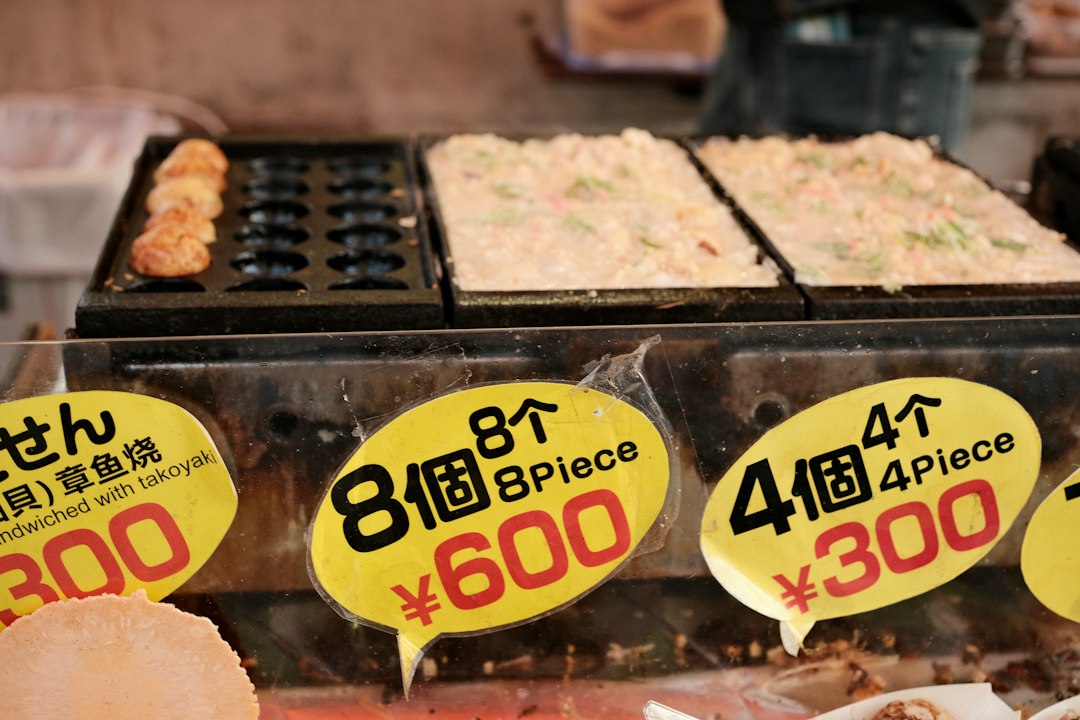
Photo: Perry Merrity II / Unsplash.
Take the view down to the water
One of the simplest ways to experience Dotonbori differently is to leave the crowded main street and find the Tombori Riverwalk. This public promenade brings you closer to the canal and its reflections. It is a good place to appreciate the layered cityscape rather than concentrating on one famous billboard.6
The river is not just scenery. It was the original reason this district developed, a practical route through which trade and entertainment could grow. Walking along its edge puts that connection back in view.
Boat rides also operate on the canal, but they are a separate paid activity, with schedules and availability that can change. You do not need a ticket or a cruise to enjoy the public riverside path. Try visiting at dusk, when the last daylight and the first illuminated signs briefly share the same scene.
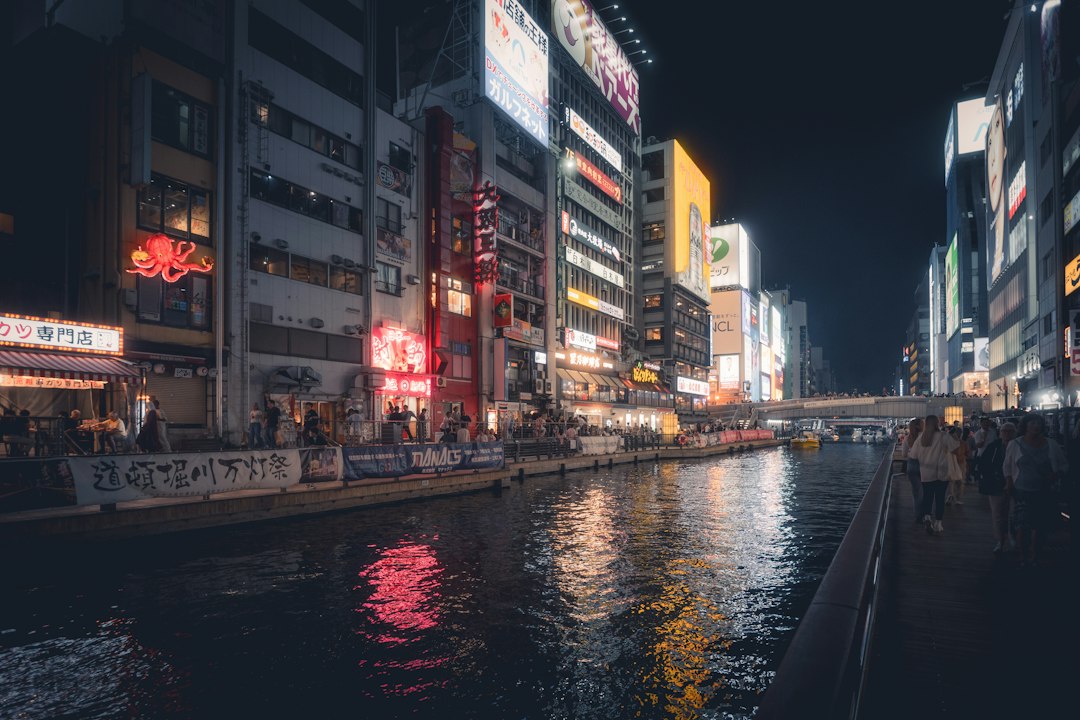
Photo: Tobias Reich / Unsplash.
Hozenji Yokocho: a different kind of evening
A short walk from the great signs, Hozenji Yokocho offers a sharp change of scale. Its narrow stone-paved lane is lined with small restaurants and modest entrances. The atmosphere is intimate rather than theatrical, though it belongs to the same long tradition of eating and entertainment in Osaka.7
Nearby is Hozenji Temple, where visitors pray before Mizukake Fudo, a statue of the Buddhist guardian Fudo Myo-o. Worshippers have traditionally poured water over the figure, helping create the thick green moss that covers it. It is a living religious practice, not a decorative fountain. Give worshippers space and follow the guidance at the site.7
The contrast makes the detour worthwhile. Within a few minutes, you can move from giant animated signs to an alley where the details are small: a stone surface, a lantern and the sound of footsteps.
An easy first-evening route
If you are visiting Osaka for the first time, keep the route simple rather than trying to see every restaurant and attraction.
- Start from Namba Station. Several Osaka Metro and railway lines serve the neighbourhood. Follow the signs for Dotonbori and Ebisubashi.1
- Visit Ebisubashi. See the Running Man and the canal from above. The bridge can be very crowded, so keep the way clear when taking photographs.
- Choose one Osaka dish. Have takoyaki, okonomiyaki, kushikatsu, or something that catches your eye. Eating slowly is more fun than collecting queues.
- Walk beside the river. The Tombori Riverwalk offers different angles on the illuminated district and is free to enter.6
- End at Hozenji Yokocho. See the quieter lane, and pause respectfully at the temple if you would like.
Allow two to three hours for a relaxed first visit with a meal. More time helps if you want to browse shops, dine at a popular restaurant or take a canal cruise. Dotonbori itself is an open public district, but individual stores have their own opening times.3
First-visit questions
Is Dotonbori free to visit?
Yes. Exploring the streets, bridges and public riverside promenade does not require an admission ticket. Food, shopping, attractions and boat cruises are charged separately.
Should I visit during the day or at night?
Both work, but dusk and evening are especially atmospheric because the signs illuminate the canal. If you dislike heavy crowds, consider walking through in daylight and returning for a shorter look after dark.
Is the area close to Osaka’s Namba Station?
Yes. Dotonbori is a short walk from the connected Namba transport area, though the exact route depends on your railway and exit. Some underground passages are extensive, so allow extra time to find your way.
Can I see a kabuki show at Osaka Shochikuza?
Not as of November 2026. Osaka Shochikuza closed after its May 2026 performances. If you want to see kabuki, consult Shochiku’s official current performance schedule for an active venue.
A city that turns everyday life into a performance
What stays with you after Dotonbori may be the familiar blue runner, but it could just as easily be the sound of batter sizzling, a joke between friends, or the moment you notice the lights moving across the water.
The canal, theatres and enormous signs belong to different centuries, yet each asks for the same thing: people who will come out, watch, eat and enjoy the city together. That is the story behind Dotonbori’s dazzling surface.
Sources and further reading
- Japan National Tourism Organization: Dotonbori — history, the Running Man, local food and Namba access.
- Japan National Tourism Organization: Dotonbori & Shinsaibashi — the canal, signs and kuidaore.
- OSAKA-INFO: Dotonbori — the canal’s origins and evolution as an entertainment district.
- Shochiku: History of Osaka Shochikuza — theatre closure in May 2026.
- Japan National Tourism Organization: Kansai model course — Osaka street-food specialities.
- OSAKA-INFO: Tombori Riverwalk — the riverside walkway and cruise.
- OSAKA-INFO: Hozenji Yokocho — historic alley and Mizukake Fudo.
Travel and venue information checked November 2026; business hours and operations can change.


Comments