Sensoji in Asakusa: A First Visit to Tokyo’s Oldest Temple
A red lantern, watchful guardians and a quiet moment of prayer. Discover the stories and everyday customs of Tokyo’s best-known Buddhist temple.
7 MIN READ
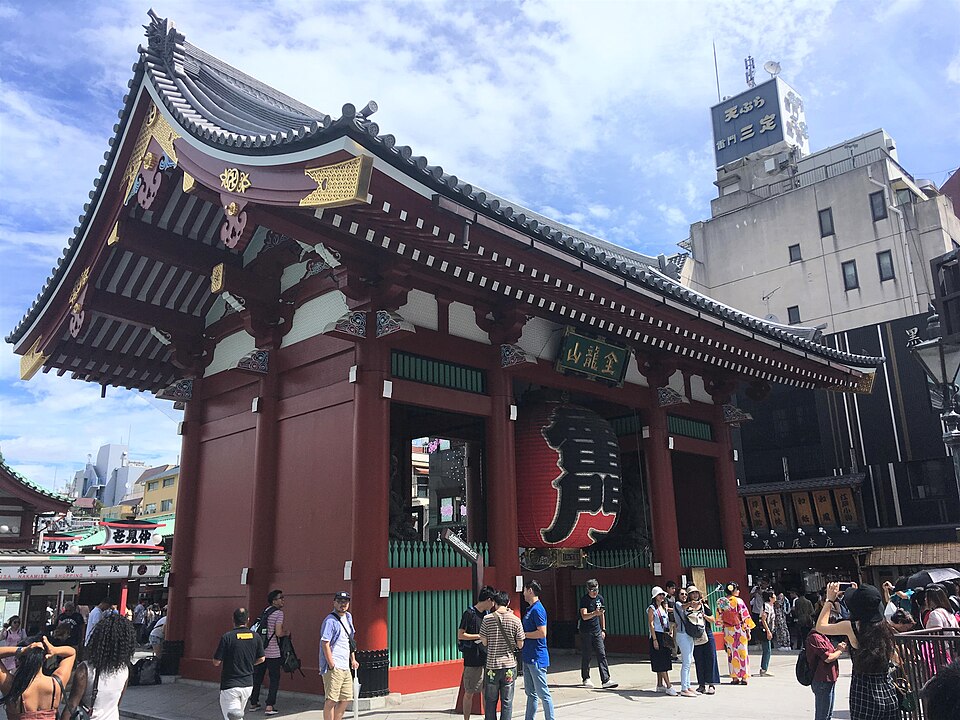
Photo: Christophe95 / Wikimedia Commons · CC BY-SA 4.0. Resized by Wikimedia Commons; uncropped.
The great red lantern makes an unmistakable entrance. Beneath it, people pause for photographs before joining the stream of visitors heading towards Sensoji.
It helps to arrive with a little time and a few things to look for. The gates have different guardians. An enormous pair of sandals carries a story of protection. At the main hall, a moment of worship follows a different rhythm from the busy approach.
A temple dedicated to compassion
Sensoji is Tokyo’s oldest temple, dedicated to Kannon, the Buddhist bodhisattva associated with compassion. Its beginnings are told through a founding tradition: in 628, two brothers fishing in the Sumida River found a statue of Kannon in their net. A local village head recognised its religious importance and turned his home into a place of worship.1
This is the temple’s account of its origins, passed down through religious tradition. It connects the great complex to a small discovery in the river and to people who chose to care for it.
That story gives the visit a centre. The gates, shops and courtyards all lead towards a place where devotion to Kannon continues.
Look closely at Kaminarimon
The first great gate is Kaminarimon, often translated as Thunder Gate. Its fuller name, Furaijinmon, refers to both wind and thunder. The figures of Fujin and Raijin stand to either side, protecting the temple and expressing hopes for favourable weather.2
The present gate dates from 1960. As you pass beneath its lantern, look up at the carved dragon on the underside.2 It is an easy detail to miss when everyone is looking straight ahead. Find a safe moment to notice it without stopping the flow through the gate.
Nakamise: shops along a sacred approach
Beyond the gate, Nakamise leads towards the temple. Its shops are part of a long relationship between pilgrimage and everyday commerce. The merchants’ association traces the street’s origins to the late seventeenth and early eighteenth centuries, when people serving temple visitors were allowed to open shops on the approach.3
Sweets, toys and souvenirs belong to that history.3 Browse with the same care you would bring to a narrow neighbourhood street: leave room for others, and ask the shop where to enjoy anything you buy to eat. There is no need to turn the walk into a checklist of snacks.
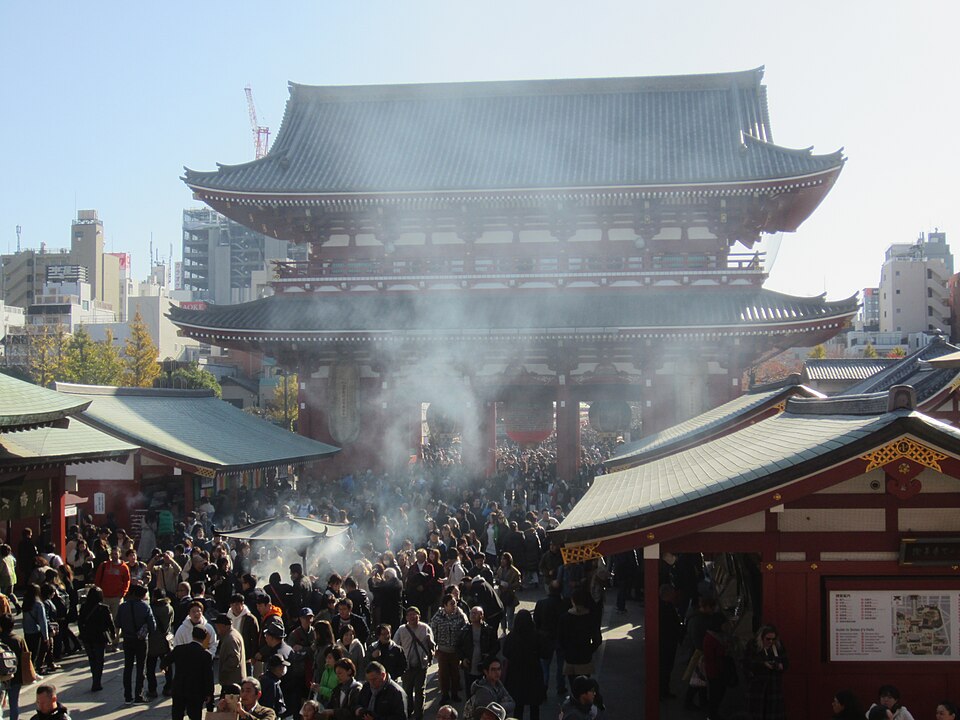
Photo: Another Believer / Wikimedia Commons · CC BY-SA 4.0. Resized by Wikimedia Commons; uncropped.
Hozomon: guardians and a storehouse
The next large gate is Hozomon. Its fierce Nio figures are Buddhist guardians. The current gate was completed in 1964, with space above for preserving scriptures and other temple treasures; its name reflects that role as a treasure storehouse.4
After walking through, look back at the enormous straw sandals, or waraji, hanging on the rear. Donated from Murayama in Yamagata Prefecture, they symbolise the guardians’ strength. The temple describes a traditional idea behind them: an evil spirit imagining the giant who could wear such sandals would be frightened away.4
The sandals make an abstract idea of protection wonderfully concrete. A familiar object, enlarged far beyond human scale, becomes a reminder to look at the gate from both sides.
Make room for prayer
Near the main hall, slow down and notice where people are worshipping. Keep entrances clear and give anyone praying a little space. Taking a photograph can wait for a natural pause.
For a simple Buddhist temple prayer, face the hall, bow respectfully, bring your palms together and pray quietly. Do not clap your hands; clapping belongs to the usual Shinto shrine form of worship. Tokyo’s official visitor guide makes this distinction between the two settings.6
You can also observe quietly. Follow the signs and staff guidance around sacred spaces, including any photography restrictions.
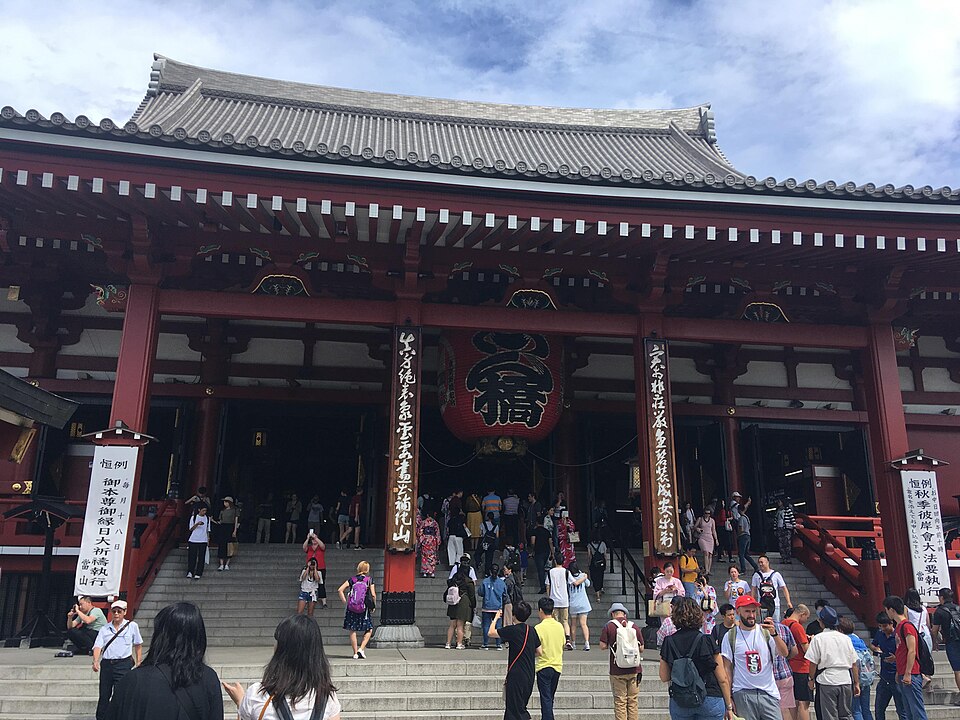
Photo: Christophe95 / Wikimedia Commons · CC BY-SA 4.0. Resized by Wikimedia Commons; uncropped.
An old temple, a rebuilt hall
Sensoji’s long history does not mean every building is ancient. The present main hall was completed in 1958, after its predecessor was destroyed in the air raids of 1945. Contributions from worshippers helped make the rebuilding possible.5
The principal image of Kannon is kept hidden from public view.7 A visit is therefore centred on the place of worship and its practices, rather than an opportunity to inspect the original statue. From the steps, you can also turn back towards the courtyard and see how the gates organise the approach.
What if your omikuji says bad luck?
If you choose to draw an omikuji, or paper fortune, follow the instructions at the station and return the numbered stick to its container. Read the whole message before focusing on its luck category.
Sensoji’s own guidance says an unfavourable fortune is no reason for fear: it encourages patience and sincerity in daily life. The temple provides designated places to tie an unlucky slip.7 Treat the practice as a chance for reflection, rather than a prediction you must accept.
The shrine nearby has its own story
Asakusa Shrine is a separate Shinto place of worship. It honours the two fishermen and the village head from Sensoji’s founding story. Its familiar name, Sanja-sama, refers to these three figures.8
The relationship is a useful glimpse of how Buddhist temples and Shinto shrines can share local history while retaining distinct identities. If you visit both, pause to notice which space you are entering and follow its own guidance for worship.
Before you visit
- Choose your rail connection. The temple lists access from Asakusa stations on the Tokyo Metro Ginza Line, Toei Asakusa Line, Tobu Skytree Line and Tsukuba Express. Use the official access page to plan your arrival.9
- Check the main hall’s hours. The published opening time is 6:00 a.m., or 6:30 a.m. from October through March; the hall closes at 5:00 p.m. These are the hall’s hours, not a timetable for every shop or building.5
- Ask about step-free access. The temple says an elevator is available on the left when facing the main hall. Ask staff if you need help finding the route.7
Leave time for a second look on the way out. The dragon under the lantern, the sandals behind the gate and the quiet gestures of worship can stay with you as clearly as the famous entrance.
Sources & further reading
- Senso-ji: Official English introduction — The temple’s founding tradition, its age and devotion to Kannon.
- Senso-ji: Kaminarimon — The wind and thunder deities, the lantern carving and the present gate.
- Nakamise Shopping Street: History — The relationship between temple visitors and the historic shopping street.
- Senso-ji: Hozomon — The Nio guardians, treasure storage, reconstruction and giant straw sandals.
- Senso-ji: Main Hall — The 1958 reconstruction and the hall’s official opening hours.
- GO TOKYO: Customs and manners — Respectful conduct and the distinction between temple and shrine prayer.
- Senso-ji: Frequently asked questions — The hidden principal image, omikuji guidance and access to the main hall.
- Asakusa Shrine: Official English introduction — The shrine’s connection with the three people in Sensoji’s founding story.
- Senso-ji: Access — Rail connections and current visitor information.
Photographs date from 2018–2019. Crowds, displays and access can differ on your visit. Credits and licences appear beneath each image; check the temple’s official pages for current visiting information.





Comments