Culture & Traditions
Fushimi Inari in Kyoto: The Stories Behind the Red Gates
Vermilion passages, watchful foxes and a mountain of small places of worship. A closer look at one of Kyoto’s most familiar sights.
6 MIN READ
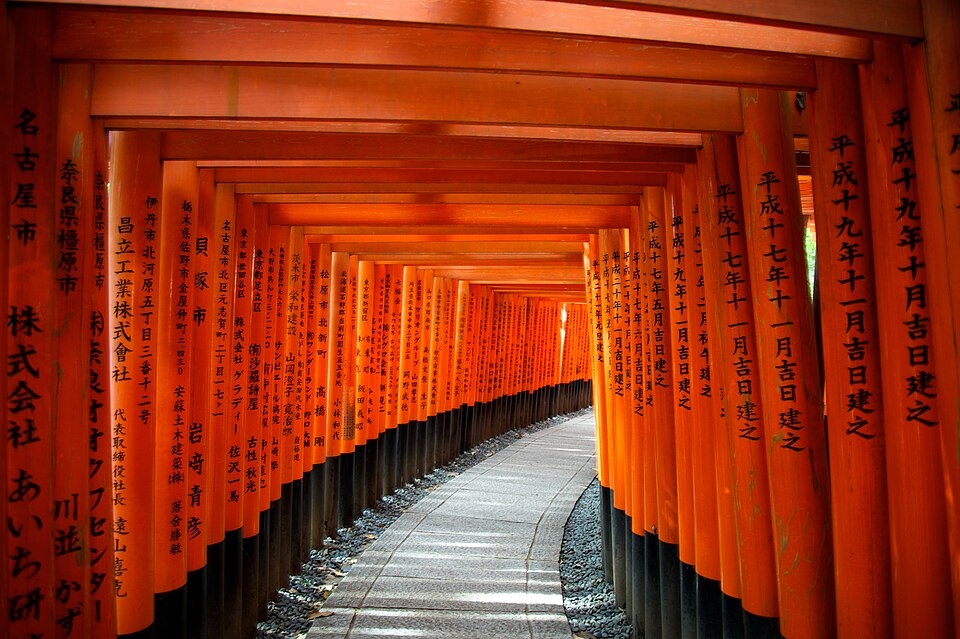
Photo: BriYYZ / Wikimedia Commons · CC BY-SA 2.0. Resized; original composition retained.
A path disappears into a corridor of red gates. One frame follows another, drawing the eye towards a bend you cannot quite see around. Even before you know its name, Fushimi Inari Taisha can feel familiar.
For many visitors, that image is the reason to come. It is a good beginning. But there is more to notice once you start asking why the gates are there, what the foxes represent and where the paths lead.
Give yourself room to look beyond the photograph. The details make the place more interesting, and they also help explain how to share it with the people who come to worship.
A shrine with more than thirteen centuries of history
Fushimi Inari Taisha traces its foundation to 711 and is the head shrine of Japan’s Inari shrines. Its official account describes prayers for plentiful harvests, successful businesses and the well-being of home and family.1
Those concerns bring the shrine’s long history close to everyday life. Work, food and the people we care about are easy to recognise across different countries and centuries. You do not have to share a particular faith to understand why someone might come here with a hope or a thank-you.
Before heading towards the famous passage, take time around the main shrine. Notice where visitors stop, where they leave space and where worship is taking place. Let that activity set the pace of your visit.
Why are there so many red gates?
The closely spaced gates known as Senbon Torii—“Thousand Torii”—are part of a tradition of offerings. The shrine explains that donating torii became established during the Edo period, from 1603 to 1868, as an expression of prayer and gratitude.3 The striking passage has grown from individual acts of devotion.
Knowing this changes how you might look at the repetition. Each gate is one contribution to a much larger setting. The rows can be appreciated both as a beautiful sequence and as evidence of people continuing a practice over time.
The colour has meaning, too. According to the shrine, vermilion is associated with protection against evil and with abundant harvests.2 Its brightness belongs to the religious life of the place as well as to its appearance in photographs.
As you walk, look at how the posts frame small pieces of the path ahead. A few steps can change the view completely. You need not wait for an empty passage to enjoy that experience; allowing others to pass is part of being there.
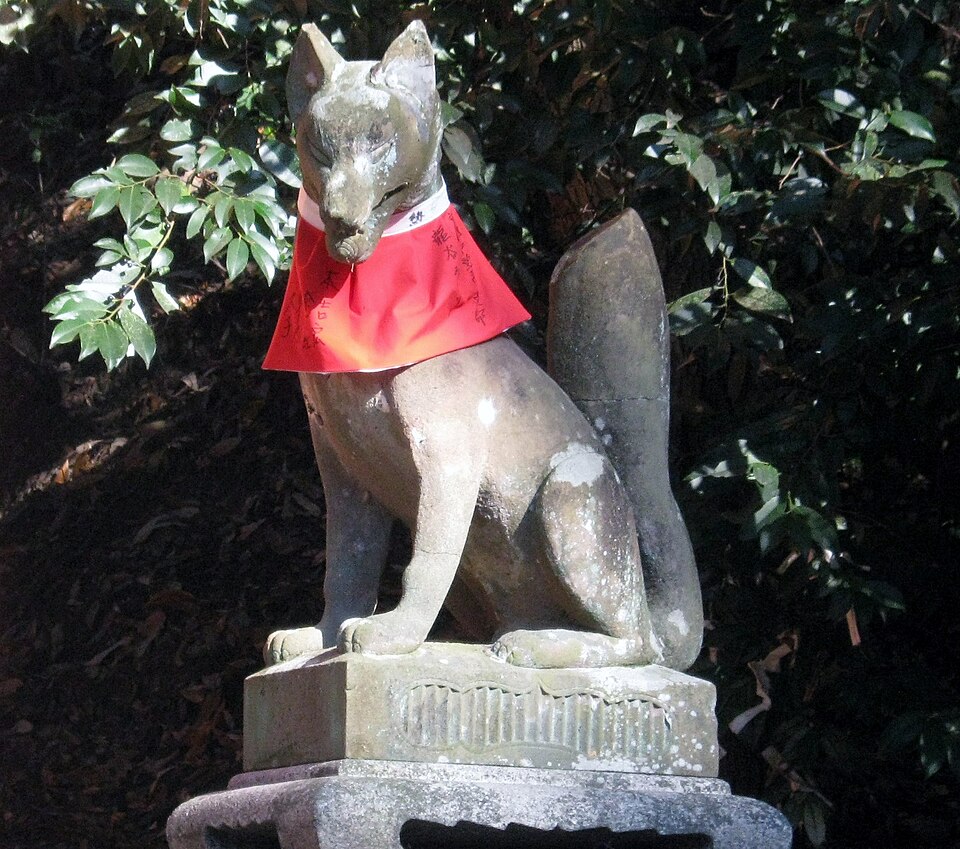
Photo: Xqt / Wikimedia Commons · CC BY-SA 3.0. Resized; original composition retained.
The foxes are messengers
The fox statues are another memorable feature. The shrine makes an important distinction: Inari Okami is not a fox. Foxes are understood as the deity’s messengers or kindred spirits; the sacred messengers are described as invisible “white foxes.”2
That explanation gives these statues a role beyond decoration. They belong to the relationship between worshippers and the deity, even when a visitor first notices their pointed ears, alert posture or bright red bibs.
Try looking at one for a moment before taking a picture. Notice the shape of the face, the line of the tail and the surface of the stone. A close look at a single figure can be as memorable as the larger view of the gates.
The mountain is part of the shrine
Fushimi Inari extends into Inariyama, a sacred mountain rising to 233 metres above sea level. Its paths connect places of worship, historical sacred sites and otsuka: stones inscribed with names given to the deity by worshippers. The shrine describes these stones as expressions of individual and family faith.4
Think of the mountain as a landscape of worship when deciding how to explore it. A small grouping of stones or a side shrine deserves the same consideration as the most photographed gates. Leave space for anyone who has stopped to pray.
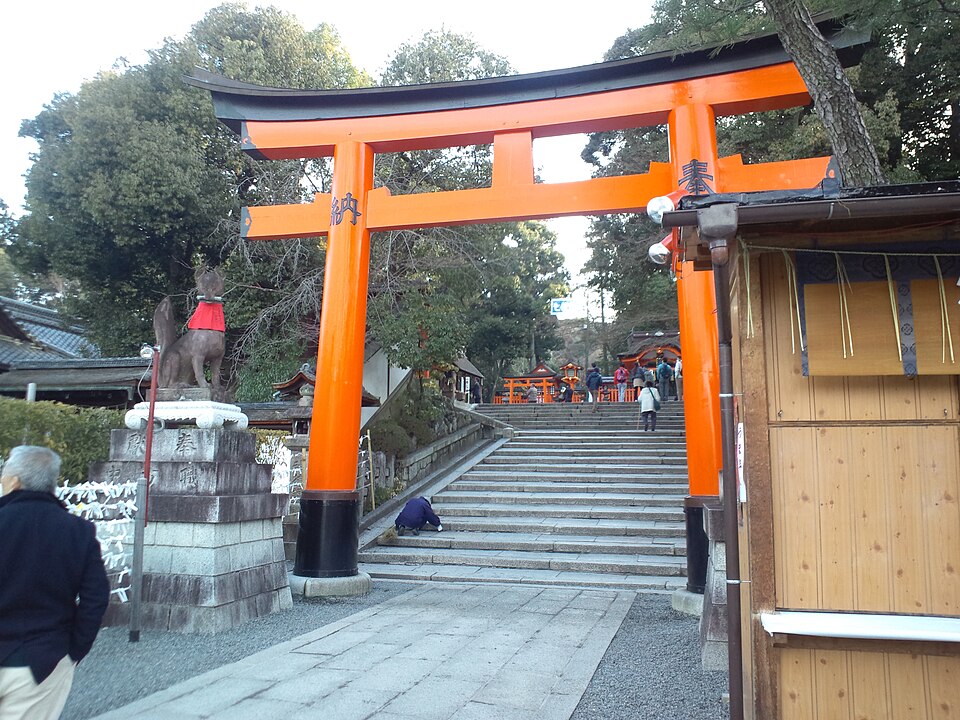
Photo: Yanajin33 / Wikimedia Commons · CC BY-SA 4.0. Resized; original composition retained.
Choose how far you want to walk
You can enjoy a visit without making the summit your goal. Start with the main shrine and the gate passages, then decide whether a longer walk suits the weather, your energy and the rest of your day.
Use the official grounds map to understand the route before continuing. Remember that 233 metres is the mountain’s elevation, not a measure of how much climbing remains from wherever you are standing. Steps and slopes call for comfortable footwear and time to return at your own pace.
There is no need to turn the visit into a distance challenge. You might prefer an unhurried look at a smaller area, with enough time to notice the stonework and the spaces between buildings. Choose a walk you can enjoy all the way back.
A few ways to visit thoughtfully
The shrine publishes requests for visitors that are useful to read before arriving.5 In particular:
- Keep the paths moving. Avoid blocking narrow passages for photographs, and give worshippers room to pass.
- Follow photography restrictions. Some places prohibit photography, and the shrine separately restricts commercial photography.
- Use designated rest areas for food and drink. The shrine asks visitors not to eat or drink while walking or standing elsewhere in the precinct.
- Leave the grounds as you find them. Stay out of restricted areas, do not place belongings on sacred structures and take your rubbish away.
A photograph is worth keeping when the moment works naturally. If people are waiting behind you, move on and look again farther along. The shared experience matters more than arranging a scene around the camera.
Getting to Fushimi Inari
The main approach is immediately outside JR Inari Station on the Nara Line. Keihan’s Fushimi-inari Station is another option, with the shrine about a five-minute walk to the east. The shrine recommends public transport because parking is limited and the surrounding roads can be busy.6
Check the current train service for the station you plan to use, and allow a little time after arrival to get your bearings. You can begin with the gates that brought you here, then follow your curiosity towards a fox, a small shrine or a path you had not noticed in the photographs.
Sources & further reading
- Fushimi Inari Taisha: official introduction — foundation, Inari worship and the shrine’s role.
- Fushimi Inari Taisha: frequently asked questions — fox messengers and the meaning of vermilion.
- Fushimi Inari Taisha: Senbon Torii — the tradition of donating gates.
- Fushimi Inari Taisha: Inariyama — the mountain, sacred sites and otsuka stones.
- Fushimi Inari Taisha: requests to visitors — conduct and photography restrictions.
- Fushimi Inari Taisha: access — railway stations and travel guidance.
Check the shrine’s current notices and local signs when visiting. The photographs are archival views, with dates given in the captions; they do not indicate current crowd levels or access conditions. Images have been resized to 960 pixels wide without cropping and retain the licences linked below them.





Comments