Anime Pilgrimage · Asakusa, Tokyo
Demon Slayer in Asakusa: A Walk Through Tanjiro’s Tokyo
Follow the story into Tokyo, then discover the layers of a real neighbourhood: a great red gate, a lively temple approach and open views across the Sumida River.
ANIME & FANDOM · 5 MIN READ
For Tanjiro, Asakusa is a startling encounter with the city.
The official synopsis of Demon Slayer: Kimetsu no Yaiba’s eighth episode places his next mission in Asakusa, where the bustling Taisho-era streets overwhelm him before he senses a demon nearby.1 That moment gives fans a compelling reason to visit a part of Tokyo already full of its own stories.
Today, you can arrive by subway, pass beneath Kaminarimon and follow the temple approach towards Sensoji. The walk below combines the confirmed Asakusa setting with nearby sights chosen for a present-day visit. Allow a relaxed half-day for the temple district, a break and the river, with room for whatever catches your attention.
Kaminarimon: start with a little time travel
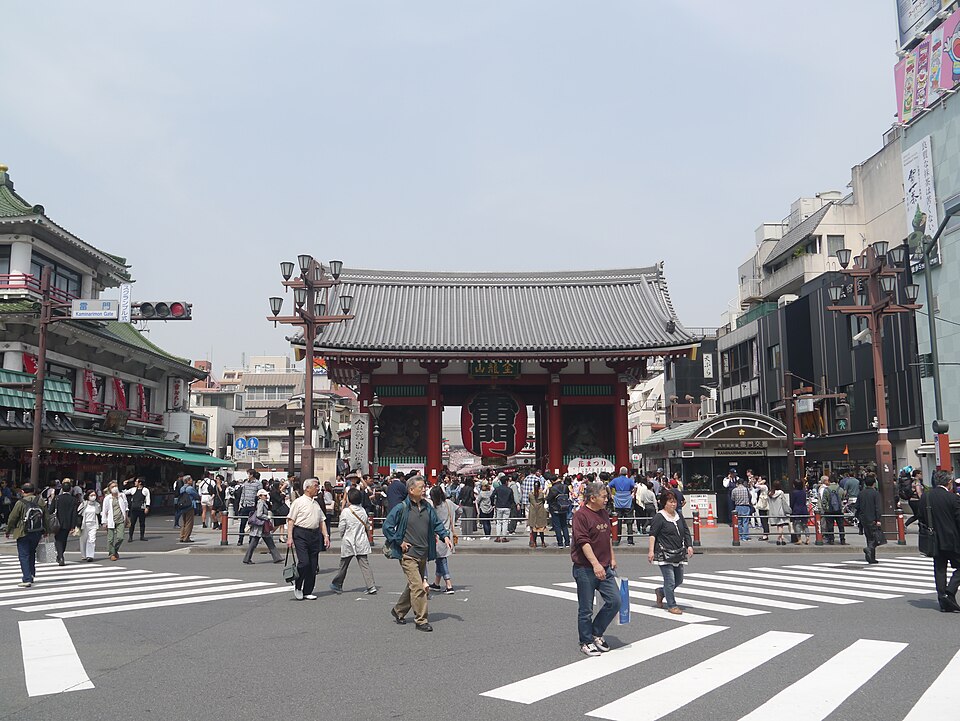
The enormous red lantern makes Kaminarimon an easy meeting point. Look beyond it to the figures of Fujin and Raijin, the wind and thunder gods who guard Sensoji.2 From the street, the gate gives the temple approach a clear beginning.
There is an intriguing detail for anyone imagining Tanjiro’s time. Sensoji’s own history records that the gate burned down in 1865 and was rebuilt in 1960, with support from Konosuke Matsushita. The familiar gate standing here today therefore came after the story’s Taisho-era setting.2
That history adds something to the visit. Asakusa has been repeatedly rebuilt, and its most recognisable landmark is part of that continuing life. Take your photograph from a position that leaves the entrance clear, then walk through and let the shopping street draw you onwards.
Nakamise: the city at the pace of a shopfront
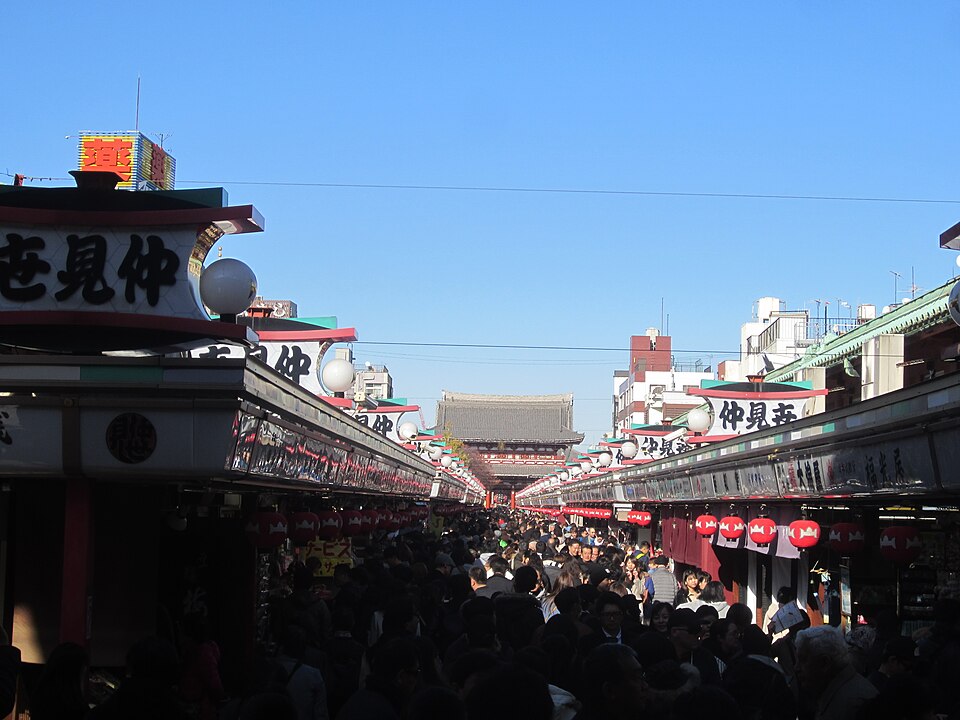
Nakamise fills roughly 250 metres of the approach between Kaminarimon and Sensoji with shops selling souvenirs, toys, snacks and other goods.3 It is a good place to slow down: compare small objects, study a display and choose one thing you actually want to remember.
The Japan Tourism Agency traces the street’s growth to the increasing numbers coming to Asakusa for worship and entertainment. It also describes the red-brick shops of the Meiji era, their destruction in the 1923 earthquake, and later rebuilding after wartime bombing.3 The commercial energy has a long history, even as the buildings have changed.
The November 2019 photograph below shows the street full of people, with Hozomon’s roof ahead. When you stop to browse, step out of the main flow and give other customers room. Check the opening information for any particular shop you want to visit. If you buy something to eat, use the place indicated by the seller and keep the walkway free.
Sensoji: give the temple its own time
Continue through the approach to Sensoji, a temple devoted to Kannon, the bodhisattva associated with compassion. The temple describes itself as Tokyo’s oldest. Its present Main Hall was completed in 1958 after the earlier building was destroyed in the 1945 air raid.2
The scale changes as you emerge from the line of shops. Look up at the broad roof, notice the space around the hall and allow people coming to pray a clear path. Follow posted photography instructions and put the camera away where requested.
An anime-led visit can leave room for this independent history. You may have come because a character once entered Asakusa; spending a little time here reveals why people have been drawn to the district across many different generations.
See the neighbourhood from above
On the way back towards Kaminarimon, consider the Asakusa Culture Tourist Information Center across the road. Taito City lists a free eighth-floor observation terrace with views over Asakusa and towards Tokyo Skytree. The centre also provides tourist information in English.4
This is a useful pause before changing direction. From above, the route through the district becomes easier to understand. Check the centre’s current opening information, especially if you want to use the information desk as well as the terrace.
The Sumida River: open out the afternoon
Head east towards the Sumida River and Azumabashi Bridge. Sumida Park extends along both banks, with paths and views towards Tokyo Skytree.5 After the tightly framed temple approach, the water gives your eyes somewhere wider to travel.
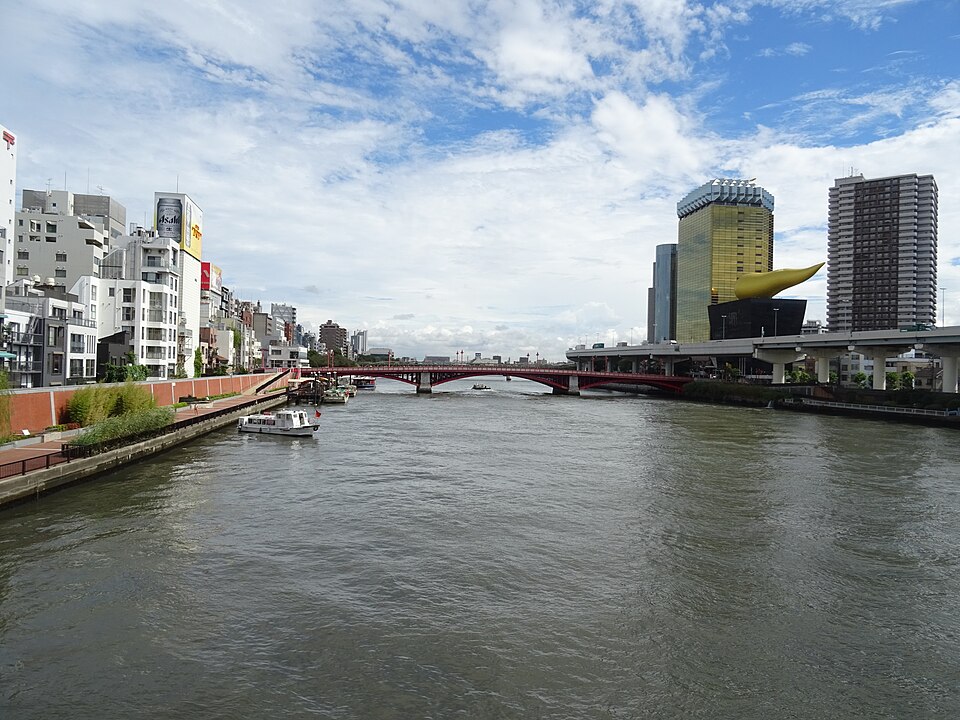
For a short extension, stay on the Asakusa side and stroll beside the river. The photograph below looks north from nearby Komagata Bridge, showing Azumabashi and the modern skyline beyond. It records the wider neighbourhood in 2018; the river section is included for the pleasure of the walk, rather than as a claimed anime scene.
Keep this part flexible. A bench and a drink may be all you want after a busy morning. You can also save the riverside for another visit if the weather turns or the temple district holds your attention longer than expected.
A simple plan for your visit
Asakusa Station on the Tokyo Metro Ginza Line is G19. The operator’s station page includes maps and access information, useful when choosing an exit or checking an accessible route.6
- Begin at Kaminarimon: look at the gate and its guardians before entering the shopping street.
- Continue along Nakamise to Sensoji: leave time for browsing and visiting the temple without rushing either.
- Pause near the gate: take a proper food break and add the tourist centre’s terrace if it fits your day.
- Finish beside the river: head towards Azumabashi, then choose a short riverside stroll before returning to the station.
Asakusa works well when you let the story guide your curiosity. The gate’s rebuilding, the changing shops and the skyline across the water all add chapters to a place that has continued moving since the world Tanjiro encountered.
Sources & image notes
- Demon Slayer: Kimetsu no Yaiba official English website — Episode 8 synopsis. Confirms the Asakusa setting.
- Sensoji — official temple history and guide to its buildings.
- Japan Tourism Agency — Nakamise Shopping Street. Used for historical context and the temple approach.
- Taito City — Asakusa Culture Tourist Information Center facilities (Japanese; updated March 2026).
- Japan National Tourism Organization — Sumida Park.
- Tokyo Metro — Asakusa Station, G19.
Information checked on 25 October 2026. The half-day walk is an editorial suggestion. Photographs show real places in 2018 and 2019, and are not anime stills or reconstructions of Taisho-era streets. Credits and licences appear beneath each image. Consult the linked facilities for current opening hours and visitor arrangements. This is an independent travel article.





Comments