Food & Everyday Tables · Real Life in Japan
Why Do Japanese Restaurants Display Fake Food?
Inside shokuhin sampuru, the craft that helps people choose a meal before they step through the door.
By Maki Kakudate · 6 minute read
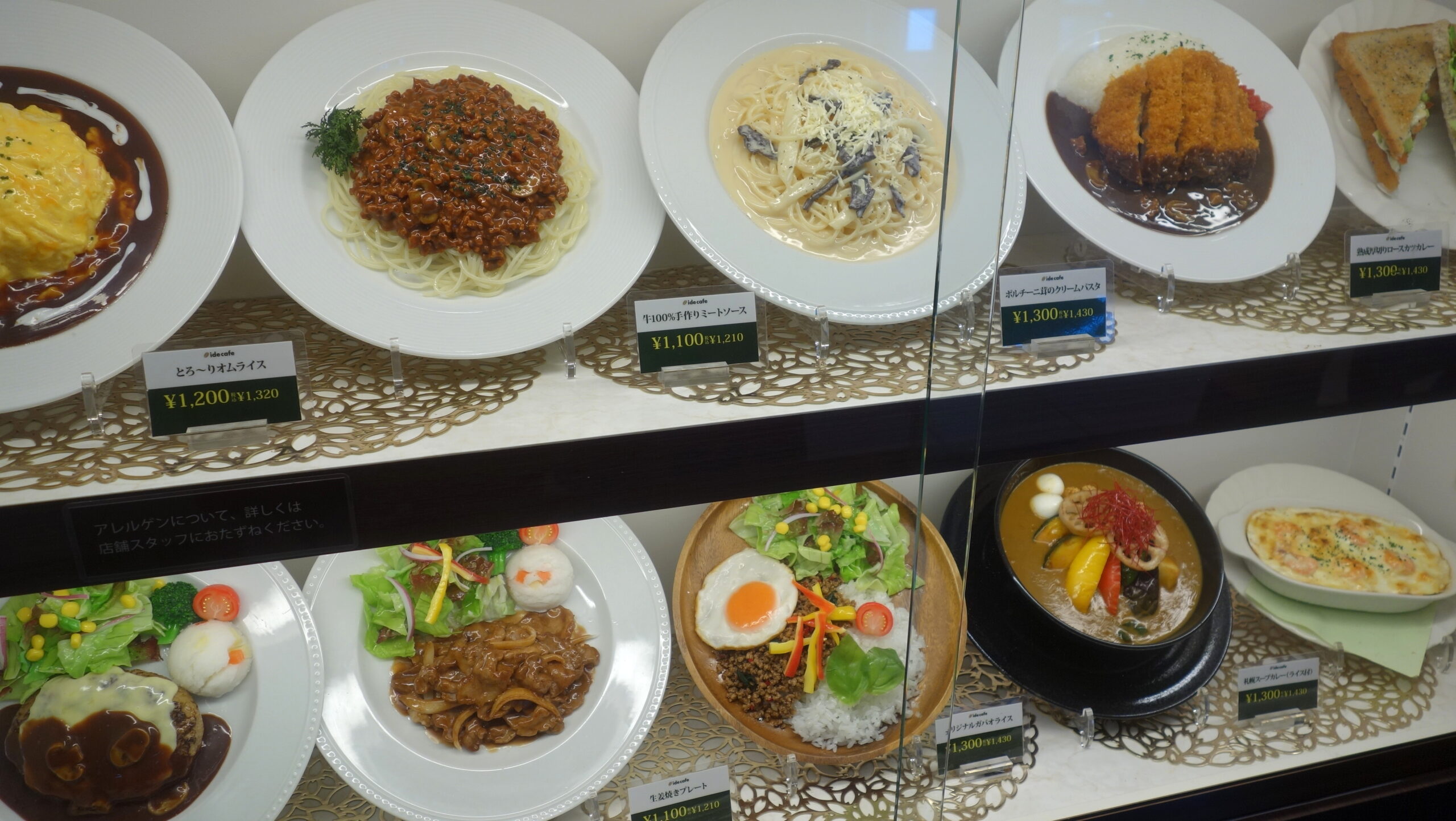
A bowl of noodles keeps its shape all afternoon. A parfait holds its layers, its cream never softening. Behind the glass, lunch appears permanently ready.
These are shokuhin sampuru—食品サンプル, or food samples: inedible models made to show what a restaurant serves. For a visitor encountering them for the first time, the illusion can be the main attraction. You look twice, then move closer.
The replicas have a practical job, too: helping people decide where to eat before they step inside.
A meal you can see before you sit down
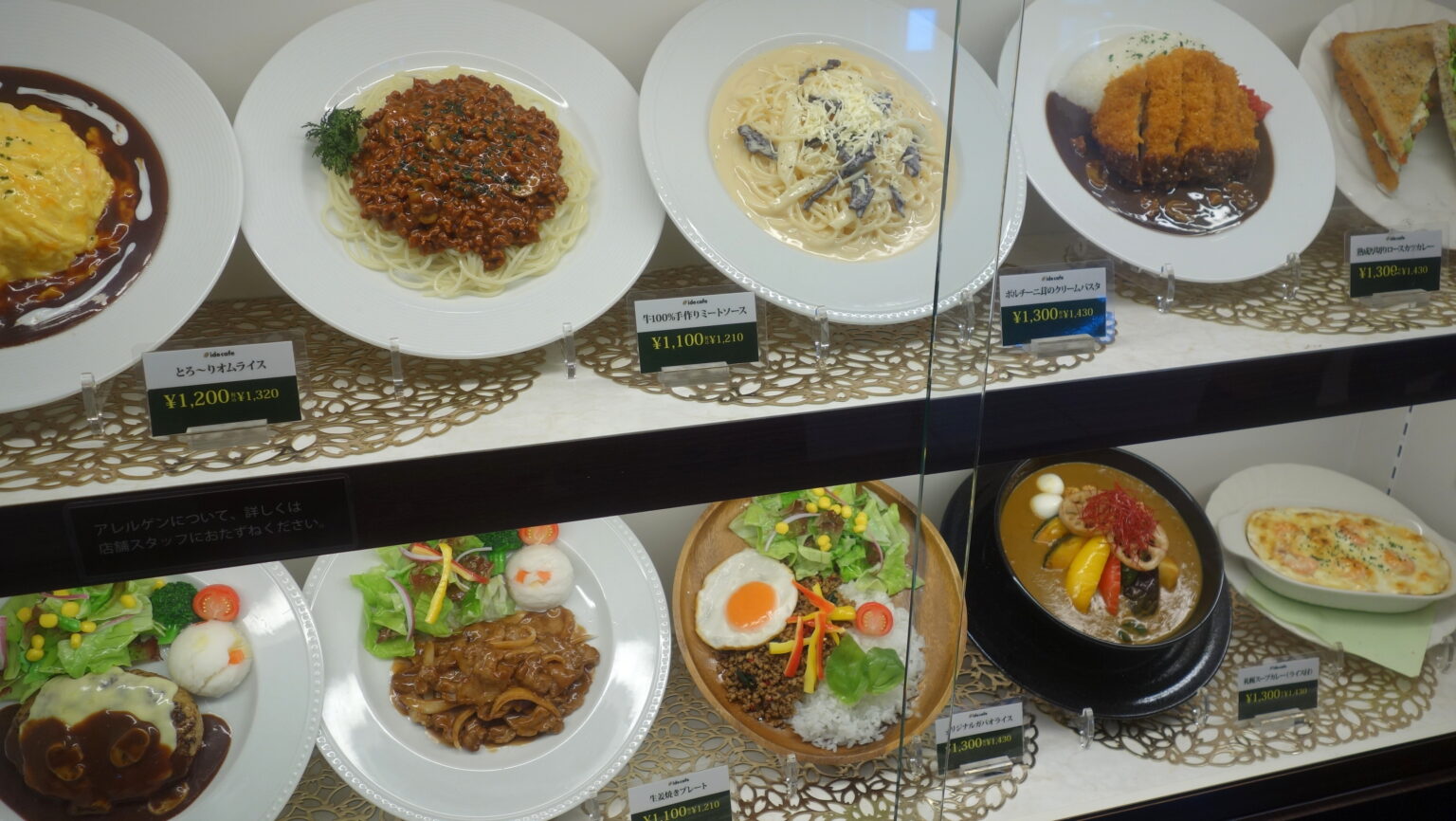
A dish’s name leaves some things to the imagination. A model can show the arrangement of a set meal, the toppings on a bowl of noodles, or the size of a dessert beside its neighbors. A price card adds another part of the decision.
For someone reading an unfamiliar menu, that information can make entering a restaurant feel easier. It can be useful even when language poses no difficulty: perhaps you want a small lunch, or need to see the choices together before deciding.
The manufacturer Iwasaki Be-I treats the whole display as part of this communication. Its guidance for restaurants covers lighting, cleanliness, the angle of the dishes and cards explaining the food and its price. The model works with its surroundings to make the offer understandable.
A modern answer to unfamiliar food
The history belongs to a period when eating out in Japan was changing. Japan House London’s exhibition guide on food replicas describes early examples in several cities, including models made for Shirokiya’s temporary dining hall in Tokyo in 1923.
Department-store dining halls introduced customers to a wide range of dishes, including unfamiliar food from overseas. Displays helped Japanese diners understand what they could order; in some dining halls, customers looked at replicas and price cards before buying meal tickets.
Takizō Iwasaki became a pivotal figure in building the business. His company’s timeline records its foundation in Osaka in 1932. Earlier makers were already experimenting with food models, and the Japan House guide distinguishes Iwasaki’s commercial achievement from the invention of the replicas themselves.
The familiar window display grew out of that relationship between new food and new customers. Its usefulness to overseas visitors today continues a much older task: making an unfamiliar meal easier to picture.
First, prepare the real dish
A convincing model begins with close attention to the food it represents. Iwasaki’s ordering guide offers a glimpse of how a commission can work.
The restaurant prepares a sample dish. It is photographed, and its size and the height of the arrangement are measured and sketched. The maker then takes the dish away, together with its tableware, to use in preparing the replica.
The restaurant’s own presentation guides the model: the height of a topping, the position of the sauce and the way the food fills the plate.
Some components can also come from standard stock, as the Japan House guide explains. A finished display can combine repeatable parts with the attention needed to represent a particular dish.
How resin becomes lunch
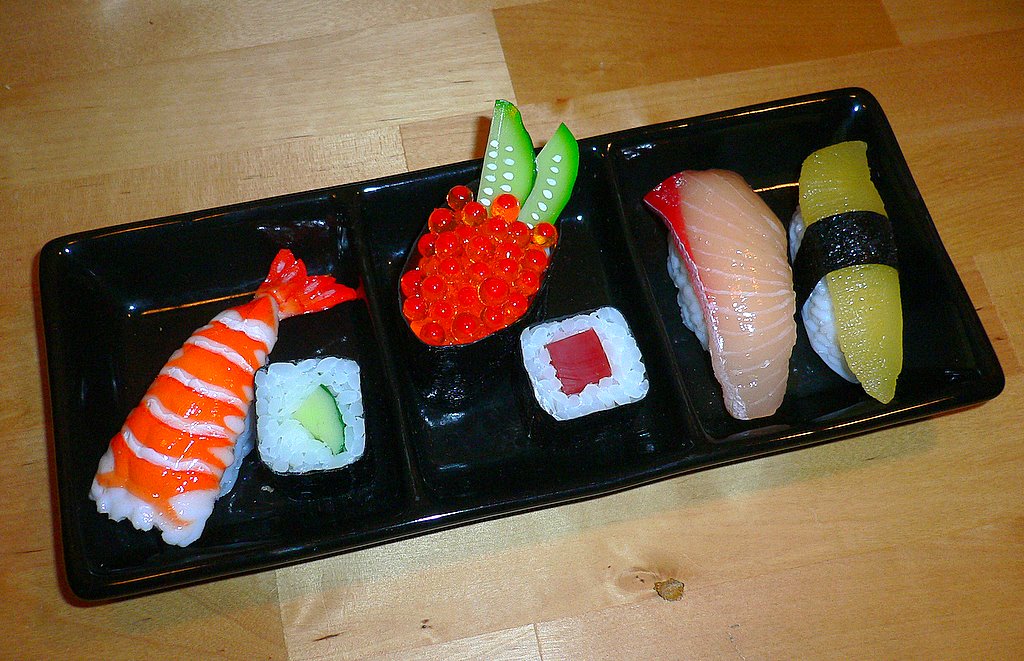
Early replicas used wax. Iwasaki Be-I explains that most modern food samples use resin, which addresses wax’s vulnerability to sunlight and durability problems. The lifelike appearance comes from several stages of careful work.
In the company’s published production process, silicone is poured around real ingredients to capture the uneven surfaces. Colored resin goes into the resulting molds and is heated until it sets.
Once the pieces are removed and trimmed, color is added with airbrushes and brushes, using photographs of the food as a reference. The components are then positioned and glued in place according to sketches and photographs. A final gloss completes the surface.
A mold supplies a shape. The coloring and arrangement give that shape the details a diner will recognize: a browned edge, a glossy sauce, the contrast between one ingredient and the next.
A workshop town, and an older material
The industry also has a local story. Iwasaki was born in Gujō Hachiman, in Gifu Prefecture. After establishing his business in Osaka, he opened a factory in his hometown in 1955. Iwasaki Mokei’s account describes how employees who learned within the group later established their own businesses, helping food-sample production take root in the area.
At Sample Village Iwasaki, visitors can try making tempura and lettuce replicas with wax. The experience offers an introduction to an older technique, while many restaurant displays now use resin.
The contrast is easy to miss when all the finished pieces sit behind glass. Learning how they are made gives the ordinary restaurant window another dimension: the work of people whose names a diner may never know.
The look of something you want to eat
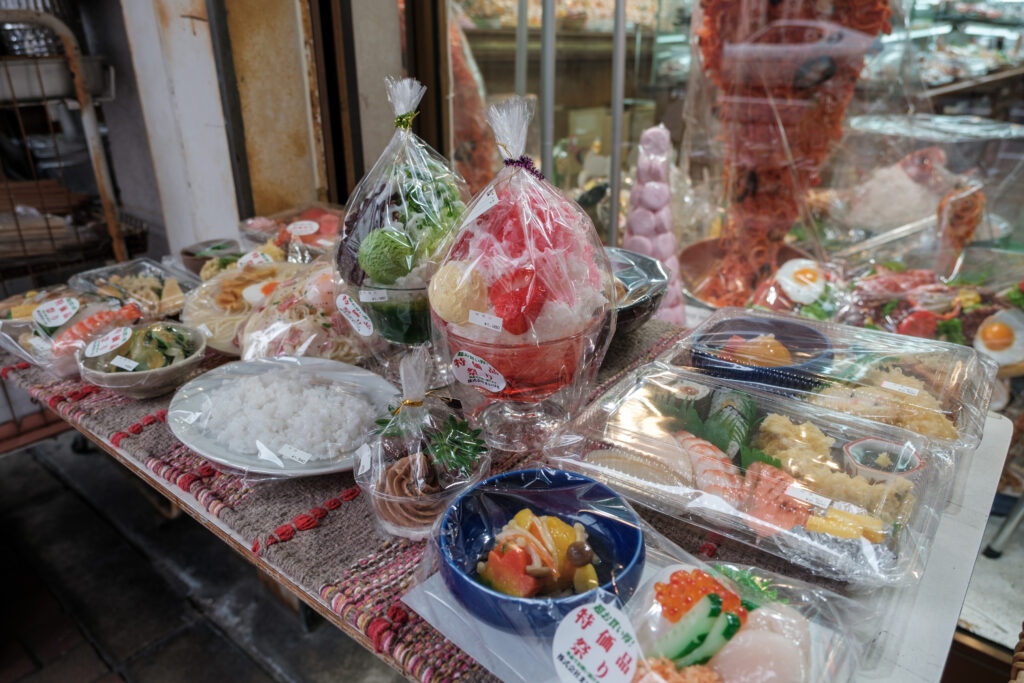
Accuracy is only part of the craft. Japan House London describes how makers also work with remembered impressions of food. A color can suggest a fruit at the ripeness someone enjoys; a carefully emphasized texture can bring a familiar ingredient to mind.
Iwasaki Mokei similarly explains that its makers consider lighting and viewing angles when trying to convey a dish at its most appetizing moment. This is a commercial art, shaped by the wish to make somebody hungry.
That helps explain the pleasure of looking. A model gives the imagination something to work with. The shine of a sauce or the layers of a parfait can suggest a taste before any food has arrived.
The small decision at the door
A restaurant window lets a person pause. You can compare dishes, point something out to a companion, or take a little longer over a choice. The display turns part of the menu into a shared view.
Food samples are one way a restaurant can make that moment easier. Like the entrance curtains explored in our story about noren, they help give the doorway its character.
The maker studies a dish’s shape, color and shine so that someone outside a restaurant can picture the meal. All that careful work becomes part of an ordinary decision: where to have lunch.
Sources & further reading
Researched from official exhibition materials and manufacturers’ published accounts. Sources checked on 17 October 2026; photographs are dated in their captions.
- Japan House London: Looks Delicious! exhibition guide — early makers, department-store dining and production practices.
- Iwasaki Be-I: company timeline and food-sample background and display guidance.
- Iwasaki Be-I: how to commission food samples — photographs, measurements and the restaurant’s own dish.
- Iwasaki Be-I: the production process — molds, resin, coloring and assembly.
- Iwasaki Mokei: company history and approach — Gujō Hachiman and the craft of making food look appetizing.
- Sample Village Iwasaki: making food samples — visitor activities using wax.
- Japan House London: the artistry of food replicas — color, texture and remembered impressions of food.
Keep exploring