Real Life in Japan · Behind the Everyday
Why Are Japan’s Vending Machines Disappearing?
Japan still has millions of vending machines, but their numbers are falling. Behind every glowing cabinet are delivery workers, rising costs and decisions about which locations can survive.
LAYERS OF JAPAN · 8 minute read
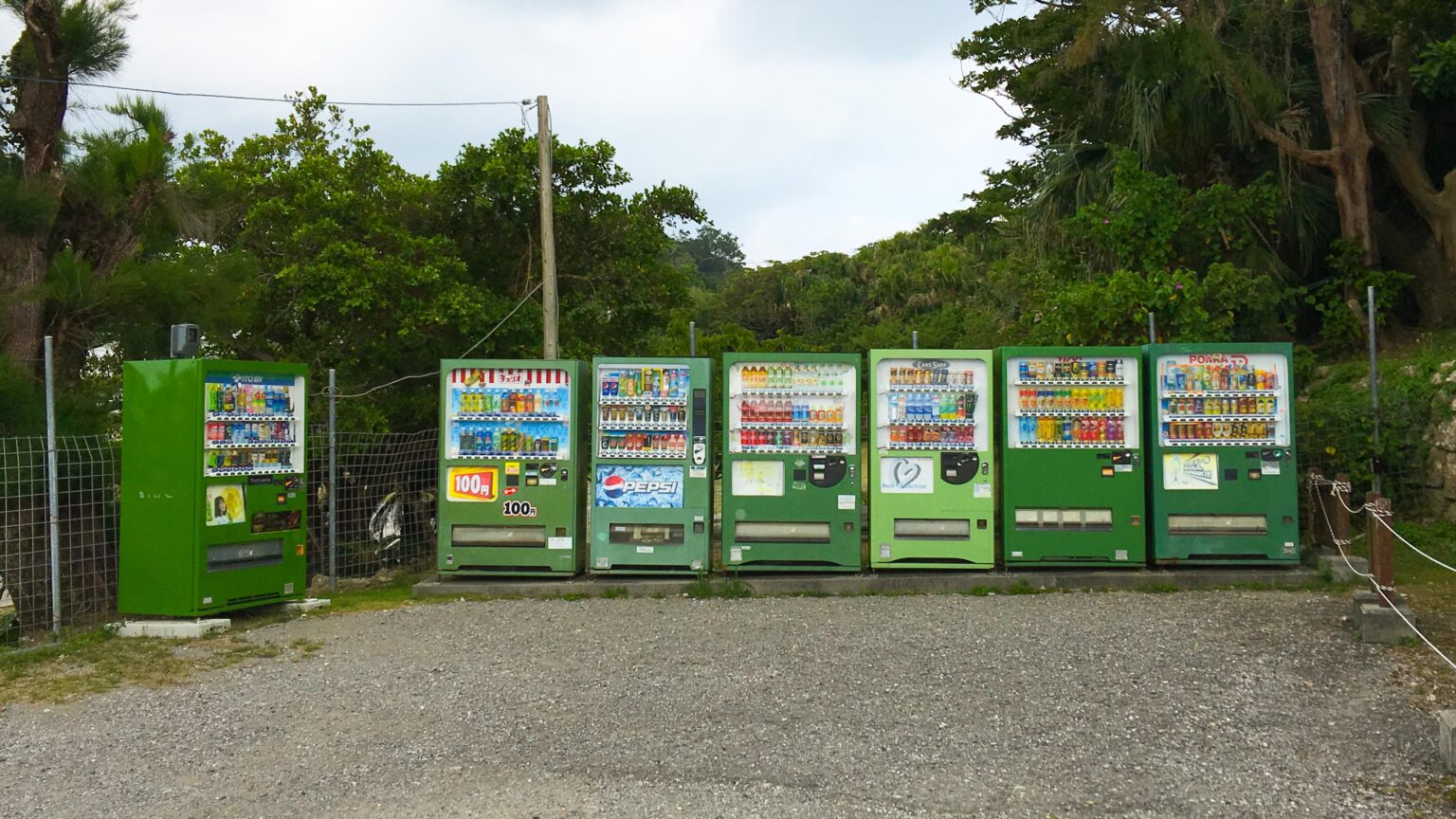
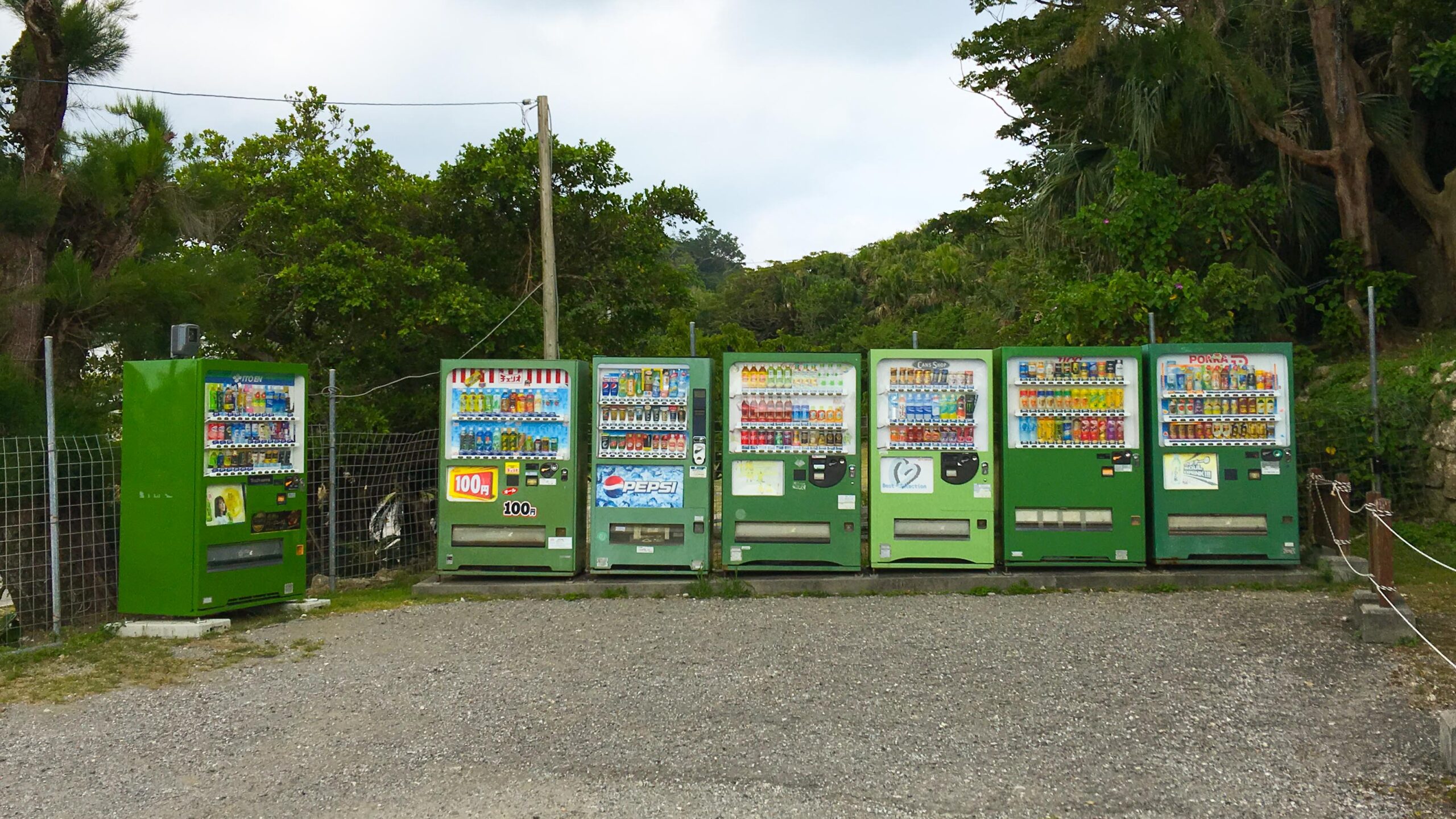
A vending machine stands beside a local road, ready to sell a cold bottle even when nearby shops are closed. From the outside, the arrangement looks effortless. A brightly lit cabinet takes a payment and delivers a drink without a cashier.
Yet someone must drive to that cabinet, replace what sold, keep its equipment working, manage costs and decide whether the location is still worthwhile. If demand weakens or deliveries become more expensive, even a familiar machine may be removed.
Japan’s vending-machine network remains enormous, but the industry is no longer growing without limits. Some machines also contribute to neighborhood safety or disaster preparation, making the decision to keep them more complicated than a simple sales calculation.
This is the less visible side of convenience: the people, costs and changing expectations that determine which machines remain.
For the reasons vending machines became so common, read Why Does Japan Have So Many Vending Machines?
1. Why a Giant Network Is Beginning to Shrink
A visitor may see a row of illuminated cabinets and assume the industry is expanding. In reality, the numbers are moving in the opposite direction.
Research published by SOMPO Institute Plus in March 2026 points to increasing competition from convenience stores, supermarkets and drugstores. Customers who are comparing prices can often find cheaper drinks elsewhere. Inflation makes those differences more noticeable.
Operators also face the cost of deliveries, maintenance, energy and replacing older equipment. Beverage manufacturer DyDo publicly identifies shortages of route-operation staff as a significant challenge, and equipment maker Fuji Electric describes pressure to improve operating efficiency as the market contracts.
The consequence is not that every vending machine is disappearing tomorrow. Rather, a location that once made sense may stop making sense when sales fall or the cost of restocking rises.
The more useful question is no longer only “Why are there so many?” It is “Which machines are still worth keeping—and for whom?”
2. The Invisible People Who Keep the Machines Full
Now imagine the same vending machine with its door open.
Instead of glowing product samples, there are racks, wiring, payment equipment and an inventory of heavy bottles and cans. Someone has to know what has sold, what needs replacing and which products customers will actually buy next week.
A route operator may load a vehicle, drive between locations, replenish drinks, collect cash where necessary, check change, clean the machine, respond to faults and record stock. The work is not eliminated by the self-service screen at the front. Much of it has simply moved behind the scenes.
In its published account of operational reform, beverage company DyDo describes the old model as one in which route staff checked inventory, prepared and replenished products, collected proceeds and cleaned machines. The company has introduced systems that use sales data to plan replenishment and visits more efficiently.
That is an unusually revealing detail. When a drink appears at the press of a button, the convenience has a human supply chain attached to it.
If the driver cannot be hired, the location is too far from the delivery route, or sales cannot cover repeated visits, keeping the machine in place becomes harder. Labor shortages matter even to businesses whose most visible feature is the absence of a cashier.
3. The Little Address Label You Might Never Notice
There is a curious detail hidden in some of Japan’s ordinary drink machines: an address sticker.
The Japan Soft Drink Association explains that the industry began an initiative in 2005 to place location information on machines. A person who is lost or needs to tell emergency services where they are may be able to use such a label as a reference.
It is a modest design decision, but it shows how the street-facing cabinet can be treated as part of the neighborhood’s infrastructure, not merely as an advertising surface.
It would be a mistake to rely on the sticker as an emergency system by itself. But the detail makes the familiar machine look a little different: behind the product display is a fixed point in the city, with an address and people responsible for keeping it operating.
4. When a Vending Machine Becomes Part of a Disaster Plan
Some machines have an even more surprising secondary function.
Certain disaster-response vending machines can provide beverages without payment when designated conditions are met and authorized people activate the system. Some are designed to operate in a power outage using special equipment or backup power.
The coastal city of Zushi, in Kanagawa Prefecture, documents agreements with beverage companies allowing drinks to be supplied to residents during disasters. Its municipal guidance explains that staff or facility managers control the required keys or mechanisms.
The important word is some. An ordinary vending machine will not automatically offer free drinks whenever an earthquake strikes. Emergency access depends on a particular machine’s capabilities, agreements, local procedures and available stock.
Still, the possibility is revealing. A machine already installed in the neighborhood can serve an emergency role if people make arrangements in advance.
5. The Environmental Cost Behind the Glow
A cold drink from a glowing box may be convenient, but cooling and heating products, illuminating displays, transporting stock and producing containers all use resources.
The industry has introduced technologies to reduce the energy needed for each machine. The Japan Soft Drink Association describes heat-pump systems that reuse heat from cooling products, selective heating and cooling, insulation, and controls for lighting.
It reports that annual electricity use per newly shipped can-and-bottle machine fell by about 77% by 2015 compared with the 1991 benchmark. That is a specific comparison of machine technology, not proof that vending has no environmental impact today.
The drinks themselves generate packaging, and the machines have to be manufactured, maintained, replaced and eventually processed as waste. Recycling containers placed nearby are intended for the appropriate beverage containers, not necessarily every piece of litter carried down the street.
Japan’s clean-streets story is connected to the same question: who handles the materials after the convenient moment has passed?
A vending machine solves the problem of getting a drink at the point of purchase. It does not make the wider environmental questions disappear.
6. Fewer Machines, Smarter Routes?
Technology may change the way the remaining machines work. Instead of sending a driver to discover that only a few bottles sold, operators can use sales information and demand forecasts to decide which locations need attention.

DyDo describes a “Smart Operation” model that separates warehouse product preparation from the on-site visit and uses data to make those visits more efficient. This is the company’s description of its own approach, not a claim that every machine in Japan already has the same system.
Other innovations may make machines more energy efficient or support a wider variety of goods. But none of them entirely removes the need for physical deliveries, responsible ownership and an economically sensible location.
The future could involve fewer machines in low-demand places and more careful investment in those that are useful. For some customers that may mean less instant convenience; for operators it may mean a network that is less expensive to maintain.
There is no reason to assume either outcome is the same for every town or every person.
7. What the Glowing Box Really Tells Us
Return to that quiet street after the shops close. A machine still stands by the wall, its bright rows of drinks offering a small, predictable service.
The first impression is technological: a shop without a shopkeeper.
Look longer and another story emerges. Somebody negotiated for this location. Somebody connected the electricity. Somebody chooses the products and brings fresh stock. Somebody cleans up a fault, manages a route and decides whether the sales justify staying here another year.
That is why Japan’s vending machines are worth noticing—even after their novelty has worn off.
They are not simply symbols of a country that loves convenience. They show how convenience is built, maintained and sometimes quietly taken away.
The machine may be unattended. The system behind it never really is.
Frequently Asked Questions About Japan’s Vending-Machine Industry
Will a vending machine give out free drinks during an earthquake?
Only certain designated disaster-response machines can be activated for free dispensing under applicable local arrangements. Ordinary vending machines should not be assumed to provide free emergency drinks.
Are vending machines in Japan increasing or decreasing?
The combined total has recently declined, including from roughly 3.91 million at the end of 2024 to 3.88 million at the end of 2025. Competition, prices, staffing and operating costs are important factors.
Who keeps Japan’s vending machines stocked?
Route-operation staff and beverage-company partners replenish products, check machines and respond to issues. Operators increasingly use sales data to decide which machines need attention.
Will Japan’s vending machines all disappear?
No such conclusion follows from recent trends. The installed total has been declining, but machines remain useful where demand, accessibility and delivery costs make a location viable.
Sources and Further Reading
The references below document Japan’s vending-machine industry, staffing challenges, energy use and disaster-response arrangements.
- Japan Vending System Manufacturers Association (JVMA), Vending-machine data and annual installed figures: https://jvma.or.jp/information/information_3.html
- SOMPO Institute Plus, Japan’s Era as a Vending-Machine Giant Is Changing (16 March 2026; Japanese): https://www.sompo-ri.co.jp/topics_plus/20260316-22331/
- DyDo Group Holdings, Streamlining Operations — Smart Operation and the Human Side of Vending: https://holdings.dydo.co.jp/en/sustainability/innovation/work/
- Fuji Electric, Food and Beverage Distribution — Market Trends and Business Opportunities, Fuji Electric Report 2026: https://www.fujielectric.com/ir/library/detail/ar2026_segment_04_e.html
- Japan Soft Drink Association, Energy-Saving Technologies for Vending Machines (Japanese): https://www.j-sda.or.jp/vending-machine/energy_saving.php
- Japan Soft Drink Association, Annual Electricity Consumption Trends (Japanese): https://www.j-sda.or.jp/vending-machine/power_consumption.php
- Japan Soft Drink Association, Social Contributions of Beverage Vending Machines (Japanese): https://www.j-sda.or.jp/vending-machine/social_contributions.php
- City of Zushi, Disaster-Response Vending Machines (updated 13 June 2025; Japanese): https://www.city.zushi.kanagawa.jp/kurashi/bosai/1001502/1001521/1001523.html
- Japan Soft Drink Association, Vending Machine Q&A and Contact Stickers (Japanese): https://www.j-sda.or.jp/learning/qa/qa04/qa04.php
Editorial note: Figures refer to the end of 2025, not a real-time census. The opening scene is illustrative rather than a reported interview. All photos retain their original credit and licence links in their captions.



Comments