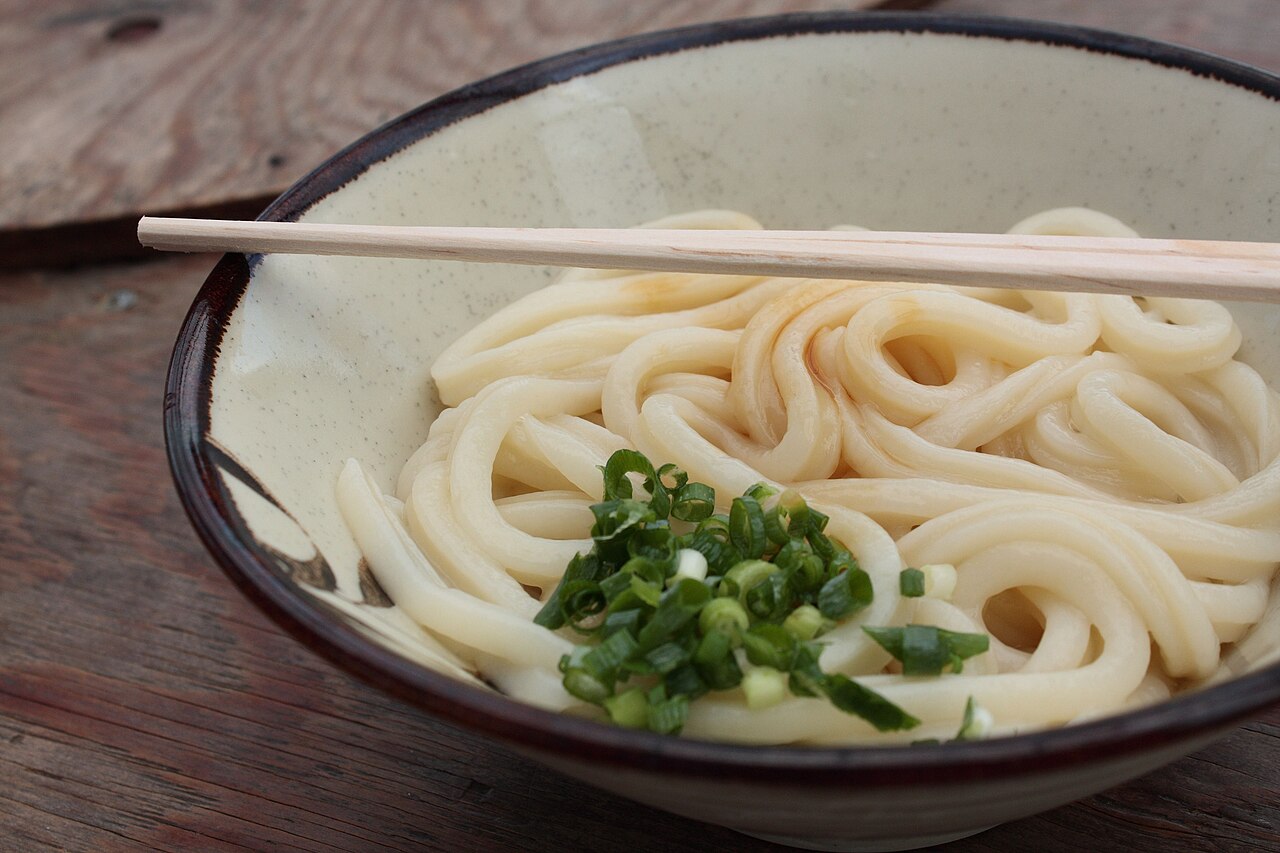
At a Sanuki udon counter in Kagawa, the shortest words on the menu can change the whole bowl. Kake, bukkake and kamaage may all use the shop’s same wheat noodles. They tell you where the liquid goes, what it tastes like and what to do with your chopsticks.
Kake and bukkake: look at the depth of the bowl
Kake udon comes in a generous amount of light, seasoned broth. Try a spoonful or a small sip before adding ginger or scallions. The first mouthful tells you how this shop builds its dashi. In Kagawa, dried small fish called iriko are closely associated with that flavour, though each shop has its own blend.
Bukkake comes with a smaller amount of more concentrated sauce poured over the noodles. A dish listed as cold can make the noodles’ firmness especially easy to notice. Toss a few strands through the liquid at the bottom rather than expecting the bowl to be full of soup. Some shops let you choose a warm version too.
Kamaage: the bowl and the dipping cup do different jobs
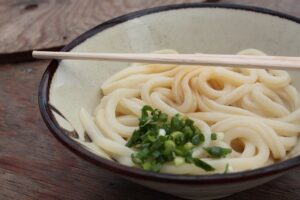
Kamaage noodles come straight from the cooking pot, usually in hot water. The seasoned dipping liquid is served separately. Lift a few noodles, move them to the small cup, dip and eat. That large bowl of water is keeping the noodles warm.
At a self-service shop, make the noodle decision first. The tempura on the side counter is a second decision. Plain kake with a piece of tempura on its own plate lets you taste the broth before any batter softens in it. On a second visit, order bukkake or kamaage and compare what changed even though the noodles came from the same kitchen.
Read next · Ramen in Japan: Finding Your Favourite Bowl
Sources and visitor information
Lead image · sekido · Wikimedia Commons · CC BY 2.0


Comments