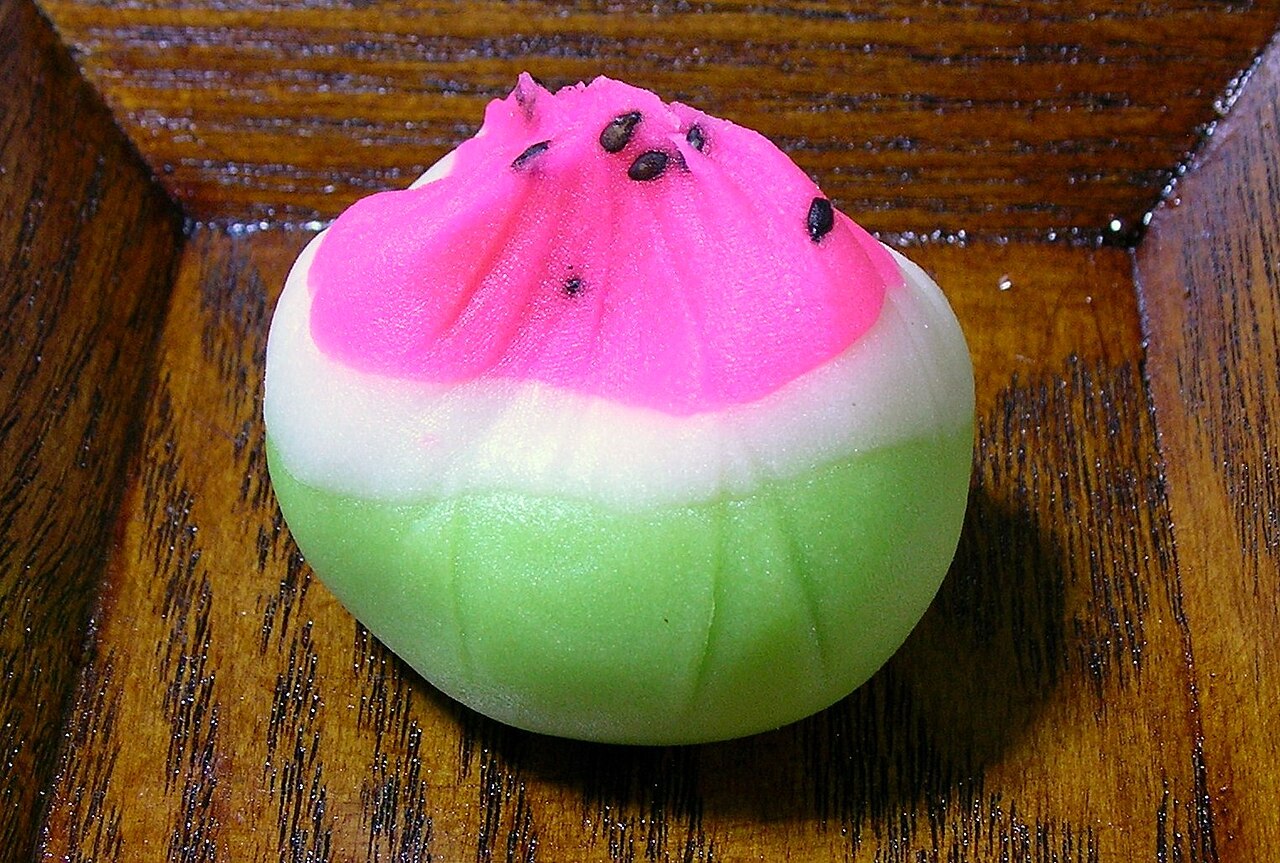
A sweet in a Japanese confectioner’s case may tell you what time of year it is without tasting of the thing it depicts. A tiny watermelon can be made from bean paste. A flower may suggest a few days in spring rather than the flavour of a particular fruit. Nerikiri asks you to read a shape before taking a bite.
Look for the one detail that makes the season
Nerikiri is a soft confection shaped from a workable paste, typically based on white bean paste. A maker can tint and sculpt the surface, sometimes around a separate filling. Look at the edge of a petal, a change from pink to white or a line suggesting a rind. Often just one detail makes the subject legible.
Try this at the display case: choose one piece without reading its name, guess the motif, then check the label. A Japanese confection may be named for a scene or a poetic association. The name can change what you see, even if you do not know every ingredient. Ask separately about flavour or ingredients if either matters to your choice.
A souvenir and a tea sweet make different journeys
In a shop that also sells higashi, compare the soft shapes with the dry sweets beside them. A pressed dry sweet can reproduce a crisp line from a mould. Soft nerikiri offers another kind of surface, one on which a tool or fingertip can suggest a fold in a flower.
For a train journey, tell the shop when you plan to eat your purchase and follow its storage and use-by instructions. For a tea break nearby, order one piece and spend a moment with it on the plate. Turn it once. The most convincing petal may be on the side that faced away from the glass.
Read next · Reading a Sweet Backwards in Kanazawa’s Museum of Wooden Moulds
Sources and visitor information
Lead image · Nightshadow28 · Wikimedia Commons · CC BY-SA 3.0


Comments