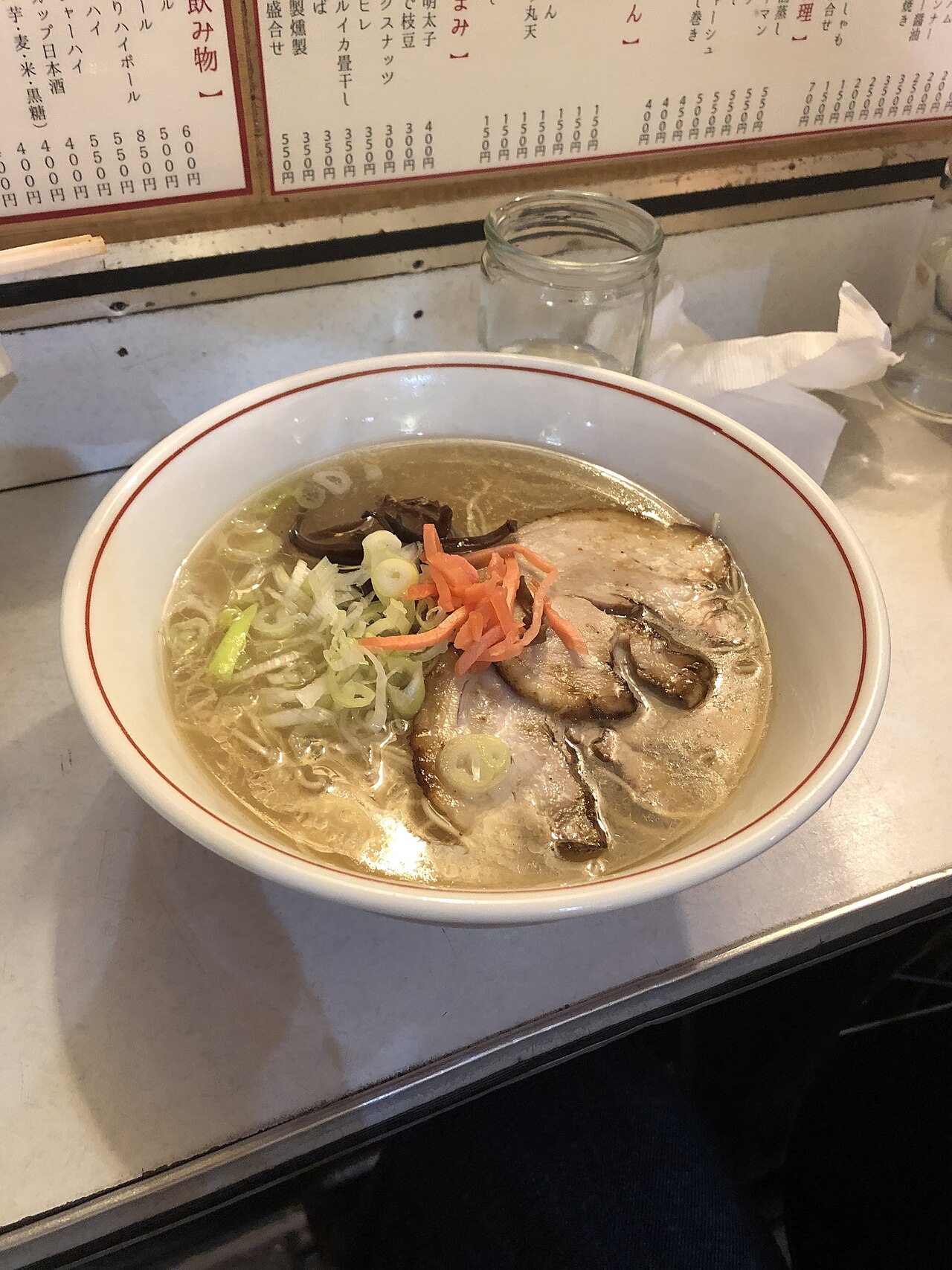
Hakata tonkotsu and Sapporo miso are two famous ramen orders, but their names describe different parts of a bowl. Tonkotsu points to pork bones used to make stock. Miso names a seasoning. That distinction explains why the labels on a ticket machine do not always divide ramen into mutually exclusive families.
In Hakata, leave some soup for the noodles to come
A characteristic Hakata bowl has a pale pork-bone soup and thin, straight noodles. Lift a small bundle early and notice how quickly those narrow strands carry the broth. Many shops ask about noodle firmness. If you want the shop’s ordinary version, futsū, or regular, is a useful answer.
Kaedama is an extra serving of noodles for the soup still in your bowl. If the shop offers it, order while you have enough soup left and follow its payment system. Ordering a separate bowl of ramen brings a whole new dish. Ordering kaedama usually brings noodles. It is a small difference on the menu and a big difference on the table.
In Sapporo, look at what happens in the wok
Miso ramen is closely associated with Sapporo. At shops using the local wok technique, vegetables are stir-fried as the broth is brought together. A thicker, often curly noodle offers a different chew from a thin Hakata strand. Try the broth with the vegetables before adding anything else.
Butter and corn make a recognisable photograph, but the miso seasoning and the way the kitchen builds the bowl are more useful clues. When visiting both cities, note three things after each meal: what the soup tastes of, how the noodles feel and whether the menu lets you order more of them.
Read next · Ramen in Japan: Finding Your Favourite Bowl
Sources and visitor information
Lead image · Ominae · Wikimedia Commons · CC BY-SA 4.0


Comments