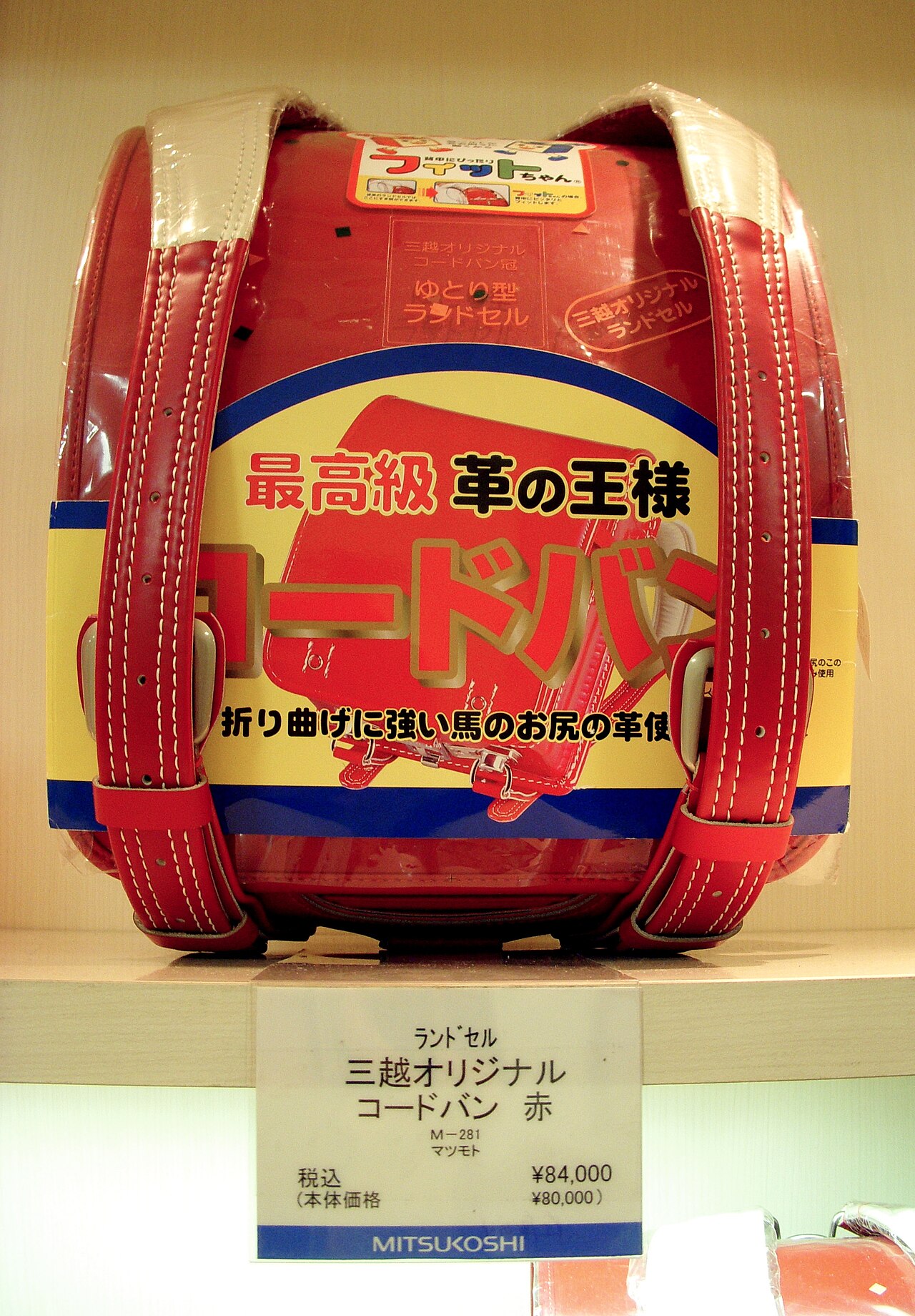
On an April morning in Japan, children with very different schoolbags can look surprisingly alike from behind. Look closely and you may see why: the bright yellow panel is a removable cover over the broad flap of the bag. It is often connected with the first journey to elementary school.
One bag can last much longer than the cover
The familiar box-shaped school backpack is the randoseru. Its flap provides a broad surface for a cover, while the original colour still shows at the sides. Randoseru are designed to carry school materials over the elementary years. The yellow panel can belong to a much shorter chapter: starting first grade.
Local programmes explain why the design can vary between neighbouring cities. In Chofu, Tokyo, FC Tokyo and MIXI donated reflective yellow covers for children entering the city’s municipal elementary schools in April 2025. The design incorporated the football club’s mascot. The cover therefore says something about this particular community as well as the start of school.
Look at the date and the town
Urayasu City in Chiba documented a March 2026 presentation of yellow badges and schoolbag covers for the new first graders arriving that April. The city describes reflective tape on the covers. A badge and a cover are separate items, even when they appear together in a photograph of the ceremony.
These examples are local and dated. A child with a different cover, another kind of backpack or no cover at all does not tell you that a school has different academic rules. If you spot a mascot on a bag in a local exhibition or city newsletter, try identifying the town before identifying the brand. The detail that caught your eye may belong to the community, not the manufacturer.
Read next · Why Does Japan’s School Bag Look Like That? The Story of the Randoseru
Sources and visitor information
Lead image · L. W. Yang · Wikimedia Commons · CC BY 2.0


Comments