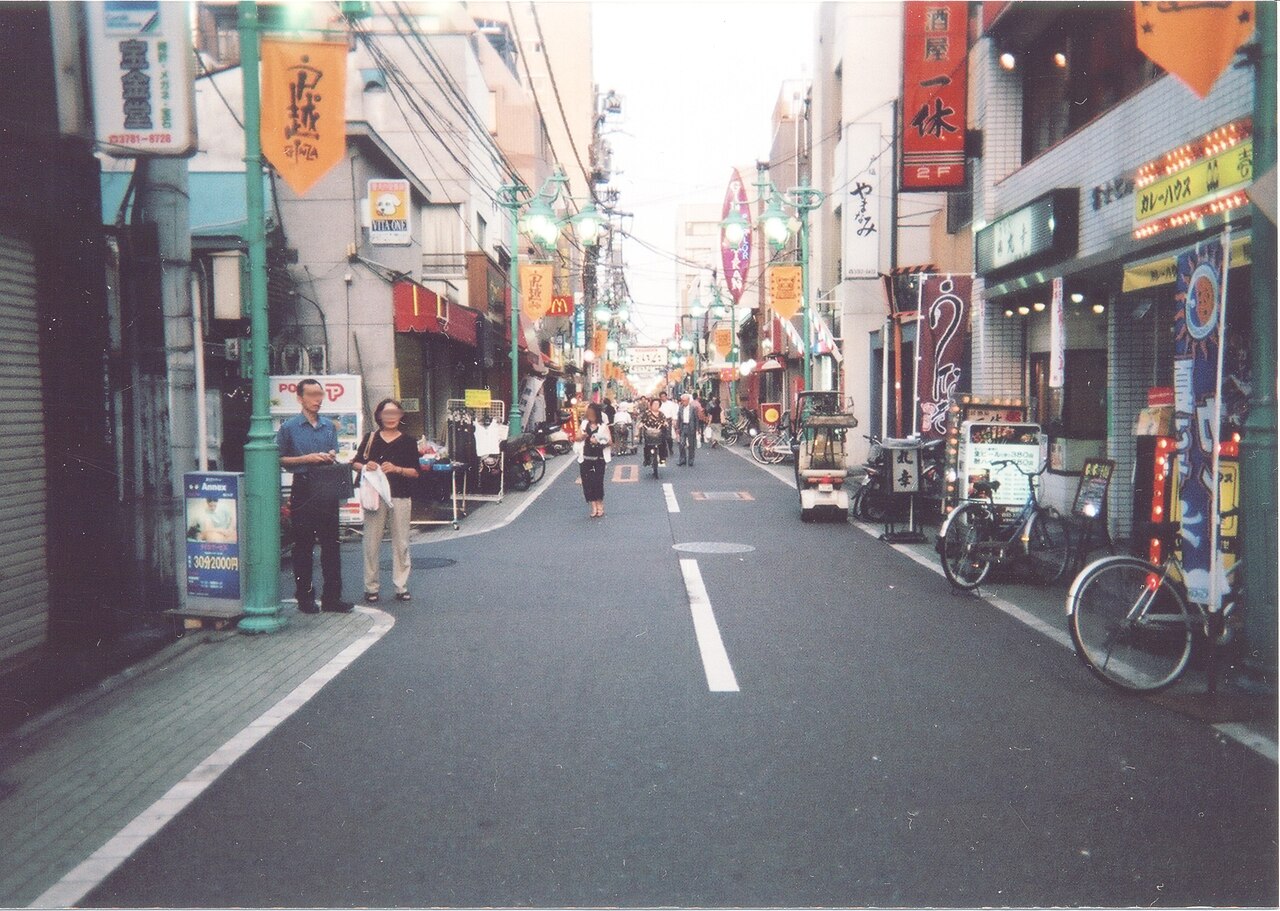
To get to Togoshi Ginza, leave Ginza out of your station search for a moment. The street you want is in Shinagawa, south of central Tokyo. Two stations serve it: Togoshi-Ginza on the Tokyu Ikegami Line and Togoshi on the Toei Asakusa Line. The extra word in the shopping street’s name has a surprisingly physical explanation. Some of Ginza once came here by handcart.
What a muddy street needed from Ginza
In the local merchants’ account, the ground in Togoshi drained poorly. After the Great Kanto Earthquake of 1923, bricks from damaged buildings in Ginza had become rubble that needed clearing away. People from Togoshi went to collect bricks and used them to make the difficult ground easier to walk on. There was also a wish in the borrowing: perhaps some of the bustle of the original Ginza would come with its name.
One part of the story survives in another name. The eastern stretch is known as Ginroku. The shopping association connects the “six” in that name with Ginza 6-chome, where bricks were collected. It is a detail worth taking along on a walk. Even if you never spot an identifiable old brick, you can still find the record of that trip in the merchants’ signs.
Where to start a walk
If you like arriving in the middle of things, take the Ikegami Line to Togoshi-Ginza. The street runs across the railway, so the first decision is simply which direction to turn. If the Asakusa subway line fits your day better, Togoshi Station also serves the district. Open the merchants’ access map before choosing your exit. The two station names make much more sense when you can see how the railway and the road meet the shopping street.
The district extends roughly 1.3 kilometres and brings together three shopping associations. Treat that distance as the length of the whole street when deciding how far to go. For a short visit, pick one errand: find something hot to eat, buy a side dish for dinner, or walk to the signs for Ginroku. You can turn around with a perfectly good sense of the place before you have visited every section.
Look for what people take home
Tokyo’s visitor guide singles out oden croquettes and curry bread. A different way to read the same counter is to watch the size of the order. One hot croquette makes a snack for the walk. Several packed together start to look like one part of a family dinner. That little change in the size of a paper bag says something about what a shōtengai still does for its neighbours.
The merchants’ history of the bricks and Ginroku · Station and area maps in English · GO TOKYO’s guide to the shopping street.
What happens to Japan’s shopping streets when their shops close?
Cover image: Togoshi Ginza in August 2005. Resized archival photograph. kentin / Wikimedia Commons · CC BY-SA 2.1 JP.


Comments