Turn a Japanese 100-yen coin over to the side with the large 100. Along the bottom is a much smaller line of writing. If one coin reads 平成31年 and another reads 令和元年, you have found two different ways to write 2019. Set the coins side by side and you can see a change of reign without opening a history book.
Read the two characters before the number
Start on the left of the small inscription. 平成 is Heisei. The 31 that follows counts years within that era, and the final 年 means “year.” On the other coin the first two characters, 令和, spell Reiwa. In its inaugural year, the space where you might expect a numeral contains 元. Read the pair 元年 as gannen, the first year.
| Inscription | Reading | Calendar year |
|---|---|---|
| 平成31年 | Heisei 31 | 2019 |
| 令和元年 | Reiwa gannen | 2019 |
| 令和2年 | Reiwa 2 | 2020 |
Why the photograph says April and Reiwa began in May
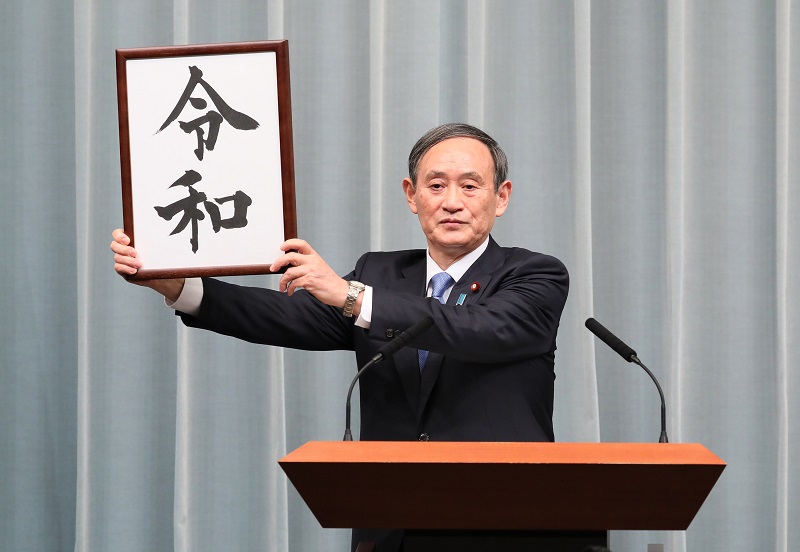
The famous photograph of the new name being held up for the cameras was taken on April 1, 2019. It shows an announcement. Reiwa began on May 1. In a diary, April 30 was still Heisei 31, and the very next day was Reiwa gannen. When January 1, 2020 arrived, the count moved on to Reiwa 2. The first year was eight months long.
How many coins carried each date?
In the Japan Mint’s table, look down the 100-yen column for the two lines marked 2019. The entries are 302,006 for Heisei 31 and 58,614 for Reiwa gannen. The table counts thousands of coins. That is about 302 million and 58.6 million respectively. It is easy to miss that little note under the table and picture a far smaller production run.
If you have a different Reiwa coin, you can still use it for the same exercise. Add its era year to 2018: Reiwa 5 gives 2023. On a dated letter you can go on to look for the month and day. On an ordinary 100-yen coin the inscription gives you a year. That is as far as the object itself takes you.
Japan Mint production figures by year of inscription (PDF) · Ministry of Finance pictures of circulating coin designs · House of Councillors account of the April announcement and May change.
Why Japan keeps imperial era names alongside the Gregorian calendar
Cover image: Yoshihide Suga announces the name Reiwa on April 1, 2019. Cabinet Public Relations Office, Cabinet Secretariat of Japan / Wikimedia Commons · CC BY 4.0.



Comments